
Resort Interior Design Companies in Thailand: How to Choose the Right Design Partner
A resort is not simply somewhere guests sleep.
For many travellers, the resort becomes the trip.
Guests may spend several days moving between villas, pools, restaurants, spas, terraces, gardens, lounges, beaches, and private outdoor spaces.
They experience the same paths repeatedly.
The same breakfast room.
The same pool.
The same view.
The same villa.
That changes the responsibility of design.
A city hotel can sometimes rely on the destination outside its doors.
A resort has to remain compelling when guests barely leave the property.
For developers searching for a resort interior design company in Thailand, the right studio therefore needs to understand more than guestrooms and public areas.
It needs to understand how:
landscape,
climate,
privacy,
architecture,
operations,
behaviour,
and time
become one continuous guest experience.
A strong resort should not merely occupy an extraordinary site. It should become inseparable from it.
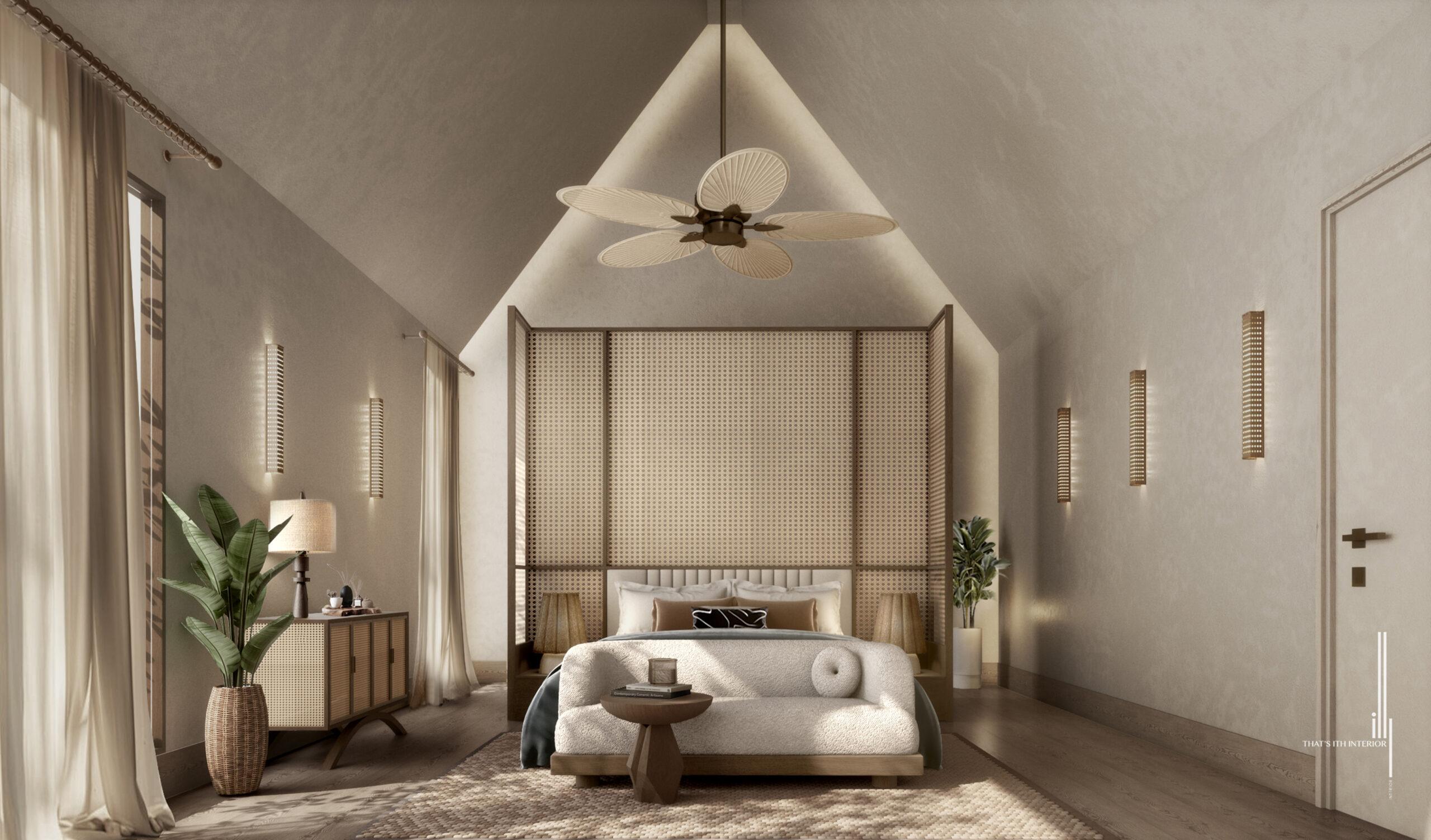
What Does a Resort Interior Design Company Do?
A resort interior design company develops guest environments across interior and, depending on the agreed scope, semi-outdoor hospitality spaces.
These may include:
- arrival areas
- lobbies
- guestrooms
- suites
- private villas
- restaurants
- bars
- lounges
- spas
- clubhouses
- poolside environments
- and transitional spaces between architecture and landscape
Resort projects are particularly collaborative.
Interior designers may work alongside:
architects,
landscape designers,
lighting consultants,
engineers,
operators,
kitchen consultants,
contractors,
fabricators,
and specialist suppliers.
Each discipline remains professionally distinct.
But guests do not experience consultant packages.
They experience one resort.
That is why coordination between architecture, interior, landscape, and hospitality operations becomes especially important.
1. Resort Design Should Begin With the Site
The strongest resorts feel as though they could not have been designed in exactly the same way somewhere else.
The site should have consequences.
Topography.
Views.
Vegetation.
Sun.
Wind.
Water.
Climate.
Architecture.
Local material.
Culture.
The sequence of arrival.
A beachfront resort should not feel interchangeable with a mountain retreat.
A villa development beside a creek should not receive the same answer as a property overlooking the Andaman Sea.
The question should not simply be:
“How do we make the resort look appropriate to its location?”
A more useful question is:
“What does this place allow us to do that another site would not?”
That shift is important.
Because sense of place is strongest when the location helps create the design rather than decorating it afterwards.
A strong resort should lose something essential if removed from its site.
2. Tropical Resort Interior Design Requires Climate Intelligence
Thailand’s tropical climate creates both opportunity and responsibility.
Heat.
Humidity.
Heavy rain.
Strong sunlight.
Wind.
And, in coastal locations, salt air.
These conditions affect almost every design decision.
Where should shade occur?
How much direct sun reaches the furniture?
How will materials age?
Which spaces can remain naturally ventilated?
What happens during monsoon season?
How will indoor and outdoor areas perform when conditions are less photogenic than opening day?
A luxury resort interior design firm in Thailand should understand not only what a material looks like.
But what life that material is about to have.
Timber.
Metal.
Fabric.
Stone.
Hardware.
Outdoor furniture.
Sealants.
All behave differently depending on exposure.
Luxury should survive reality.
A resort that looks exceptional at handover but deteriorates rapidly has misunderstood part of its brief.
3. Design With the Climate, Not Against It
Air-conditioning can solve temperature.
But it should not become the only environmental strategy.
In tropical resort design, architecture, landscape, and interiors can work together through:
shade,
cross-ventilation,
covered transitions,
orientation,
deep overhangs,
courtyards,
planting,
and carefully controlled openings.
The objective is not necessarily to eliminate the climate.
Sometimes the weather is part of why the guest came.
Wind moving through a terrace.
Rain heard under a roof.
A shaded courtyard.
Morning light entering a villa.
The better question is not always how to protect guests from nature.
Sometimes it is:
How can design allow them to experience nature comfortably?
That distinction can give tropical resorts far greater character than sealed environments that happen to be located in the tropics.
4. Indoor and Outdoor Living Should Feel Like One Experience
Many resort concepts promise indoor-outdoor living.
But simply adding large glass doors does not achieve it.
A terrace should not feel like leftover space outside the room.
A private pool should not feel disconnected from the villa.
A lobby should not frame the landscape accidentally.
Successful relationships between interior and exterior consider:
shade,
privacy,
rain,
airflow,
insects,
furniture,
maintenance,
lighting,
and circulation.
The strongest result often makes the boundary feel almost irrelevant.
The guest moves naturally from bedroom to terrace.
From restaurant to garden.
From lobby to view.
Nature becomes part of the architecture rather than scenery surrounding it.
This is one reason resort design needs particularly strong communication between interior, architecture, and landscape teams.
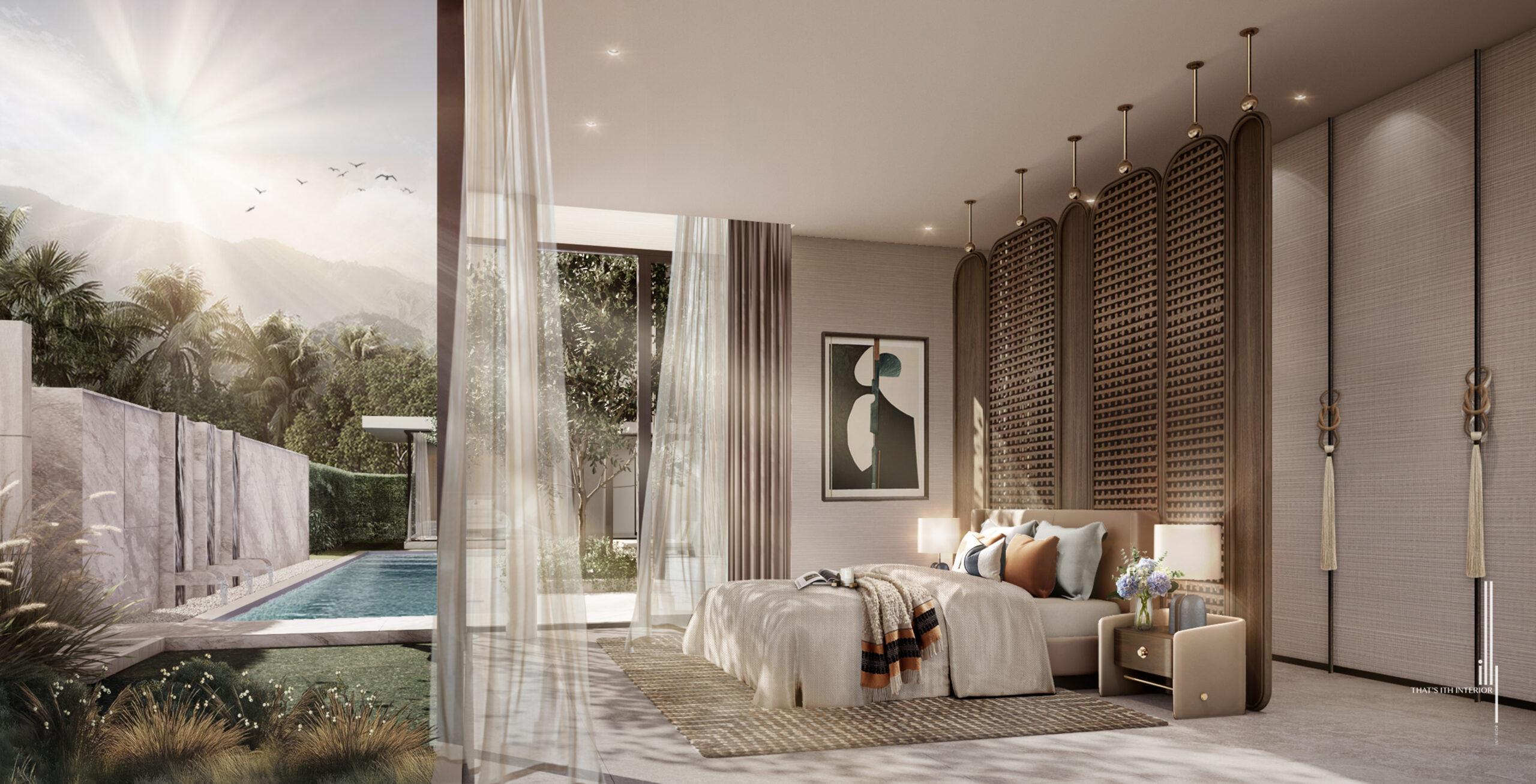
5. Privacy Is Not the Same as Enclosure
Luxury resorts frequently celebrate openness.
Large windows.
Terraces.
Private pools.
Outdoor baths.
Long views.
But openness creates another requirement:
control.
Guests should be able to decide when they are visible.
When they interact.
And when they disappear.
Privacy can be created through:
orientation,
distance,
planting,
screens,
changes in level,
walls,
shadow,
controlled sightlines,
and the sequencing of spaces.
The strongest privacy is often not obvious.
The guest simply feels protected.
Privacy is not only about preventing someone from seeing you. It is about giving you control over when you can be seen.
That psychological freedom is one of the deeper forms of luxury in resort design.
6. Resort Villas Need More Than a Bigger Guestroom
A resort villa is not simply a hotel room with more square metres.
It often behaves more like a temporary private home.
Guests may stay longer.
Spend much of the day inside.
Eat privately.
Use separate living spaces.
Entertain family or friends.
Move repeatedly between indoor and outdoor areas.
Use a private pool.
That changes the planning criteria.
Storage becomes more important.
Furniture needs to support longer use.
Different activities require different territories.
Privacy needs to work at several levels.
The bathroom, bedroom, living area, terrace, landscape, and pool should feel like parts of one inhabitable environment.
Luxury residential design fails when it accommodates the idea of life better than life itself.
The same principle applies to resort villas.
They need enough theatre to feel like travel.
But enough ease to feel temporarily like home.
7. Arrival Is About Sequence, Not Size
Resorts often possess dramatic natural settings.
That creates temptation to reveal everything immediately.
Sometimes that is right.
Sometimes withholding creates a stronger experience.
A narrow approach.
A shaded threshold.
A compressed volume.
Then landscape.
Water.
Sky.
A distant view.
A memorable arrival is about sequence, not size.
The first impression does not need to be the largest architectural gesture.
It needs to prepare the guest emotionally for what comes next.
In a resort, arrival can establish an important transition:
from travel to rest,
from city to nature,
from public world to retreat.
That psychological shift is part of the design brief.
8. Restaurants and Bars Need Different Emotional Temperatures
Resort guests may stay for several days.
That means they experience the same property repeatedly.
Variation becomes important.
Breakfast should not feel exactly like dinner.
A pool bar should not behave like a destination restaurant.
A sunset lounge should create another emotional moment.
A quiet tea space may need a different relationship with landscape.
The strongest resorts can contain several identities without becoming fragmented.
Lighting.
Furniture.
Material.
Scale.
Music.
Acoustics.
Views.
Seating configuration.
All influence emotional character.
Consistency does not require repetition.
The resort needs one larger identity.
But different outlets should give guests different reasons to return.
Otherwise, even a beautiful environment can become monotonous.
9. Landscape and Interior Design Need to Share the Same Story
Resort interiors rarely succeed independently from landscape.
A lobby view depends on what has been framed outside it.
Villa privacy may depend more on planting than walls.
Restaurant comfort can depend on shade.
A guest’s sense of discovery may depend on the path between two buildings.
Interior designers and landscape designers therefore need to understand the same overall experience.
Not because their disciplines become interchangeable.
But because the guest does not mentally separate them.
The guest experiences one journey.
Architecture may create the threshold.
Landscape creates anticipation.
Interior creates arrival.
Lighting transforms all three after sunset.
When these disciplines communicate, the property begins to feel inevitable rather than assembled.
10. Wellness Extends Beyond the Spa
A spa can be beautifully designed.
And still occupy only a small fraction of the guest’s stay.
Contemporary resort wellness therefore needs a wider lens.
Natural light affects circadian rhythm.
Acoustics influence rest.
Thermal comfort affects relaxation.
Privacy affects psychological recovery.
Airflow changes physical comfort.
Material tactility influences sensory experience.
Sleep quality can depend on blackout performance, temperature, sound, and bedding rather than one dedicated wellness amenity.
Connection with nature can also happen throughout the property rather than through one “biophilic” room.
The future of resort wellness may be less about adding more wellness spaces and more about making the whole resort kinder to the human body.
That is a deeper challenge.
And potentially a more meaningful one.
11. Resort Design Needs Sensory Endurance
A restaurant visitor may experience a space once.
A resort guest can experience the same environment dozens of times in several days.
That creates another design criterion:
sensory endurance.
An intense visual gesture may be exciting on arrival and exhausting by day four.
A scent can become overwhelming.
Music that energises one evening may irritate after repeated exposure.
Highly reflective materials may feel dramatic but uncomfortable in strong tropical sunlight.
The best resort interiors consider both:
first impression and hundredth experience.
Some spaces need novelty.
Others need familiarity.
Some moments can be theatrical.
Others should recede.
The designer has to understand how the emotional rhythm of the property changes over time.
This is one reason resort design should not become a collection of “Instagram moments.”
Guests do not live inside photographs.
They live inside the environment.
12. Luxury Beachfront Resort Design Requires Long-Term Thinking
Coastal locations introduce particularly demanding conditions.
Salt.
Moisture.
UV exposure.
Wind.
Sand.
Intensive outdoor use.
Metal finishes need corrosion resistance.
Timber requires appropriate selection and treatment.
Outdoor fabrics need to withstand exposure.
Hardware matters.
Maintenance access matters.
Details that trap moisture matter.
The wrong choice can look perfect during opening photographs and begin failing shortly afterwards.
True luxury is often the feeling that nothing important has been overlooked.
That includes the things guests never consciously notice.
How a door still closes after years of coastal exposure.
How furniture ages.
How finishes weather.
How easily maintenance can happen without compromising the design.
Long-term performance is part of the aesthetic.
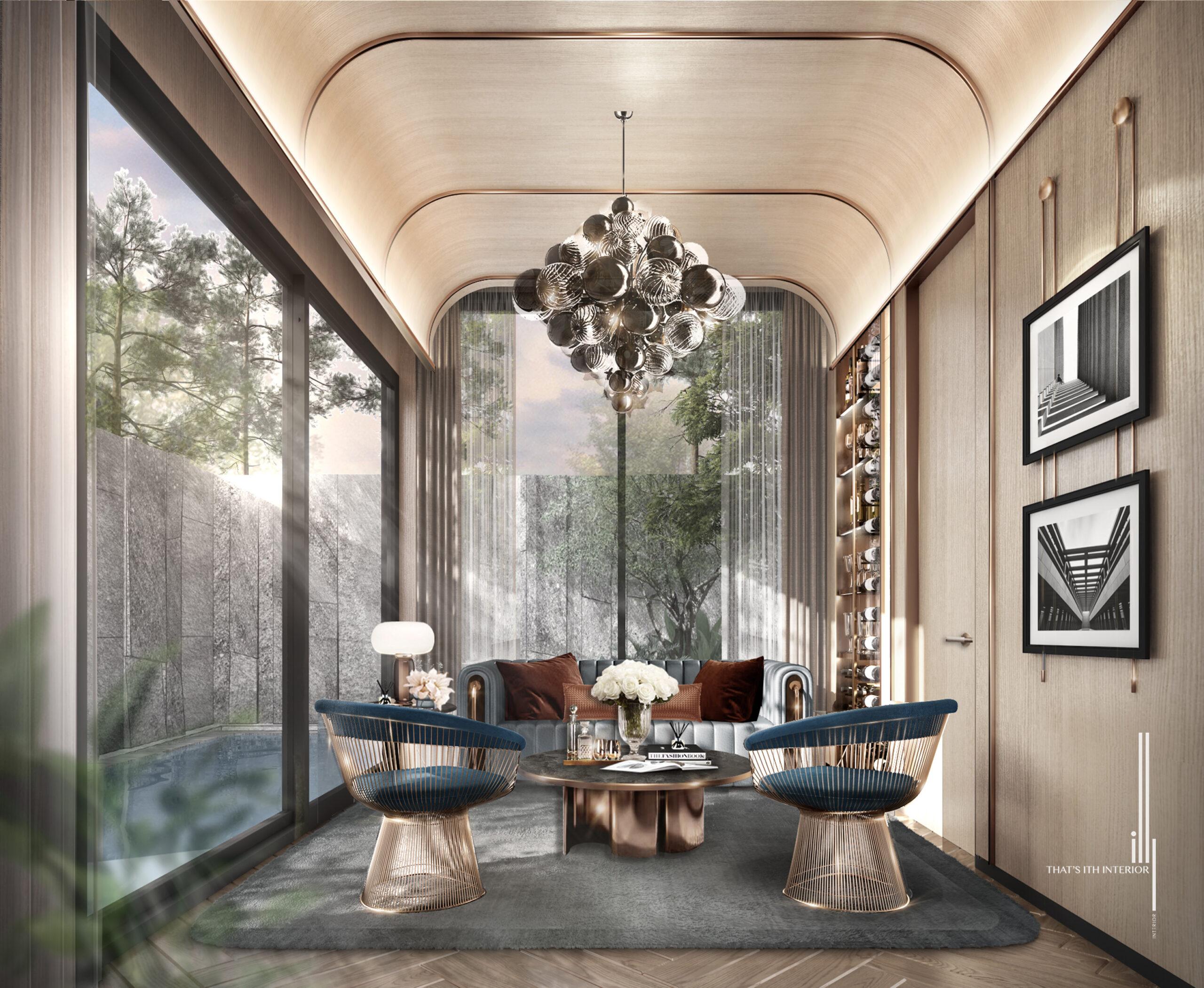
13. Bespoke Resort Design Should Ask: What Deserves to Exist Only Here?
Resorts often provide opportunities for highly customised design.
Furniture.
Lighting.
Art.
Screens.
Joinery.
Craft.
Architectural interventions.
But bespoke should not become compulsory simply because the project is luxurious.
The more useful question is:
What deserves to exist only here?
A piece may reinterpret local craft.
Respond to the site.
Frame a view.
Solve a particular operational problem.
Create privacy.
Or become the object guests associate with the property.
The value lies in the reason it exists.
Not simply the fact that it is custom-made.
Uniqueness without judgment is simply uniqueness.
The best bespoke work creates specificity.
THAT’S ITH and Luxury Resort Interior Design
THAT’S ITH INTERIOR is a Bangkok-based design studio founded and creatively led by ITH PALACH, whose professional design career spans more than 25 years.
The studio works across hospitality, residential, restaurant, workplace, villa, and lifestyle environments in Thailand and international markets.
Our core belief is:
People are more interesting than styles.
For resort projects, that means the design should not begin with a predetermined tropical aesthetic.
It begins with:
the site,
landscape,
climate,
guest,
architecture,
privacy,
culture,
operations,
and the experience the property hopes to create.
Our design territory, Fearless Luxury, is not about making every resort dramatic.
Sometimes the fearless decision is an extraordinary object.
Sometimes a saturated interior.
Sometimes opening the architecture completely to nature.
Sometimes doing almost nothing so that the view becomes the protagonist.
Fearless means having enough conviction to choose what the project genuinely needs.
The visual language may change.
The consistency is not in the aesthetic. It is in the judgment.
Finding the Unspoken Brief in Resort Design
A resort development brief contains explicit requirements.
Keys.
Facilities.
F&B outlets.
Villa types.
Brand standards.
Operations.
Target market.
Budget.
But there is often another layer underneath.
We call it The Unspoken Brief.
What is the guest actually escaping from?
What version of themselves do they hope to become while staying here?
Do they want social energy or permission to disappear?
What behaviour should the landscape encourage?
What should guests remember after they have forgotten the marble?
What does this particular destination offer emotionally that competitors cannot?
These questions can lead to a more specific resort identity.
Because the deeper competition between resorts is not simply over rooms.
It is over how guests imagine themselves living while they are there.
Resort Thinking and Villa Experience
THAT’S ITH also works extensively across private villas and luxury residential environments.
This creates an interesting overlap with resort design.
Both need to understand:
privacy,
comfort,
indoor-outdoor living,
landscape,
material warmth,
longer periods of occupation,
and the rituals of everyday life.
But they are not the same.
A private villa needs to understand one particular household deeply.
A resort villa serves changing guests while still trying to create a feeling of personal territory.
The challenge is to borrow the intimacy of residential design without losing the operational intelligence and emotional rhythm of hospitality.
Hospitality can bring theatre. Residential thinking brings intimacy.
The strongest resort villas need both.
ANANN Villas Phuket: Designing a World of One’s Own
ANANN Villas Phuket offers a useful example of THAT’S ITH’s thinking around villa environments and landscape.
The development consists of twelve villas within a setting shaped by both creek and mountain.
Rather than treating the villas as objects placed onto the site, the design responds to climate, privacy, cross-ventilation, and the relationship between interior and surrounding nature.
The idea is less about creating another generic tropical luxury language and more about giving each residence the sense of entering a world of one’s own.
This distinction is important.
Nature is not simply the view outside.
It affects:
air,
light,
privacy,
orientation,
movement,
and atmosphere.
That way of thinking can also inform resort environments, where the relationship between architecture, landscape, and human behaviour is often inseparable.
How to Choose a Resort Interior Design Company in Thailand
Start with relevant experience.
Study more than the lobby photographs.
Look at:
villas,
guestrooms,
terraces,
restaurants,
semi-outdoor areas,
material performance,
landscape relationships,
and completed built work.
Then ask:
- Does the studio understand tropical climate?
- How does it work with architects and landscape designers?
- How is guest privacy approached?
- Does the villa planning support longer stays?
- How are indoor-outdoor spaces resolved?
- How are coastal materials selected?
- How does the designer think about operations?
- What technical services are included?
- How is FF&E developed?
- How are bespoke pieces approached?
- How does the studio protect design intent during value engineering?
- Does every resort in the portfolio look essentially the same?
And perhaps the most revealing question:
“If this resort were moved to another location, what part of the design would no longer make sense?”
If the answer is “almost nothing,” the design may not yet be specific enough.
The Best Resort Design Creates a World Guests Want to Stay Inside
A successful resort does more than provide accommodation.
For several days, it becomes the guest’s world.
That world needs:
rhythm,
variation,
privacy,
comfort,
discovery,
rest,
social connection,
and enough sensory restraint to remain enjoyable over time.
The landscape should matter.
Climate should matter.
Culture should matter.
And the guest should feel that the property belongs exactly where it is.
The strongest resort design is therefore not simply about making paradise look beautiful.
Nature has already done much of that work.
The designer’s challenge is more interesting:
How do we help people inhabit paradise without getting in its way?
That may require architecture.
Craft.
Technology.
Material.
Light.
Or deliberate restraint.
Ultimately, a resort should offer something more valuable than an impressive photograph.
It should create a temporary world that guests are reluctant to leave — and able to remember long after they have.
Planning a Resort or Villa Development in Thailand?
The most useful time to involve the interior designer is often before architecture, landscape, operations, and guest journey have already become separate decisions.
Early collaboration allows these systems to influence one another.
THAT’S ITH works with developers, architects, landscape designers, operators, consultants, and multidisciplinary teams across hospitality and villa projects in Thailand and international markets.
We do not begin by asking which previous resort yours should resemble.
We begin with:
“What can exist here that could not have existed in quite the same way anywhere else?”
Contact THAT’S ITH INTERIOR to discuss your next resort, villa, or hospitality development.
You do not need to arrive with the perfect brief.
Finding the Unspoken Brief is part of the work.
Frequently Asked Questions
What does a resort interior design company in Thailand do?
Depending on the agreed scope, a resort interior design company may design lobbies, guestrooms, suites, villas, restaurants, bars, lounges, spas, clubhouses, poolside areas, and other guest environments.
It may also coordinate interior relationships with architecture, lighting, landscape, and other specialist disciplines.
Why is tropical resort interior design different?
Tropical resort design needs to consider heat, humidity, rain, sunlight, ventilation, shade, material performance, indoor-outdoor relationships, landscape, and long-term maintenance.
The objective is often to work intelligently with the climate rather than isolate guests completely from it.
What is important in luxury beachfront resort design in Thailand?
Coastal projects should consider salt exposure, moisture, strong UV, wind, corrosion risk, material performance, privacy, shade, landscape, and long-term maintenance.
How should resort villas be designed?
Resort villas should be treated as more than oversized guestrooms.
They often need greater privacy, storage, residential comfort, indoor-outdoor living, longer-stay functionality, landscape connection, and different spaces for gathering and retreat.
How important is privacy in resort design?
Very important.
Luxury resorts frequently combine openness with private pools, terraces, outdoor bathing, and large areas of glazing.
The design should give guests control over visibility through orientation, planting, screening, level changes, distance, and sightline management.
What does sensory endurance mean in resort design?
Sensory endurance refers to how comfortable and enjoyable the design remains after repeated exposure.
Because resort guests experience the same environments many times during a stay, colour, sound, scent, light, materials, and visual intensity should be considered beyond first impression.
How should interiors and landscape work together in a resort?
They should contribute to one guest journey while remaining distinct professional disciplines.
Views, privacy, shade, movement, planting, terraces, architecture, and interior space should be coordinated so the guest experiences one coherent environment.
What role does wellness play in modern resort design?
Wellness can extend beyond the spa into sleep quality, acoustics, daylight, privacy, thermal comfort, airflow, movement, nature, and opportunities for both social connection and retreat.
What is The Unspoken Brief in resort design?
The Unspoken Brief refers to deeper guest desires and project opportunities that may not appear in the formal development brief.
For a resort, this might include what guests are escaping from, how they want to feel while staying there, the balance between privacy and social life, or the memory the property hopes to create.
What does Fearless Luxury mean in resort design?
For THAT’S ITH, Fearless Luxury means making the design decision that belongs to the site, guest, and concept rather than applying a predetermined resort aesthetic.
Sometimes the answer is dramatic.
Sometimes it is restraint.
Does THAT’S ITH work on resort and villa environments?
Yes.
THAT’S ITH works across hospitality and residential environments, including villas and projects where landscape, privacy, climate, and indoor-outdoor relationships are central to the experience.
Who leads THAT’S ITH INTERIOR?
THAT’S ITH is founded and creatively led by ITH PALACH, whose professional design career spans more than 25 years.
What is one useful question when choosing a resort interior designer?
Ask:
“If this project were moved to another site, what part of the design would have to change?”
A strong answer can reveal whether the design truly responds to place — or simply applies a familiar resort formula.