
Boutique Hotel Interior Design Ideas That Stand Out
A boutique hotel does not compete on room count.
It competes on memory.
With fewer keys and fewer public spaces to make an impression, every square metre has to work harder to earn its reputation. There is no back row in a boutique property. Every space is close, every detail is noticed, and every guest is paying attention.
That is the opportunity, not the limitation.
The boutique hotels people remember are rarely the ones with the biggest budgets. They are the ones with the clearest identity — where every idea, from the arrival sequence to the smallest object in a guestroom, feels as though it could belong nowhere else.
Here are the ideas that consistently help boutique hotels stand out. Not through fleeting visual gimmicks, but through identity, craft, and a genuine sense of place.
Ideas Rooted in Identity, Not Style
A boutique property’s most valuable design asset is a story no other hotel can tell. Style can be copied. Identity cannot.
Start With a Story Specific to the Site
The strongest boutique hotel interior design ideas rarely start with a mood board.
They start with a question: why does this building, in this place, deserve to exist the way it does?
The answer might come from the building’s original history, the owner’s personal narrative, a craft tradition unique to the region, or an unusual site condition turned into a design feature.
Specificity is what separates a truly distinctive property from one that merely looks expensive.
Let Every Guestroom Carry Its Own Character
A large hotel needs consistency across hundreds of keys. A boutique property does not — and benefits from resisting it.
Different artwork. A unique material accent. A layout that responds to one room’s particular view rather than a repeated template.
These small variations give returning guests a reason to book a different room next time. Repeat visits start to feel like collecting.
Commission Something That Cannot Be Bought Elsewhere
A single hand-crafted console. A commissioned art installation. Custom joinery made by a regional workshop.
None of these need to be expensive to be powerful. What they need is to exist nowhere else.
Boutique hospitality interior design in Thailand has a real advantage here — a craft ecosystem few markets can match, and artisans capable of turning a simple brief into an object with genuine presence.
“This exists only here” is a more powerful statement than any recognisable brand-name furniture piece could ever make.
Ideas That Shape How a Guest Moves Through the Property
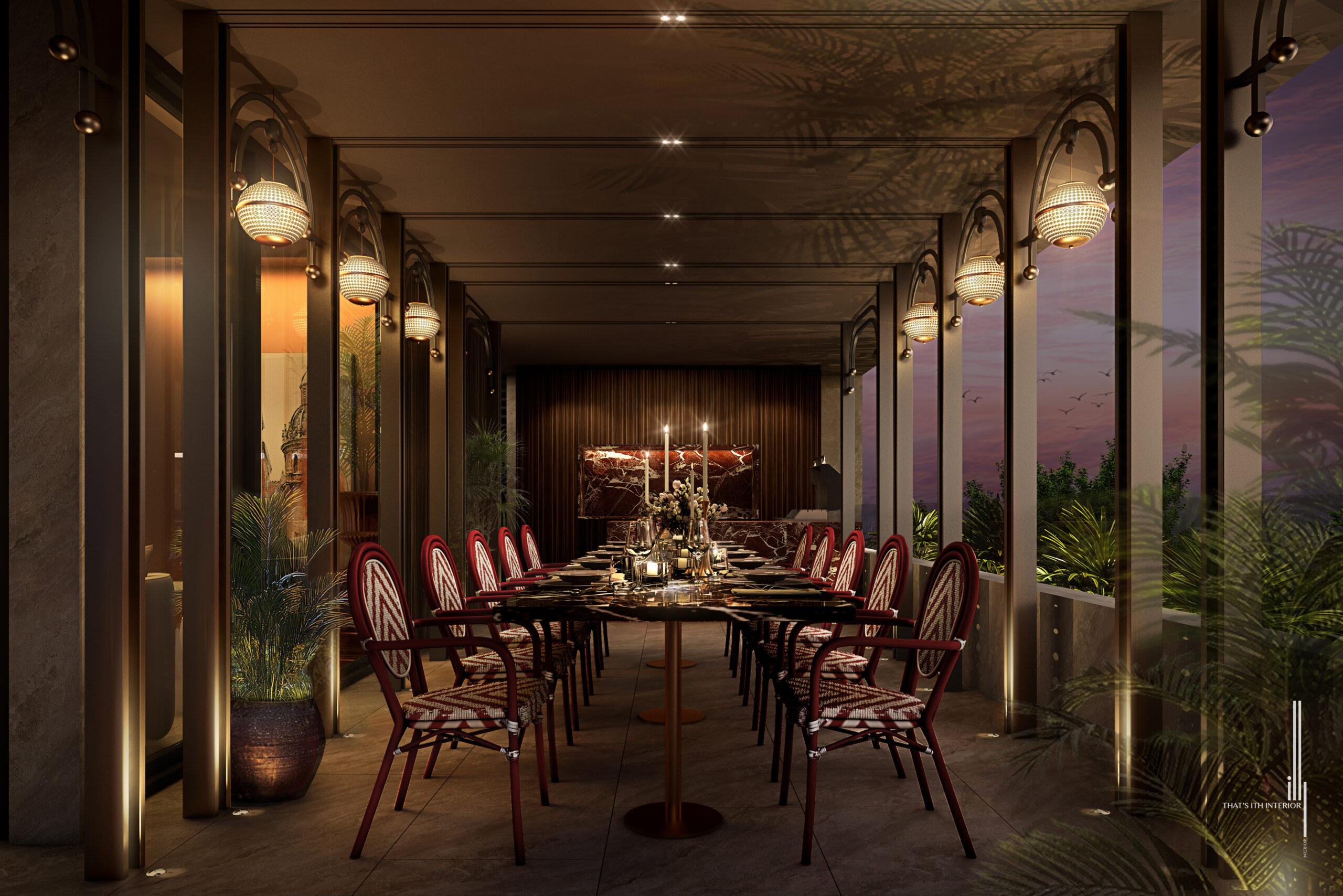
Guests do not experience a boutique hotel as a floor plan. They experience it as a sequence — arrival, discovery, pause, and reveal. A boutique property has the freedom to choreograph that sequence with more theatre than a larger hotel could ever allow—an artful approach seen in our work at The Fullton – Vietnam.
Design One Unforgettable Arrival Moment
With a single entrance and a single first impression to make, boutique hotels can invest disproportionately in the moment a guest steps through the door.
A dramatic material threshold. An unexpected reveal as the space opens up. A scent or a sound introduced the instant the door closes behind them.
Because this experience doesn’t need to scale across dozens of entry points, it can be more theatrical — and more specific — than a larger hotel typically allows itself to be.
Make the Bar or Restaurant the Property’s Social Heart
In many of the most memorable boutique hotels, the restaurant or bar becomes as much a draw for local guests as the rooms are for travellers.
That extends the property’s identity — and its revenue — well beyond overnight stays.
Elevated materials, deliberate lighting, and a spatial identity distinct from the guestroom floors help this space become a genuine destination, not simply an amenity attached to the lobby.
Use Intimacy as an Asset, Not a Compromise
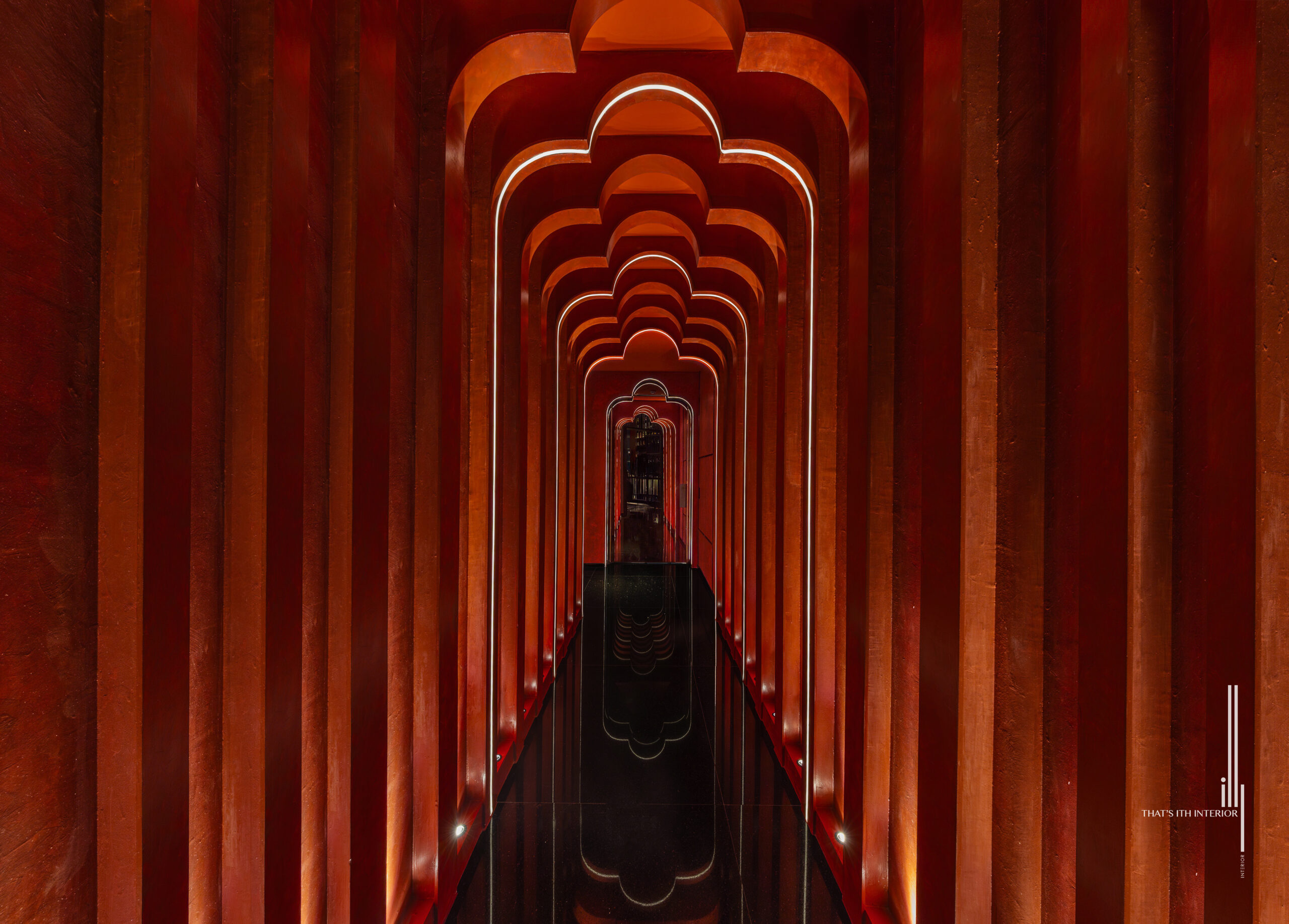
Elevated materials, deliberate lighting, and a spatial identity distinct from the guestroom floors help this space become a genuine destination—a dynamic achieved in our design for Silver Waves at Chatrium Riverside Bangkok—not simply an amenity attached to the lobby.
Confidence in scale is often what makes a boutique property feel curated rather than compromised.
Ideas Built on Material and Sensory Craft
Because guests experience boutique hotels at close range, material choices carry more weight here than in almost any other hospitality typology.
Layer Natural, Tactile Materials Generously
Boutique guests linger. They touch, and they notice details a larger hotel’s faster pace might obscure.
Natural stone. Raw and finished timber. Woven textiles. Hand-applied plaster.
These reward close attention in a way smoother, more uniform commercial finishes rarely can.
Design Public Spaces That Invite Guests to Stay
Boutique hotels often thrive on the atmosphere created when guests linger in shared spaces rather than retreating straight to their rooms.
Varied, comfortable seating. Considered acoustics. Lighting that invites people to stay a little longer in a lobby, a courtyard, or a rooftop.
That lingering is where the spontaneous, memorable moments happen — the ones guests write reviews about.
Blur the Line Between Indoors and Outdoors
Even an urban boutique hotel can find a courtyard, a rooftop terrace, or an operable façade that introduces a sense of openness a larger, more enclosed property often lacks.
In tropical and resort-adjacent boutique properties across Thailand, this becomes an even more central opportunity — extending the guest experience beyond four walls entirely.
Ideas That Keep a Property Distinctive for Years, Not Seasons
The final test of any boutique hotel interior design idea is simple: will it still feel considered in ten years?
Resist the Urge to Chase a Passing Look
The boutique hotels that stand out longest are rarely the ones that chased a particular visual moment.
A design built around genuine materials, craft, and narrative continues to feel considered years after opening. One assembled around a fleeting aesthetic tends to date quickly — a costly outcome when refurbishing even a small number of keys represents a significant share of total inventory.
A boutique hotel should be designed to be remembered, not just photographed.
Give the Property One Unmistakable Detail
The most memorable boutique hotels often have a single design gesture guests mention before anything else — a striking staircase, an unexpected art collection, a rooftop feature with one singular view.
Rather than spreading a limited budget evenly and thinly across every space, concentrating resources on one or two truly exceptional details tends to generate more word-of-mouth than a uniformly “nice,” forgettable property.
Extend the Story Into the Smallest Details
Boutique hotels can personalise in ways a larger property simply can’t — a welcome note referencing a local craft tradition, in-room amenities sourced from regional makers, turndown details that echo the property’s broader narrative.
These touches cost little to implement. But they reinforce the sense that the entire property, down to its smallest gesture, was considered on purpose.
Why “Boutique” Doesn’t Mean “Small Budget”
There’s a persistent assumption that boutique means modest — a smaller version of a proper luxury hotel, done on a proper luxury hotel’s leftover budget.
That assumption misunderstands what boutique actually offers.
A boutique property doesn’t need to spread its investment across two hundred identical rooms. It can concentrate that same investment into fifteen, or thirty, or fifty rooms — each one carrying far more design weight per square metre than its equivalent in a large hotel ever could.
Boutique isn’t luxury design with a smaller budget. It’s luxury design with a sharper focus.
That focus is exactly what lets a boutique hotel punch above its size — not by spending more than a larger competitor, but by spending with more precision, on fewer things that actually matter.
Design That Has to Survive Daily Operations
An idea only stands out if it survives contact with real, daily use.
A striking material that stains easily. A bespoke piece with no available replacement part. Both can quietly undermine an otherwise strong design once wear and tear set in.
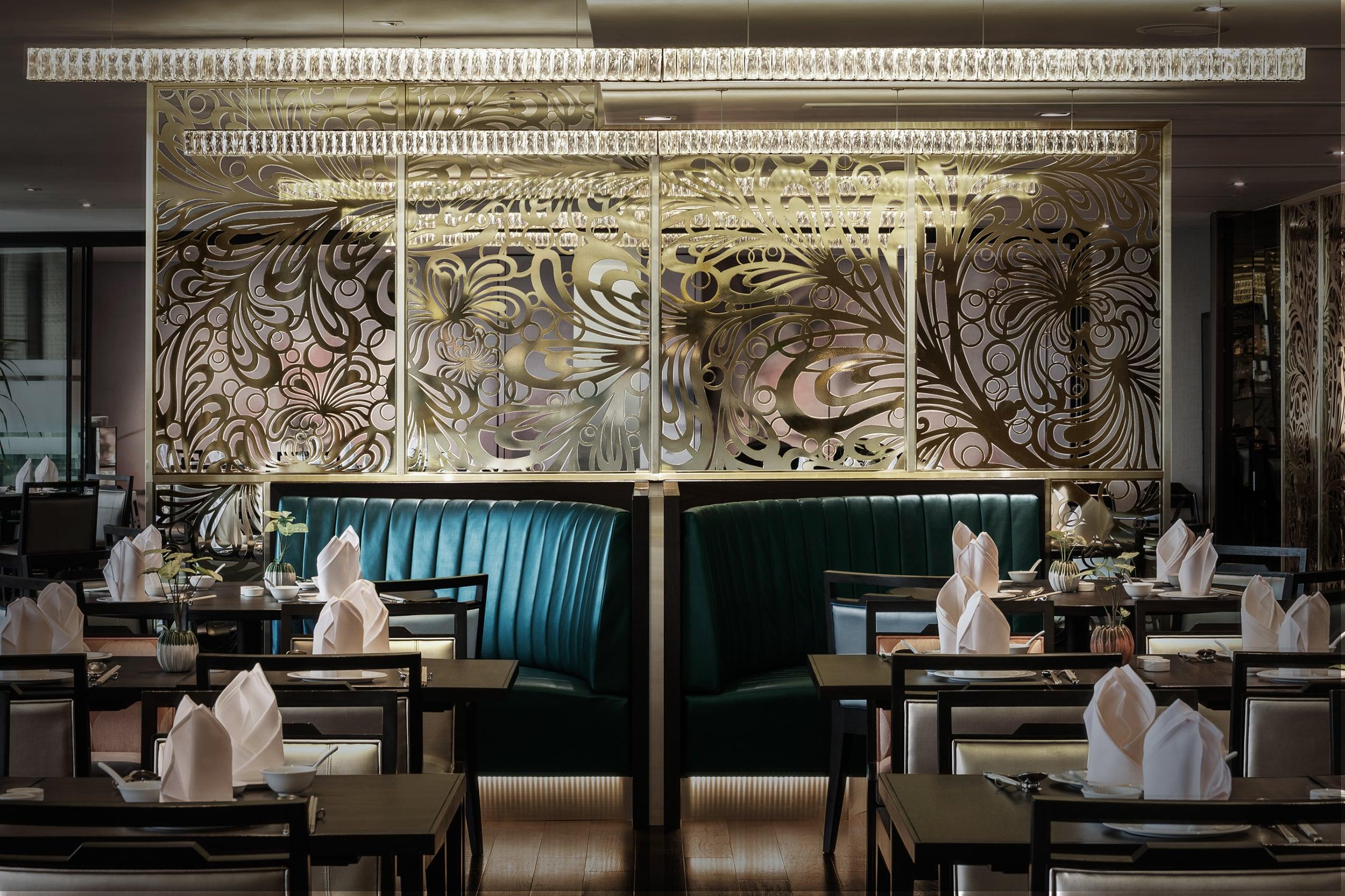
The strongest boutique properties, such as our work on The Emporia, are designed with this reality in mind from the outset — working closely with operations teams during design development so distinctive choices remain practical to clean, maintain, and replace, without losing the character that made the property memorable in the first place.
Beauty that cannot survive operations is not boutique hotel interior design. It is a photograph waiting to age badly.
That’s ITH’s Approach to Boutique Hotel Interior Design
At That’s ITH Interior, boutique projects receive the same rigour as our large-scale developments — applied at a more intimate, more personal scale.
Every project begins with a genuine narrative rooted in the site, translated into curated, crafted interiors that reward close attention. The kind of detail only a boutique property can fully deliver.
This is where Fearless Luxury shows itself most clearly: not as excess, but as the confidence to make a distinctive choice with purpose, whether that choice is bold or quiet, dramatic or restrained.
The goal is never to make every boutique project look recognisably “That’s ITH.” It is to make each one feel so specific to its circumstances that it could belong nowhere else.
Explore That’s ITH boutique hospitality projects.
Planning a Boutique Hotel Project?
The most important boutique hotel design conversations happen before the visual language has already been decided.
Led by founder and designer ITH Palach Painupong (อิฐ พลัช ภายนุปอง), whose design career spans more than 25 years, That’s ITH Interior is a Bangkok-based studio working across hospitality, residential, and commercial projects in Thailand and international markets.
Contact That’s ITH Interior to discuss your next boutique hotel, resort, or hospitality development.
Frequently Asked Questions
What makes boutique hotel interior design different from large hotel design?
Boutique hotel interior design allows far more intimacy and room-by-room individuality. With fewer keys, each space carries more weight in shaping how the whole property is remembered.
How can a boutique hotel stand out without a large budget?
Standing out is less about budget than specificity. A genuine, site-rooted story, one or two truly bespoke pieces, and a deliberately designed arrival moment can distinguish a boutique hotel far more effectively than expensive but generic finishes.
Should every guestroom in a boutique hotel look the same?
Not necessarily. Subtle variation between rooms — different art, materials, or layouts responding to each room’s own conditions — often gives a boutique hotel its character, and gives guests a reason to return.
Why does craftsmanship matter so much in boutique hotel interior design?
Because guests experience boutique hotels up close, and linger longer in each space. Tactile, hand-crafted materials reward that closer attention in a way smoother, mass-produced finishes rarely can.
Is Thailand a strong market for boutique hotel interior design?
Yes. Thailand’s craft heritage and accessible artisan network give boutique hotel projects here a genuine advantage — bespoke, locally rooted detailing that would be far harder, and far more expensive, to achieve elsewhere.