
Bespoke Interior Design: What Does It Really Mean?
“Bespoke” may be one of the most overused words in luxury interior design.
It appears beside furniture selected from a catalogue with a different fabric.
On joinery adjusted to fit an existing wall.
Sometimes on entire interiors that contain very little genuinely designed from scratch.
That does not make customisation less valuable.
But it does make the distinction worth understanding.
Bespoke interior design means creating spaces, furniture, joinery, finishes, or other elements specifically in response to one project — its people, place, dimensions, function, and identity — rather than simply applying a predetermined solution.
The important word is not expensive.
It is specific.
A genuinely bespoke piece should have a reason for being the way it is.
And a genuinely bespoke interior should contain decisions that would lose some of their meaning if transferred unchanged to another client or another place.
What Does Bespoke Interior Design Actually Mean?
There is no single universal legal definition of “bespoke” in interior design, and the term is used differently across markets.
But in professional design practice, it generally describes work developed specifically for a particular project rather than selected entirely from an existing standard offering.
That might include:
- furniture designed for one room
- joinery developed around a particular collection
- a custom lighting piece
- commissioned artwork
- a unique stone pattern
- a special metal finish
- a screen developed with a craftsperson
- or an entire spatial concept responding to one client and one site
A bespoke dining table, for example, is not simply a standard table ordered in another finish.
Its dimensions, material, proportion, edge detail, base, and construction may all be developed around a particular room and the way a particular household gathers.
Bespoke begins when the project itself becomes the reason the design exists.
Bespoke vs. Customised vs. Personalised
These terms are frequently used interchangeably.
In reality, there is useful distinction between them — although terminology varies between brands and industries.
Customised
Customisation usually begins with something that already exists.
A standard sofa may be available in another fabric.
A cabinet may be produced at a different width.
A table might be ordered with another finish.
The original product remains recognisable.
Its variables change.
Personalised
Personalisation usually adds something specific to the client without fundamentally redesigning the underlying object.
A monogram.
A selected colour.
An engraved detail.
A combination chosen specifically for the buyer.
Bespoke
Bespoke work goes further.
The solution is developed specifically around the brief rather than simply chosen from predetermined options.
That does not necessarily mean every screw, mechanism, or production technique must be invented from zero.
Design still draws on existing knowledge, materials, construction methods, and craft traditions.
What makes the result bespoke is that the final design has been intentionally developed for this particular circumstance.
The distinction is therefore less about whether something technically “started from nothing” and more about whether the design itself is genuinely project-specific.
Bespoke Does Not Mean Customising Everything
A common misunderstanding is that a bespoke interior requires everything to be individually designed and made.
It does not.
In fact, that approach can create unnecessary cost, complexity, and visual noise.
A strong project may combine:
- a bespoke dining table
- custom joinery
- commissioned art
- carefully sourced vintage furniture
- international design pieces
- standard products where they make perfect sense
The designer’s judgment lies in deciding where bespoke adds meaning and where it does not.
There is little value in designing a custom chair simply to say it is custom if an existing chair already performs beautifully.
Sometimes one project-specific object can carry more identity than twenty pieces created without a clear reason.
Bespoke should be selective, not compulsory.
Where Bespoke Interior Design Creates the Most Value
1. When Standard Products Cannot Solve the Problem
Sometimes bespoke design is not primarily about luxury.
It is simply the most intelligent solution.
An unusually shaped room may require furniture with dimensions no commercial product provides.
A client may need storage for a specific collection.
A window, structural column, or architectural condition may require joinery developed around it.
A family ritual may demand a completely different furniture arrangement.
In those situations, custom design is solving a problem rather than merely creating exclusivity.
The best bespoke solutions often feel obvious once they exist — precisely because they fit the problem so well.
2. When the Object Needs to Belong to the Architecture
Off-the-shelf furniture sits within architecture.
Bespoke furniture can sometimes become part of it.
A banquette can follow the geometry of a room.
A console can extend an architectural line.
A bed can become integrated with walls, lighting, storage, and views.
A bar can behave simultaneously as furniture, sculpture, and spatial divider.
This relationship between object and room is difficult to achieve when every element has been designed independently.
Bespoke work allows the boundaries between architecture, interior, furniture, and detail to become less obvious.
3. When a Client’s Life Is Unusually Specific
Private residential design is particularly suited to bespoke thinking because people are rarely as generic as furniture catalogues assume.
Someone may own one hundred pairs of shoes.
Another may collect watches.
A family may eat breakfast together every morning but rarely use the formal dining room.
One client may need absolute symmetry.
Another may dislike anything that feels overly perfect.
The more specific the life, the more opportunity there is for the design to become specific too.
A home begins to feel genuinely personal when its decisions respond to habits that no other household has in exactly the same combination.
4. When a Hospitality Project Needs Its Own Identity
Bespoke thinking also matters in hospitality.
A hotel, restaurant, or bar competes differently from a private home.
Its identity has to be understood by people who may enter only once.
Project-specific furniture, art, joinery, lighting, or material gestures can help create moments guests associate with that particular place.
The objective is not simply to create something nobody else owns.
It is to create something nobody else could use with exactly the same meaning.
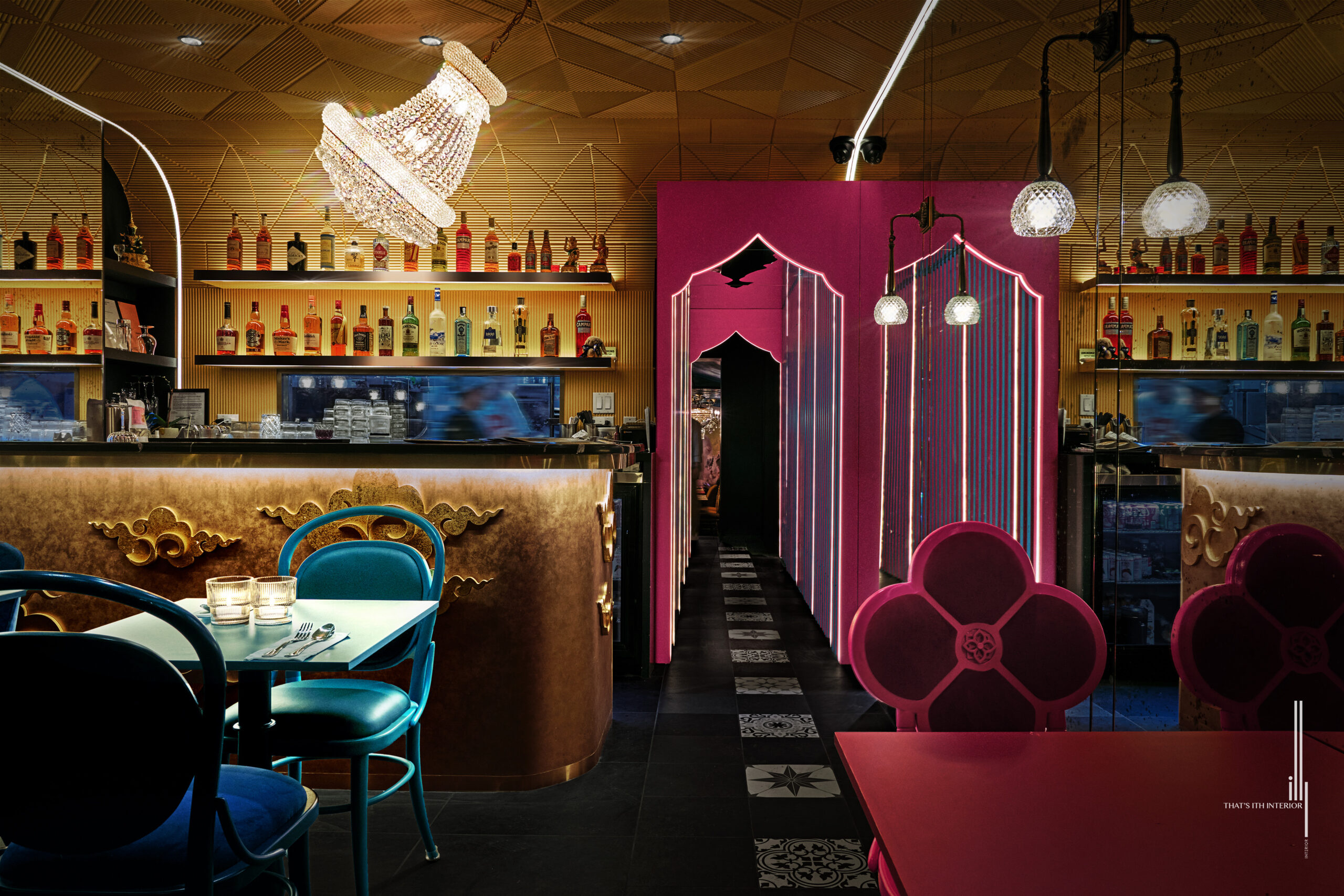
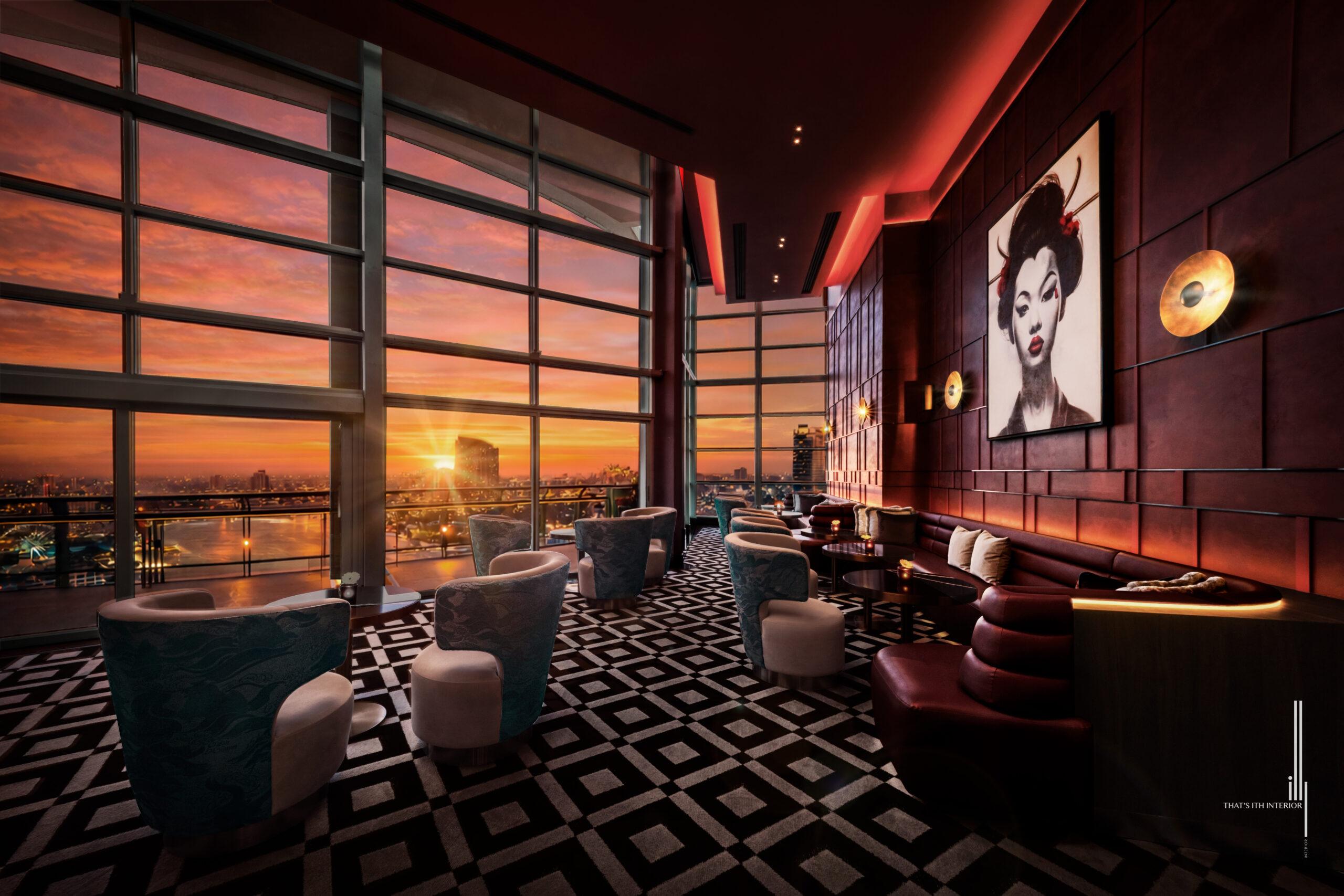
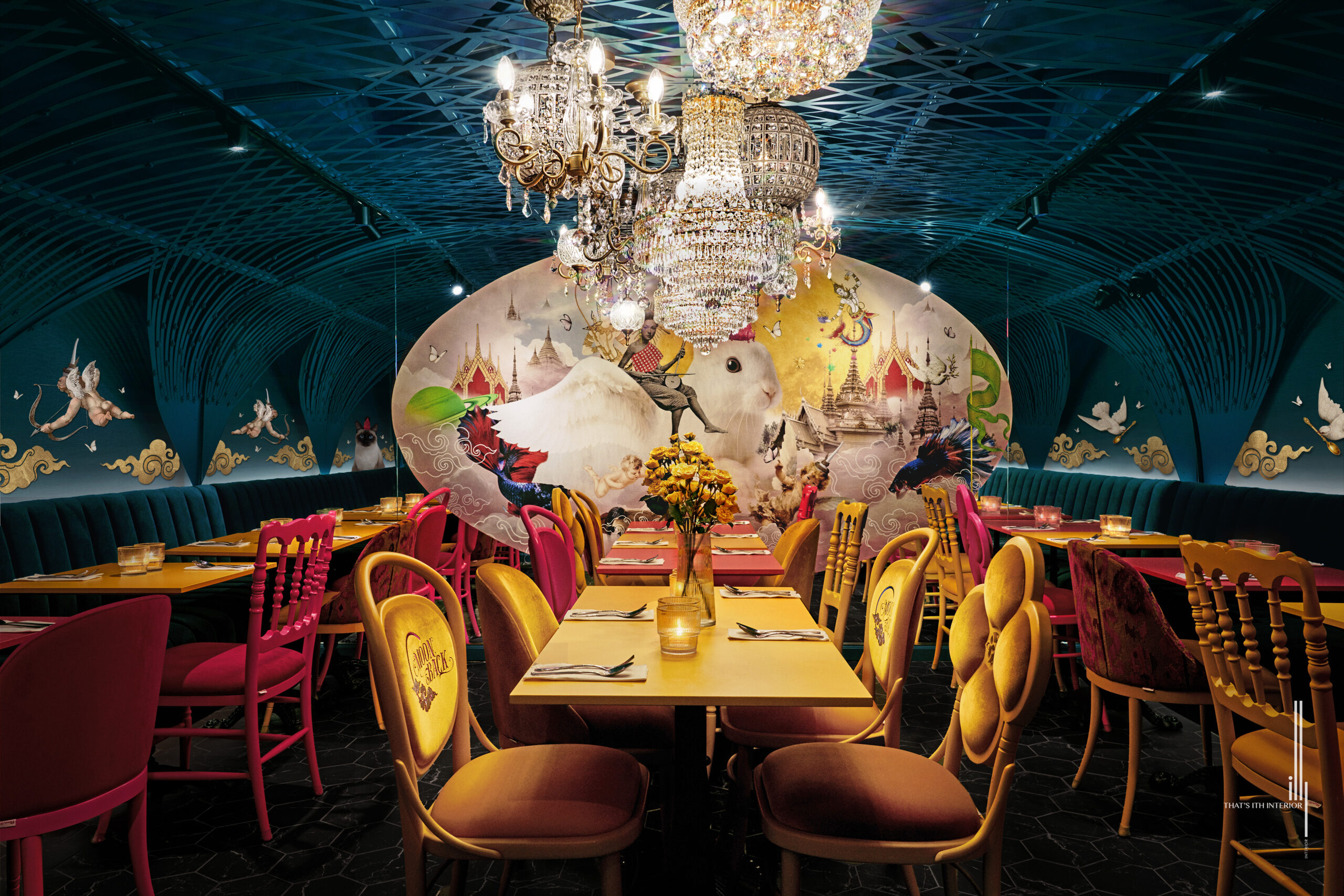
Projects such as Moon & Back – New York and Silver Waves at Chatrium Riverside Bangkok demonstrate how a hospitality identity can emerge from specific narrative, material, colour, and spatial decisions rather than a universal luxury formula.
5. When Craft Can Become Part of the Story
Bespoke design creates an opportunity for designers to work directly with makers.
Furniture workshops.
Metal fabricators.
Stone specialists.
Artists.
Textile makers.
Craftspeople.
Lighting manufacturers.
The relationship can transform a design idea into something more specific than a product chosen from a catalogue.
A traditional technique might be used in an entirely contemporary way.
A familiar material might be manipulated at an unfamiliar scale.
A maker’s knowledge may even change the original design for the better.
The designer brings the intention. The maker brings knowledge of how material behaves. Bespoke design becomes strongest when both influence the result.
Bespoke Interior Design Is Not Automatically Better
This distinction matters.
Custom-made does not automatically mean beautifully designed.
Handmade does not automatically mean high quality.
Unique does not automatically mean useful.
A poorly proportioned bespoke table remains poorly proportioned.
A complicated custom detail that is impossible to maintain may be worse than a well-designed standard solution.
A unique chair can still be uncomfortable.
Bespoke is a process.
Not a guarantee.
Its value depends on the quality of the thinking, detailing, fabrication, and execution behind it.
Uniqueness without judgment is simply uniqueness.
Bespoke Is Not the Same as Expensive
Bespoke work can be expensive.
But price is not what defines it.
A locally fabricated piece may occasionally cost less than importing a comparable piece from an international luxury brand.
In other cases, prototyping, specialist fabrication, unusual materials, complex detailing, or a highly skilled craft process can make bespoke work considerably more expensive.
The real differences are often:
- design time
- development
- sampling
- prototyping
- fabrication
- coordination
- quality control
- lead time
This means bespoke work should be considered early enough in the programme.
A custom piece cannot normally be treated like an item selected from available stock.
It has to be designed.
Reviewed.
Detailed.
Made.
And sometimes remade before it is right.
Why Thailand Is Particularly Interesting for Bespoke Interior Design
Thailand has a strong ecosystem of making.
Furniture manufacturing.
Joinery.
Stonework.
Metalwork.
Textiles.
Decorative finishing.
Artisan production.
Specialist fabrication.
For designers, this creates an opportunity to combine international design thinking with deep local production capability.
But the opportunity is not simply that bespoke work can sometimes be produced more economically.
The more important advantage is access to knowledge.
A craftsperson who has worked with timber for decades understands something a rendering never can.
A stone fabricator may see opportunities or limitations hidden in a drawing.
A metalworker may suggest a different junction that makes a detail finer.
This dialogue between design and making is part of what gives bespoke work its richness.
And it does not require the finished project to look traditionally Thai.
Local craft does not have to produce a local aesthetic. It can produce globally relevant design with deeper local intelligence.
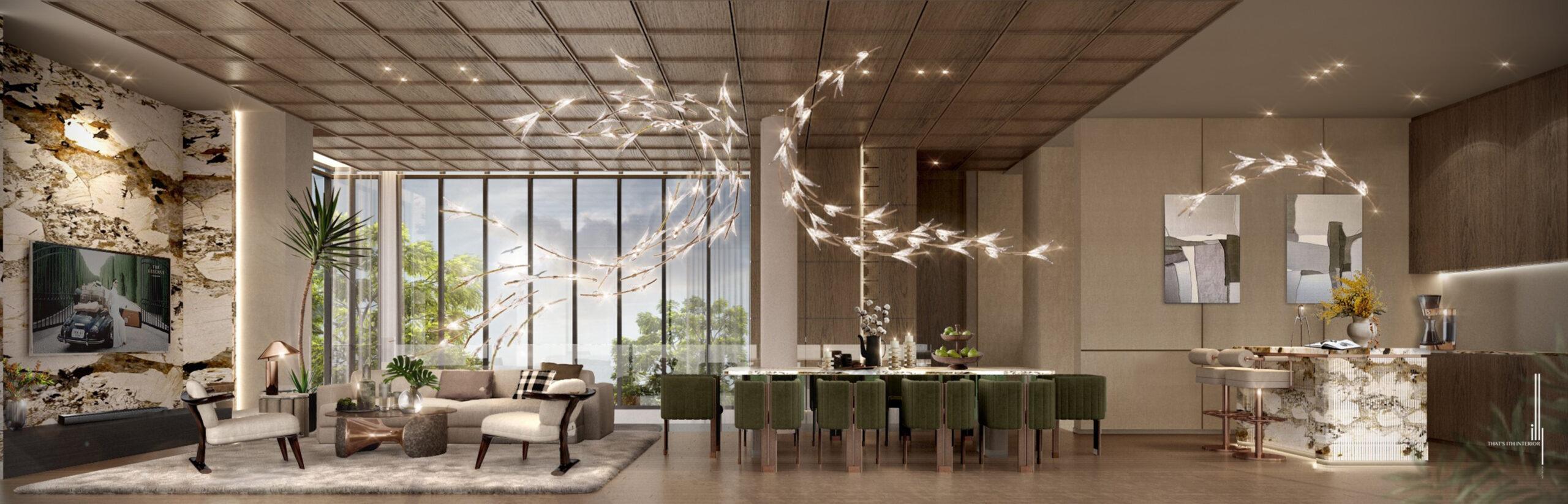
Projects such as The Reserve Villas Sukhumvit 89/1 show how residential design can benefit from highly specific detailing and project-responsive solutions without relying on a single predetermined luxury language.
What Does Bespoke Interior Design Require From a Designer?
Saying “we do bespoke” is easy.
Delivering it requires much more.
Original Design Thinking
The designer needs to be capable of developing a solution rather than only selecting one.
Technical Knowledge
An idea eventually needs dimensions, materials, junctions, tolerances, hardware, and construction logic.
Understanding of Materials
Different materials behave differently.
Stone cannot be detailed like timber.
Metal cannot be treated like plaster.
The design has to respect the logic of making.
Relationships With Fabricators and Makers
A designer needs access to people capable of producing the work — or the ability to collaborate effectively with fabricators appointed by the project.
Prototyping and Sampling
Some details cannot be resolved completely on paper.
Mock-ups and samples allow proportion, comfort, finish, colour, construction, and material behaviour to be tested.
Time
Bespoke work generally requires more development than simply ordering an existing product.
If the programme does not allow for that process, the design needs to respond realistically.
Bespoke design is not only a creative capability. It is a delivery capability.
How Can You Tell Whether Something Is Genuinely Bespoke?
Instead of relying on the word itself, ask what actually happened.
Was the piece developed specifically for this project?
Or was an existing item modified slightly?
What problem or idea drove the design?
There should be a reason beyond “we wanted something custom.”
Were project-specific drawings or specifications produced?
Genuine bespoke fabrication normally requires information developed for that piece.
Was sampling or prototyping involved?
Not every piece requires a prototype, but complex bespoke work often benefits from one.
Who fabricated it?
Understanding who made the object and how the designer collaborated with them can reveal a great deal about the process.
Could the piece be moved unchanged into another project and retain all of its meaning?
If yes, it may still be an excellent custom product.
But its relationship to the original project is probably less deeply bespoke.
What Is the Difference Between Bespoke Furniture and Bespoke Interior Design?
Bespoke furniture is one part of the larger idea.
A project can contain custom furniture without the overall interior being especially bespoke.
Conversely, an interior may be profoundly tailored to its client even if much of its furniture is sourced rather than custom-made.
A genuinely bespoke interior can emerge through:
- spatial planning
- circulation
- privacy
- storage
- lighting
- materials
- architectural relationships
- furniture
- art
- landscape
- custom details
The most important question is not:
“How much was custom-made?”
It is:
“How much of this design could have been created without understanding this particular project?”
That is a much more meaningful test.
Bespoke vs. Made-to-Measure
Another phrase sometimes used alongside bespoke is “made-to-measure.”
Made-to-measure generally begins with an established design or system and adapts its dimensions to suit a particular requirement.
For example, a standard cabinetry system may be resized for a particular wall.
Bespoke design may instead rethink the cabinetry itself — its internal organisation, proportions, materials, detailing, hardware, and relationship with the room — because the project requires something more specific.
Again, industry terminology is not always consistent.
The useful distinction is between adapting an existing solution and developing the solution around the brief.
When Is Bespoke Interior Design Worth the Investment?
Bespoke work is especially valuable when it does at least one of the following:
- Solves a problem existing products cannot solve
- Strengthens the identity of the project
- Responds precisely to a client’s life or collection
- Creates an important moment in the space
- Takes advantage of a particular maker or craft
- Integrates furniture more deeply with architecture
- Creates something whose meaning depends on this specific place
If it does none of these, customisation may be unnecessary.
Sometimes the most sophisticated choice is to buy the existing chair.
That’s ITH’s Approach to Bespoke Interior Design
At That’s ITH Interior, we do not use bespoke as another word for luxury.
For us, bespoke begins with specificity.
What does this project require that another project does not?
What does this client need?
What belongs to this place?
Which moment deserves something that cannot simply be selected from a catalogue?
And equally important:
Which moments do not?
We do not believe every object needs to be custom-designed for a project to feel personal.
Bespoke design becomes meaningful when there is a reason behind it.
A piece might solve an unusual functional problem.
Translate a memory.
Respond to architecture.
Interpret a local craft.
Create a moment of surprise.
Or carry part of the identity of the entire space.
Across our residential and hospitality work, the answer changes because the project changes.
We do not aim to make every project recognisably That’s ITH.
The consistency is not in the object. It is in the judgment behind choosing why that object should exist.
For us, Fearless Luxury is not having the freedom to customise everything.
It is having the confidence to know what is worth making only once.
Explore That’s ITH residential and hospitality interior design projects.
Planning a Project With Bespoke Interior Design?
The most valuable conversations about bespoke design happen before every object and material has already been selected.
Led by founder and designer ITH Palach, That’s ITH Interior is a Bangkok-based interior design studio working across private residences, hospitality, and commercial projects in Thailand and international markets.
We collaborate with homeowners, developers, operators, architects, artisans, fabricators, and multidisciplinary teams to translate identity, lifestyle, location, and narrative into project-specific spaces and objects.
Contact That’s ITH Interior to discuss your next residential, hospitality, or bespoke interior project.
Frequently Asked Questions
What does bespoke interior design mean?
Bespoke interior design describes spaces, furniture, joinery, finishes, or other elements developed specifically in response to one project rather than simply selected from a standard range.
The emphasis is on project-specific design rather than price or exclusivity alone.
What is the difference between bespoke and customised interior design?
Customised design usually modifies an existing product or solution through predetermined options such as size, material, or finish.
Bespoke design is developed more specifically around the requirements of an individual project.
Terminology varies across the industry, so the most useful approach is to ask what was actually designed specifically for the project.
Is bespoke interior design the same as personalised design?
Not exactly.
Personalisation can involve adding client-specific choices or details to an otherwise standard product or environment.
Bespoke design generally involves a deeper level of project-specific development.
Does bespoke mean everything has to be handmade?
No.
Bespoke describes the specificity of the design, not necessarily the production method.
A bespoke object may combine handcraft, digital fabrication, machinery, standard hardware, and specialist production techniques.
Does every element in a bespoke interior need to be custom-made?
No.
Strong interiors often combine bespoke elements with existing furniture, art, lighting, or standard products.
Bespoke work is most valuable where project-specific design genuinely improves function, identity, or experience.
Is bespoke interior design always more expensive?
No.
Cost depends on material, complexity, fabrication, quantity, maker, prototyping, and location.
Some locally made bespoke pieces may compare favourably with imported luxury products, while highly complex custom work may cost considerably more.
Does bespoke interior design take longer?
Often, yes.
Bespoke work usually requires design development, technical information, fabrication, review, and sometimes prototyping or sampling before final production.
Lead times should therefore be considered early in the project.
Why is Thailand suited to bespoke interior design?
Thailand has established capabilities across furniture production, joinery, stone, metalwork, textiles, decorative finishing, craft, and specialist fabrication.
This can allow designers to work closely with local makers and develop highly specific elements with strong technical and material knowledge.
How can I tell if a designer genuinely offers bespoke work?
Ask to see built examples and understand the process behind them.
Look for project-specific design development, technical or fabrication information, material samples, prototypes where appropriate, and evidence that the resulting solution was developed around the particular brief rather than selected primarily from an existing catalogue.
What makes bespoke design genuinely luxurious?
Not the fact that it is custom-made.
The real luxury lies in precision.
Something has been designed around a particular person, place, problem, or idea — and therefore would not have quite the same reason to exist anywhere else.