
What Is Modern Luxury Interior Design?
Modern luxury interior design is often mistaken for minimalism dressed in expensive materials.
White walls. Clean lines. Travertine. Sculptural furniture. A perfectly placed object on an otherwise empty table.
That can be modern luxury.
But it can also be completely generic.
Modern luxury interior design is not a fixed look. It is an approach to design that expresses value through proportion, material quality, craftsmanship, comfort, and intentionality rather than through ornament or obvious excess.
The difference is important.
A room does not become luxurious because it contains fewer objects.
Nor because those objects are expensive.
It becomes luxurious when every major decision feels considered — when the space understands what should be present, what should disappear, and what deserves attention.
Modern luxury is less about showing how much has been added to a space, and more about demonstrating how precisely it has been edited.
What Does Modern Luxury Interior Design Actually Mean?
Traditional ideas of luxury often communicated value visibly.
Ornament.
Rare materials.
Elaborate detailing.
Large-scale furniture.
Objects whose expense was immediately recognisable.
Modern luxury communicates confidence differently.
It can be quieter.
But quiet does not mean empty.
A carefully proportioned room can feel more luxurious than a room filled with costly objects.
A single exceptional material can carry more impact than ten competing finishes.
A custom piece made specifically for one project can feel more valuable than a recognisable object available to anyone with the same budget.
The defining quality is not minimalism.
It is judgment.
Knowing where to invest.
Where to restrain.
Where the space needs drama.
Where it needs silence.
And when another beautiful object would actually make the room worse.
Modern Luxury Is Not a Style
This is perhaps the most useful distinction.
If modern luxury becomes a visual formula — neutral stone, warm timber, curved furniture, bronze details — it immediately begins to contradict itself.
Because a formula can be copied.
And what can be copied endlessly eventually stops feeling particular.
A modern luxury residence in Bangkok should not automatically look like a luxury villa in Phuket.
A hotel should not use exactly the same design language as a private home.
Two families with completely different lives should not receive the same palette simply because both asked for “modern luxury.”
Modern luxury is not the answer to the design brief. It is the level of precision with which the answer is developed.
That answer should change with the client, architecture, location, culture, and purpose of the space.
Modern Luxury vs. Minimalism
Modern luxury and minimalism are often confused because both can use restraint.
But they are not the same thing.
Minimalism traditionally places emphasis on reduction: fewer elements, simplified forms, visual clarity, and the removal of what is considered unnecessary.
Modern luxury may use those principles.
But it can also be colourful.
Layered.
Tactile.
Expressive.
Filled with art.
Or deliberately dramatic.
The distinction is intention.
A modern luxury interior might contain a richly veined stone, deep timber, hand-finished metal, patterned textiles, and a significant art collection — while still feeling controlled because each element has a clear role.
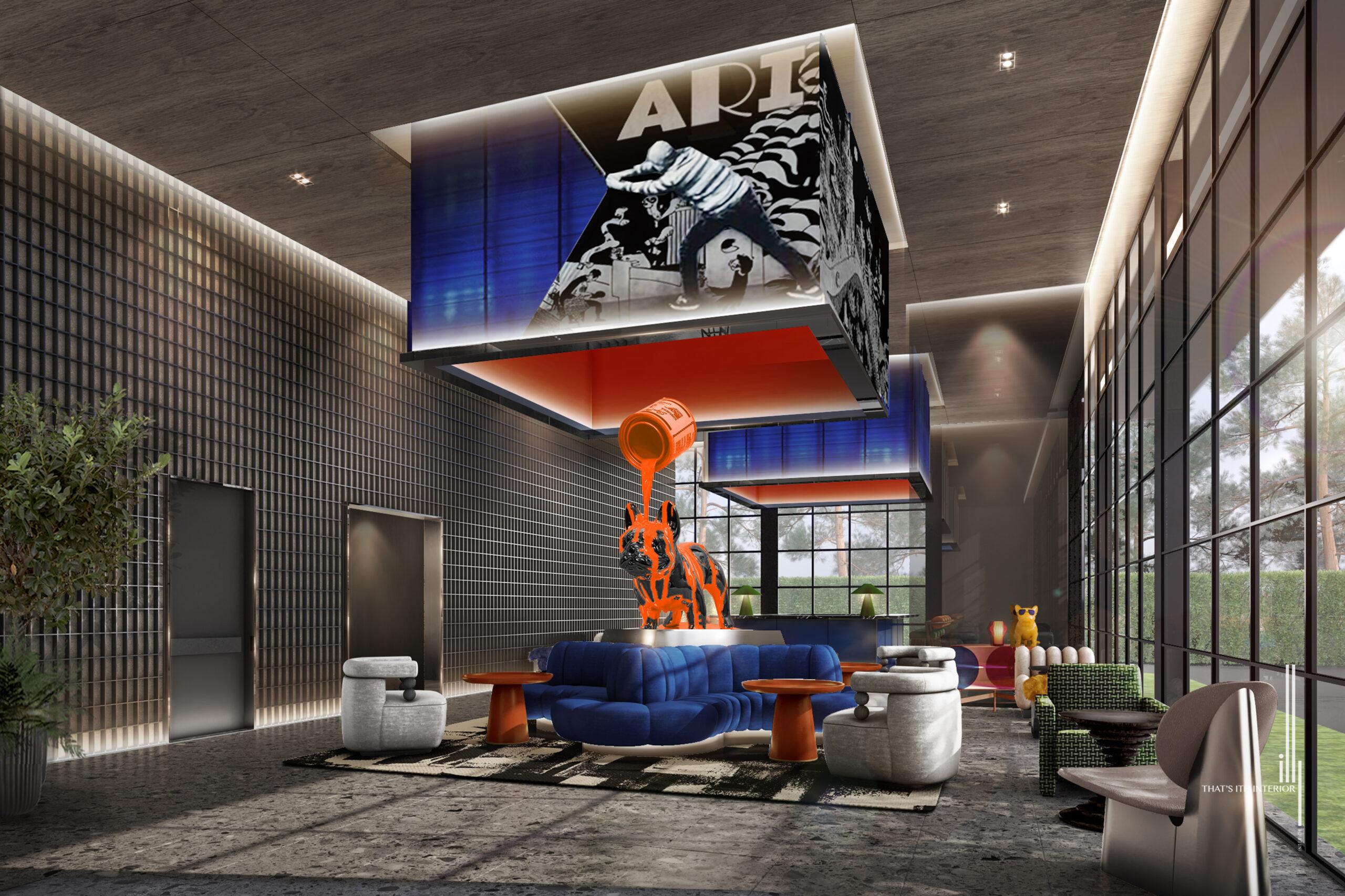
Projects such as M Ari demonstrate how contemporary clarity can exist without forcing the interior into a purely minimalist language.
Minimalism asks how much can be removed. Modern luxury asks what deserves to remain.
Modern Luxury vs. Contemporary Interior Design
“Contemporary” describes what belongs to the present.
Modern luxury asks another question:
Will it still feel considered when the present has moved on?
A contemporary interior can follow current colours, furniture silhouettes, layouts, or decorative trends.
There is nothing inherently wrong with that.
But luxury projects usually represent substantial investment and are expected to endure beyond a short trend cycle.
Modern luxury therefore relies more heavily on principles with greater longevity:
- proportion
- material integrity
- craftsmanship
- comfort
- spatial clarity
- context
- personal relevance
A fashionable object may still appear.
The entire identity of the room should not depend on it.
Modern Luxury vs. Quiet Luxury
Quiet luxury is another term frequently associated with contemporary high-end interiors.
There is overlap.
Both often value restraint, craftsmanship, subtle material quality, and confidence without obvious display.
But modern luxury does not have to be quiet.
A room can be unapologetically theatrical and still represent modern luxury if the drama is specific, controlled, and appropriate to the space.
A dramatic stone staircase may be modern luxury.
So can a nearly empty bedroom.
A vivid artwork.
A sculptural bar.
A deeply coloured dining room.
The question is not whether the decision is quiet or bold.
It is:
Does it belong?
1. Proportion Before Decoration
One of the strongest signals of sophisticated interior design is often something people cannot name.
Proportion.
The relationship between ceiling height and room size.
The width of a doorway.
The amount of empty space around a piece of furniture.
Where a wall terminates.
How one room reveals another.
Whether furniture feels grounded or lost.
When proportion is wrong, expensive materials rarely rescue the space.
When proportion is right, surprisingly little may be needed.
This is why genuine modern luxury often begins with space planning and architecture rather than decoration.
Luxury is sometimes created before the first material is selected.
2. Material Quality Without Material Exhibition
Modern luxury values materials.
But it does not necessarily require many of them.
Natural stone might be allowed to express its veining.
Timber can reveal grain and variation rather than being finished into absolute uniformity.
Metal may develop patina.
Plaster may retain slight evidence of the hand that applied it.
Textiles can reward touch rather than simply photograph well.
Material honesty does not mean every material must be natural or handmade.
It means materials should be chosen and detailed in a way that feels convincing rather than pretending to be something else.
The objective is not to create a showroom of expensive surfaces.
The material should contribute to the experience before it contributes to the price tag.
3. Restraint With a Reason
Restraint is one of the most misunderstood qualities in modern luxury.
It is easy to remove objects.
It is much harder to know what should be removed.
A restrained room can feel calm and complete.
Or it can simply feel unfinished.
The difference is whether what remains has enough character, proportion, texture, and meaning to hold the space.
A single artwork may need the wall around it.
An exceptional piece of stone may need fewer competing materials.
A dramatic staircase may become more powerful when the rest of the room refuses to compete with it.
Restraint is therefore not an aesthetic preference.
It is a form of hierarchy.
Everything cannot be the protagonist.
4. Craftsmanship Over Recognition
Luxury used to be communicated easily through brand recognition.
A familiar furniture name.
A famous light fitting.
A particular stone.
Those objects can still be exceptional.
But private clients increasingly have access to the same international brands, catalogues, and references.
Recognition alone therefore creates less distinction.
Bespoke craft offers something different.
A dining table designed around one family.
A commissioned artwork responding to one location.
Joinery developed for a specific collection.
A metal finish created with a local maker.
A hand-finished surface that cannot be reproduced with absolute uniformity.
The value is not that bespoke automatically costs more.
Its value is that it makes the project harder to separate from the people and place it was designed for.
Modern luxury is strongest when customisation creates meaning rather than merely exclusivity.
5. Comfort Without Compromising Design
Luxury that is uncomfortable is difficult to defend.
A beautiful sofa nobody wants to sit on.
A dramatic bathroom with nowhere practical to place anything.
A visually immaculate kitchen that fights against the way its owners cook.
A hotel guestroom where nobody can work out how to switch off the lights.
These are not minor functional issues.
They change the experience of the entire space.
Modern luxury increasingly recognises that ease itself has value.
Good lighting.
Acoustic comfort.
Temperature.
Storage.
Ergonomics.
Intuitive circulation.
Privacy.
Technology that works without demanding attention.
A space can look expensive immediately. Genuine luxury usually reveals itself through use.
6. Technology Should Become Quieter as It Becomes Smarter
Modern high-end interiors increasingly incorporate sophisticated lighting, climate, audio-visual systems, security, shading, and automation.
But visible complexity rarely feels luxurious.
The paradox is simple:
The more intelligent the technology becomes, the less the user should have to think about it.
A wall covered with confusing control panels does not necessarily communicate advancement.
Neither does requiring several apps simply to adjust a room.
Technology works best when it supports the experience quietly.
Integrated.
Intuitive.
Serviceable.
Upgradeable.
And visually secondary to the architecture and interior.
The smartest room should not need to constantly remind you how smart it is.
7. Specificity Is Becoming the Real Luxury
This may be the most important principle.
A space can have perfect proportions, exceptional materials, bespoke furniture, and immaculate detailing — and still feel strangely anonymous.
Why?
Because none of those decisions necessarily explain who the space belongs to.
In a private residence, specificity might emerge from habits, collections, memories, family relationships, art, travel, or daily rituals.
In hospitality, it may come from location, culture, brand identity, guest behaviour, or an overlooked piece of local history.
That specificity transforms design from an arrangement of beautiful things into an identity.
True luxury is not simply having access to more choices. It is having the confidence to make choices specific enough that the result could not easily belong to somebody else.
Modern Luxury Interior Design in Thailand
Thailand creates particularly interesting conditions for modern luxury interior design.
There is access to international furniture and material markets alongside a strong ecosystem of local manufacturing, joinery, stonework, textiles, metalwork, and craft.
The opportunity is not to choose between “international modern” and “Thai.”
That distinction is too simplistic.
A more interesting approach is translation.
A regional craft technique can be abstracted into contemporary joinery.
Traditional material knowledge can be used without reproducing traditional decoration.
Local timber, textile, stone, metal, or fabrication capability can create bespoke elements with an entirely contemporary expression.
Modern luxury interior design in Thailand can therefore combine global design literacy with local intelligence.
The strongest outcome does not need to announce its nationality.
It simply feels impossible to separate completely from where it was made.
Modern Luxury in a Private Residence
In a private home, modern luxury should become intensely personal.
The designer can respond to one household rather than a broad guest profile.
A chair can have exactly the proportion its owner finds comfortable.
A wardrobe can be organised around one person’s habits.
A room can exist specifically for an unusual ritual.
Materials can be selected according to how a particular family wants them to age.
One home might need extraordinary visual calm.
Another might need colour, art, and controlled eccentricity.
The luxury comes from precision of fit, not adherence to one recognised style.
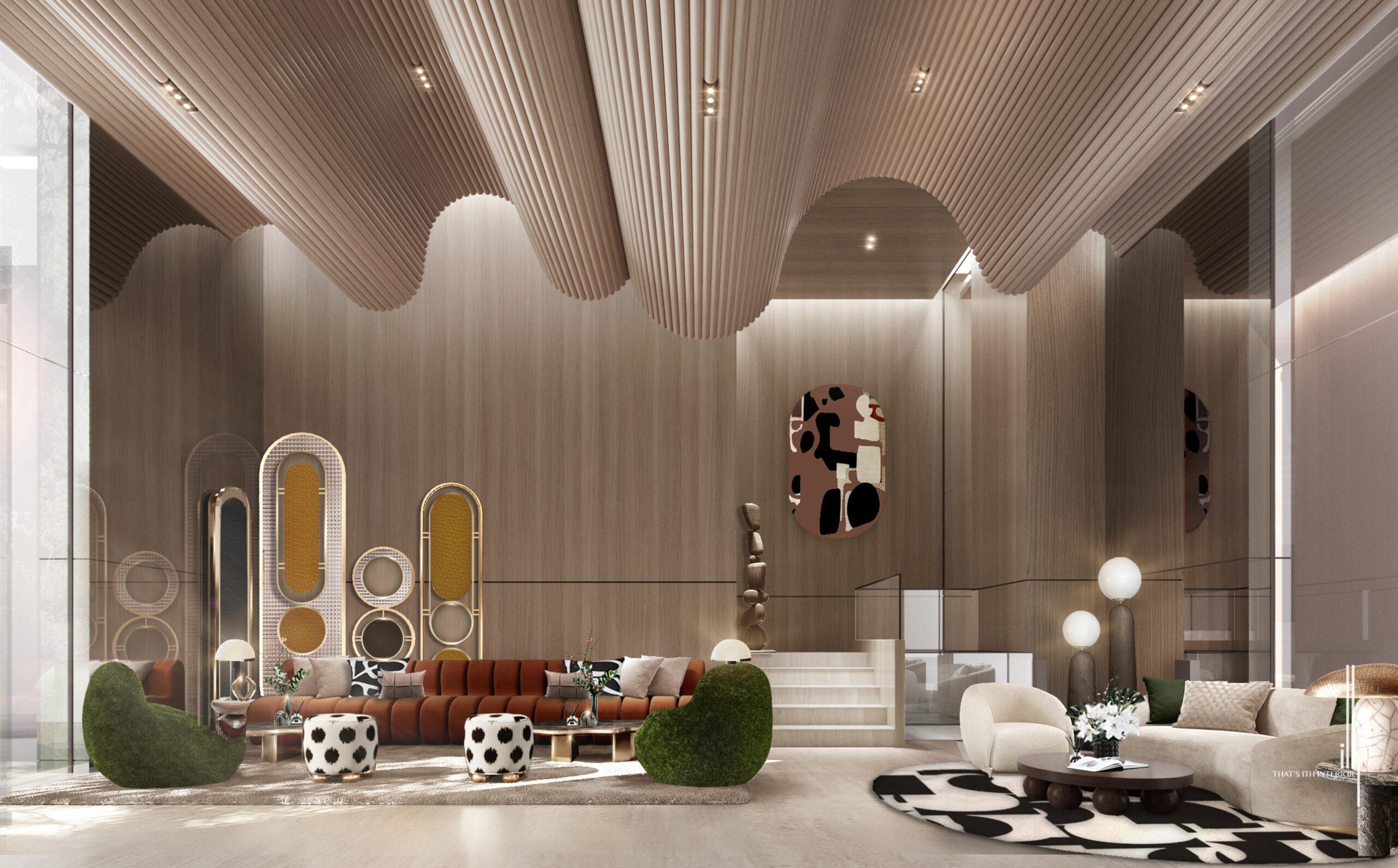
Projects such as Marquis – Phayathai show how material richness and contemporary clarity can coexist without requiring a generic minimalist formula.
Modern Luxury in Hospitality
Hospitality asks modern luxury to perform differently.
A private residence has years to reveal itself.
A hotel or restaurant may have minutes.
Identity therefore needs to register more quickly without becoming superficial.
Arrival.
Lighting.
Material tactility.
Acoustics.
Furniture.
Scent.
Movement.
Service.
All contribute to the perception of luxury.
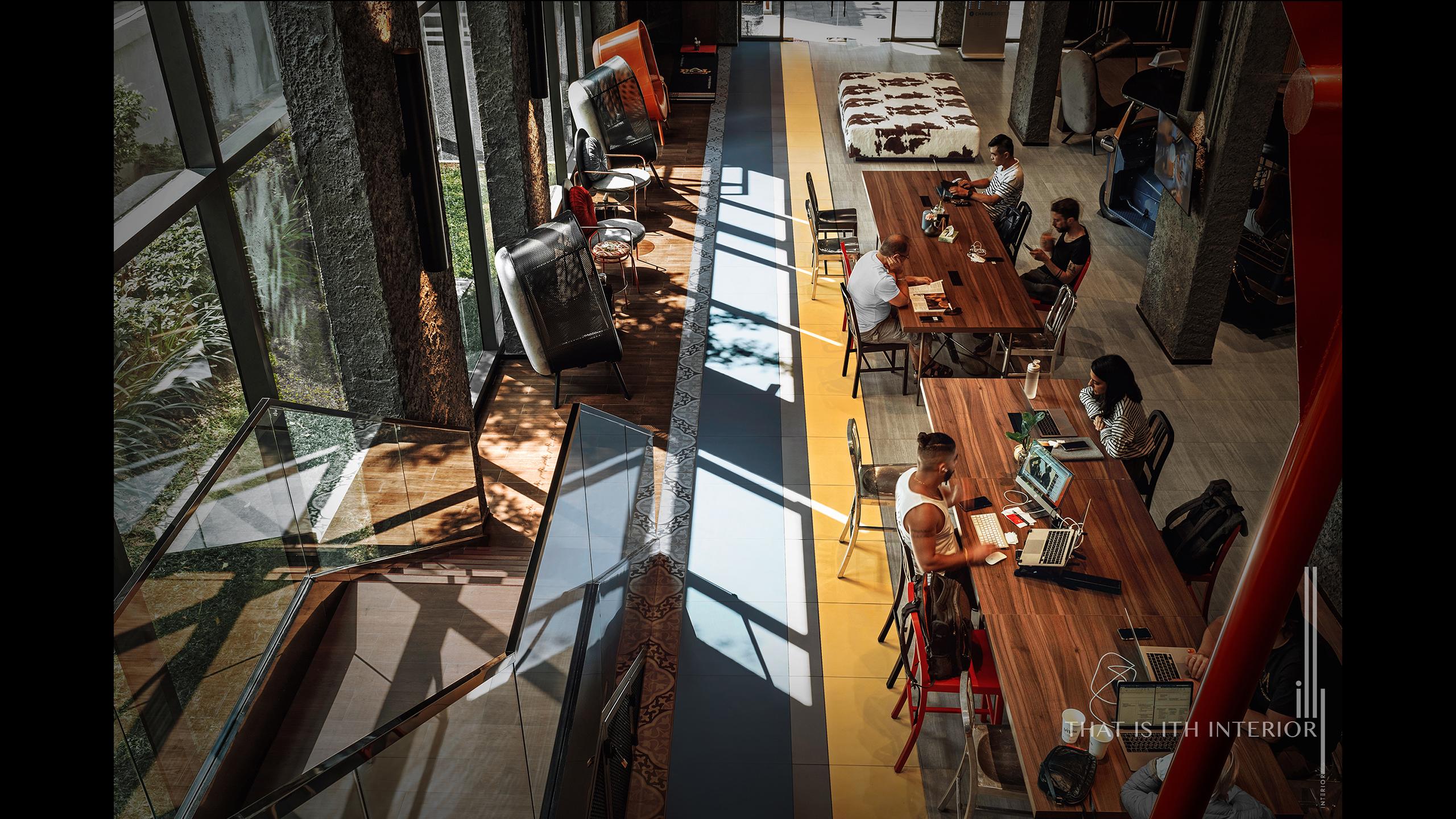
The Royal Orchid Sheraton Ballroom and lyf Sukhumvit 8 operate in very different hospitality contexts, which is precisely the point.
Modern luxury should not force both into the same visual language.
The experience changes.
So the design should change with it.
What Modern Luxury Interior Design Is Not
It is not beige
Neutral palettes can be beautiful.
They are not a prerequisite.
It is not minimalism with expensive furniture
Reduction without identity can still produce a generic room.
It is not a collection of luxury brands
Recognition and luxury are not the same thing.
It is not perfection at any cost
Natural variation, patina, and evidence of making can sometimes create more richness than immaculate uniformity.
It is not trend avoidance
Contemporary ideas can absolutely belong in a luxury interior.
They simply should not become the only reason the interior works.
It is not one fixed aesthetic
If every modern luxury project looks identical, the word “modern” may still apply.
The word luxury becomes more questionable.
Why Modern Luxury Can Age Well
No design is completely timeless.
Every interior belongs to a period.
Pretending otherwise usually produces very safe design.
But some decisions age better than others.
Good proportion.
Thoughtful planning.
Real craftsmanship.
Materials selected for how they will change.
Furniture chosen because it belongs rather than because it is fashionable.
Technology designed to be replaceable rather than visually dominant.
A clear identity.
These qualities can help an interior remain relevant even when individual trends around it change.
Timelessness should not mean removing personality. It means giving personality a reason deeper than fashion.
How to Recognise Genuine Modern Luxury Interior Design
When evaluating a space, ask:
- Would the design still feel compelling without its most expensive object?
- Do the proportions and planning work before decoration is considered?
- Are materials chosen for how they feel, perform, and age — not simply for recognition?
- Is restraint being used deliberately rather than as an aesthetic shortcut?
- Does bespoke work solve something specific?
- Is technology supporting the experience rather than competing with it?
- Could this design belong unchanged to another client or another location?
The final question may be the most revealing.
Because modern luxury ultimately depends less on how universally beautiful a space is than on how specifically right it feels.
That’s ITH’s Approach to Modern Luxury Interior Design
At That’s ITH Interior, we do not see modern luxury as a style.
We see it as judgment.
Knowing when to add.
Knowing when to remove.
Knowing when a project needs a dramatic gesture.
And knowing when the strongest decision is restraint.
We do not begin with a predetermined palette or signature aesthetic.
We begin with identity.
The people.
The place.
The architecture.
The culture.
The behaviour.
The memory.
And the experience the space should create.
That is why one That’s ITH project can look completely different from another.
The consistency is not in the aesthetic. It is in the thinking.
For us, Fearless Luxury does not mean visual excess.
It means having enough confidence to make a decision because it is right for that particular project — whether the answer is expressive or quiet, highly crafted or deliberately simple.
Because ultimately, true luxury is not about making a space look more expensive.
It is about making it more specific.
Explore That’s ITH residential and hospitality interior design projects.
Planning a Modern Luxury Interior Project?
The most valuable design conversations happen before a visual direction has already been decided.
Led by founder and designer ITH Palach, That’s ITH Interior is a Bangkok-based interior design studio working across private residences, hospitality, and commercial projects in Thailand and international markets.
We collaborate with homeowners, developers, operators, architects, and multidisciplinary teams to translate identity, lifestyle, location, and ambition into distinctive built environments.
Contact That’s ITH Interior to discuss your next residential, hospitality, or interior design project.
Frequently Asked Questions
What is modern luxury interior design?
Modern luxury interior design expresses value through proportion, material quality, craftsmanship, comfort, intentionality, and specificity rather than relying primarily on ornament or visible excess.
It is not one fixed aesthetic. The visual result should respond to the client, architecture, location, and purpose of the space.
Is modern luxury interior design the same as minimalism?
No.
Modern luxury can use minimalist principles such as restraint and clarity, but it can also be colourful, richly textured, expressive, or layered.
Minimalism focuses strongly on reduction. Modern luxury focuses more broadly on intentionality and judgment.
What colours are used in modern luxury interior design?
There is no required colour palette.
Neutral colours are common because they can allow materials, proportions, art, and texture to become more prominent, but modern luxury interiors can also use deep colour, contrast, or expressive accents when appropriate to the project.
Does modern luxury interior design have to be expensive?
Luxury interiors typically involve investment in design, materials, craftsmanship, or bespoke work, but cost alone does not create modern luxury.
A costly room can still feel generic.
The stronger indicators are quality, proportion, comfort, specificity, and how intelligently resources have been used.
What materials are commonly used in modern luxury interiors?
Natural stone, timber, metal, glass, plaster, leather, and high-quality textiles frequently appear, but there is no mandatory material list.
The important consideration is whether materials are appropriate to the concept, use, climate, maintenance requirements, and desired ageing of the space.
What is the difference between modern luxury and quiet luxury?
Quiet luxury generally emphasises understatement, discretion, subtle material quality, and restrained visual expression.
Modern luxury is broader. It may be quiet or dramatic, provided the design remains intentional, refined, context-specific, and well resolved.
Can modern luxury interior design use bold colours and patterns?
Yes.
Modern luxury is not defined by beige, white, or neutral interiors.
Bold colour, pattern, art, and unusual materials can all belong when they are used with control and support the identity of the project.
How does modern luxury interior design work in Thailand?
Modern luxury interior design in Thailand can combine contemporary design thinking with the country’s strong capabilities in craft, furniture manufacturing, joinery, stone, textiles, metalwork, and other forms of fabrication.
The objective is not necessarily to make a space visibly “Thai,” but to use local knowledge and making capability to create something more specific to its context.
How can modern luxury interior design avoid looking dated?
Focus on fundamentals that tend to outlast short trend cycles: proportion, spatial planning, craftsmanship, material quality, comfort, adaptability, and a clear project-specific identity.
Trends can still be used, but they should support the design rather than become its entire reason for existing.
What should I look for in a modern luxury interior designer in Thailand?
Look for a designer with strong spatial thinking, material knowledge, technical capability, built work, access to appropriate local craft and fabrication, and a portfolio that responds differently to different clients and contexts.
Most importantly, look for someone who can explain why each major decision belongs specifically to your project rather than simply reproducing a familiar image of modern luxury.