
10 HOSPITALITY INTERIOR DESIGN TRENDS SHAPING LUXURY HOTELS IN 2026
The most important hospitality interior design trends of 2026 are not defined by one colour, material, or visual style.
They reflect a bigger change in what luxury is expected to feel like.
Beautiful materials and exceptional craftsmanship still matter. But well-travelled guests have already experienced many beautiful hotels.
What makes one property memorable is often something deeper:
- A strong sense of identity
- A genuine connection to place
- Restorative experiences
- Thoughtful personalisation
- Meaningful moments worth remembering
For developers, hotel owners, and operators, this changes the role of hospitality interior design.
The question is no longer simply:
“What looks current in 2026?”
A better question is:
“What are guests beginning to value now, and how can design turn those values into a property that remains relevant for years to come?”
Here are ten hospitality interior design trends shaping luxury hotels, resorts, and boutique properties in 2026 — and what they mean beyond the trend cycle.
What Is Driving Hospitality Interior Design Trends in 2026?
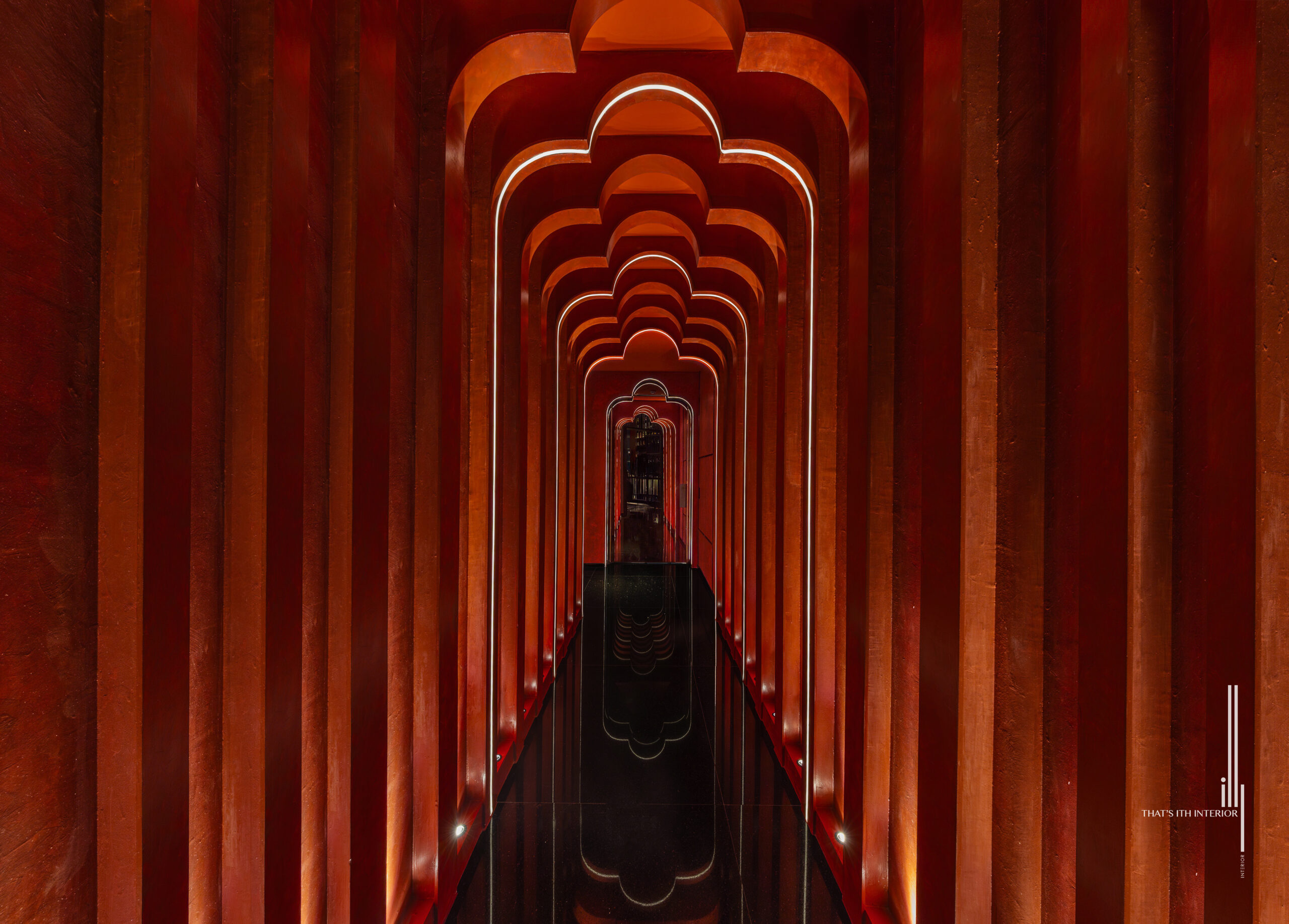
Hospitality design in 2026 is moving from visual display toward emotional experience.
Travellers are increasingly looking for serenity, comfort, meaningful connection, and experiences that match how they want to feel.
For interior designers, this shift changes the brief.
A spectacular lobby can attract attention. But attention alone does not create attachment.
Guests remember properties that answer deeper questions:
- Why does this hotel belong here?
- What can I experience here that I cannot experience somewhere else?
- Does the space know when I want stimulation and when I want quiet?
- Does it feel designed for a person rather than for a photograph?
The strongest hospitality interior design trends in 2026 therefore focus on:
- Identity
- Restoration
- Wellbeing
- Nature
- Craftsmanship
- Adaptability
- Personal experience
At That’s ITH, we see trends as evidence of changing human behaviour — not as instructions for what a hotel should look like.
That distinction matters.
The 10 Luxury Hotel Interior Design Trends for 2026
- Identity-led hotel design
- Restorative and quieter luxury
- Wellness beyond the spa
- More architectural biophilic design
- Bespoke craftsmanship
- Multi-sensory hospitality design
- Invisible and personalised technology
- Flexible and purposeful social spaces
- Life-cycle-focused sustainable design
- Boutique-inspired experiences in larger hotels
1. Identity-Led Design Is Replacing Generic International Luxury
One of the clearest shifts in contemporary hospitality interior design is the move away from hotels that could exist almost anywhere.
A hotel in Bangkok should not feel interchangeable with one in London, Dubai, or Bali.
Creating a sense of place does not mean filling an interior with obvious cultural motifs.
A more sophisticated approach is to uncover what makes the destination specific:
- Local rituals
- History
- Architecture
- Landscape
- Craftsmanship
- Mythology
- Food culture
- Everyday life
The designer can then reinterpret these elements through a contemporary design language rather than reproducing them literally.
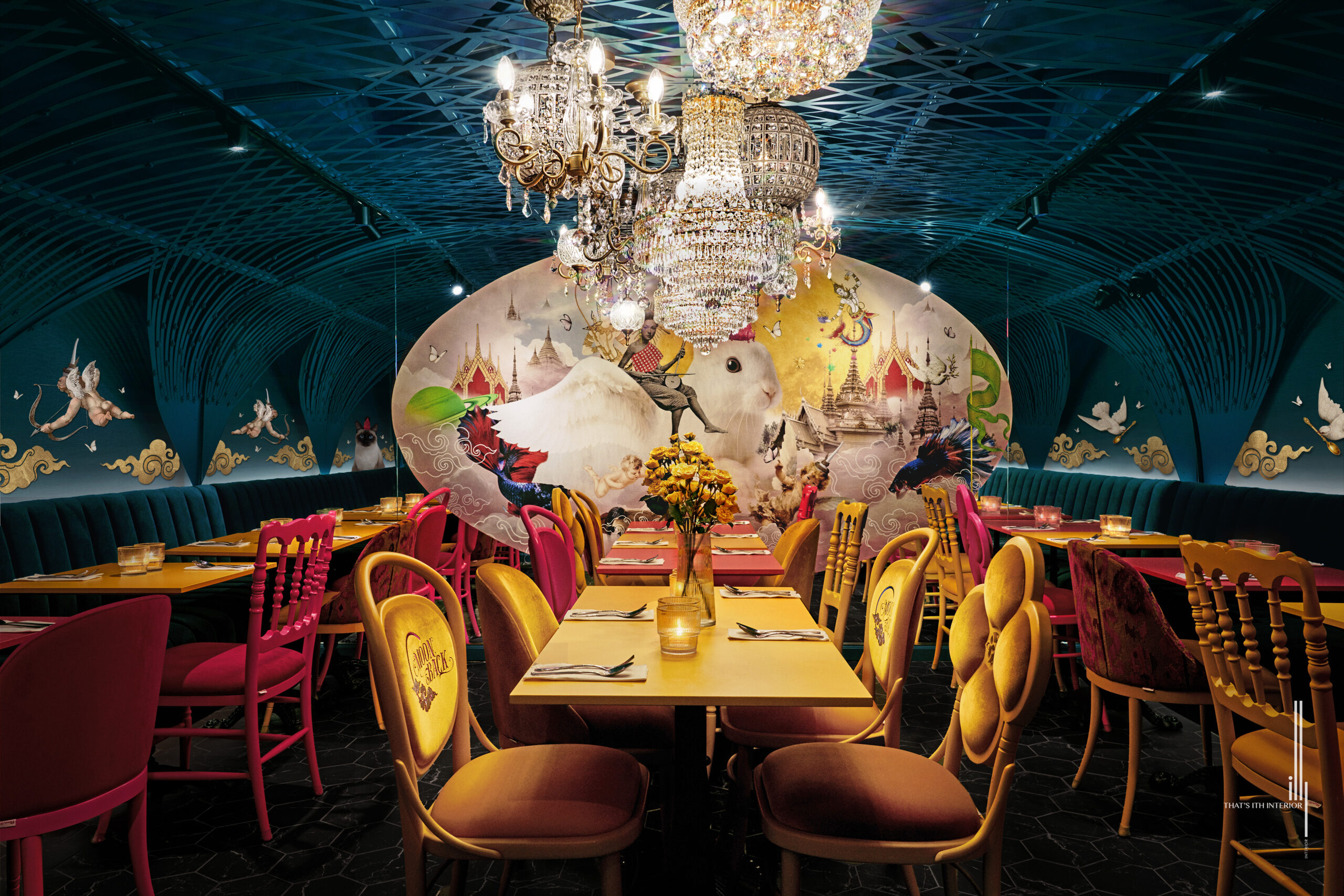
In our Moon & Back New York project, for example, Thai cultural references are not treated as decorative symbols placed onto a restaurant in New York.
Familiar fragments of Thai memory are transformed through a new visual language that suits the Greenwich Village context.
That is where storytelling becomes more than styling.
The future of sense-of-place design is not about looking local. It is about belonging.
2. Restorative Design: Luxury Is Becoming Quieter
Hospitality has spent years competing for attention.
Bigger gestures.
More dramatic lobbies.
More photogenic moments.
These experiences still have value. But another form of luxury is becoming increasingly important:
relief from stimulation.
Luxury hospitality is increasingly making room for discretion, intimacy, reflection, and sensory calm.
For interior designers, this does not mean every hotel should become neutral, beige, or minimalist.
Restorative design is not an aesthetic.
It is an understanding of emotional rhythm.
A restaurant may be theatrical.
A lobby may be energetic.
A bar may deliberately heighten the senses.
But the journey toward the guestroom can do the opposite.
It can become quieter and more restorative through:
- Acoustic softness
- Controlled lighting
- Visual calm
- Privacy
- Warm materials
- Carefully designed transitions
These elements can become forms of luxury in their own right.
Sometimes the most luxurious thing a space can offer is less.
3. Wellness Is Moving Beyond the Spa
Wellness is no longer limited to a spa, fitness room, or treatment menu.
It is becoming part of the design intelligence of the entire property.
For hospitality interior designers, this expands the brief.
The design of a hotel can consider:
- Natural light
- Acoustic comfort
- Sleep quality
- Air quality
- Thermal comfort
- Privacy
- Lighting throughout the day
- Access to nature
- Sensory stimulation
The guestroom is particularly important.
A room designed genuinely for sleep is different from one designed mainly to photograph well.
Details such as these can influence the experience:
- Blackout performance
- Bedside usability
- Lighting control
- Acoustic comfort
- Material tactility
- Visual simplicity
Wellness does not always need to announce itself with greenery, pale timber, or a meditation cushion.
Sometimes it is simply the result of designing around how the human body and nervous system experience a space.
4. Biophilic Design Is Becoming More Architectural
Biophilic design remains an important hospitality interior design trend in 2026.
But the strongest projects are moving beyond the idea that connecting with nature simply means adding plants.
Nature can become part of the architecture and planning itself.
Consider:
- Orientation
- Natural light
- Cross-ventilation
- Framed views
- Shade
- Water
- Landscape transitions
- Natural materials
- Indoor-outdoor relationships
This is especially relevant to luxury resorts and hospitality projects in Thailand and Southeast Asia.
Here, climate can become part of the guest experience.
A guest does not need to be surrounded by greenery to feel connected with nature.
It might be:
- A breeze entering a room
- The sound of rain
- A changing shadow across a wall
- A view toward the landscape
- A natural material that becomes more beautiful with age
Biophilic hospitality design is strongest when nature is not decoration added to a building, but part of how the building behaves.
5. Bespoke Craft Is Becoming a Stronger Marker of Luxury
Luxury hospitality is increasingly defined by what cannot be easily reproduced.
This is giving new importance to:
- Bespoke furniture
- Commissioned artwork
- Custom joinery
- Handmade surfaces
- Regional craftsmanship
- Materials with visible human touch
For decades, recognisable international brands could communicate luxury immediately.
Today, another statement can be even more powerful:
“This exists only here.”
A hand-finished surface may contain slight variations.
A woven element may not be perfectly identical.
A custom piece may carry no famous logo at all.
These qualities create specificity.
For developers, bespoke design should not mean customising everything simply for exclusivity.
The strongest pieces have a reason to exist.
They may:
- Communicate the story of a place
- Define an important moment in the guest journey
- Reinterpret a regional craft
- Create a memorable focal point
- Become an object guests remember after leaving
Craft creates value when it strengthens identity — not simply when it increases cost.
6. Multi-Sensory Design Is Becoming More Intentional
Hospitality has always been sensory.
The difference in 2026 is that designers are paying more attention to how those sensory layers work together.
Different elements influence the atmosphere of a space:
- Lighting establishes rhythm.
- Acoustics influence energy and intimacy.
- Texture affects how close or distant a space feels.
- Temperature and airflow influence comfort and dwell time.
- Scent can become connected with memory.
- Sound can influence how a guest perceives quality.
- Material tactility can change the emotional character of a room.
Even something as small as the weight of a door or the sound it makes when closing can affect a guest’s perception of quality.
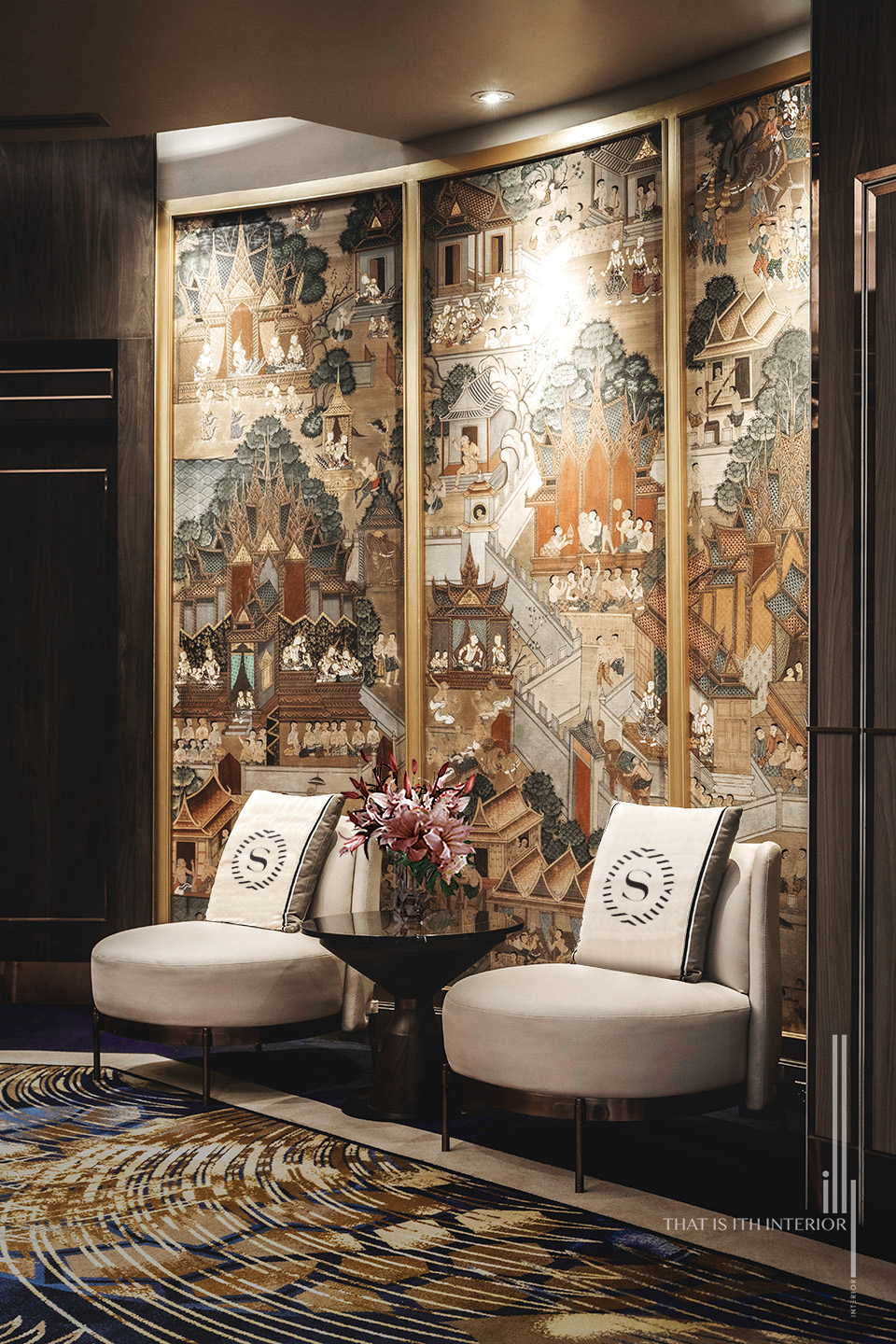
This is why hospitality interior design cannot be fully judged through photographs.
A photograph records appearance.
A guest experiences atmosphere.
At That’s ITH, we often think of hospitality design as closer to directing a scene than composing a static image.
The designer is shaping:
- Sequence
- Tension
- Pause
- Reveal
- Movement
- Sensory information
All of these elements work together to create an experience.
7. Technology Is Becoming More Invisible — and More Personal
The most successful hospitality technology increasingly does not look technological.
Guests expect intuitive control over:
- Lighting
- Climate
- Entertainment
- Communication
- Privacy
- Other elements of their personal environment
But luxury hospitality creates an interesting paradox:
The more sophisticated the technology becomes, the less the guest should have to think about it.
A beautifully designed room becomes less intelligent when a guest needs five minutes to work out how to turn off the lights.
Technology should remove friction rather than create another interface that needs to be learned.
Personalisation is therefore not simply about adding more screens, apps, or controls.
It is about allowing the room to respond quietly to individual needs while keeping the focus on:
- Materiality
- Comfort
- Atmosphere
- Service
- Human interaction
Good hospitality technology should be experienced through convenience, not displayed as a feature.
8. Hotel Social Spaces Are Becoming More Flexible — and More Purposeful
The traditional hotel lobby is evolving.
Guests may work, meet, eat, wait, socialise, drink, or attend an event within the same public areas at different times of day.
Hotel public spaces are increasingly becoming places for guests and local communities to work, socialise, and connect rather than functioning only as transitional lobbies.
This creates a demand for greater flexibility.
But flexibility should not mean designing a neutral room that can technically perform every function while emotionally performing none of them.
Successful multi-use hospitality spaces use:
- Zoning
- Furniture planning
- Acoustics
- Lighting
- Thresholds
- Changes in scale
- Different levels of privacy
These elements can create different behaviours within the same footprint.
A space might feel focused in the morning, social in the afternoon, and atmospheric after dark.
It does not need to physically transform each time.
Projects such as LYF Sukhumvit 8 demonstrate another side of hospitality, where social interaction becomes part of the guest experience rather than something added around accommodation.
The trend is therefore not simply toward flexible space.
It is toward space that understands how human behaviour changes throughout the day.
9. Sustainability Is Moving From Material Choice to Design Intelligence
Sustainable hotel interior design is often discussed through individual specifications:
- Locally sourced products
- Certified materials
- Recycled content
- Responsible manufacturing
- Low-impact finishes
All of these can matter.
But sustainability begins before the material schedule.
The better questions are:
- Can a finish withstand heavy hospitality use?
- Can an existing architectural element be retained instead of discarded?
- Can passive shading reduce energy demand?
- Can daylight reduce reliance on artificial lighting?
- Can natural ventilation reduce demand on building systems?
- Can regional suppliers reduce unnecessary transport?
- Can a material be repaired instead of replaced?
Sustainability should be considered across the design and operating life of a hotel.
For designers and developers, this leads to a more useful question.
Not simply:
“Is this material sustainable?”
But:
“Is this design decision responsible over the life of the project?”
This approach makes sustainability part of design intelligence rather than a checklist added at the end.
10. Large Hotels Are Learning From Boutique Hospitality
Boutique hotels have traditionally had an advantage in creating intimate and highly individual experiences because of their scale.
Large hotels and resorts face a different reality.
They may include:
- Hundreds of rooms
- Multiple restaurants and bars
- Event spaces
- Amenities
- Back-of-house systems
- Operator requirements
- Strict brand standards
Yet guests do not experience a hotel as a spreadsheet of room keys.
They experience moments.
That is why larger hospitality properties can benefit from thinking at a more human scale.
This can mean creating:
- Smaller social zones
- Differentiated F&B experiences
- Memorable transitions
- Intimate pauses
- Distinct emotional characters
- More personalised moments
This does not mean making a large resort pretend to be a boutique hotel.
It means avoiding the assumption that operational consistency requires emotional sameness.
Scale should change how a story is organised. It should not eliminate the story.
How Do Hotel Design Trends Differ Across Hotels, Resorts, and Boutique Properties?
The same hospitality interior design trends should never be applied identically to every property.
The right approach depends on the hotel’s location, brand, audience, scale, and operational requirements.
Luxury Urban Hotels
A luxury urban hotel in Bangkok may place greater importance on:
- Acoustic control
- Efficient circulation
- Strong F&B identity
- Social spaces
- Connection with the city
- Privacy from the surrounding urban environment
Luxury Resorts
A coastal resort may place greater emphasis on:
- Landscape
- Climate
- Indoor-outdoor relationships
- Restoration
- Natural materials
- The guest’s relationship with nature
Boutique Hotels
A boutique hotel may have greater freedom to create:
- Individual guestrooms
- Unconventional public spaces
- Stronger narratives
- Intimate experiences
- Highly specific design details
Large Branded Hotels
A large branded property must balance identity with operational consistency.
Its design needs to work across:
- Hundreds of rooms
- Multiple outlets
- Larger guest volumes
- Complex operations
- Brand standards
The role of a hospitality interior designer is therefore not to apply more trends.
It is to understand:
Which ideas matter to this project — and which do not?
Knowing what to leave out can be as important as knowing what to put in.
Should Luxury Hotels Follow Interior Design Trends?
Hospitality developments can take years to design and construct.
Successful hotels are expected to operate for much longer than a typical trend cycle.
That makes literal trend-following risky.
A property designed around a fashionable colour, furniture silhouette, or social-media aesthetic may look dated soon after opening.
The deeper behavioural shifts behind those trends are more useful.
For example:
- Wellbeing matters.
- Connection to place matters.
- Craft matters.
- Adaptability matters.
- Sustainability matters.
- Personalisation matters.
- Human experience matters.
How these values are expressed should be different from one property to another.
This is the difference between using a trend as information and using it as instruction.
For developers briefing a hospitality interior design team, the better question is not:
“Can you make this look current?”
It is:
“Can you understand what is changing now and turn it into something that will still feel relevant later?”
A Hospitality Design Framework for Developers and Hotel Owners
Before introducing any hotel interior design trend into a project, developers and owners can test it against six questions.
1. Does it strengthen the identity of the property?
If the same idea could be copied into almost any hotel, it may not be distinctive enough.
2. Does it improve the guest experience?
A trend without behavioural or emotional value is decoration.
3. Does it work operationally?
Hospitality design has to survive service, maintenance, cleaning, staffing, and daily use.
4. Does it belong to the location and brand?
Not every global trend belongs in every market or every property.
5. Can it age with dignity?
Materials, technology, details, and visual decisions should be considered against the lifespan of the hotel.
6. Can the designer explain why it is there?
Every important design decision deserves a better answer than:
“Because it is trending.”
That’s ITH’s Perspective on Hospitality Interior Design Trends
At That’s ITH Interior, we do not believe trends should determine the identity of a project.
They help us understand the world that project is entering.
We do not begin by asking what style is currently popular.
We begin with identity:
- The place
- The brand
- The audience
- The culture
- The business
- The experience that should exist between them
That is why one That’s ITH project may look completely different from another.
The consistency is not in the aesthetic.
It is in the thinking.
For us, Fearless Luxury means having the confidence to make a design decision because it is right for that particular project — whether that decision happens to be fashionable or not.
Sometimes the answer is bold.
Sometimes it is quiet.
Sometimes it comes from something deeply local.
Sometimes an unexpected contrast is exactly what allows the identity to emerge.
The objective remains the same:
To design places people remember — not because they followed the moment, but because they created one.
Explore That’s ITH hospitality and interior design projects.
Planning a Hotel, Resort, or Hospitality Project?
The most valuable hospitality design conversations happen before the visual language has already been decided.
Led by founder and designer ITH Palach, That’s ITH Interior is a Bangkok-based interior design studio working across hospitality, residential, and commercial projects in Thailand and international markets.
We collaborate with developers, hospitality brands, operators, architects, and multidisciplinary project teams to translate location, identity, operational requirements, and ambition into spaces with lasting emotional resonance.
Contact That’s ITH Interior to discuss your next hotel, resort, restaurant, bar, or hospitality development.
Frequently Asked Questions
What are the biggest hospitality interior design trends in 2026?
The most important hospitality interior design trends in 2026 include identity-led design, restorative environments, integrated wellness, biophilic and nature-connected design, bespoke craftsmanship, multi-sensory experiences, discreet technology, flexible social spaces, life-cycle-focused sustainability, and greater intimacy within large hotel developments.
Rather than representing one dominant aesthetic, these trends reflect broader changes in what guests expect from luxury hospitality.
What are the latest luxury hotel interior design trends?
Luxury hotel interior design is moving beyond obvious displays of luxury toward more personal and meaningful experiences.
Sense of place, craftsmanship, privacy, wellbeing, intuitive personalisation, natural materials, thoughtful technology, and stronger emotional identity are increasingly shaping contemporary luxury hospitality.
Should a luxury hotel follow current interior design trends?
A luxury hotel should understand current trends without copying them literally.
Hotel interiors must remain relevant for many years. The strongest approach is to identify the lasting behavioural or cultural shift behind a trend and interpret it through the property’s specific identity, location, audience, brand, and operational requirements.
How are boutique hotel design trends different from large hotel trends?
Boutique hotels often have greater freedom to create highly individual rooms, narratives, and intimate experiences.
Large hotels and resorts must achieve distinction while managing more complex operations, repeated room types, multiple outlets, larger guest volumes, and often more extensive brand standards.
Both require identity. The design constraints are simply different.
Why are wellness and restorative design important in hospitality interiors?
A guest’s sense of wellbeing can be influenced by the entire environment, not only by dedicated wellness facilities.
Lighting, acoustics, sleep conditions, thermal comfort, natural materials, connection with nature, privacy, and sensory stimulation can all affect how restorative a hotel experience feels.
Why is sense of place important in hotel interior design?
A strong sense of place gives a hotel an identity connected to its actual destination rather than relying on generic international luxury.
This can emerge through architecture, local craftsmanship, materials, cultural narratives, landscape, rituals, or other contextual references.
The strongest approach is usually to reinterpret these elements rather than copy them literally.
What should developers look for in a hospitality interior designer in Thailand?
Look for a hospitality design studio that understands both guest experience and operational reality.
A strong interior designer should be able to develop a distinctive concept, interpret local context intelligently, collaborate with operators and multidisciplinary consultants, carry the concept through technical execution, and explain how major design decisions support the long-term identity and performance of the property.