
Hospitality Interior Design Companies in Thailand: What to Look For
Thailand is one of Asia’s most established hospitality destinations.
Bangkok serves international business travellers, leisure guests, local diners, and visitors drawn to food, culture, shopping, and nightlife.
Phuket supports a sophisticated resort and villa market.
Across the country, hotels, resorts, boutique properties, restaurants, wellness destinations, and branded developments continue to compete for increasingly experienced guests.
Behind these experiences is an increasingly specialised design industry.
For owners and developers searching for hospitality interior design companies in Thailand, the challenge is therefore not simply finding a studio capable of producing beautiful interiors.
The more important question is:
Can this design partner understand hospitality as one interconnected system?
Brand.
Guest behaviour.
Operations.
Architecture.
Materials.
Lighting.
FF&E.
Craftsmanship.
Technical coordination.
Commercial reality.
And the memory guests carry away from the property.
The strongest hospitality interiors bring these elements together so naturally that guests rarely notice the complexity behind them.
They simply experience a place that feels right.
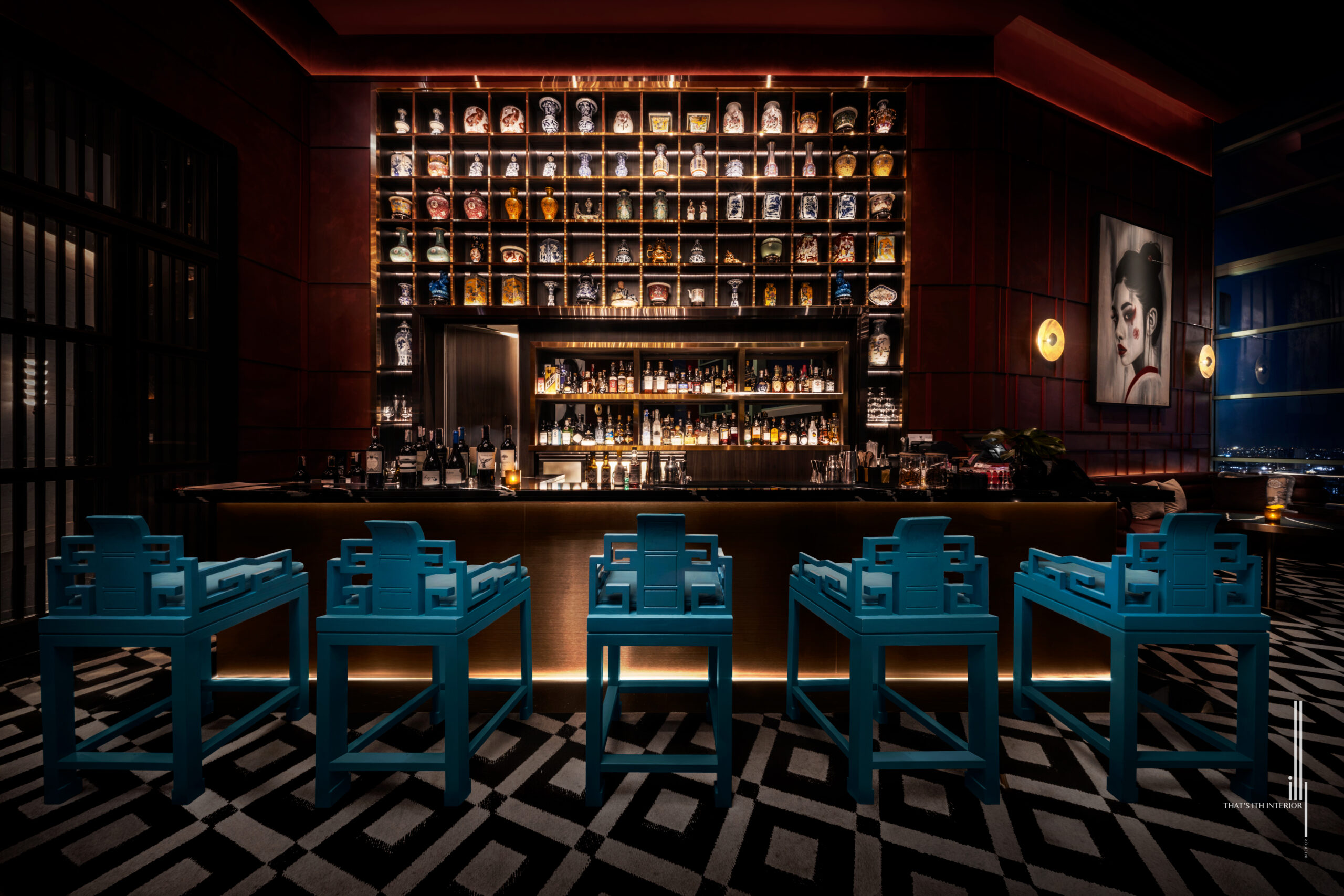
What Does a Hospitality Interior Design Company Do?
A hospitality interior design company specialises in environments created for guests.
These may include:
- hotels
- resorts
- restaurants
- bars
- lounges
- ballrooms
- clubs
- wellness environments
- serviced living
- and other guest-focused spaces
Depending on the agreed appointment, services may include:
- concept design
- space planning
- guest journey development
- material strategy
- furniture selection
- FF&E
- bespoke furniture and joinery
- lighting coordination
- design development
- technical documentation
- consultant coordination
- and construction-stage design review
Not every studio provides every service.
That distinction matters.
Before comparing fees or portfolios, developers should understand exactly what the proposed scope includes — and where responsibility transfers to architects, contractors, specialist consultants, procurement teams, or other parties.
“Full service” is only useful when everyone agrees on what “full” actually means.
Why Hospitality Design Requires Specialist Experience
Hospitality interiors operate very differently from private residences.
A hotel guestroom may accommodate hundreds of different people over its lifetime.
A restaurant chair may serve several guests in one evening.
A lobby floor experiences luggage, cleaning, movement, spills, maintenance, and constant use.
A bar changes character between afternoon and midnight.
A ballroom can host completely different events within the same week.
The designer needs to understand this intensity before the property opens.
A material cannot be selected only because it looks beautiful.
Furniture cannot be judged only through photography.
A dramatic concept cannot ignore service routes.
Everything belongs to an operational environment.
Hotels are not presentations.
They are working systems.
Specialist hospitality experience helps designers anticipate these realities before they become expensive problems.
1. Guest Experience Should Guide the Design
Guests do not experience a hotel as a drawing.
They experience moments.
Arrival.
Welcome.
Waiting.
Movement.
Discovery.
Gathering.
Rest.
Dining.
Privacy.
Departure.
Interior design can influence every one of them.
The location of reception changes arrival.
Furniture placement influences whether people gather or remain separate.
Lighting changes emotional temperature.
Acoustics affect comfort.
Material texture shapes perception.
A transition between public and private zones can alter the entire feeling of the guestroom experience.
This is why a strong luxury hospitality interior designer in Thailand needs to think beyond individual rooms.
Space planning solves function. Guest journey design adds emotion.
A good hospitality company understands both.
The Spaces Between Destinations Matter Too
A corridor is not simply the distance between the lift and the room.
A restaurant entrance can create anticipation before the guest sees the dining space.
A ballroom foyer can change the emotional tempo before an event begins.
A resort arrival can reveal landscape gradually rather than immediately.
The guest journey is a sequence.
And sequence creates memory.
The strongest design teams therefore ask not only:
“What should each room look like?”
But:
“What should the guest experience next?”
2. Brand Identity Needs to Become Physical
Hospitality brands often describe themselves with words.
Elegant.
Playful.
Restorative.
Social.
Sophisticated.
Local.
Adventurous.
But guests do not experience those adjectives through a brand manual.
They experience them through space.
Scale.
Colour.
Material.
Light.
Sound.
Furniture.
Service.
Movement.
The relationship between people.
A hotel brand is therefore not simply a logo placed inside an interior.
Interior is brand you walk into.
A playful hospitality brand might require spaces that encourage informal interaction.
A restorative resort may need quieter transitions, privacy, tactile materials, controlled acoustics, and a slower guest journey.
A luxury property may communicate confidence through restraint rather than obvious extravagance.
The strongest hospitality interiors do not decorate with the brand.
They behave like the brand.
For this reason, interior design becomes more valuable when involved early enough to influence the experience rather than merely dress a predetermined plan.
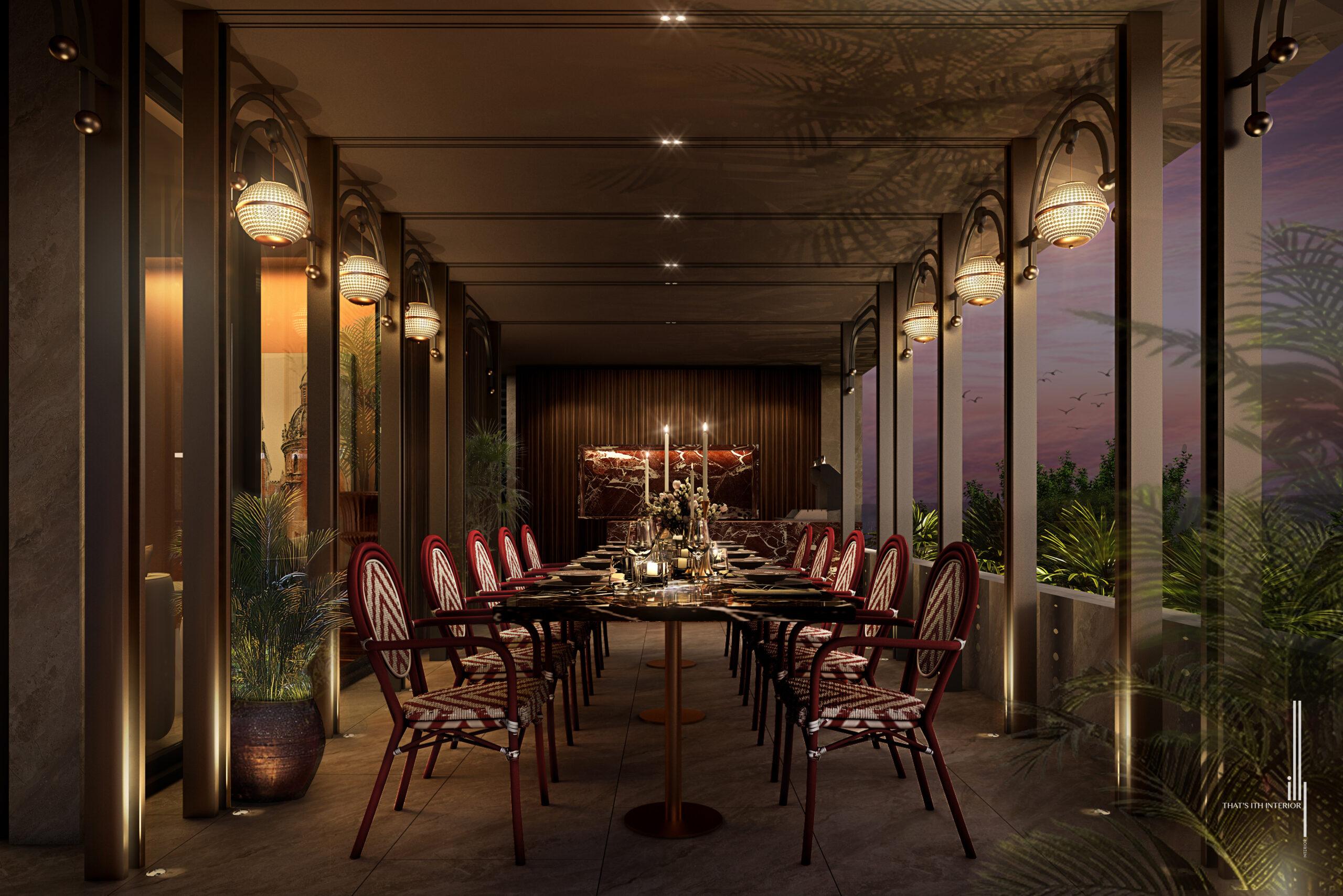
3. Operations Are Part of the Design Brief
Consider a restaurant.
Guests need comfort.
Servers need clear circulation.
Tables need appropriate spacing.
The kitchen needs efficient connections.
Lighting needs atmosphere and practical visibility.
Furniture needs durability.
Cleaning needs to remain manageable.
Acoustics need control.
All of these requirements exist simultaneously.
A visually dramatic restaurant that makes service difficult will eventually affect the guest experience.
The same applies across hospitality.
A reception desk must support the people working behind it.
A bar needs storage, preparation space, cleaning access, lighting, and equipment.
Guestrooms need intuitive controls, housekeeping access, luggage space, and comfortable circulation.
Event spaces need flexibility and infrastructure.
Operations are not the enemy of creativity.
They are part of the creative problem.
A good hospitality design company does not hide operational requirements under decoration.
It resolves them until the guest barely notices they exist.
4. Look for a Studio That Understands Human Behaviour
Hospitality is ultimately about people.
Yet many briefs begin with rooms.
Lobby.
Restaurant.
Bar.
Guestroom.
Spa.
Ballroom.
A more useful design conversation also asks:
What should people do there?
Should strangers interact?
Should guests linger?
Should the bar feel energetic or intimate?
Should the lobby become a social destination or simply make arrival effortless?
Where should privacy begin?
What should change between day and night?
People also behave differently when they travel.
They wake early for hotel breakfast.
Wear robes they would never wear at home.
Spend an hour doing almost nothing beside a pool.
Talk to strangers.
Celebrate differently.
Stay out later.
Slow down.
A hotel does not simply contain these behaviours.
Sometimes it helps create them.
The room is not the protagonist. The human being is.
For hospitality design, that shift in perspective can completely change the answer.
5. Thailand Should Influence the Design Without Becoming a Theme
Thailand provides hospitality designers with an extraordinary range of creative resources.
Woodworking.
Metalwork.
Textiles.
Ceramics.
Furniture manufacturing.
Stone.
Artisan techniques.
Tropical landscape.
Food culture.
Urban density.
Historic environments.
Ways of gathering.
But using Thai identity well requires judgment.
A property does not become meaningfully Thai simply because familiar cultural symbols appear in the interior.
The deeper opportunity is interpretation.
A craft technique can become contemporary.
A vernacular spatial principle can influence shade or movement.
A local material can be used in an unfamiliar way.
A cultural memory can become atmosphere rather than ornament.
Thai soul does not require Thai decoration.
The objective is not to make a hotel look local.
It is to make the hotel belong.
For international brands entering Thailand, this distinction becomes particularly important.
Global standards should provide coherence.
Local intelligence should provide specificity.
6. Climate Should Influence Design Decisions
Hospitality projects in Thailand often need to perform under demanding tropical conditions.
Humidity.
Heat.
Strong sunlight.
Heavy rainfall.
And in coastal environments, salt exposure.
These conditions influence:
timber,
metal finishes,
outdoor fabrics,
stone,
hardware,
sealants,
furniture,
and semi-outdoor environments.
A finish that looks exceptional in the sample room may behave very differently after several monsoon seasons.
A timber may be beautiful but unsuitable for a particular exposure.
A metal finish may require another specification near the coast.
Large areas of glazing may create an extraordinary view while also introducing glare and heat.
The designer needs to understand not only what a material looks like.
But what life it is about to have.
Opening day is not the final test.
The interior needs to remain convincing after thousands of guests have used it.
7. Boutique Hospitality Requires Concentrated Identity
Boutique properties often operate at a smaller scale.
That does not make the design easier.
It can make every decision more important.
A boutique hotel may have only a handful of public spaces.
Reception.
Staircase.
Breakfast room.
Bar.
Guestrooms.
Perhaps one courtyard or rooftop.
Each carries more responsibility for establishing the property’s identity.
A boutique hotel does not compete on room count. It competes on memory.
A small number of highly considered decisions can define the entire experience.
That requires precision.
What becomes the image guests remember?
Where should the brand speak most clearly?
Which element deserves investment?
What can remain deliberately simple?
Boutique hospitality works best when personality is concentrated rather than scattered.
8. Large Hotels Need Identity Without Forcing Sameness
Large hotels face the opposite problem.
Hundreds of guestrooms.
Several restaurants.
Ballrooms.
Lounges.
Meeting rooms.
Amenities.
Long corridors.
Back-of-house systems.
Multiple consultant teams.
Brand standards.
Here, consistency becomes important.
But consistency should not become sameness.
A restaurant does not need to look like the ballroom.
The ballroom does not need to resemble the guestroom.
A wellness space should have a different emotional temperature from an active lobby.
The challenge is creating one property with several personalities, rather than many disconnected consultant packages or one design language repeated everywhere.
The guest should experience one hotel.
Not a collection of rooms forced into visual uniformity.
9. Technical Documentation Is Part of Design Quality
Hospitality interiors cannot be delivered through mood boards and renderings alone.
Concepts need development.
Materials need specification.
Furniture needs dimensions.
Joinery needs drawings.
Lighting needs coordination.
Technical interfaces need resolution.
Construction teams need information they can actually use.
Depending on the agreed scope, documentation may include:
plans,
elevations,
sections,
material schedules,
FF&E information,
bespoke joinery,
furniture drawings,
and other detailed design information.
Developers should ask:
What documentation is included?
Who coordinates it?
How are comments from consultants incorporated?
How does the studio work with architects, engineers, lighting designers, kitchen consultants, and contractors?
A rendering shows what a studio can imagine. A built project shows what its process can deliver.
That distinction matters in hospitality.
10. Bespoke Design Should Strengthen Positioning
Luxury hospitality increasingly competes for distinctiveness.
Custom furniture.
Commissioned artwork.
Specialist finishes.
Bespoke lighting.
Crafted architectural details.
These elements can create significant value.
But customising everything does not automatically create identity.
It can simply create complexity.
The more useful question is:
What deserves to exist only here?
Perhaps one reception object can carry the identity of arrival.
A bar might become a piece of architecture.
A crafted screen may solve privacy while reinterpreting local making.
A bespoke light can become the memory guests associate with one particular room.
The strongest bespoke elements have a reason to exist.
Uniqueness without judgment is simply uniqueness.
Specificity is what gives it value.
11. International Developers Need Local Translation
International hospitality developments often involve teams spread across markets.
Global hotel operators.
International architects.
Brand consultants.
Lighting specialists.
Kitchen consultants.
Local contractors.
Fabricators.
Suppliers.
Authorities.
A Thai hospitality interior studio can become an important bridge between these systems.
But the advantage is not simply geographical convenience.
It is translation.
Understanding international expectations.
Understanding Thai execution.
And protecting the ambition of one while working intelligently with the reality of the other.
That includes knowledge of:
materials,
suppliers,
fabrication,
construction practices,
climate,
craftsmanship,
and cultural context.
Local intelligence. Global grammar.
The strongest regional design work does not become international by erasing where it came from.
It becomes international because its local intelligence is strong enough to travel.
12. The Studio Should Know What Cannot Be Lost
Almost every hospitality project changes.
Budgets shift.
Operator requirements evolve.
Products become unavailable.
Technical conditions emerge.
Construction reveals problems.
Value engineering begins.
A good design company does not respond by defending every original decision equally.
Some things can change.
Others carry the identity of the whole project.
The skill is knowing the difference.
Perhaps a stone can be replaced.
A furniture piece can change.
A decorative detail can simplify.
But the arrival sequence may be essential.
One crafted element may carry the concept.
The lighting hierarchy may define the atmosphere.
Protecting design intent does not mean refusing change. It means knowing what the project cannot afford to lose.
Good value engineering should remove cost before it removes the idea.
That requires judgment, not stubbornness.
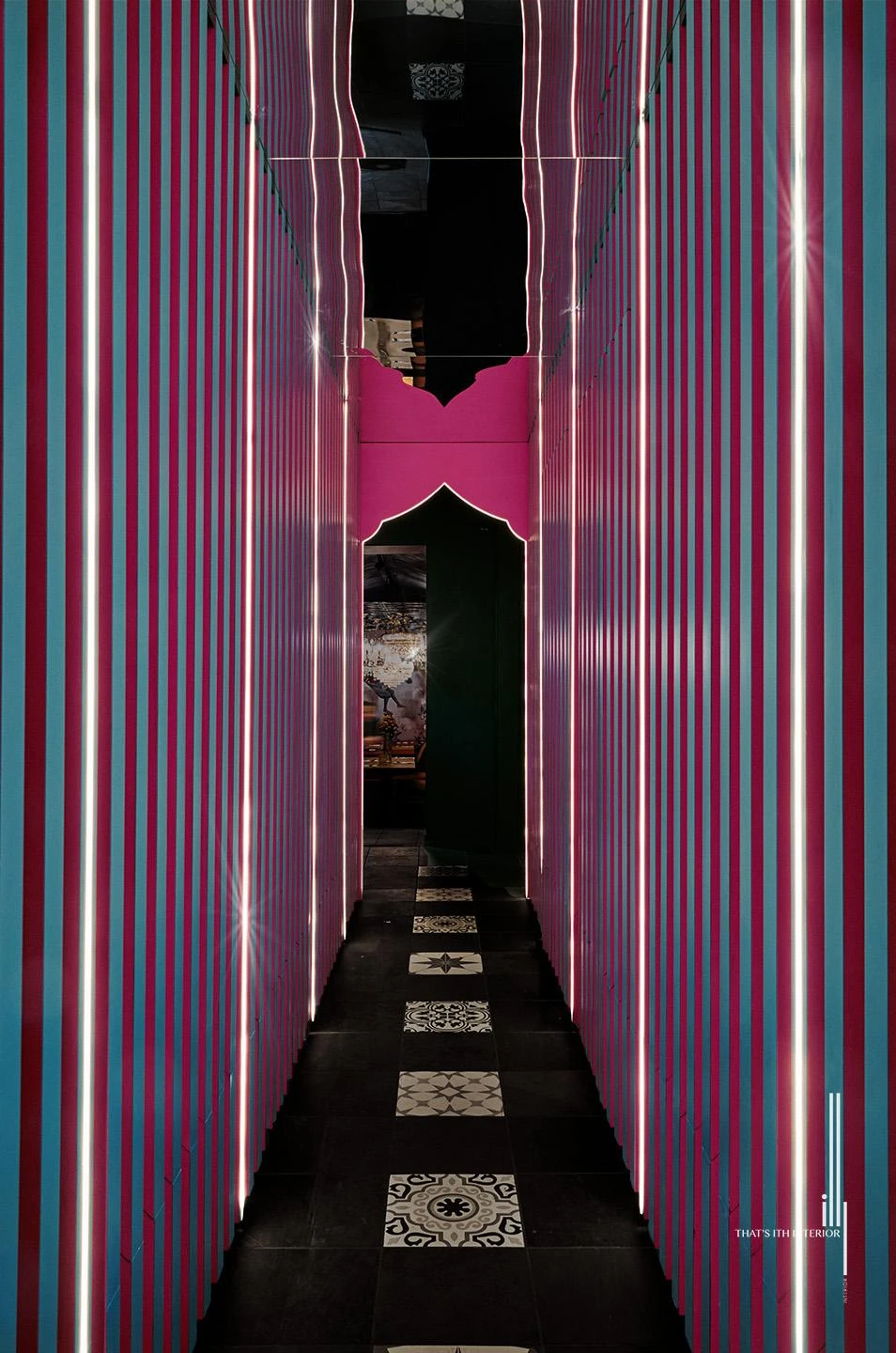
THAT’S ITH and Hospitality Interior Design in Thailand
THAT’S ITH INTERIOR is a Bangkok-based interior design studio founded and creatively led by ITH PALACH, whose professional design career spans more than 25 years.
The studio works across hospitality, restaurant, residential, workplace, and lifestyle environments in Thailand and international markets.
Our core belief is:
People are more interesting than styles.
So hospitality projects do not begin with a predetermined visual language.
They begin with:
the place,
the guest,
the brand,
the architecture,
the culture,
the behaviour,
the operational realities,
and the emotional experience the project is trying to create.
This forms part of our broader philosophy of Fearless Luxury.
Fearless does not mean every project needs to be dramatic.
Sometimes the answer is bold.
Sometimes restrained.
Sometimes crafted.
Sometimes highly contemporary.
Sometimes the landscape or architecture should carry almost all the emotional weight.
Fearless means having the confidence to make the decision the project actually needs.
The visual language can change completely.
The consistency is not in the aesthetic. It is in the judgment.
Finding the Unspoken Brief
Most hospitality briefs contain explicit information.
Brand standards.
Functions.
Room requirements.
Target market.
Budget.
Operational needs.
Programme.
But there is often another brief underneath.
We call it The Unspoken Brief.
What is the guest really coming here for?
What experience is missing from the market?
What behaviour should the property encourage?
What does the operator struggle with?
What should the hotel communicate without needing to say it?
What should guests remember after they have forgotten the finishes?
These questions can reveal opportunities that a conventional design brief may miss.
The most valuable design idea is often hiding behind the request rather than inside it.
That is where identity can begin.
Hospitality Projects With Different Identities
THAT’S ITH’s portfolio spans several very different hospitality environments.
Royal Orchid Sheraton Bangkok Ballroom
THAT’S ITH’s work at Royal Orchid Sheraton Bangkok focuses specifically on the ballroom and conference facilities.
The design responds to celebration, gathering, flexibility, technology, and the operational requirements of a major hospitality environment.
The concept, Celebration on the Chao Phraya, draws from the property’s relationship with the river.
The project has received recognition through the Asia Pacific Property Awards in the Hotel Conference Facilities Interior category.
Its lesson is relevant to hospitality design more broadly:
A highly functional room does not need to be anonymous.
Silver Waves at Chatrium Riverside Bangkok
Silver Waves at Chatrium Riverside Bangkok creates another kind of hospitality experience.
The restaurant needs to balance:
dining,
atmosphere,
service,
view,
lighting,
comfort,
and operational movement.
The project has also received recognition through the Asia Pacific Property Awards.
Its design illustrates the importance of creating a destination within a wider hospitality property.
A restaurant should possess its own identity.
Without feeling disconnected from the hotel around it.
lyf Sukhumvit 8 Bangkok
lyf Sukhumvit 8 Bangkok represents another hospitality model entirely.
Social.
Urban.
Youthful.
Informal.
Its design responds to contemporary guest behaviour and collective memory of Bangkok, including playful reinterpretations of the tuk-tuk.
The project received DEmark 2025 recognition and international recognition within hospitality design.
It demonstrates a principle central to THAT’S ITH:
Memorable hospitality does not require every property to aspire to the same idea of luxury.
The answer depends on the guest.
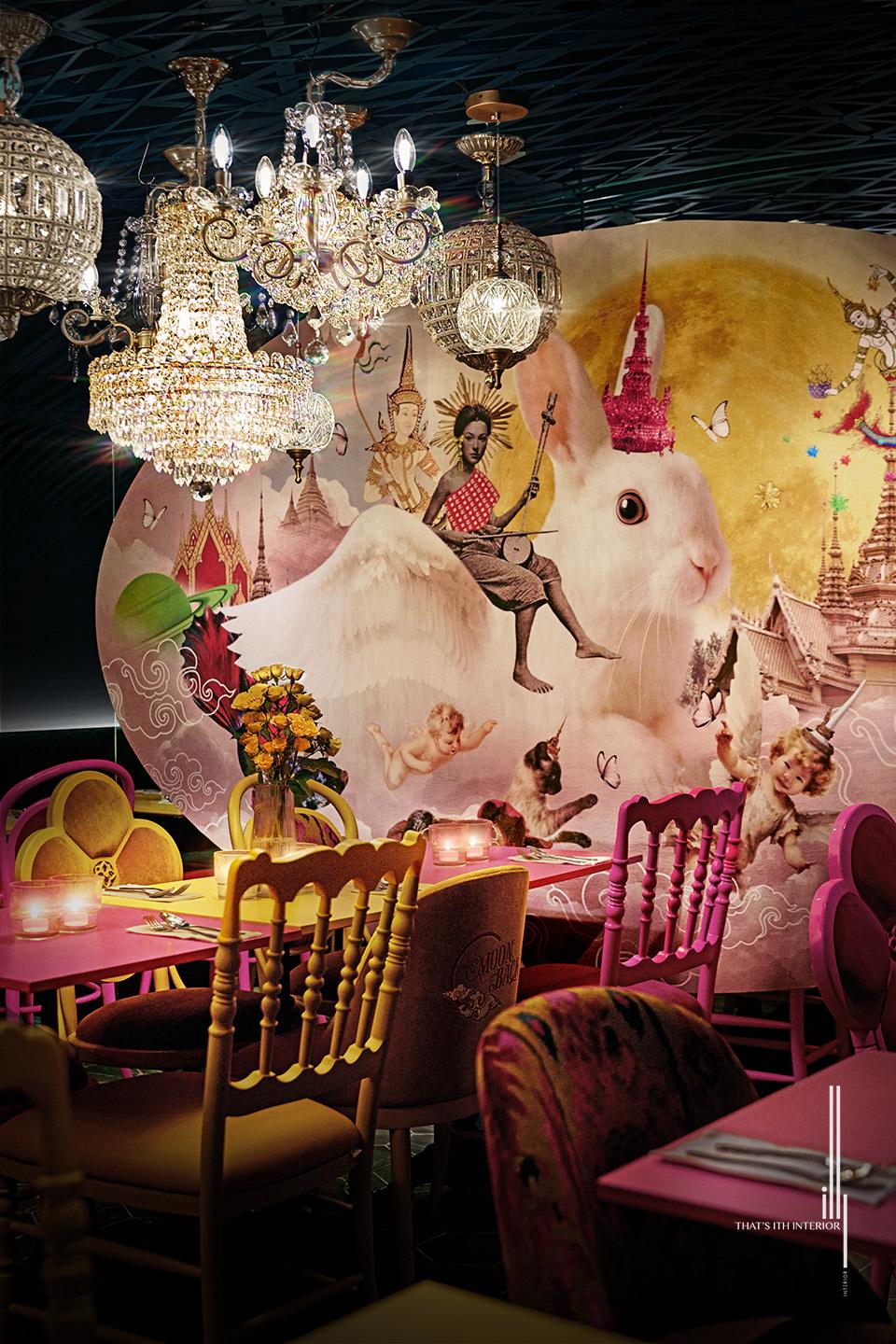
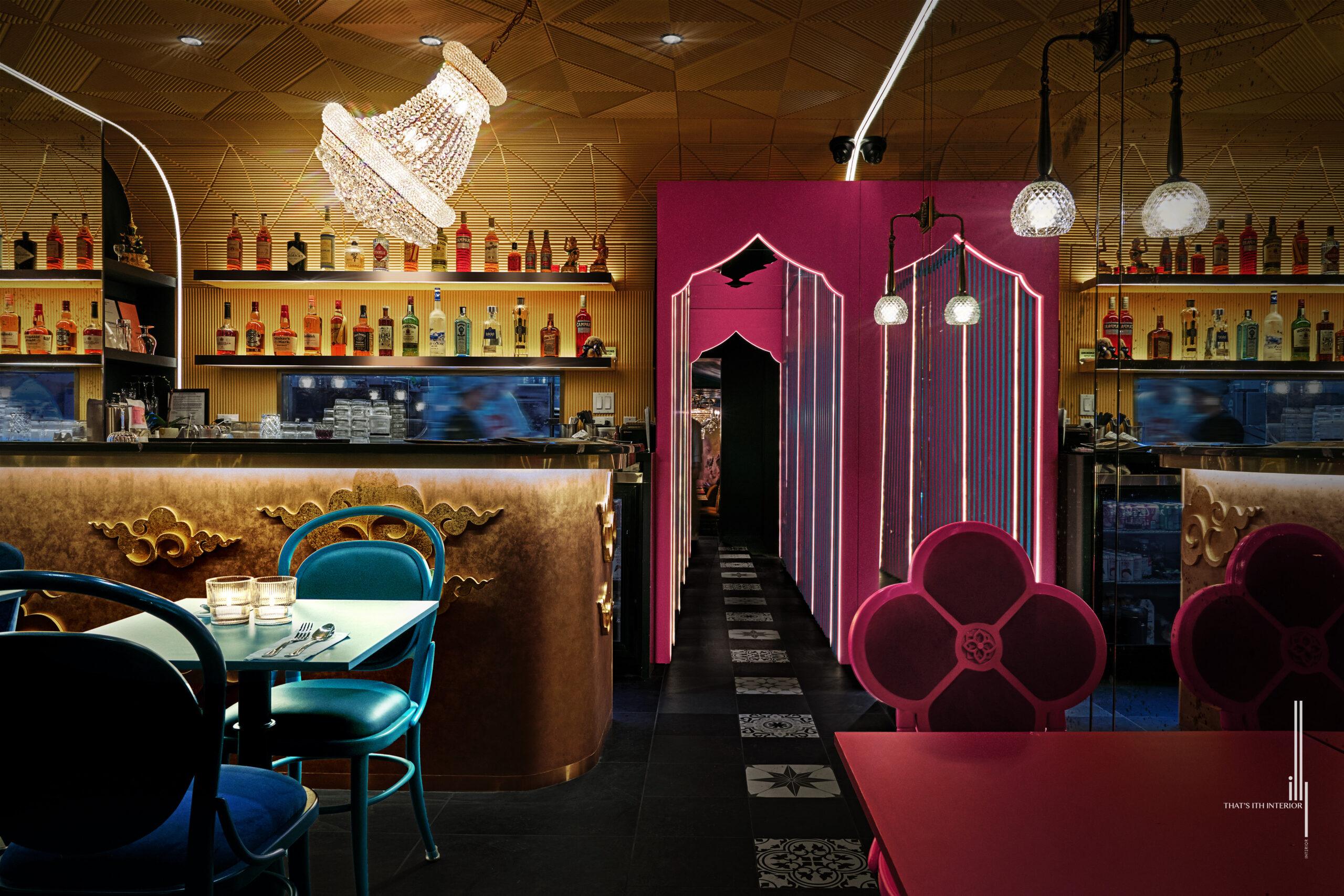
MOON & BACK, New York
At MOON & BACK in Greenwich Village, New York, Thai cultural memory is translated into a contemporary restaurant without relying on the conventional imagery of a Thai dining environment.
The project received recognition at the Americas Property Awards 2026–2027 in the Hospitality Interior category.
Its relevance to our work in Thailand is conceptual.
Cultural identity becomes stronger when it is understood deeply enough not to need literal explanation.
That principle applies whether the project is in Bangkok, Phuket, or New York.
How to Compare Hospitality Interior Design Companies in Thailand
Begin with relevant experience.
Does the studio understand hotels?
Restaurants?
Resorts?
Event spaces?
Has it delivered built hospitality projects?
Can it handle the intended scale?
Then examine the process.
Ask:
- Who leads the creative direction?
- How is the brief developed?
- How does the studio approach guest journey?
- How are operations integrated?
- What services are included?
- How is FF&E developed?
- How are bespoke elements managed?
- How does the studio coordinate technical information?
- How does it work with operators and architects?
- How are climate and material performance considered?
- What happens when budget or site conditions change?
- How is design intent protected during value engineering?
And perhaps one question matters more than any checklist:
Does the conversation make the project clearer before the designer has drawn anything?
A strong hospitality partner should improve the brief.
Not simply decorate it.
The Strongest Hospitality Design Creates Belonging
A luxury hospitality project in Thailand should not feel interchangeable.
A Bangkok hotel should belong to Bangkok.
A Phuket resort should respond to Phuket.
A restaurant should understand its food, audience, brand, and location.
This does not require literal design.
Sense of place can be subtle.
Material.
Light.
Scale.
Craft.
Landscape.
Behaviour.
Sequence.
What matters is that the environment could not be moved somewhere else unchanged without losing something important.
A strong project should lose something essential if removed from its place.
That is a deeper form of authenticity.
And authenticity is increasingly difficult to reproduce.
Choosing the Right Hospitality Interior Design Partner
A hospitality project may take years to move from first concept to opening.
The relationship with the interior designer therefore matters.
The studio needs creativity.
But also discipline.
Communication.
Technical knowledge.
Commercial awareness.
Operational understanding.
Collaboration.
And the confidence to know when to defend an idea and when to adapt it.
The final test is not opening night.
It is what happens afterwards.
After thousands of guests.
After maintenance.
After trends change.
After the photographs disappear from the feed.
Does the hotel still feel specific?
Does it still work?
Does it still belong?
And does somebody still remember it?
For THAT’S ITH, that is the ambition behind Designing Places People Remember.
Not by making everything demand attention.
But by identifying the moments worth remembering — and designing everything around them with enough intelligence to let them survive.
Planning a Hospitality Project in Thailand?
The most valuable time to involve the right interior design partner is often before major decisions around architecture, operations, guest journey, and brand experience have already become fixed.
THAT’S ITH works with developers, operators, architects, consultants, and multidisciplinary project teams across hospitality environments in Thailand and international markets.
We do not begin by asking which previous project yours should resemble.
We begin with a more useful question:
“What should make this place impossible to confuse with another one?”
Contact THAT’S ITH INTERIOR to discuss your next hotel, resort, restaurant, ballroom, or hospitality project.
You do not need to arrive with the perfect brief.
Finding the Unspoken Brief is part of the work.
Frequently Asked Questions
What does a hospitality interior design company in Thailand do?
Depending on the agreed project scope, a hospitality interior design company may provide concept design, space planning, guest journey development, material strategy, FF&E, bespoke furniture, design development, technical documentation, and coordination with other consultants.
The exact services should be clarified before appointment.
Why hire a hospitality specialist instead of a general interior designer?
Hospitality environments introduce specialist requirements involving guest behaviour, operations, durability, maintenance, service circulation, brand standards, material performance, and intensive daily use.
Relevant hospitality experience can help anticipate these issues earlier.
What is luxury hospitality interior design in Thailand?
Luxury hospitality interior design combines guest experience, identity, operational performance, craftsmanship, comfort, technical resolution, and sensitivity to place.
Luxury does not require one visual aesthetic.
It depends on how precisely the design responds to the property.
What is boutique hospitality interior design?
Boutique hospitality generally operates at a smaller scale and often depends heavily on distinctive identity and memorable individual spaces.
Because fewer rooms and public areas carry the brand, each design decision may have greater impact.
Why is local experience valuable for hotel development in Thailand?
Local experience can support understanding of climate, materials, fabrication, craftsmanship, suppliers, construction practices, and cultural context.
Its greatest value is helping international ambitions become locally executable without losing design intent.
What should developers ask before appointing a hospitality interior design company?
Ask about relevant built work, proposed scope, project leadership, guest-journey methodology, operational understanding, FF&E, bespoke capability, technical documentation, consultant coordination, material performance, and how the studio handles changes during development and construction.
What is The Unspoken Brief in hospitality design?
The Unspoken Brief refers to behaviours, tensions, needs, aspirations, operational issues, market opportunities, and emotional objectives that may not appear explicitly in the formal project brief but can significantly influence the design.
What does Fearless Luxury mean in hospitality design?
For THAT’S ITH, Fearless Luxury means having the confidence to create the design response the project genuinely needs rather than applying a predetermined image of luxury.
Sometimes the answer is expressive.
Sometimes restrained.
The consistency lies in the quality of judgment.
Does THAT’S ITH provide hospitality interior design?
Yes.
THAT’S ITH works across hotels, restaurants, ballrooms, social hospitality, F&B, and other guest-focused environments in Thailand and international markets.
Does THAT’S ITH have one hospitality signature style?
No.
Different brands, guests, locations, operations, and project types require different answers.
The consistency is not in the aesthetic. It is in the judgment.
Who leads THAT’S ITH INTERIOR?
THAT’S ITH is founded and creatively led by ITH PALACH, whose professional design career spans more than 25 years.
When should a hospitality interior designer join the project?
Ideally during the early planning or concept stages.
Early involvement allows architecture, guest journey, operations, brand, lighting, materials, and FF&E to influence one another before major project decisions become difficult or expensive to change.