
High-End Interior Designer Thailand: What Defines the Right Expert for Luxury Projects?
High-end interior design in Thailand is no longer defined simply by imported furniture, rare stone, or visibly expensive finishes.
Luxury clients already have access to all of those things.
The more difficult question is:
What should actually be done with them?
For a hotel developer, that may mean creating a property distinctive enough to compete in an international hospitality market while still belonging naturally to Thailand.
For a homeowner, it may mean creating a residence so precisely connected to the owner’s life that the result could not convincingly belong to somebody else.
For a restaurant, office, or branded development, the challenge may be translating brand, operations, culture, and commercial ambition into a physical environment.
That is where the role of a High-End Interior Designer in Thailand becomes more significant.
High-end design is not the accumulation of exceptional things. It is the ability to make exceptional decisions — spatially, materially, technically, and emotionally — until the result feels inevitable.
The value lies less in how much the designer can add.
And more in how precisely they know what belongs.
What Does a High-End Interior Designer in Thailand Actually Do?
A high-end interior designer may work across several layers of a project, depending on the agreed scope.
These can include:
- concept development
- space planning
- architectural interior design
- material development
- lighting coordination
- bespoke furniture and joinery
- FF&E
- art integration
- design development
- technical documentation
- consultant coordination
- construction-stage design services
- final furnishing and styling
But this list does not really explain what makes the work high-end.
Many designers can specify stone.
Many can select furniture.
Many can make attractive renderings.
The more important capability is judgment across all of those decisions.
Which space deserves drama?
Where should the architecture become quiet?
What needs to be bespoke?
What should remain simple?
Which local craft genuinely belongs?
Which imported object adds value?
Where should budget be concentrated?
What must survive value engineering?
High-end interior design is defined more convincingly by the precision of these decisions than by the visual intensity of the finished room.
High-End Does Not Mean One Particular Look
Luxury is often mistaken for an aesthetic.
Marble.
Brass.
Muted neutrals.
Sculptural furniture.
Large-scale art.
Perfectly styled rooms.
Those elements can all belong in high-end interiors.
But they do not define them.
A deeply restrained residence can be luxurious.
A highly theatrical restaurant can be luxurious.
A colourful hotel can be luxurious.
A minimal executive office can be luxurious.
The visual language depends on the project.
What remains consistent should be the quality of thought behind it.
Luxury is not one look. It is one level of judgment.
That distinction matters when selecting a designer.
A studio with a strong point of view does not necessarily need to reproduce the same visual signature across every project.
In fact, the opposite can be more revealing.
Look for a Recognisable Attitude, Not a Recognisable Style
A strong designer can have a recognisable philosophy without making every project look recognisably the same.
Hotels serve different guests.
Homes belong to different families.
Restaurants tell different stories.
Offices support different organisations.
Sites change.
Architecture changes.
Climate changes.
Clients change.
So the answer should change too.
A designer who applies the same palette, furniture language, colour strategy, or decorative gesture to every project may create a recognisable brand.
But that consistency can come at the expense of the client’s own identity.
The most sophisticated design signature may not be a repeated look at all. It may be a repeated standard of judgment.
That is particularly important at the high end, where clients are not paying for a formula.
They are paying for a response that could not have been developed in exactly the same way for someone else.
Thailand Should Change the Design — Without Becoming a Theme
Thailand offers extraordinary design intelligence.
Climate.
Landscape.
Craftsmanship.
Architecture.
Regional materials.
Food culture.
Patterns of hospitality.
Ways of living.
Light.
Shade.
Thresholds between inside and outside.
But local identity becomes more interesting when interpreted rather than copied.
A restaurant does not need obvious Thai motifs to belong to Thailand.
A villa does not need traditional decoration to understand tropical life.
A hotel does not need cultural symbolism on every surface to feel connected to place.
Traditional craft can be transformed through contemporary construction.
Vernacular architecture can influence shade, ventilation, courtyard planning, or thresholds.
Local materials can appear in unexpected ways.
At Silver Waves – Chatrium Riverside Bangkok, the relationship between hospitality, material character, atmosphere, and place becomes more valuable than simply applying a recognisable regional style.
Private residential projects such as Cinq Royal – The Eighteen Bangna KM.7 similarly demonstrate that contemporary luxury does not need to depend on cultural cliché in order to feel specific.
The goal is not to make an interior look Thai. It is to make the design belong naturally to Thailand.
That is a more difficult — and more sophisticated — task.
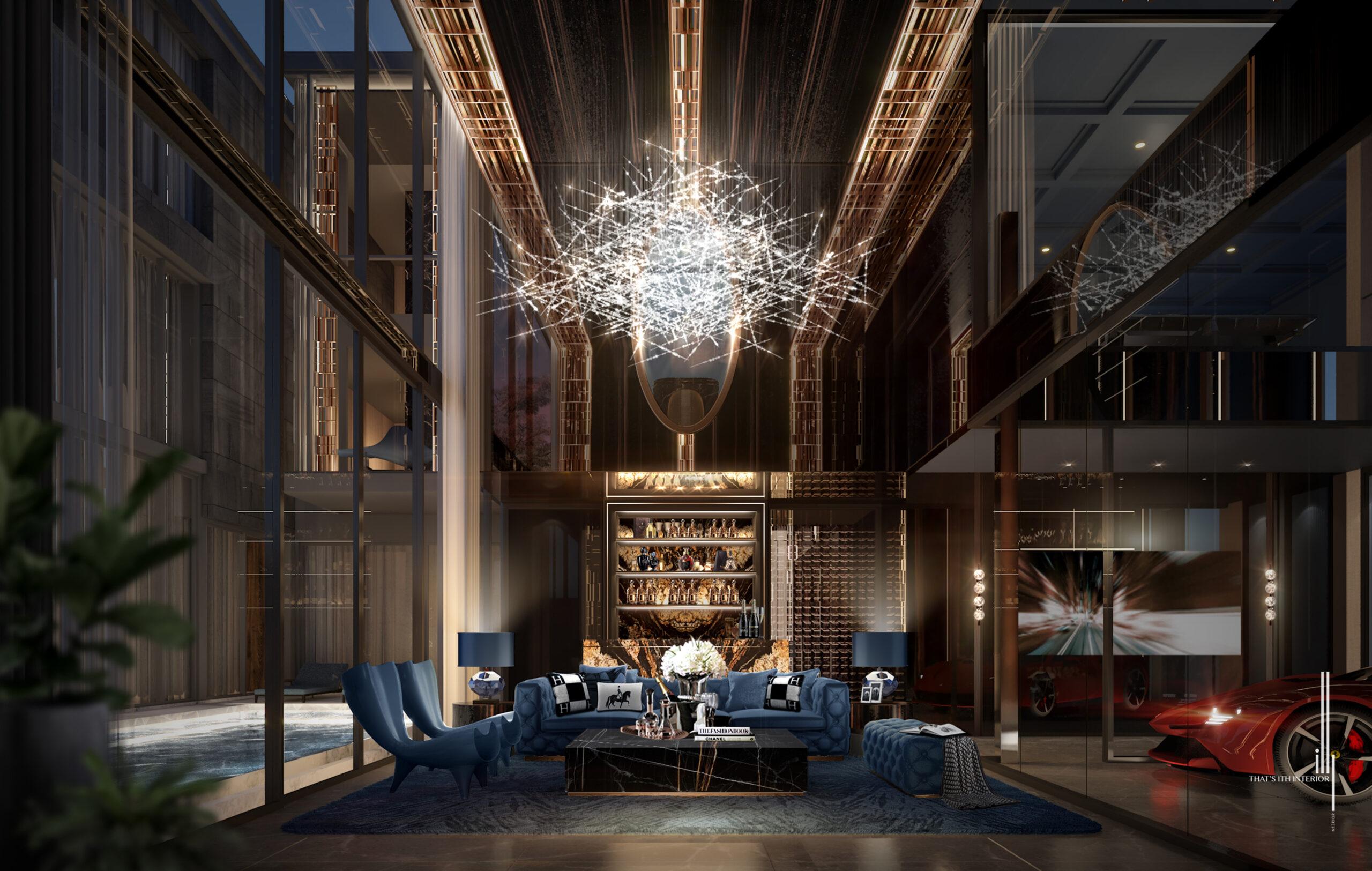
Global Perspective Matters. Local Intelligence Matters More Than Ever.
Many luxury projects in Thailand involve international stakeholders.
Developers.
Hotel brands.
Consultants.
Architects.
Investors.
Homeowners.
Operators.
They may bring expectations shaped by London, Hong Kong, Singapore, Dubai, New York, or other global design markets.
That perspective can raise ambition.
But global sophistication cannot simply be imported.
The project still needs to respond to:
Thailand’s climate,
local construction practices,
available materials,
fabrication capabilities,
craft traditions,
lead times,
contractor conditions,
maintenance,
and cultural behaviour.
A High-End Interior Designer in Thailand therefore needs to operate comfortably between both worlds.
Not local versus international.
But local and international.
Global design literacy becomes most valuable when it sharpens local intelligence rather than replacing it.
The strongest projects can feel internationally sophisticated while still making sense only where they are.
A High-End Designer Should Understand Hospitality Differently From Residential Design
One sign of a mature studio is understanding that different project types require different intelligence.
A hotel is not simply a large house.
A private villa is not a small hotel.
A restaurant is not a beautifully furnished room.
An office is not a hospitality lobby with desks added later.
Each typology asks different questions.
Hospitality
Hotels and resorts need memorable identity, but they also need to operate continuously.
Guestrooms repeat.
Corridors repeat.
Materials receive intense use.
Restaurants require service efficiency.
Lobbies need to manage arrival and emotion simultaneously.
FF&E may be repeated hundreds of times.
Maintenance matters.
Operations matter.
Guest flow matters.
Lighting, acoustics, technology, and service all interact.
Hospitality luxury succeeds when considerable operational complexity becomes almost invisible to the guest.
Private residential
Residential design is almost the opposite.
There may be only one client.
One family.
One highly specific way of living.
How they cook.
Entertain.
Work.
Collect.
Sleep.
Dress.
Relax.
Value privacy.
Use technology.
Respond to art.
These details can influence the architecture itself.
A truly luxurious private home should reveal more about the owner than it reveals about the person who designed it.
That is one of the most important tests of high-end residential design.
High-End Residential Design Should Not Turn the Client Into a Style
Luxury homeowners often arrive with visual references.
Images.
Hotels they love.
Furniture brands.
Colours.
Materials.
But those preferences are only part of the brief.
A designer needs to understand the life underneath them.
A client may love open space but also value privacy.
They may entertain extensively yet dislike formal rooms.
They may admire minimalism but own a significant collection.
They may want a calm home but also possess a strong personality.
These apparent contradictions are useful.
The most interesting part of a residential brief is often not what the client likes. It is what the client needs two conflicting things to do at the same time.
A high-end designer should be able to resolve those tensions spatially rather than forcing the client into a predetermined visual identity.
Bespoke Design Should Have a Reason
Bespoke design is closely associated with luxury.
But customisation by itself does not create value.
Something is not automatically better because only one exists.
The important question is:
Why did this need to exist only once?
A dining table may respond to the exact way a family gathers.
A wardrobe might reflect what the owner actually owns.
A hotel screen could reinterpret a regional craft technique.
A bar may need to integrate specialised equipment.
A piece of joinery might frame a specific artwork.
Projects such as 10&Only – Pattanakarn 20 show how residential environments can become more specific through project-driven detailing, while developments such as Marquis – Phayathai demonstrate how furniture and interior architecture can work as one composition.
A Bespoke Interior Professional in Thailand therefore needs to understand more than form.
Material.
Fabrication.
Detail.
Use.
Tolerance.
Craft.
Installation.
Maintenance.
The value of bespoke design comes from specificity, not simply exclusivity.
The most sophisticated interiors also know when not to customise.
Not Everything Should Be Bespoke
Making everything from scratch can actually weaken a project.
It can become overdesigned.
Precious.
Slow.
Expensive.
And unnecessarily complicated.
Some internationally designed furniture already performs perfectly.
Some commercially available lighting is exceptional.
A vintage piece may carry more personality than a custom-made replacement.
A family heirloom may have emotional value no designer could manufacture.
High-end design is therefore not about maximising the bespoke percentage.
It is about knowing where specificity genuinely matters.
The designer’s judgment lies in recognising what deserves to exist only once — and what is already good enough to leave alone.
That restraint is part of luxury too.
Materials Should Be Experienced, Not Merely Specified
Material quality matters enormously in high-end interiors.
But materiality is not only visual.
Stone has temperature.
Weight.
Movement.
Timber has grain.
Warmth.
Variation.
Textiles influence touch and acoustics.
Metal can introduce precision.
Hand-finished surfaces reveal evidence of making.
Natural materials change with time.
Thailand’s climate adds another layer.
Humidity.
Strong daylight.
Rain.
Heat.
Coastal exposure.
Air-conditioning.
All can influence performance.
A surface that looks exceptional at handover but deteriorates rapidly under real conditions is not a successful luxury specification.
Material selection should consider the tenth year as seriously as the opening day.
That includes how the owner or operator feels about ageing.
Some people appreciate patina.
Others want surfaces to remain visually pristine.
Neither preference is wrong.
The designer needs to understand which applies.
High-End Materiality Is About Relationships, Not Price Tags
Expensive materials can still create an ordinary interior.
Why?
Because material value comes from composition.
Stone against timber.
Matte beside reflective.
Heavy beside delicate.
Rough beside refined.
Warm beside cool.
One exceptional material given enough space may feel more luxurious than a room containing five competing expensive finishes.
Cost and perceived value are not the same thing.
High-end interior design depends on hierarchy.
Where should investment be visible?
Where should detail become quiet?
Which material needs craftsmanship?
Which surface should simply perform well?
This is especially important in large projects where indiscriminate luxury can become both visually exhausting and commercially inefficient.
FF&E Should Be Part of the Architecture From the Beginning
Furniture, fixtures, equipment, decorative lighting, artwork, and objects strongly influence how an interior is finally experienced.
They should not automatically be postponed until the architecture is complete.
Furniture dimensions affect circulation.
Dining tables influence lighting positions.
Sofas influence sightlines.
Artwork changes wall composition.
Beds influence electrical planning.
A bar stool influences counter height.
A rug can define the perceived boundaries of a room.
When FF&E begins early enough, these elements can influence architecture instead of simply filling it later.
The strongest FF&E schemes make architecture feel inhabitable rather than merely furnished.
This is particularly important in high-end work because the final layer often determines whether the design feels personal or generic.
Technical Precision Separates the Image From the Built Reality
A compelling concept is only the beginning.
Eventually, somebody has to build it.
That means the project needs information.
Plans.
Sections.
Elevations.
Joinery details.
Material schedules.
Lighting coordination.
Dimensions.
Specifications.
Technical development.
The exact documentation and professional responsibilities vary according to project scope, jurisdiction, consultant appointments, and contract structure.
But comprehensive interior design requires an understanding of how ideas move toward fabrication and construction.
High-end interior design needs imagination strong enough to create the idea — and technical discipline strong enough to protect it once reality begins negotiating with it.
That second capability is easy to underestimate when evaluating portfolios online.
Renderings show what a studio can imagine.
Built projects show what its process can deliver.
A Designer Should Know What the Concept Cannot Afford to Lose
Every substantial project changes during development.
Budget changes.
Site conditions appear.
Suppliers become unavailable.
Technical coordination creates constraints.
Operators request modifications.
Clients reconsider priorities.
Value engineering begins.
Strong designers do not protect every original decision equally.
That would be inflexible.
Instead, they need to understand which parts of the idea are fundamental.
What can change?
What can be simplified?
Where can cost be removed?
And what, if removed, would destroy the identity of the project?
Protecting design intent does not mean refusing change. It means knowing what the project cannot afford to lose when change becomes necessary.
That is a critical part of high-end design expertise.
Collaboration Is Part of the Design Skill
Luxury interiors are rarely created by one person or one discipline.
A project may involve:
architects,
engineers,
lighting designers,
landscape architects,
kitchen consultants,
AV specialists,
artists,
contractors,
operators,
fabricators,
suppliers,
and developers.
A designer therefore needs strong authorship and strong collaboration.
Those are not opposites.
Collaboration does not mean allowing the concept to become diluted by committee.
Authorship does not mean refusing expertise from others.
The designer needs enough clarity to know:
what needs protecting,
what can improve through another specialist’s knowledge,
and when the original idea should evolve.
Strong collaboration does not weaken authorship. It is often what allows the idea to survive long enough to become real.
Local Making Knowledge Can Be a Competitive Advantage
Thailand has a strong ecosystem of makers and fabricators.
Furniture.
Joinery.
Stone.
Metal.
Textiles.
Decorative finishes.
Craft.
Specialist fabrication.
For a high-end designer, understanding this ecosystem creates more than practical convenience.
It creates design opportunities.
A concept can respond to what can genuinely be made exceptionally well locally.
A craft technique can be reinterpreted rather than simply purchased as decoration.
Mock-ups can influence refinement.
A fabricator’s material knowledge can improve the detail.
The relationship between designer and maker can become collaborative rather than purely transactional.
The designer brings intention. The maker brings knowledge of how material behaves. The strongest bespoke work often emerges when both influence the result.
This is one area where deep local knowledge can become an international advantage.
High-End Design Should Consider How the Project Ages
Luxury projects should not be judged only on opening day.
Hotels operate.
Restaurants experience intense use.
Homes evolve.
Offices change with organisations.
Materials age.
Furniture wears.
Technology becomes obsolete.
Families change.
Operators reconfigure spaces.
A design that depends entirely on remaining visually perfect may struggle with real life.
Longevity therefore involves:
material performance,
repairability,
maintenance,
adaptability,
replaceable components,
timeless proportions,
and an identity deeper than one fashionable visual language.
But timelessness does not mean making everything neutral.
A highly expressive room can age beautifully.
A colourful interior can remain relevant.
A dramatic gesture can endure.
Timelessness is not the absence of personality. It is personality rooted deeply enough that fashion is not the only reason it exists.
High-End Design Is Also About Knowing Where Not to Design
Luxury projects offer enormous opportunity.
That can become a problem.
Every wall can become a feature.
Every ceiling can become sculptural.
Every piece can become bespoke.
Every material can make a statement.
Eventually, the room loses its hierarchy.
Everything cannot be the protagonist.
A sophisticated designer needs the confidence to decide where attention should go — and where it should not.
A remarkable artwork may require a quiet wall.
An extraordinary view may make elaborate decoration unnecessary.
A beautifully crafted table may need simple surroundings.
A dramatic entrance may be followed by restraint.
High-end design is therefore partly an act of editing.
What remains becomes more powerful because not everything was allowed to remain.
How Can You Tell Whether a Portfolio Is Truly High-End?
Do not look only at whether the photographs appear expensive.
Look for evidence of thinking.
Do different projects look different?
Different clients, programmes, and locations should produce different answers.
Are there built projects?
Renderings demonstrate imagination.
Completed work demonstrates delivery.
Does the planning appear intelligent?
Look beyond hero images.
How do people move?
Where does privacy happen?
How do spaces connect?
Is materiality resolved closely?
High-end work should survive close-up photography.
Junctions, details, and craftsmanship matter.
Does the work demonstrate several scales of thinking?
Can the studio move from overall concept to furniture, lighting, joinery, and detail?
Can the studio explain why?
A strong designer should be able to explain the reasoning behind the work without retreating into generic words such as elegant, timeless, luxurious, or sophisticated.
Design preferences can be subjective. Design thinking should not be.
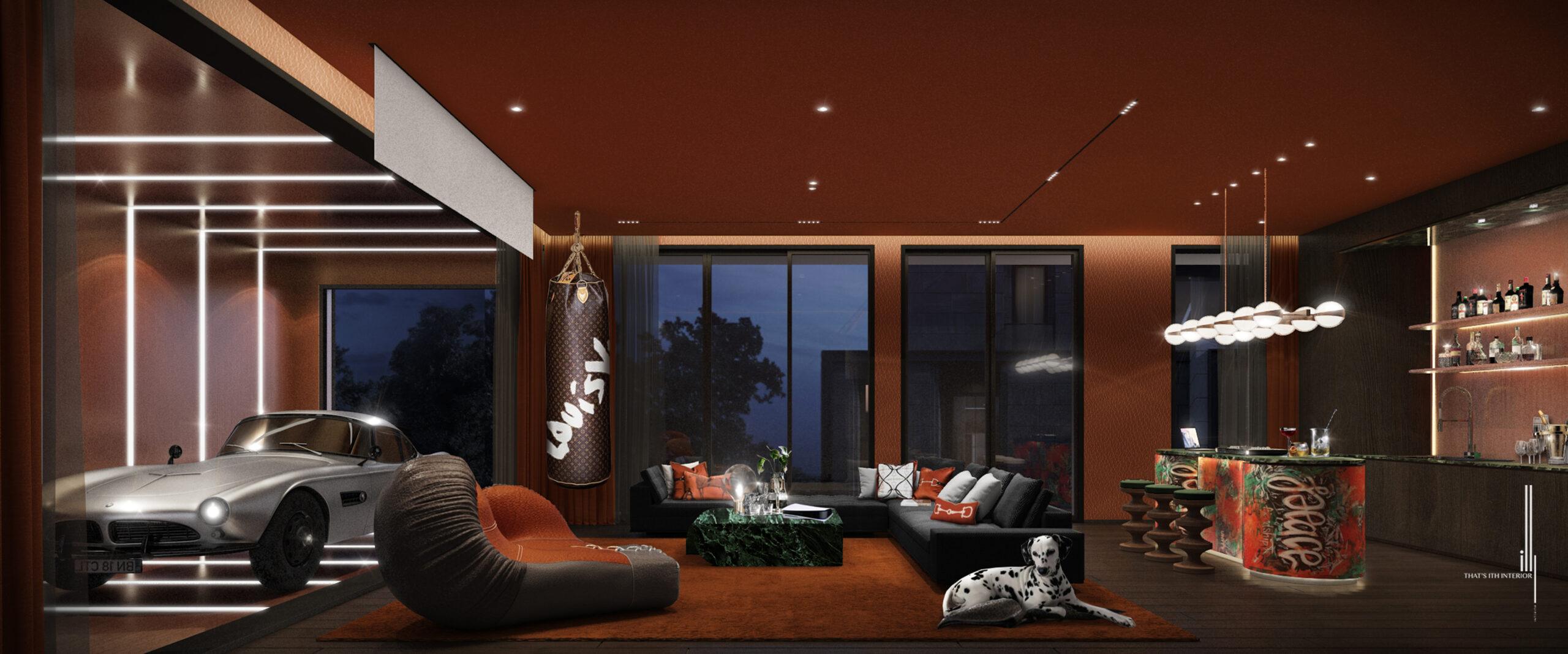
What Should You Ask a High-End Interior Designer Before Appointment?
Instead of asking only:
“What is your style?”
Ask questions that reveal process and judgment.
How does the studio begin a project?
How is the brief developed?
How do you protect the concept during value engineering?
Who will actually work on the project?
How much involvement does the founder or design director have?
Which technical documents are included?
How is FF&E handled?
What is bespoke?
What is not?
How do you coordinate with architects and consultants?
How do you approach site involvement?
How do you work with international clients?
How do you respond when you disagree with the client?
That final question can be revealing.
A designer who agrees with everything may be pleasant to work with.
They may not necessarily provide the judgment the client is paying for.
The right designer should understand the brief — but also be willing to reveal possibilities the client had not yet considered.
When Should a High-End Interior Designer Join the Project?
Usually, earlier than many clients expect.
Interior planning can influence:
architecture,
glazing,
lighting,
MEP,
room proportions,
ceiling heights,
floor levels,
joinery,
furniture,
technology,
landscape relationships,
and service planning.
If the designer enters after all of these have been fixed, many opportunities may already have disappeared.
For new-build residences, hotels, resorts, restaurants, workplaces, and other complex projects, early collaboration can allow architecture and interiors to develop together.
The earlier the designer joins, the more design can prevent problems rather than decorate around them later.
That does not mean every project requires involvement from day one.
But the appropriate timing should be considered strategically.
What Should You Look for in a High-End Interior Designer in Thailand?
The right designer should demonstrate more than taste.
Look for:
- strong conceptual thinking
- varied built work
- relevant experience with the project type
- planning capability
- technical development
- material knowledge
- FF&E expertise
- bespoke capability
- local fabrication knowledge
- consultant coordination
- understanding of climate and local conditions
- international design literacy
- clear communication
- long-term thinking
And look closely at how they speak about their work.
Do they mainly describe what it looks like?
Or can they explain:
why the plan changed,
why one material mattered,
why something was removed,
why another detail needed to be bespoke,
and how the project became specific to its particular client and place?
The strongest designers do not simply show answers. They reveal the quality of the questions that produced them.
That’s ITH’s Approach to High-End Interior Design in Thailand
At That’s ITH Interior, we do not define high-end design through one aesthetic, one material palette, or one recognisable visual signature.
We begin with identity.
Who is this for?
Why here?
What needs to happen?
What should be remembered?
What deserves emphasis?
What should become quiet?
For a private home, this may mean understanding the owner at an unusually personal level.
For hospitality, guest, brand, destination, operations, and commercial reality all become part of the brief.
For a restaurant, food and behaviour may shape the design.
For a workplace, organisational culture and how people actually work may matter more than conventional corporate aesthetics.
The visual language can therefore change dramatically between projects.
That change is intentional.
For us, Fearless Luxury is the confidence to make a decision because it is right for the project — not because it resembles a familiar image of luxury.
Sometimes that decision is bold.
Sometimes it is restrained.
Sometimes it is bespoke.
Sometimes the most intelligent choice is not to add anything at all.
And then craftsmanship, collaboration, and technical precision need to make those decisions feel convincing once built.
We do not aim for a recognisable signature look.
The consistency is in the judgment.
Explore That’s ITH projects to see how different hospitality, residential, restaurant, workplace, and commercial briefs produce different design responses.
Planning a High-End Interior Project in Thailand?
The most valuable design conversations happen before planning, architecture, materials, lighting, FF&E, and technical requirements have already been fixed independently.
Led by founder and designer ITH PALACH, That’s ITH Interior is a Bangkok-based interior design studio working across luxury residential, hospitality, restaurant, workplace, retail, and commercial environments in Thailand and international markets.
Depending on the agreed scope, our work can extend from concept and space planning through materials, bespoke design, FF&E, design development, technical documentation, consultant coordination, and construction-stage design services.
Contact That’s ITH Interior to discuss your next high-end residential, hospitality, restaurant, workplace, or commercial interior project in Thailand.
Frequently Asked Questions
What does a high-end interior designer in Thailand do?
Depending on the agreed scope, a high-end interior designer may provide concept design, space planning, architectural interior development, materials, lighting coordination, bespoke design, FF&E, technical development, consultant coordination, construction documentation, and final furnishing or styling.
The role often extends beyond decoration into the planning and creation of the interior environment itself.
What defines high-end interior design in Thailand?
High-end interior design is better defined by conceptual depth, planning, personalisation, material quality, craftsmanship, technical precision, bespoke capability, and specificity to the project than by any single luxury aesthetic.
The strongest projects respond to the client, location, architecture, culture, climate, and use rather than reproducing a generic image of luxury.
Does high-end interior design need to look expensive?
No.
High-end design may use exceptional materials and craftsmanship, but visual expense alone does not guarantee design quality.
Precision, proportion, comfort, planning, material relationships, bespoke decisions, and long-term performance can communicate luxury more convincingly than obvious excess.
Why is local knowledge important when choosing an interior designer in Thailand?
Local knowledge can influence climate response, material selection, fabrication, contractor coordination, sourcing, craft, construction practices, lead times, and project delivery.
For international clients, the strongest designers can combine global design expectations with realistic understanding of local conditions.
What is the role of a luxury interior expert in Thailand?
A luxury interior expert may help guide the relationship between concept, architecture, planning, materials, furniture, lighting, guest or resident experience, technical development, and execution.
The exact services depend on the studio and agreed project scope.
Why is bespoke design important in high-end interiors?
Bespoke design can solve spatial, functional, ergonomic, or narrative requirements more precisely than standard products.
Its value comes from being appropriate to the project, not simply from being unique or expensive.
Does every high-end project need bespoke furniture?
No.
A sophisticated scheme can combine bespoke elements with carefully selected existing furniture, art, vintage pieces, and personal objects.
Bespoke design is most valuable where specificity matters.
Why are built projects important when selecting a designer?
Renderings show what a studio can imagine.
Built projects show whether that idea could survive technical development, coordination, fabrication, construction, installation, and real use.
Both are useful, but completed projects provide a different level of evidence.
What should I ask a high-end interior designer before hiring them?
Ask about process, project team, scope, concept development, technical documentation, FF&E, bespoke design, consultant coordination, site involvement, value engineering, communication, and how the studio handles disagreement or change.
The goal is to understand not only whether you like the portfolio, but whether you trust the designer’s judgment.
When should a high-end interior designer join a project?
For new-build or complex renovation projects, early involvement is usually valuable.
Interior design can influence spatial planning, architecture, services, lighting, materials, furniture, technology, and other decisions before they become difficult or expensive to change.
How should I choose a high-end interior designer in Thailand?
Look for relevant built work, strong planning, conceptual thinking, technical capability, material knowledge, FF&E and bespoke expertise, local execution knowledge, international perspective, and a portfolio demonstrating different answers for different clients.
Perhaps the most important question is not:
“Do I like this designer’s style?”
But:
“Do I trust this designer’s judgment when there is no obvious answer?”
Related Articles
- High-End Interior Designer vs Interior Decorator: What’s the Difference?
- Interior Design Bangkok: The Complete Guide to High-End Interiors in Thailand
- Luxury Residential Interior Designer: What to Expect
- Hotel Interior Design Company: How to Choose the Right Partner
- What Is Modern Luxury Interior Design?
- Best Interior Design Firms in Bangkok for Luxury Residential Projects
- Meet ITH PALACH: Design Philosophy, Fearless Luxury & a Point of View Beyond Style
- Top Luxury Interior Design Studios in Thailand: What Defines the Right Design Partner?