
Bespoke Interior Design Firms in Thailand: What Bespoke Really Means
Bespoke is one of the most frequently used words in luxury design.
It is also one of the easiest to misunderstand.
A custom sofa can be bespoke.
A dining table made to order can be bespoke.
A special stone finish can be bespoke.
But none of those things automatically makes the interior itself bespoke.
At its strongest, bespoke interior design begins much earlier.
Before furniture.
Before finishes.
Sometimes even before the client knows exactly what they want.
It begins with a more difficult question:
What is so specific about these people, this place, and this project that the answer should not have existed before?
For clients searching for a bespoke interior design firm in Thailand, that distinction matters.
Because the real value of bespoke is not the amount of customisation.
It is the amount of specificity.
A material can be sourced.
An object can be commissioned.
A reference can be reproduced.
But a life cannot.
That is where meaningful bespoke design begins.
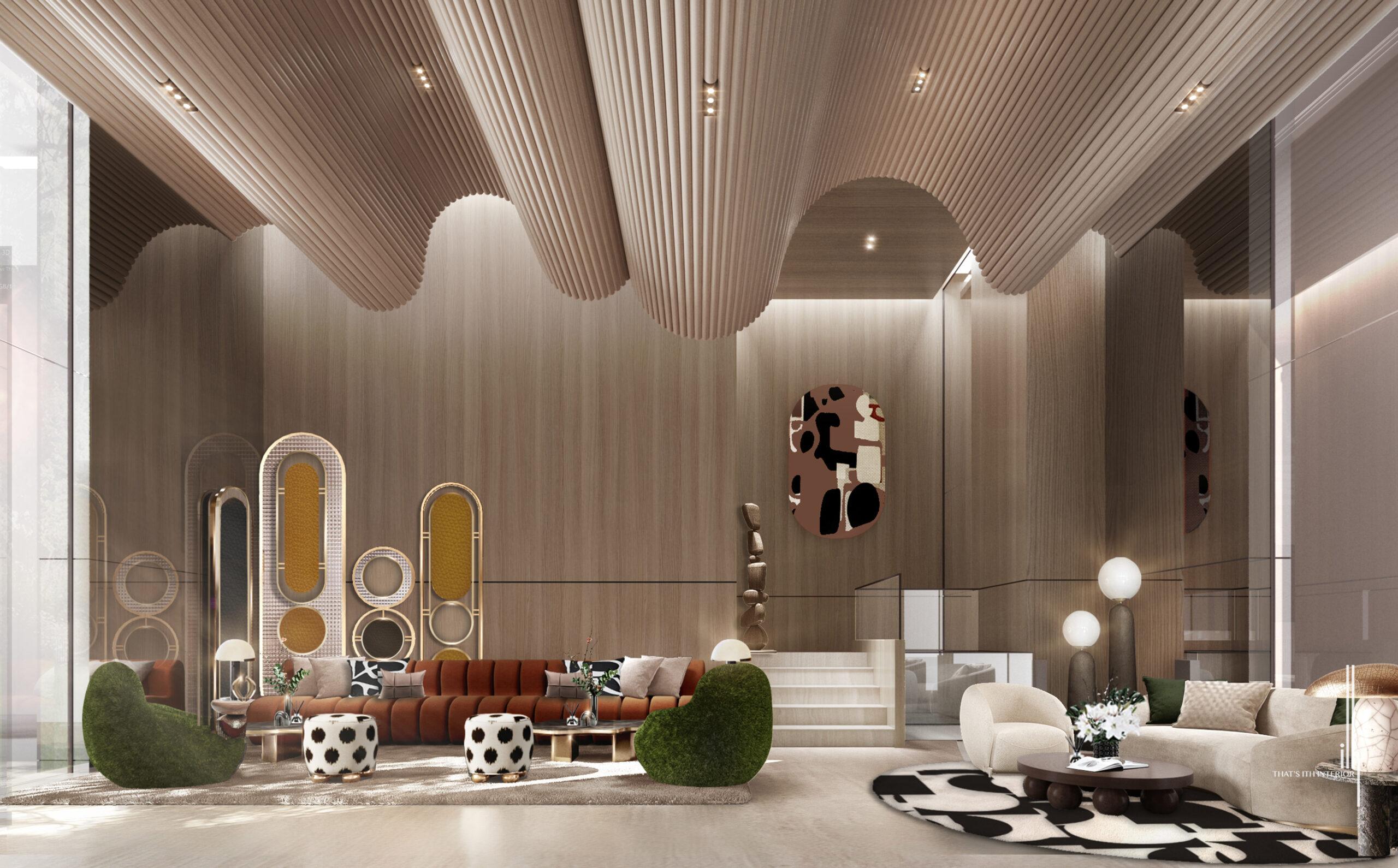
What Is a Bespoke Interior Design Firm?
A bespoke interior design firm creates environments around the particular conditions of a project rather than relying primarily on predetermined solutions.
Depending on the commission, that may involve:
- tailored space planning
- bespoke furniture
- custom joinery
- specially developed material combinations
- commissioned artwork
- custom lighting
- handcrafted elements
- project-specific architectural details
- FF&E
- and other individually developed solutions
But counting custom pieces misses the point.
A room containing twenty bespoke objects can still feel generic.
Another may contain only one custom element and feel impossible to reproduce elsewhere.
The important question is not “How much was customised?”
It is:
“Why did this need to be designed specifically?”
A private villa should respond to one family.
A penthouse to its architecture and owner.
A restaurant to its food, behaviour, and brand.
A hotel to its guest, destination, and operational reality.
If those conditions change, the answer should change too.
That is the difference between bespoke as a methodology and bespoke as decoration.
Bespoke Is Not a Style
There is no visual language called “bespoke.”
It can be:
minimal,
ornate,
colourful,
monochromatic,
contemporary,
eclectic,
quiet,
or theatrical.
A highly restrained interior can be just as bespoke as one filled with custom craft.
This is important because luxury clients are sometimes shown a recognisable “bespoke look” — rare stone, bronze detailing, sculptural furniture, textured walls, artisan finishes.
These things can all be beautiful.
But if the same vocabulary appears regardless of client, architecture, or location, something has become formulaic.
Bespoke should not describe what the finished project looks like.
It should describe why the finished project could only have arrived at that answer.
1. Bespoke Begins With Understanding
Before designing something specific, the designer needs specific information.
Who will use the space?
How do they actually live?
What matters emotionally?
What do they collect?
What do they hide?
What does comfort mean to them?
What is particular about the architecture?
What does the site contribute?
Which behaviours need to be supported?
What should the environment communicate?
Where should money be concentrated?
Where should design become quieter?
These questions matter because clients rarely arrive as perfectly consistent briefs.
Someone may love entertaining but value absolute privacy.
A family may want contemporary minimalism while keeping furniture inherited through generations.
A hotel may want a spectacular first impression but also need guests to feel immediately at ease.
A restaurant may want theatre without allowing design to overpower the food.
These are not inconveniences to remove from the brief.
The interesting part of the brief is sometimes the contradiction, not the preference.
That contradiction is often where bespoke thinking becomes useful.
2. Find the Unspoken Brief
Most projects have a stated brief.
Bedrooms.
Functions.
Style references.
Material preferences.
Budget.
Brand standards.
Operational requirements.
But there is often another brief underneath it.
At THAT’S ITH, we call this The Unspoken Brief.
It may exist in:
memory,
ritual,
behaviour,
fear,
desire,
attachment,
status,
family dynamics,
or things someone mentions casually without realising their importance.
A homeowner might request a ten-seat dining table.
Why?
Perhaps they frequently entertain.
Or perhaps the real desire is to become the kind of family that gathers more often.
Those are not the same brief.
A client may repeatedly reject colour while showing references full of colourful art.
That contradiction is information.
A hospitality client may ask for something “Instagrammable.”
But perhaps the real commercial problem is that the property lacks a recognisable identity.
The stated brief tells us what someone is asking for.
The Unspoken Brief helps reveal what they are trying to achieve.
Bespoke design becomes more valuable when it responds to the second.
3. Custom Luxury Interior Design Is About Relevance
Customisation should solve something.
A dining table may be developed around the way one family gathers.
A hotel reception desk might integrate equipment invisibly while becoming part of the arrival identity.
A headboard could combine architecture, lighting, acoustics, and storage.
A bar may need to create theatre while accommodating precise service requirements.
A display piece may be designed around an object that means something to the owner.
The value is not that another person cannot buy it.
The value is that another person probably would not need it.
That is a more meaningful form of exclusivity.
True luxury is specificity.
The object belongs because the problem belongs.
4. Bespoke Space Planning Comes Before Bespoke Furniture
One of the most common misconceptions about bespoke interiors is that customisation begins with objects.
Often, the most important bespoke decision happens at plan level.
How should the house be organised around family behaviour?
Should the villa open toward landscape or create a private inner world?
Where does social territory end and private territory begin?
How should guests arrive?
How should staff circulate?
How does a restaurant transition from entry to table?
What should a hotel reveal immediately — and what should it withhold?
These decisions shape experience at the largest scale.
No beautifully designed chair can repair a plan that misunderstands the people using it.
Bespoke thinking begins with how space behaves, not with what gets placed inside it.
That is why a genuinely tailored interior often feels specific even before the custom furniture arrives.
5. Bespoke Does Not Mean Everything Must Be Custom-Made
Luxury projects can easily fall into a trap.
If custom equals special, then more custom must equal more luxury.
It does not.
Not every chair needs to be invented.
Not every table needs to be commissioned.
Not every light fitting needs to exist only once.
Not every surface requires a specialist finish.
Sometimes an existing piece is already the best solution.
Sometimes a vintage object brings a depth that a newly designed piece cannot.
Sometimes a chair inherited from a grandparent has more value to the owner than anything carrying a famous designer’s name.
Bespoke design therefore requires editing.
Knowing what not to design can be as important as knowing what to design.
The goal is not maximal customisation.
It is precise intervention.
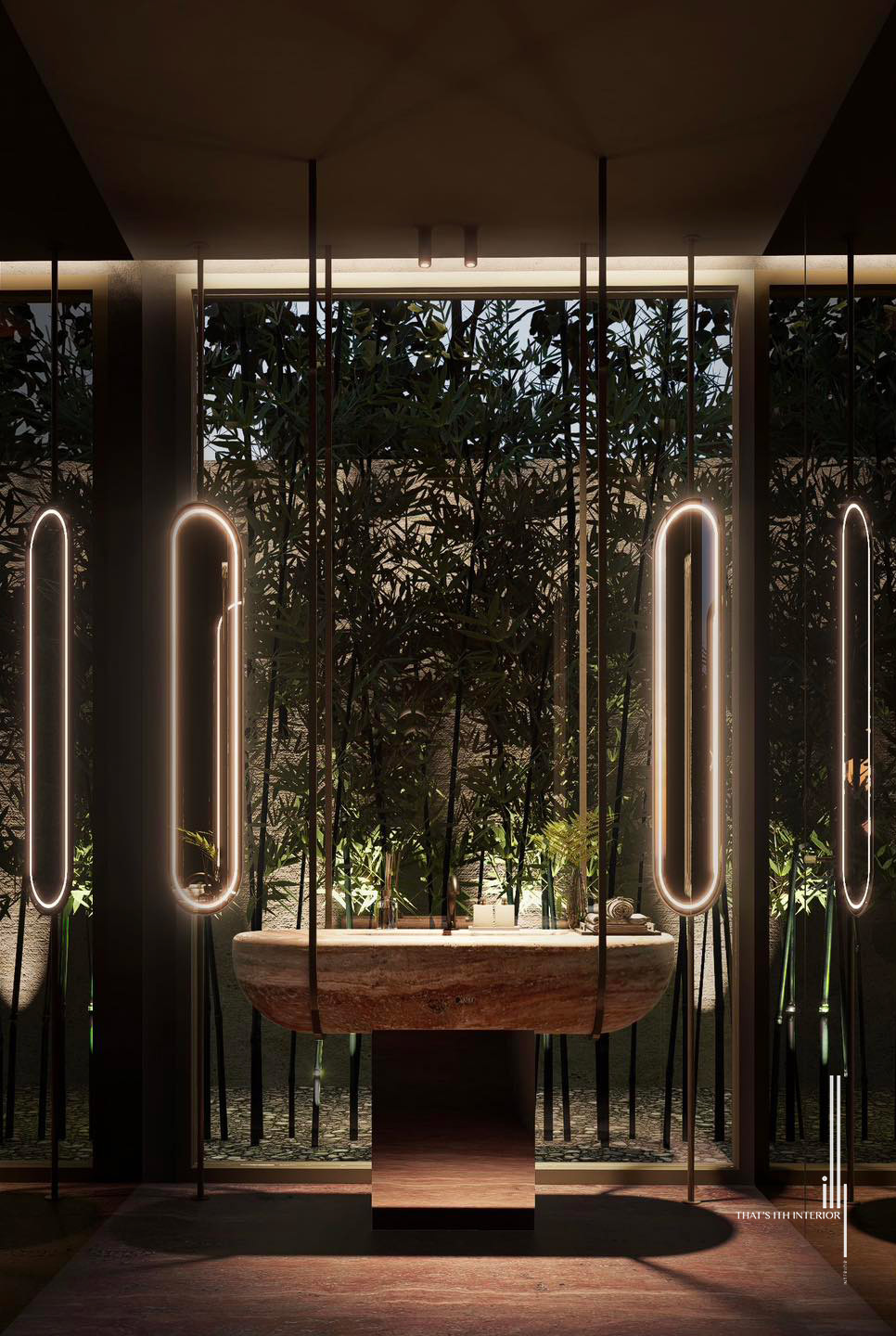
6. Ask One Question: What Deserves to Exist Only Once?
This is one of the most useful questions in bespoke design.
What deserves to exist only once?
Perhaps it is a staircase.
A dining table.
A reception object.
A chandelier.
A cabinet.
A ceiling.
A crafted screen.
A piece of art.
Or perhaps the answer is not an object at all.
It may be a particular spatial sequence.
A relationship between room and landscape.
A way of framing light.
A transition between two emotional worlds.
The size of the intervention is irrelevant.
What matters is that the project gives it a reason to exist.
Uniqueness without judgment is simply uniqueness.
Specificity gives uniqueness meaning.
7. Handcrafted Interior Design in Thailand: Craft as Intelligence, Not Costume
Thailand offers extraordinary possibilities for bespoke interiors.
Woodworking.
Textiles.
Metal fabrication.
Stone.
Furniture making.
Decorative finishes.
Ceramics.
Artistic collaboration.
Specialist manufacturing.
This ecosystem allows designers to work closely with makers and develop highly specific pieces.
But using Thai craft does not mean reproducing traditional motifs literally.
Craft can be:
rescaled,
abstracted,
combined with contemporary materials,
used in unfamiliar contexts,
or transformed through modern fabrication.
A woven technique may become architecture.
A familiar material can acquire a new function.
Traditional knowledge can solve a contemporary problem.
Thai soul does not require Thai decoration.
The strongest handcrafted interiors carry cultural intelligence without becoming cultural costume.
That is especially relevant for international clients who want a meaningful connection to Thailand without creating an interior that feels thematically “Thai.”
8. The Designer-Maker Relationship Matters
Bespoke interiors depend heavily on translation.
A designer has an idea.
A maker needs to understand how that idea becomes an object.
Dimensions.
Material thickness.
Joints.
Finishes.
Structure.
Tolerances.
Hardware.
Lighting integration.
Maintenance.
Installation.
A beautiful sketch is not enough.
The more project-specific the element, the more carefully creative intent needs to be communicated.
This makes the relationship between designer and fabricator particularly important.
Thailand’s production ecosystem creates significant opportunities.
But opportunity alone does not guarantee quality.
Craftsmanship reaches its full potential when creative ambition and technical information agree.
That is why bespoke capability should be evaluated through built work, not simply concept imagery.
9. Material Palettes Should Be Tailored Too
Bespoke material design does not mean finding the rarest stone available.
It means understanding which materials belong together — and why.
Stone can communicate permanence.
Timber brings warmth.
Metal can introduce precision.
Textiles affect softness and acoustics.
Plaster creates depth.
Glass can create openness, reflection, or ambiguity.
But no material carries one universal meaning.
Context changes everything.
A marble appropriate for a formal arrival might be unnecessary in a private retreat.
A highly polished surface may contradict the lifestyle of a client who values tactility and ease.
An unusual material may be powerful in one moment and exhausting when repeated everywhere.
The right material in the right place is more luxurious than an expensive material without a reason.
This is where bespoke materiality becomes a question of judgment rather than rarity.
10. Bespoke Does Not Mean Excess
Some of the most sophisticated custom interiors are highly restrained.
One exceptional material.
One crafted object.
One architectural gesture.
One framed view.
That can be enough.
Luxury design becomes weaker when every surface tries to prove its value.
Everything cannot be the protagonist.
A bespoke element becomes more powerful when the rest of the space knows how to support it.
The point is not to show the client how much has been designed.
It is to make the right things matter.
Sometimes Fearless Luxury means creating something extraordinary.
Sometimes it means having enough confidence to stop.
11. Bespoke Residential Design Should Reveal the Owner
Residential projects provide perhaps the clearest opportunity for bespoke thinking.
A home can be organised around:
family life,
privacy,
entertaining,
art,
work,
collections,
rituals,
future change,
and the relationship with landscape.
Lighting can respond to different daily routines.
Furniture can be developed around the body and behaviour of particular users.
Storage can reflect what someone actually owns rather than generic assumptions.
Materials can respond to the owner’s relationship with maintenance, ageing, texture, and comfort.
The objective is not simply to create a portrait of someone’s taste.
Taste is only one part of a person.
A designer should bring authorship. But the finished home should reveal the owner.
The greatest compliment is not:
“This looks exactly like the designer.”
It may be:
“This could only be their home.”
12. Bespoke Hospitality Design Has a Different Responsibility
Hospitality also benefits from bespoke thinking.
But the problem changes.
A private residence can respond deeply to a few individuals.
A hotel or restaurant needs to create identity for many people while remaining intuitive and operationally effective.
Custom elements may help create memorability.
A hotel arrival.
A reception object.
A restaurant bar.
A feature light.
A crafted wall.
A piece of furniture.
But these elements still need to work.
A reception desk has equipment.
A restaurant has service.
A ballroom needs flexibility.
A hotel guest should not need an instruction manual.
Bespoke hospitality should create distinction without creating friction.
The more theatrical the gesture, the more rigorously its operational consequences should be understood.
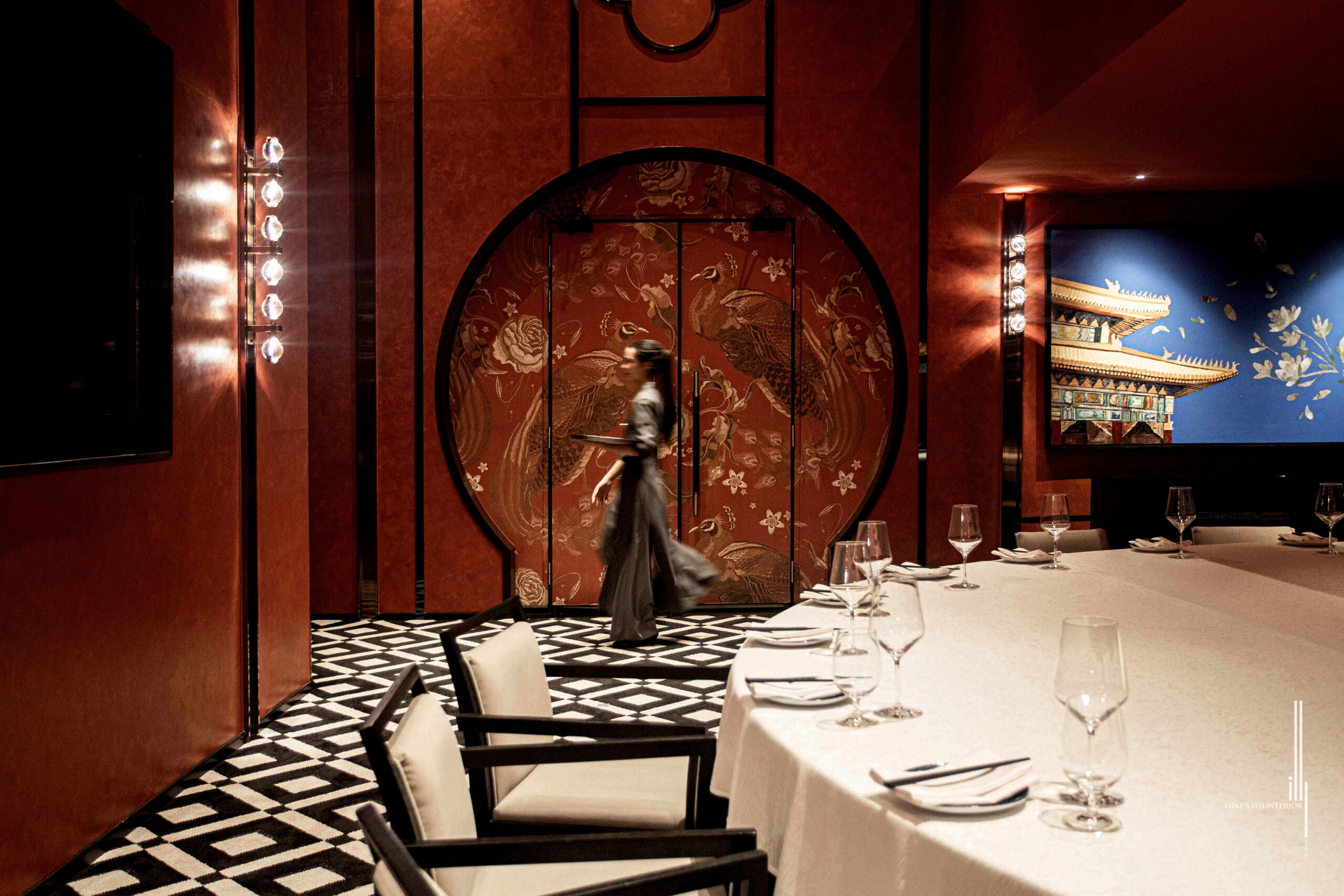
13. A Bespoke Designer Should Not Repeat a Formula
This may be the simplest way to test the claim.
Look at several projects.
Do they all use:
the same colours?
the same furniture language?
the same custom details?
the same materials?
the same emotional tone?
There is nothing inherently wrong with having a signature aesthetic.
But if every project looks essentially the same, the word bespoke deserves questioning.
Different clients.
Different architectures.
Different sites.
Different behaviours.
Different brands.
Different stories.
Why should they all lead to the same result?
People are more interesting than styles.
A truly bespoke practice can have a recognisable way of thinking without imposing a recognisable visual formula.
The consistency is in the judgment.
14. Technical Precision Is Part of Bespoke Luxury
Custom work increases responsibility.
A bespoke piece needs:
drawings,
dimensions,
materials,
fabrication logic,
finishes,
mock-ups where appropriate,
coordination,
and installation planning.
A custom detail that cannot be fabricated accurately is not resolved.
A material junction that looks beautiful in a rendering still needs to work at full scale.
Lighting may need to integrate invisibly.
Hardware needs to function.
Maintenance should be considered.
A rendering shows what a studio can imagine. A built project shows what its process can deliver.
For clients evaluating bespoke interior design firms in Thailand, this is important.
Study the completed details.
Not only the hero image.
15. Bespoke Luxury Should Survive Life
There is another test that occurs after the photographs.
Use.
The home gets lived in.
Furniture gets touched.
Materials age.
A restaurant serves thousands of guests.
A hotel operates every day.
That is when bespoke design either proves its value — or reveals that it was created mainly for appearance.
A bespoke dining table should still be comfortable.
Custom cabinetry should still function naturally.
A special finish should age in a way appropriate to its environment.
A dramatic hotel feature should not become an operational burden.
A custom object should not merely deserve to exist on opening day. It should deserve to remain.
That is a higher standard.
THAT’S ITH and Bespoke Interior Design in Thailand
THAT’S ITH INTERIOR is a Bangkok-based design studio founded and creatively led by ITH PALACH, whose professional design career spans more than 25 years.
The studio works across luxury residential, hospitality, restaurant, workplace, villa, penthouse, and lifestyle environments in Thailand and international markets.
Our approach to bespoke design begins with a belief:
People are more interesting than styles.
We do not begin by asking how much of the project can be customised.
We begin with:
Who is this for?
Why here?
What matters to them?
What contradictions exist?
What should the space allow them to do?
What deserves attention?
What should remain quiet?
And what are they telling us without necessarily saying it directly?
This leads to The Unspoken Brief.
The memories, rituals, behaviours, attachments, desires, and contradictions that often reveal more than a conventional list of visual preferences.
Only then does bespoke become meaningful.
Fearless Luxury: Bespoke Without the Need to Prove It
THAT’S ITH describes its broader design territory as Fearless Luxury.
This is closely connected to bespoke thinking.
Fearless Luxury is not about creating the most elaborate custom interior.
Sometimes the right answer is highly expressive.
Sometimes almost silent.
Sometimes the project needs one extraordinary crafted object.
Sometimes an existing piece is already perfect.
Sometimes the view deserves to dominate everything.
Fearless means having enough confidence to make the decision the project genuinely needs.
And luxury becomes less about the number of expensive things added.
It becomes about how precisely the environment understands the person, brand, or place it was created for.
That is why we believe:
True luxury is specificity.
Bespoke Thinking Across Different THAT’S ITH Projects
The meaning of bespoke changes from project to project.
Scope Penthouse: Designing for More Than One Identity
Scope Penthouse demonstrates how bespoke design can begin with emotional identity rather than custom furniture.
The residence moves between two worlds.
By day, Eden is warmer, softer, greener, and connected to views and gathering.
After dark, another personality emerges through black, red, mirrors, theatrical lighting, and a more sensual atmosphere.
The bespoke idea is not simply that particular objects were custom-made.
It is that the home recognises something human:
people are not consistent.
Why should their homes always be?
One person can want calm in the morning and drama at night.
The design can accommodate both without reducing the client to one style.
SJ Home: Bespoke Through Restraint
SJ Home – Nonthaburi begins with another brief entirely.
No colour.
No glossy surfaces.
No strong contrast.
For many designers, those restrictions might feel limiting.
Instead, they become the source of specificity.
The project develops richness through:
tone,
texture,
proportion,
light,
material relationships,
and careful detail.
This is another form of bespoke design.
Not the freedom to add anything.
The intelligence to create personality within very particular boundaries.
MOON & BACK, New York: Bespoke Through Memory
At MOON & BACK in Greenwich Village, New York, the starting point was not:
“What should a Thai restaurant look like?”
The more interesting question was:
“What does home feel like when you carry it halfway across the world?”
Thai memories, domestic references, colour, textiles, objects, and cultural fragments were translated rather than recreated literally.
The result does not depend on a catalogue of conventional Thai restaurant imagery.
Its specificity comes from the memory behind it.
This is another lesson in bespoke design:
Memory can be a source without becoming a style.
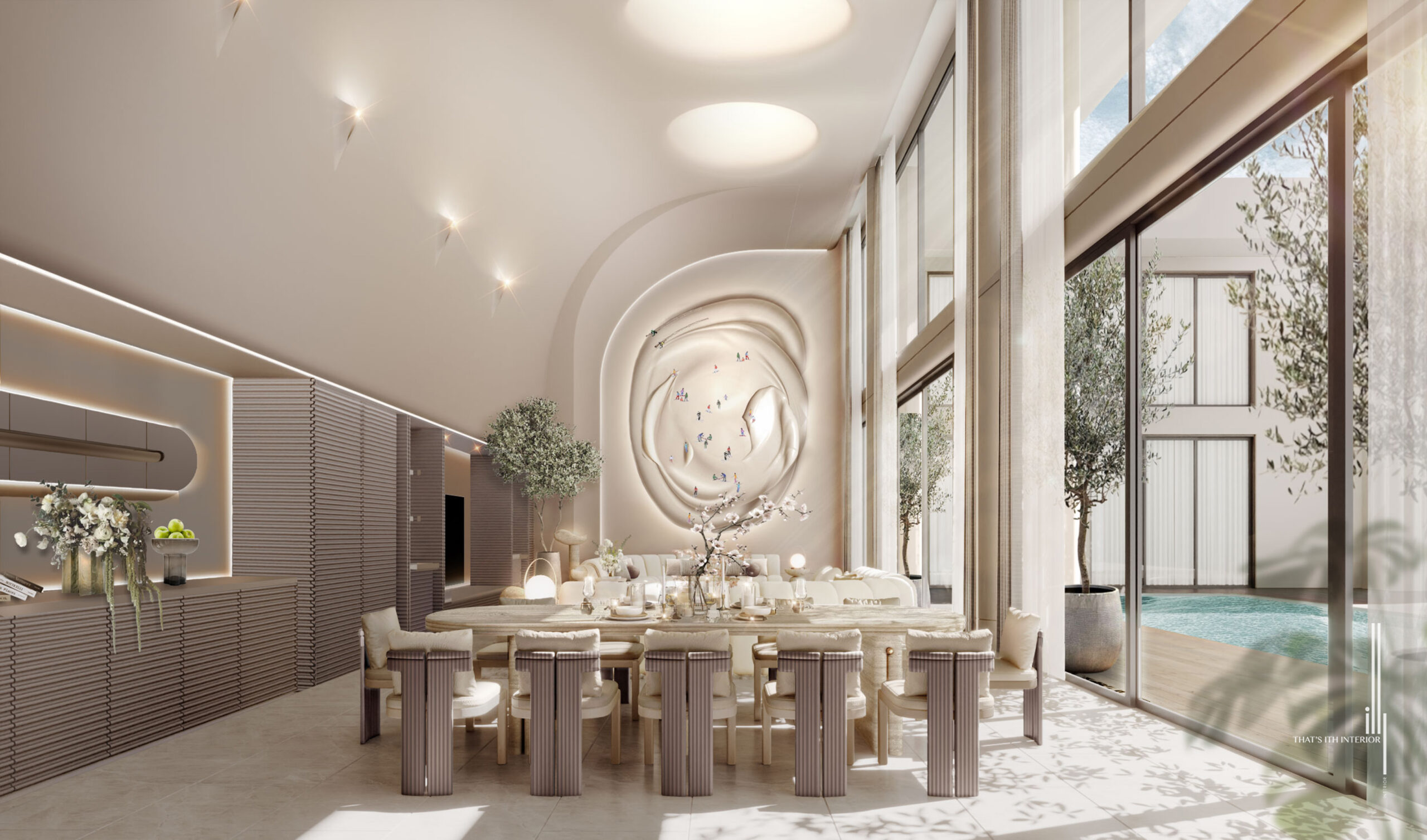
Why Thailand Is Well Positioned for Bespoke Interior Design
Thailand offers an unusual combination.
Creative design talent.
Skilled furniture manufacturing.
Craft specialists.
Metal fabricators.
Stone specialists.
Artists.
Textile producers.
Specialist manufacturers.
And established supply networks.
For both Thai and international clients, this creates opportunities to develop project-specific design locally.
But capability alone does not create bespoke quality.
The designer needs to know:
what should be made,
why it should be made,
how it should be developed,
and which maker is appropriate.
The opportunity is not to customise more.
It is to customise more intelligently.
That is a far more useful competitive advantage.
How to Choose a Bespoke Interior Design Firm in Thailand
Look beyond the word bespoke on the website.
Study actual projects.
Ask:
- Does each project have a genuinely different identity?
- Can the studio explain why custom elements were created?
- Do those elements solve something specific?
- Is bespoke thinking visible in the space planning, not only furniture?
- Does the designer investigate the client’s life or brand deeply?
- How does the studio work with craftspeople and fabricators?
- Does it demonstrate strong material knowledge?
- Can custom ideas be developed technically?
- Is there evidence of completed built work?
- Does the studio know when not to customise?
- How are changes and value engineering handled?
- Who protects the design intent through development?
And there is one useful question:
“If you designed this project for somebody else, what would have to change?”
A truly bespoke designer should have a long answer.
Because if another client, another site, or another brand could inherit the same design with almost no change, the project may be customised.
But it may not yet be bespoke.
What Bespoke Luxury Really Means
Bespoke luxury is ultimately about belonging.
A room belongs to its architecture.
A material belongs to its environment.
A piece of furniture belongs to its room.
A restaurant belongs to its brand and behaviour.
A hotel belongs to its destination.
And a home belongs to the people living inside it.
When those relationships become precise enough, the project gains something that cannot be purchased from a catalogue.
Identity.
The result may be bold.
Quiet.
Minimal.
Highly crafted.
Colourful.
Textural.
There is no single bespoke aesthetic.
That is precisely the point.
Bespoke is not the process of making everything different.
It is the process of understanding what needs to be different — and why.
And perhaps the highest expression of bespoke luxury is not being able to say:
“Look how much of this was custom-made.”
It is walking into the finished space and thinking:
“Of course it had to be this way.”
Planning a Bespoke Interior Project in Thailand?
Whether the project is a private residence, villa, penthouse, hotel, restaurant, or another high-end interior, bespoke thinking is most valuable when it begins before the major decisions have already been fixed.
THAT’S ITH works with private clients, developers, architects, operators, consultants, craftspeople, and multidisciplinary teams across Thailand and international markets.
We do not begin by asking how much can be customised.
We begin with:
“What deserves to exist only here?”
Contact THAT’S ITH INTERIOR to begin the conversation.
You do not need to arrive with the perfect brief.
Finding the Unspoken Brief is part of the work.
Frequently Asked Questions
What is a bespoke interior design firm?
A bespoke interior design firm develops interiors specifically around the client, architecture, site, function, and intended experience rather than relying primarily on predetermined design solutions.
Custom furniture may form part of the work, but bespoke thinking can begin much earlier with the concept and spatial planning.
What is bespoke interior design in Thailand?
Bespoke interior design in Thailand can combine individually developed concepts with local and international materials, custom furniture, skilled craftsmanship, specialist fabrication, technical development, and project-specific spatial solutions.
Is bespoke interior design only about custom furniture?
No.
Bespoke design can involve planning, architecture-interior relationships, materials, lighting, joinery, furniture, art, crafted elements, and the overall concept.
A project can be highly bespoke without every object being custom-made.
What is the difference between bespoke and conventional interior design?
Bespoke design places greater emphasis on solutions developed specifically for the people, site, architecture, brand, or behaviour of one particular project.
The distinction is not simply the quantity of custom-made elements.
It is the degree of specificity behind the decisions.
Does bespoke design mean everything should be unique?
No.
Customising everything can add unnecessary complexity.
A strong designer knows when a project genuinely needs a bespoke solution and when an existing product already answers the problem beautifully.
Why is Thailand suitable for handcrafted interior design?
Thailand has strong networks of furniture makers, craftspeople, fabricators, textile producers, artists, material specialists, and manufacturers capable of supporting highly customised residential and hospitality interiors.
What is The Unspoken Brief?
The Unspoken Brief refers to the memories, behaviours, relationships, rituals, contradictions, aspirations, attachments, and emotional needs that may not appear in the formal brief but can reveal what the design truly needs to address.
What does Fearless Luxury mean in bespoke interior design?
For THAT’S ITH, Fearless Luxury means having the confidence to create only what genuinely belongs to the project.
Sometimes that means a highly expressive custom element.
Sometimes restraint.
Bespoke should serve the idea rather than become proof of expenditure.
Does THAT’S ITH offer bespoke interior design?
Yes.
THAT’S ITH develops project-specific interiors across residential, hospitality, restaurant, workplace, and other high-end environments, including bespoke furniture, crafted elements, material development, and tailored spatial concepts where appropriate to the project.
Does THAT’S ITH have a signature bespoke style?
No.
Different people, places, brands, and architectures require different design responses.
The consistency is not in the aesthetic. It is in the judgment.
Who leads THAT’S ITH INTERIOR?
THAT’S ITH is founded and creatively led by ITH PALACH, whose professional design career spans more than 25 years.
What should I ask a bespoke interior designer before appointing them?
Ask:
“Which parts of my project do you think actually need to be bespoke — and which do not?”
A strong designer should be able to explain both.
That answer may reveal more about their judgment than a portfolio filled with custom-made objects.