
12 Hotel Interior Design Principles for Thailand: Trends & Best Practices
A hotel in Thailand should not feel as though it could have been built anywhere.
A five-star property in Bangkok has a different relationship with its surroundings from a beachfront resort in Phuket.
A wellness retreat in the north should not respond to climate, landscape, or guest behaviour in the same way as an urban hotel.
A boutique property asks different questions from a large international hotel with hundreds of rooms, restaurants, event spaces, and complex operations.
That is why choosing a Hotel Interior Designer in Thailand involves far more than finding a studio capable of creating beautiful rooms.
The real challenge is creating a property that:
belongs to its destination,
expresses a clear identity,
operates efficiently,
withstands years of hospitality use,
and still gives guests something specific enough to remember.
The strongest Luxury Hotel Interior Design in Thailand does not begin by asking what a luxury hotel should look like. It begins by asking why this particular hotel should look and feel the way it does.
The following principles are less about copying current aesthetics and more about understanding the design intelligence that helps hotels in Thailand remain relevant beyond them.
1. Begin With Identity Rather Than Style
Modern.
Contemporary.
Minimal.
Tropical.
Luxury.
These words can be useful shorthand for visual preferences.
They are rarely enough to build a hotel around.
A stronger concept asks more specific questions.
Why this destination?
Why this brand?
Why this guest?
What is distinctive about the architecture?
What does the surrounding landscape contribute?
What should guests remember after leaving?
A hotel concept may grow from:
local history,
regional craft,
landscape,
architecture,
a cultural narrative,
the lifestyle of the target guest,
or a particular emotional ambition.
Once that idea becomes clear, later decisions have something meaningful to respond to.
Materials.
Furniture.
Lighting.
Art.
Music.
Arrival.
Guestrooms.
Bespoke pieces.
Food and beverage spaces.
Identity gives individual design decisions a shared reason for existing.
Without it, even a beautifully finished hotel can become interchangeable with many other beautifully finished hotels.
This is particularly important in Five-Star Hotel Design in Thailand, where sophisticated guests already have access to exceptional hospitality environments around the world.
Beauty alone is no longer enough to distinguish one property from another.
2. Create Sense of Place Without Turning Thailand Into a Theme
Thailand provides enormous creative material.
Architecture.
Craft.
Textiles.
Ceramics.
Food culture.
Landscape.
Climate.
Regional materials.
Ways of gathering.
Patterns of everyday life.
But there is a significant difference between referencing culture and understanding it.
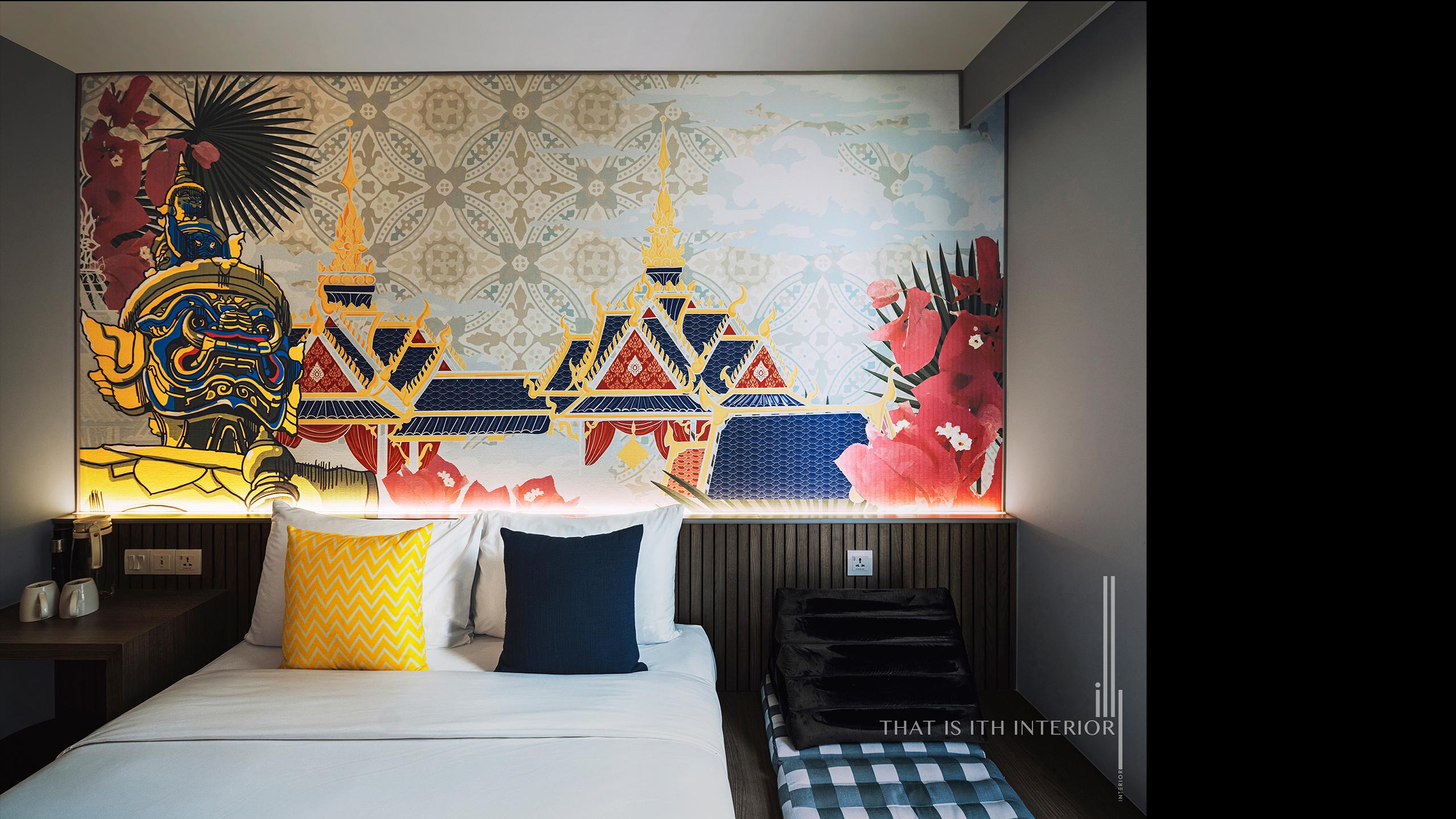
Placing recognisable Thai motifs throughout a hotel may communicate location immediately.
It does not automatically create a sophisticated sense of place.
A more interesting approach often begins with interpretation.
A weaving technique can influence the construction of a contemporary screen.
A spatial rhythm from vernacular architecture might shape the sequence of a lobby.
Traditional materials can appear in unexpected forms.
Local ceramics might become architectural rather than decorative.
Shade, courtyards, thresholds, and landscape can carry cultural intelligence without any obvious symbolism.
The objective is not to make the hotel look “Thai.” It is to make the hotel belong naturally to Thailand.
That allows local identity and international design language to coexist without either becoming superficial.
3. Treat Climate as a Design Opportunity
Hotel interiors in Thailand cannot be separated from climate.
Strong sunlight.
Heat.
Humidity.
Seasonal rain.
And, in coastal locations, salt air.
All affect material selection, furniture performance, lighting, thresholds, exterior areas, maintenance, and the relationship between conditioned interiors and the environment outside.
But climate is more than a technical problem.
It can create experience.
Deep shade can become part of arrival.
Filtered daylight can change a lobby throughout the day.
A covered walkway can turn rain into atmosphere rather than inconvenience.
A semi-outdoor lounge can allow guests to experience tropical air without being fully exposed to it.
The best hotel design in Thailand does not try to isolate guests from climate at every moment. It decides carefully when to protect them from it — and when to let them experience it.
That distinction can transform environmental response into hospitality.
4. Design the Arrival Before Designing the Lobby
The hotel experience begins before reception.
Driveway.
Landscape.
Entrance.
Door.
Sound.
Temperature.
Lighting.
The first glimpse inside.
The moment guests understand where to go.
These are all part of arrival.
A lobby may be visually impressive and still produce an ordinary arrival if the sequence leading to it has not been considered.
For Luxury Modern Hotel Lobby Design in Thailand, the opportunity is therefore not simply to create a dramatic room.
It is to choreograph expectation.
A Bangkok hotel may create a rapid psychological separation from the energy outside.
A resort might delay an important landscape view until a precise moment.
A boutique hotel may establish intimacy through proportion rather than grandeur.
A lobby does not necessarily need the largest chandelier or most expensive stone to create emotional impact.
Sometimes transition is more powerful than spectacle.
A memorable lobby is not simply where guests check in. It is the moment when the identity of the hotel becomes emotionally clear.
5. Design the Entire Hotel as a Guest Journey
Guests do not experience hotels as floor plans.
They experience sequences.
Arrival.
Reception.
Lift.
Corridor.
Guestroom.
Restaurant.
Bar.
Spa.
Pool.
Event spaces.
Back to the room.
Breakfast.
Departure.
The spaces between major destinations therefore matter too.
A corridor can create anticipation.
A lift lobby can become an emotional reset.
The route toward a restaurant may gradually change in light, sound, material, or scale.
The transition between public and guestroom areas can signal another degree of privacy.
A hotel becomes more convincing when the entire journey feels intentional — not only the spaces selected for photography.
This is particularly important in luxury hospitality because guests experience the hotel repeatedly.
What initially appears secondary can become part of their daily memory of the stay.
6. Let Luxury Come Through Precision
There are obvious visual languages of luxury.
Rare stone.
Bespoke furniture.
Sculptural ceilings.
Art installations.
Statement lighting.
They can all be appropriate.
But some of the most convincing luxury experiences are far less visible.
A bedside switch exactly where the hand expects it.
A curtain that creates genuine darkness.
A door with reassuring weight.
A chair that remains comfortable after an hour.
A bathroom with intuitive lighting.
Good acoustic separation from the corridor.
Enough charging points where people actually need them.
A room-service table that genuinely works.
These details rarely become the hero image in a marketing campaign.
Guests still experience every one of them.
True luxury is often the feeling that nothing important has been overlooked.
This is particularly relevant in five-star hospitality, where a hotel cannot perform at one level in photography and another level in actual use.
Precision needs to extend from concept to behaviour.
7. Use Bespoke Design Where It Creates Meaning
Luxury hotels often use custom furniture, commissioned art, crafted lighting, screens, joinery, textiles, and architectural installations.
But bespoke is not automatically better.
Customisation becomes valuable when it solves something specific.
A piece may reinterpret regional craft.
A screen might define privacy while carrying cultural identity.
A custom light could become the emotional centre of arrival.
A piece of furniture may respond precisely to architecture.
A crafted detail might exist only at one significant point in the guest journey.
Bespoke design becomes powerful when it creates specificity — not simply exclusivity.
The more useful question is not:
“How much can we custom-design?”
It is:
“What deserves to exist only here?”
One meaningful bespoke element can sometimes carry more identity than a room filled with unrelated custom pieces.
8. Design Guestrooms Around Real Behaviour
Hotel guestrooms are frequently designed as compositions.
Bed.
Sofa.
Desk.
Minibar.
Bathroom.
Artwork.
But guests do not experience them as compositions.
They arrive tired.
Open luggage.
Charge several devices.
Work.
Change clothes.
Order food.
Shower.
Sleep.
Wake during the night.
Search for a light switch in the dark.
Leave early.
Every behaviour creates a design requirement.
Storage should be intuitive.
Bedside controls should make sense without explanation.
Lighting should support several activities.
Furniture should correspond to actual dwell time.
Bathroom privacy should be appropriate.
Technology should simplify the experience rather than create another system to learn.
The view also deserves more thought than simply maximising glazing.
Where should it be experienced?
From bed?
Bath?
Desk?
Lounge chair?
Does furniture orientation make the most of it?
A sophisticated guestroom feels effortless because the complexity has already been resolved before the guest arrives.
That effortlessness is one of the most difficult forms of luxury to design.
9. Understand That Boutique Hotels and Large Hotels Need Different Intelligence
Boutique Hotel Interior Design in Thailand can offer extraordinary freedom.
Smaller scale may allow:
more intimate storytelling,
greater variation between rooms,
more unusual planning,
highly individual public areas,
and closer connection between identity and detail.
A large hotel faces another type of complexity.
Repeated guestrooms.
Multiple restaurants.
Bars.
Ballrooms.
Lounges.
Spas.
Meeting spaces.
Service routes.
Operator standards.
Large multidisciplinary teams.
Thousands of repeated design decisions.
The challenge becomes creating consistency without creating sameness.
Different areas can have different personalities while still belonging to one overall property.
Restaurant environments such as River Barge and Silver Waves at Chatrium Riverside Bangkok demonstrate how food-and-beverage venues can develop distinct identities within the wider context of hospitality.
Likewise, ballroom and convention environments such as Royal Orchid Sheraton Ballroom operate under very different experiential and functional requirements from guestrooms or restaurants.
Scale should change how the hotel’s story is organised. It should not remove the story altogether.
A large property still deserves personality.
It simply needs a more complex system for sustaining it.
10. Specify Materials for Their Future, Not Only Opening Day
A hotel begins being tested the moment guests arrive.
Luggage crosses floors.
Housekeeping equipment moves through corridors.
Furniture is used repeatedly.
Restaurant surfaces are cleaned constantly.
Sunlight hits fabrics every day.
Humidity affects materials.
Coastal air can accelerate corrosion.
A finish that looks exceptional during handover may behave very differently after years of hospitality use.
Material selection therefore needs to consider:
durability,
maintenance,
repairability,
cleaning,
replacement,
patina,
local climate,
and the expectations of the operator.
Material luxury should be judged not only by how something looks when new, but by how intelligently it has been allowed to age.
Some natural materials become more beautiful with use.
Others require unrealistic levels of maintenance.
The designer needs to understand the difference.
A timeless hotel is partly one whose materials remain convincing after opening day is long forgotten.
11. Make Operations Almost Invisible to the Guest
Hotels are complex machines.
Housekeeping.
Deliveries.
Luggage.
Room service.
Waste.
Maintenance.
Laundry.
Security.
Storage.
Back-of-house circulation.
Kitchen operations.
Staff movement.
Technology.
The guest should experience very little of that complexity.
But making it invisible requires considering it early.
A restaurant can look extraordinary yet fail operationally because servers repeatedly interrupt guest circulation.
An elegant reception can become chaotic during peak check-in if luggage was not planned properly.
A beautifully located service station can destroy an important sightline.
A complicated maintenance requirement can gradually weaken design quality.
The strongest hospitality interiors create the impression of ease because operational complexity has been resolved — not ignored.
This is one reason an experienced Luxury Hotel Interior Designer in Thailand can add substantial value early in the project.
Guest experience and operations should evolve together.
12. Let Technology Become Quieter as It Becomes Smarter
Hotel technology is becoming increasingly integrated into:
lighting,
curtains,
climate,
entertainment,
charging,
room access,
communication,
and guest services.
But sophistication does not require visibility.
A room becomes less luxurious when guests spend several minutes trying to understand how to switch off the lights.
Technology should reduce friction.
Controls should be intuitive.
Charging should exist where people naturally need it.
Interfaces should not visually dominate the room.
Systems should support service without replacing human hospitality unnecessarily.
The smarter the hotel becomes, the less intelligence the guest should need simply to operate it.
Technology is at its best when the guest experiences the benefit without constantly being reminded of the system producing it.
What Hotel Design Trends Actually Matter?
Hospitality projects can take years to design and build.
Then they may remain in operation for decades.
That makes literal trend-following risky.
A fashionable colour.
One furniture silhouette.
A particular stone.
A recognisable social-media aesthetic.
All may feel current during concept design and already familiar by the time the hotel opens.
The more useful trends reveal deeper changes.
Privacy.
Wellbeing.
Connection to nature.
Craft.
Sense of place.
Personalisation.
Relaxed ideas of luxury.
Intuitive technology.
Changing social behaviour.
These changes matter because they reveal something about guests.
The visual response does not need to be the same.
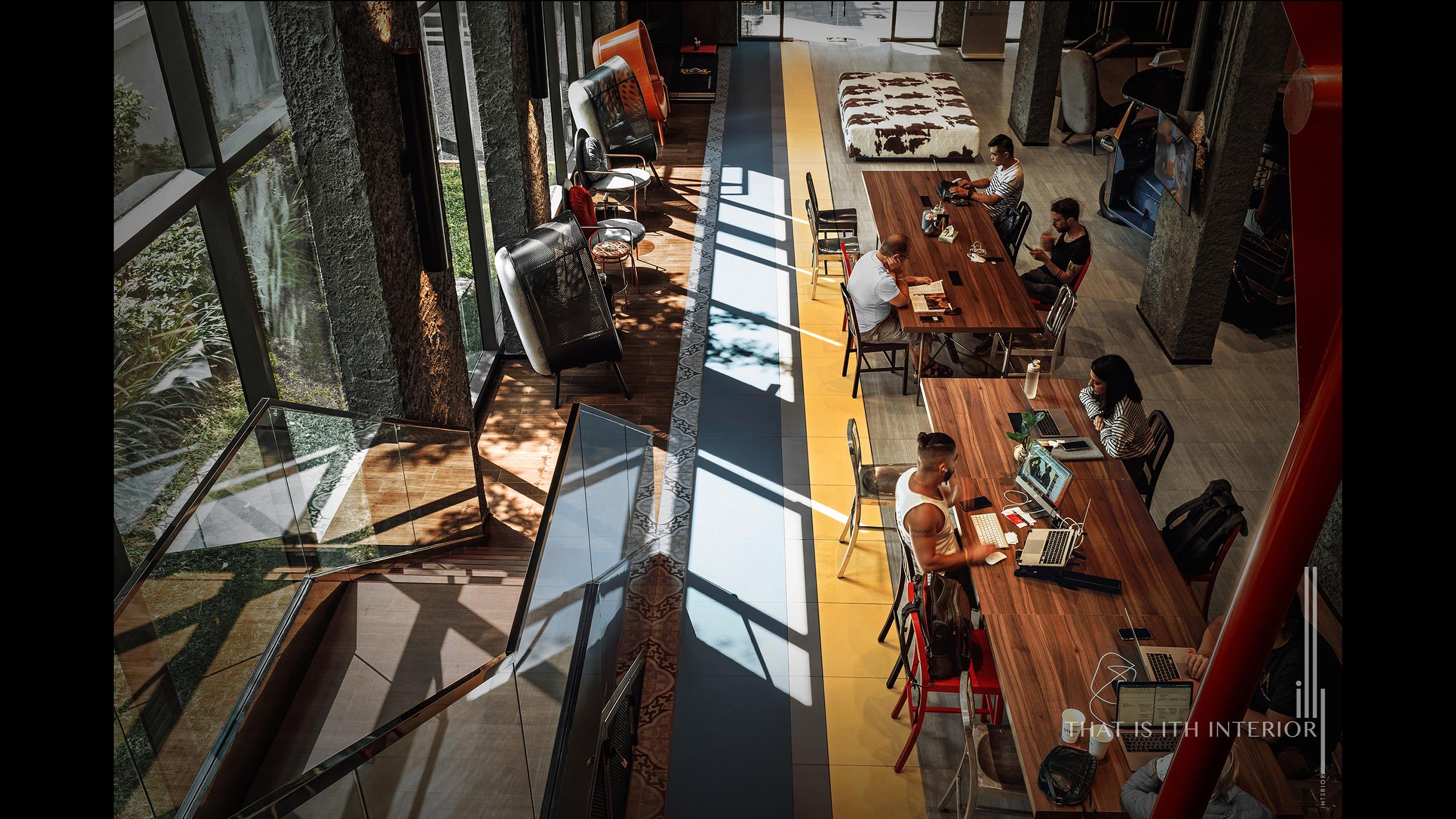
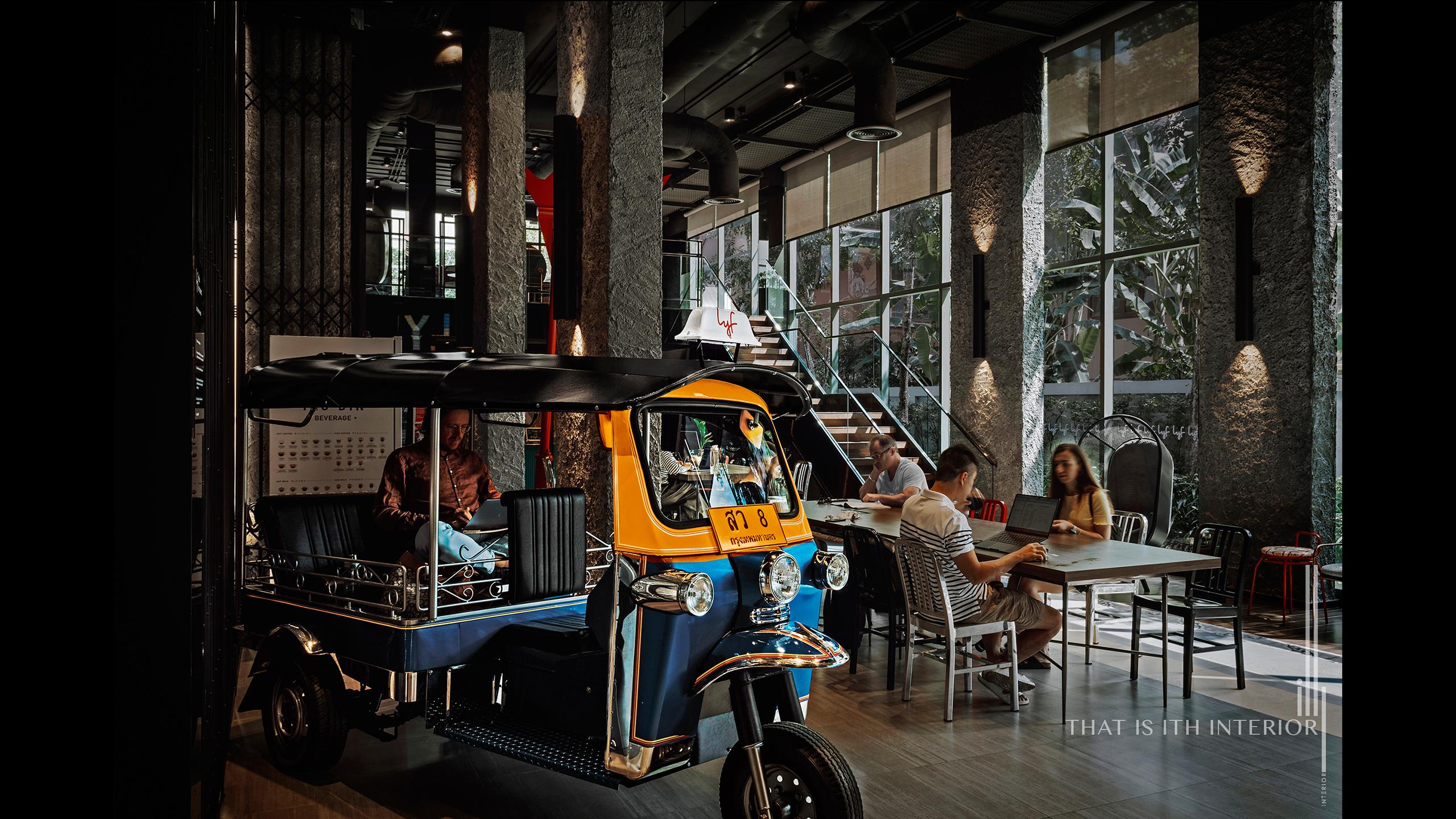
A lifestyle hospitality project such as lyf Sukhumvit 8 can respond to social behaviour through energy and interaction.
Another hotel may need exactly the opposite:
stillness,
privacy,
and retreat.
A visionary hotel designer does not ask which trend should be inserted into the project.
The more useful question is:
“What change in human behaviour is this trend revealing — and does it matter to this particular hotel?”
That is how trend awareness becomes design intelligence rather than imitation.
Wellness Should Be Part of the Environment, Not Only the Spa
Wellness in hospitality is often associated with designated amenities.
Spa.
Gym.
Treatment rooms.
Meditation.
Those spaces can be important.
But guests experience the hotel continuously.
Sleep quality.
Lighting.
Sound.
Air.
Temperature.
Privacy.
Movement.
Material tactility.
Access to landscape.
Views.
Ease of operation.
All influence wellbeing.
A room designed for genuinely good sleep may contribute more to daily wellness than an elaborate wellness programme guests never use.
The most powerful wellness design is often the design guests stop noticing because feeling better has become part of the environment.
That shifts wellness from an amenity category toward a broader hospitality principle.
A Hotel Should Have More Than One Emotional Temperature
Not every part of a hotel should feel equally energetic.
Arrival may be dramatic.
Guestroom floors can become quiet.
A restaurant may be social.
A spa should slow time.
A ballroom might carry ceremony.
A bar may become more active after dark.
One property can contain several emotional states.
The important thing is that they still feel connected.
Consistency does not require every room to speak at the same volume.
Hotels become richer when the guest can move between different experiences without feeling they have entered completely unrelated brands.
Identity creates coherence.
Atmosphere can still change.
Design for Repeat Experience, Not Only First Impression
The first visit to a beautiful hotel can be powerful.
But hospitality design should also survive familiarity.
A guest may stay several nights.
Return every year.
Walk the same corridor repeatedly.
Use the same lobby.
Eat breakfast in the same restaurant.
Design needs enough depth for repetition.
This is why constant visual spectacle can become exhausting.
Some spaces need to reveal themselves gradually.
A piece of craftsmanship may only be noticed on the third day.
Changing daylight can make the same lobby feel different.
A material becomes more interesting up close.
A quieter guestroom becomes increasingly appreciated after busy days outside.
The first impression creates excitement. Repeated experience creates attachment.
Hotel design needs both.
The Hotel Should Belong to the Brand Without Becoming a Brand Manual
Hotel brands often bring established standards.
That is useful.
Standards protect operational consistency and guest expectations.
But identity becomes weaker when standards become visual templates.
The same brand can operate differently in Bangkok, Phuket, London, or New York while remaining recognisably itself.
The designer’s role is therefore partly interpretive.
What should remain consistent?
What should respond to destination?
Where should the property express its own personality?
Brand consistency should create recognition without eliminating place.
The strongest hotel interiors allow brand and destination to sharpen one another instead of competing.
What Should Developers Look for in a Hotel Interior Designer in Thailand?
A strong portfolio should demonstrate more than visual impact.
Relevant built hospitality work
Hotels are operational environments.
Completed projects provide evidence beyond renderings.
Conceptual clarity
Can the designer explain why the property looks the way it does?
Portfolio diversity
Different brands, locations, scales, and target guests should produce different responses.
Guest journey thinking
Look beyond guestrooms and lobby hero shots.
How are arrival, circulation, transitions, and secondary spaces handled?
Understanding of operations
A hotel designer needs to think about service as well as emotion.
Material knowledge
Particularly under tropical and coastal conditions.
FF&E capability
Furniture, lighting, artwork, rugs, and objects influence both identity and performance.
Bespoke expertise
Can the studio develop project-specific elements when standard solutions are insufficient?
Technical development
A strong concept needs to survive documentation, coordination, fabrication, and construction.
Collaboration
Architecture, landscape, lighting, MEP, kitchen, branding, operator, and contractor teams all need coordination.
Local and international fluency
International developers need a partner who can understand global expectations without ignoring Thai project realities.
Perhaps the most revealing question is simple:
Can the designer explain why this particular hotel should feel exactly the way it does?
If the answer could apply equally well to ten other hotels, the concept may not yet be specific enough.
That’s ITH’s Approach to Hotel Interior Design in Thailand
At That’s ITH Interior, we do not begin a hotel project with a predetermined visual style.
We begin with identity.
Where is it?
Who is coming?
Why are they coming?
What does the brand stand for?
What does the architecture offer?
What should the destination contribute?
How should guests behave?
What should they remember?
And which part of the experience should become impossible to confuse with another property?
From there, the visual language can change dramatically.
One hotel may require expressive energy.
Another may need stillness.
A particular project may depend on bespoke craft.
Another may become more memorable by allowing landscape to become the protagonist.
One arrival may need drama.
Another needs intimacy.
The answer changes because the hotel changes.
For us, Fearless Luxury means having the confidence to create an identity specific enough to belong to one property rather than repeating a familiar formula of international luxury.
That does not mean design without discipline.
It means knowing which moments deserve attention — and which should quietly support them.
We do not aim for every hotel or hospitality project to look recognisably That’s ITH.
The consistency is in the judgment.
And ultimately, the objective is not simply to design a hotel guests recognise as luxurious.
It is to create a place they remember as itself.
Explore That’s ITH hospitality projects to see how different hotel, resort, restaurant, and destination briefs produce different spatial identities.
Planning a Hotel or Hospitality Project in Thailand?
The strongest hotel concepts develop when architecture, guest journey, operations, landscape, interiors, lighting, FF&E, and brand can influence one another before the major spatial decisions have already become fixed.
Led by founder and designer ITH PALACH, whose design career spans more than 25 years, That’s ITH Interior is a Bangkok-based interior design studio working across hospitality, resort, restaurant, residential, workplace, and commercial projects in Thailand and international markets.
Depending on the agreed project scope, our work can extend across concept design, interior design consultancy, space planning, materials, bespoke design, FF&E, design development, technical documentation, and coordination with multidisciplinary project teams.
Contact That’s ITH Interior to discuss your next hotel or hospitality development in Thailand.
Frequently Asked Questions
What does a hotel interior designer in Thailand do?
Depending on the project scope, a hotel interior designer may work across concept development, space planning, guest journey, materials, lighting coordination, bespoke furniture, FF&E, design development, technical documentation, and coordination with architects, operators, and specialist consultants.
What defines luxury hotel interior design in Thailand?
Strong luxury hotel design combines identity, guest experience, craftsmanship, operational intelligence, appropriate materials, precise planning, technical quality, and meaningful connection with the destination.
Luxury is not one aesthetic. A highly expressive hotel and a restrained property can both be luxurious when the design is specific and well resolved.
How should a hotel in Thailand express local identity?
Local identity does not require obvious Thai motifs.
Craft, materials, climate, landscape, spatial sequence, architectural traditions, food culture, and regional making processes can be interpreted through contemporary design.
The objective is to make the hotel belong to Thailand rather than simply look culturally themed.
How is boutique hotel interior design in Thailand different from large hotel design?
Boutique hotels can often develop more intimate narratives, room variation, and individual detail.
Large hotels need to coordinate repeated guestrooms, multiple F&B outlets, meeting and event environments, service systems, operational requirements, and larger multidisciplinary teams.
The challenge is different rather than one being inherently more creative.
What makes luxury modern hotel lobby design in Thailand successful?
A strong lobby should be considered as part of the entire arrival sequence.
Approach, threshold, reception, circulation, sightlines, lighting, furniture, acoustics, landscape, service, and scale all contribute to the first emotional understanding of the property.
Why is guestroom planning so important?
Guests use hotel rooms under many different conditions: sleeping, working, unpacking, bathing, charging devices, eating, relaxing, and preparing to leave.
Good planning makes those activities feel intuitive while keeping technology, storage, lighting, privacy, and furniture easy to use.
Why does material selection matter in Thai hotels?
Heat, humidity, strong daylight, heavy use, cleaning, and coastal conditions can all affect material performance.
Materials should therefore be considered for long-term ageing, maintenance, durability, and repairability as well as appearance.
Is bespoke design necessary in luxury hotels?
Not everywhere.
Bespoke design is most valuable where it creates identity or solves a project-specific spatial, functional, cultural, or experiential requirement more precisely than an existing product.
Should luxury hotels follow interior design trends?
Hotels should understand trends but avoid copying them literally.
The human or cultural change underneath a trend — such as changing expectations around wellness, privacy, craft, social behaviour, or technology — is usually more valuable than the temporary visual expression.
How important are hotel operations to interior design?
Extremely important.
Guest circulation, housekeeping, luggage, room service, maintenance, storage, F&B service, back-of-house movement, and operational requirements all influence the interior.
The strongest hotels make this complexity almost invisible to guests.
How should technology be integrated into luxury hotel rooms?
Technology should reduce friction.
Lighting, curtains, climate, charging, entertainment, and controls should feel intuitive and discreet.
The more sophisticated the technology becomes, the less attention it should demand from the guest.
What should developers look for in a luxury hotel interior designer in Thailand?
Look for relevant built hospitality experience, strong concept development, guest-journey thinking, operational understanding, material knowledge, FF&E expertise, bespoke capability, technical development, multidisciplinary collaboration, and a portfolio showing different responses to different locations and brands.
When should a hotel interior designer join the project?
Ideally during the early concept or planning stage.
Interior design can influence architecture, circulation, guestrooms, public areas, lighting, services, FF&E, materials, and operations before major decisions become difficult or expensive to change.
What makes a hotel timeless?
A hotel becomes more likely to age well when its identity grows from destination, proportion, behaviour, craft, materials, architecture, and guest experience rather than depending primarily on one fashionable visual movement.
Timelessness does not require neutrality.
It requires deeper reasons for the design decisions.
What is the most important principle in hotel interior design in Thailand?
Perhaps this:
Do not begin by asking what a luxury hotel should look like.
Ask:
“What should make this particular hotel impossible to mistake for another one?”
That question changes almost everything that follows.