
Luxury Home Interior Design in Thailand: What Makes It Different
A luxury home should not look more perfect after the owner moves in.
It should begin to look more like the owner.
A favourite chair moves closer to the window.
Books accumulate.
Artwork collected through years of travel finds its place.
Friends stay longer than expected.
Children grow.
Routines change.
And rooms begin to carry memories that could never have appeared in the original rendering.
That is where luxury home interior design becomes different from simply creating an impressive interior.
A luxury home is not defined by how expensive it looks. It is defined by how precisely it understands the life happening inside it.
In Thailand, that precision has another layer.
Climate.
Landscape.
Light.
Craft.
Ways of entertaining.
Family structures.
Domestic service.
The relationship between indoors and outdoors.
The realities of local construction and making.
A strong luxury home interior design in Thailand should therefore do more than import an international image of luxury into a Thai address.
It should become more intelligent because it is here.
What Is Luxury Home Interior Design in Thailand?
Luxury home interior design in Thailand is the planning and development of a highly personalised private living environment around the owner, architecture, location, climate, lifestyle, and long-term use of the property.
Depending on the project and agreed scope, it may include:
- client discovery and briefing
- space planning
- concept design
- material development
- lighting coordination
- bespoke furniture and joinery
- FF&E selection and specification
- art integration
- interior styling
- technology coordination
- design development
- construction documentation
- consultant coordination
- procurement support
- construction-stage design services
But those services alone do not make a home luxurious.
The more important question is what they are being used to achieve.
The objective is not to create a generic idea of a beautiful house. It is to create a home that would make less sense if it belonged to somebody else.
Begin With the Owner, Not With a Style
One of the first questions homeowners are often asked is:
“What style do you like?”
Modern.
Contemporary.
Minimal.
Classic.
Warm.
Hotel-like.
Those answers are useful.
But they reveal surprisingly little about how somebody actually lives.
A private home needs deeper questions.
Does the family eat together every night?
Do they entertain twenty people or two?
Does the owner collect art?
Who cooks?
Does domestic staff use a separate working kitchen?
Does somebody work late at home?
Which possessions need to be displayed?
Which need to disappear?
Does the family naturally spend time together, or do different people need independent territories?
How much privacy does each person need?
Those questions affect planning long before a stone sample is selected.
A wardrobe designed around an actual collection works differently from generic storage.
A dining room planned around how a family genuinely entertains behaves differently from a formal room included simply because a luxury house is expected to have one.
Personalised residential design begins when lifestyle is translated into space — not when taste is translated into finishes.
A Luxury Home Has to Resolve Contradictions
People are rarely as visually consistent as mood boards.
Someone can love minimalism and own hundreds of meaningful objects.
A couple can share a life without sharing the same idea of comfort.
A family can love entertaining and still want complete privacy once guests leave.
A client can ask for a hotel-like bedroom and simultaneously want it to feel deeply personal.
These are not bad briefs.
They are real ones.
The designer’s role is not to force every preference into one aesthetic category.
It is to find the spatial logic underneath the contradictions.
Perhaps minimalism requires exceptional concealed storage.
An open-plan house may still need movable boundaries.
A dramatic entertaining floor may require a completely separate family route.
A highly refined formal living room may need to coexist with another space where nobody worries about putting their feet on the sofa.
The contradiction is often more useful than the preference, because it tells us where the design actually has work to do.
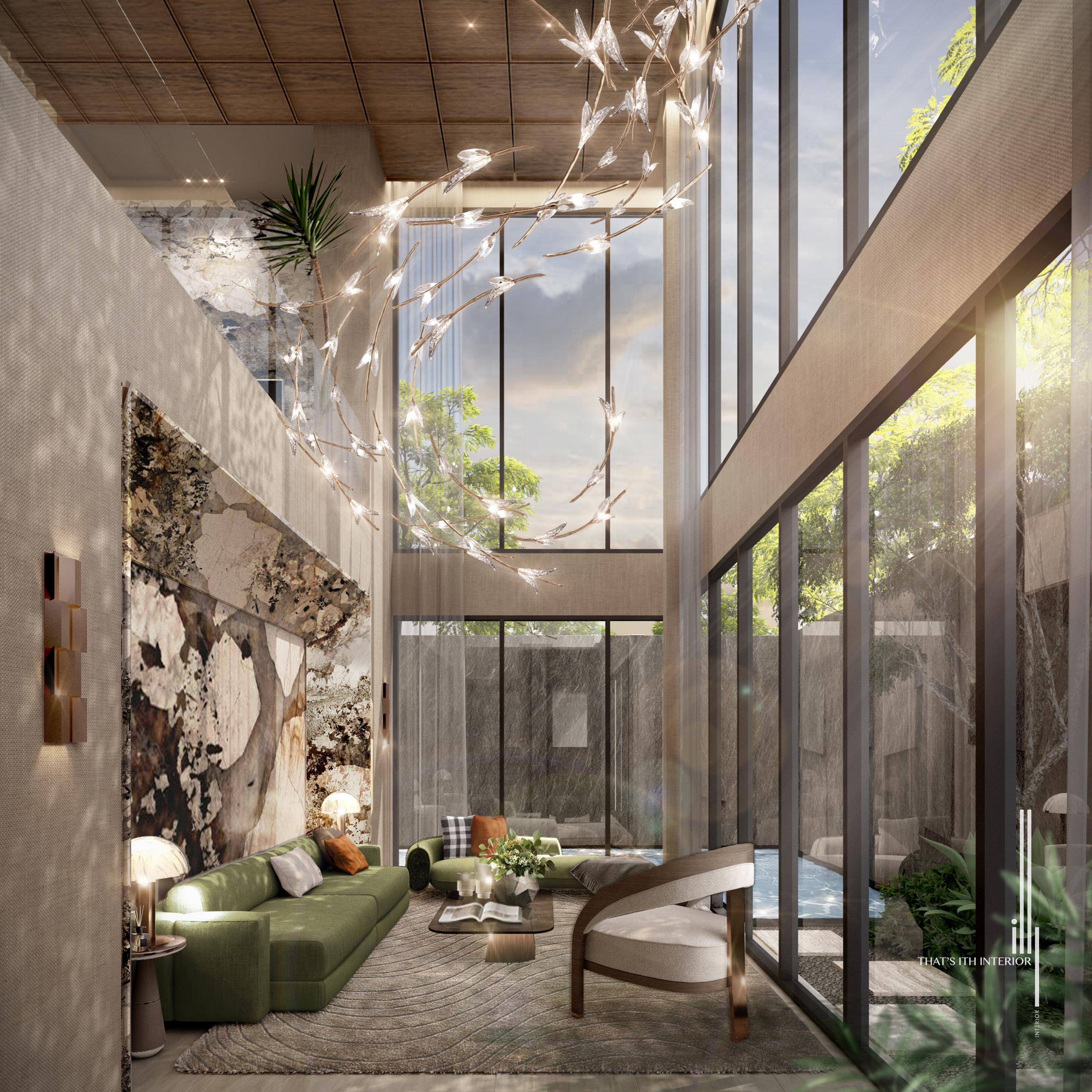
Design for Real Life, Not the Finished Photograph
Residential interiors are usually photographed at their most controlled moment.
Furniture is perfectly positioned.
Surfaces are clear.
Cushions behave themselves.
Real homes do not.
Shoes arrive.
Bags land somewhere.
Phones need charging.
Somebody eats at the kitchen island.
Someone works at the dining table.
Children occupy rooms differently as they grow.
Guests stay overnight.
The house accumulates life.
A successful luxury interior does not attempt to prevent that.
It anticipates it.
Storage should correspond to real belongings.
Electrical planning should follow actual habits.
Furniture should be comfortable enough to use repeatedly.
Circulation should still work when the house is full of people.
Lighting should create several atmospheres rather than one photogenic scene.
The objective is not to protect the interior from everyday life. It is to design an interior capable of becoming richer because everyday life happens inside it.
Space Itself Can Be a Form of Luxury
Large private homes create a temptation to fill.
More furniture.
More art.
More materials.
More features.
More statements.
But generosity of space is itself valuable.
An artwork becomes stronger when the wall around it is allowed to remain quiet.
A sculptural chair becomes more significant when it is not competing with five others.
A view becomes more powerful when nothing unnecessary interrupts it.
The same applies to circulation.
A longer approach to an important room can create anticipation.
A quiet corridor can separate social life from private life.
A generous threshold can make a transition feel intentional.
In Hyde Penthouse, scale and elevated urban living create an opportunity to consider not simply what should fill the space, but what should be allowed to remain open.
Restraint does not make a luxury home less expressive. It gives the important things enough room to be noticed.
Knowing what not to add is part of design judgment.
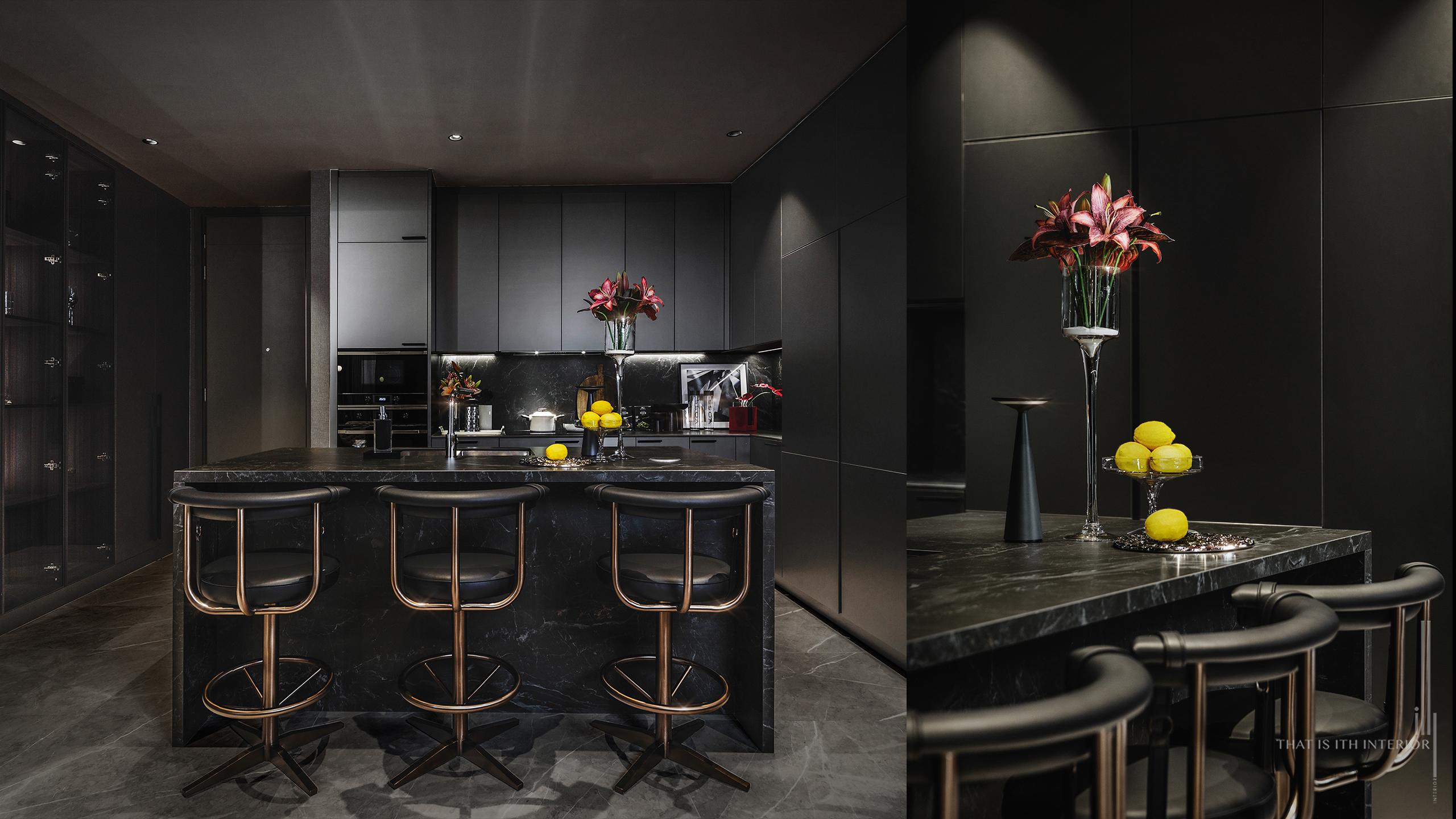
Thailand’s Climate Should Shape the Interior
A private residence in Thailand does not experience its environment in the same way as a house in London, Paris, or New York.
Strong sunlight.
Heat.
Humidity.
Tropical rain.
Landscape.
And, in coastal locations, salt air and greater material exposure.
These conditions should influence the concept from the beginning.
Not appear later as technical corrections.
Glazing should respond to heat and glare rather than simply maximise transparency.
Window treatments can soften daylight without eliminating the relationship with the exterior.
Materials need to be selected with some understanding of humidity, sunlight, touch, cleaning, and long-term ageing.
Covered terraces, courtyards, pools, landscape, deep thresholds, and shaded outdoor rooms can become part of daily life rather than decorative additions.
Luxury living in Thailand does not need to happen despite the climate. Some of the most memorable residential experiences happen because the design understands how to live with it.
Shade Can Be as Important as Sunlight
Luxury residential imagery often celebrates light.
But in Thailand, shade can be equally luxurious.
A deep veranda.
A covered poolside lounge.
A shaded courtyard.
A screened transition between rooms.
A window that receives reflected rather than direct light.
These spaces can be extraordinarily comfortable precisely because they are neither fully interior nor fully exterior.
Shade creates temperature difference.
It changes atmosphere.
It makes outdoor areas usable for longer.
And it can become part of the architectural identity of the home.
In tropical residential design, shade is not simply the absence of sunlight. It is a design material.
Indoor and Outdoor Living Should Feel Continuous — Not Simply Open
Large glass doors do not automatically create successful indoor-outdoor living.
The relationship depends on far more.
Floor levels.
Thresholds.
Rain.
Sun.
Privacy.
Air-conditioning.
Furniture.
Material performance.
Drainage.
Landscape.
Lighting.
Maintenance.
A terrace may look like an extension of the living room but become unusable for much of the afternoon because nobody studied the sun.
A completely transparent room may feel extraordinary by day and exposed after dark.
The objective is therefore not maximum openness.
It is creating the sense that architecture, interior, and landscape belong to one continuous living environment while allowing each to perform properly.
Projects such as ANANN Villas Phuket and The Title Villa Kirara Phuket demonstrate different ways in which water, landscape, interior, and privacy can become part of the same residential experience.
Bespoke Design Should Translate Personal Habits Into Form
Few design typologies can become as specific as a private home.
A dining table can be designed around exactly how a family gathers.
A wardrobe can reflect what somebody actually owns.
A cabinet can be developed for one particular art collection.
A desk can orient precisely toward the view its owner loves.
A wine room can respond to the way someone collects.
A library can grow around books accumulated over decades.
This is where bespoke design becomes meaningful.
Not because something is unique.
But because its uniqueness has a reason.
A bespoke piece becomes luxurious when it solves something specific about the person, architecture, or story of the home — not simply because nobody else owns one.
The strongest interiors often mix bespoke pieces with existing furniture, art, inherited objects, and internationally sourced design.
Everything does not need to be custom.
Judgment lies in knowing what deserves to exist only once.
Thailand Offers More Than Local Sourcing
Thailand has a strong ecosystem of furniture manufacturing, joinery, stone fabrication, metalwork, textiles, specialist finishing, and craft.
The value of working within that ecosystem is not simply lower cost or easier sourcing.
It is access to knowledge.
A skilled timber craftsperson understands the behaviour of material differently from a rendering.
A stone fabricator may identify a possibility the drawing did not anticipate.
A metalworker may refine a junction.
A local maker may know how a material will behave after years in Thailand’s climate.
This allows design and making to inform one another.
And local craft does not require a traditionally Thai visual language.
A regional technique can be abstracted.
A familiar material can be used at an unfamiliar scale.
Traditional knowledge can produce highly contemporary work.
Thai soul does not require Thai decoration.
The more interesting opportunity is to combine global design grammar with local intelligence.
Material Luxury Is About Relationship, Not Quantity
Luxury homes often use exceptional materials.
But the strongest material palettes are rarely the largest.
Stone.
Timber.
Metal.
Plaster.
Textiles.
Glass.
Hand-finished surfaces.
Each has character.
The designer’s task is not to show all of them at once.
It is to create hierarchy.
Stone should be allowed to reveal variation.
Timber should communicate grain.
A crafted surface does not necessarily need to look mechanically perfect.
And every material should be considered not only on installation day, but in relation to what happens later.
Will it scratch?
Patina?
Fade?
Stain?
Require specialist maintenance?
Will the owner enjoy that ageing — or hate it?
Neither answer is more sophisticated.
The material simply needs to be right for the person who will live with it.
True material luxury is not choosing the most precious surface. It is choosing one whose beauty survives a real relationship with its owner.
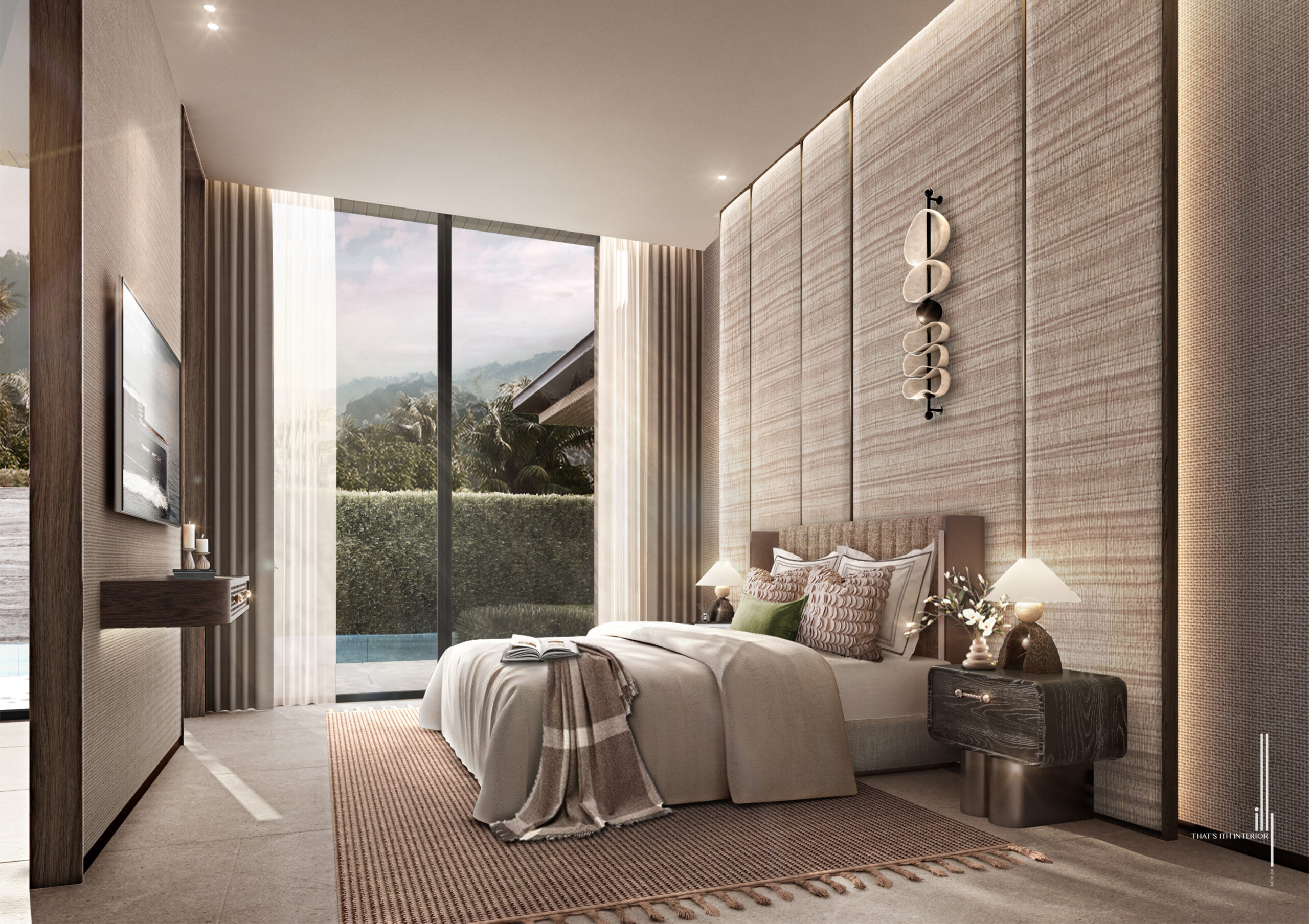
Lighting Should Follow the Rhythm of Life
A private residence changes hour by hour.
Morning might be bright and energetic.
Afternoon sunlight can become intense.
Dinner requires another mood.
Late evening may need almost no light at all.
Lighting should respond to those transitions.
Natural light comes first.
Where does it enter?
When does it become uncomfortable?
Where does a view become strongest?
Which material becomes more beautiful under grazing light?
Which artwork requires protection?
Artificial lighting can then create layers.
Task lighting for actual activities.
Accent lighting for art and materials.
Low-level lighting for navigation.
Decorative fixtures where architecture gives them enough room to matter.
Not every surface needs illumination.
Sophisticated lighting creates hierarchy. It knows what should emerge — and what should be allowed to disappear.
Privacy Is About Control, Not Isolation
Luxury villas and large residences often celebrate openness.
Living rooms connect to pools.
Glazing connects interiors with gardens.
Social spaces flow into one another.
But openness only feels luxurious when the owner still has control.
Guests may need to move through public spaces without crossing private family areas.
Bedrooms should remain psychologically separated from entertaining zones.
Home offices may require acoustic privacy without total physical isolation.
Service circulation might need to function discreetly during events.
Landscape can provide screening.
Orientation can control sightlines.
Level changes can establish hierarchy.
Privacy is not simply the ability to close a door. It is the ability to decide how much of your life is available to other people at any given moment.
That control is itself a form of luxury.
Design the Kitchen Around Culture, Not Assumption
Few rooms reveal household behaviour as clearly as the kitchen.
For one family, cooking is the centre of social life.
For another, the primary kitchen may be operated mainly by household staff.
Some homeowners want one open kitchen connected directly to dining and living.
Others prefer a social show kitchen with a separate preparation or heavy-cooking kitchen.
Cooking habits can also influence ventilation, storage, appliance choice, cleaning, and circulation.
There is no universally correct luxury kitchen.
Bigger is not automatically better.
More stone is not automatically more luxurious.
A luxury kitchen is one unusually precise about how that particular household prepares food, eats, gathers, and entertains.
Furniture Should Be Curated, Not Merely Purchased
FF&E plays a major role in residential identity.
But a deeply personal home should rarely feel as though everything arrived from the same catalogue on the same afternoon.
A richer interior might combine:
- bespoke furniture
- international design pieces
- local craftsmanship
- vintage furniture
- inherited objects
- art
- books
- objects collected through travel
- things with no design pedigree whatsoever but enormous emotional value
The designer’s job is not to erase those differences.
It is to compose them.
Scale matters.
A beautiful sofa can still be wrong if it weakens the architecture.
A decorative light can overwhelm the table beneath it.
A rug can unify a room or make every piece feel disconnected.
Luxury does not come from owning exceptional objects. It comes from creating relationships between them.
Integrate Art Before the Walls Are Finished
For many private clients, art already exists before the new home does.
That collection can influence the architecture.
A major painting may require a particular wall proportion.
A sculpture may change a circulation route.
A series of works may need controlled daylight.
A collection may require storage, conservation, lighting, or environmental considerations.
Art should therefore not always be treated as the final styling layer.
Sometimes the room should be designed around the artwork.
Styling remains important — bringing furniture, books, textiles, objects, and art into final relationship — but the objective should not be to make the residence look staged.
A meaningful home should contain evidence of a life.
Art.
Books.
Travel.
Family history.
Objects whose value has nothing to do with price.
Those layers should deepen the interior rather than disappear behind it.
Approach Luxury Home Renovation as Editing, Not Erasure
A luxury home renovation in Thailand begins with something a new build does not have:
a past.
That past may contain problems.
It may also contain value.
An existing staircase may have beautiful proportions.
Original stone may have developed character.
Timber may be worth restoring.
A mature tree may matter more than another extension.
A courtyard may remain fundamental to the house even if everything around it changes.
The strongest renovation process therefore begins by asking:
What deserves to remain?
Removing everything and starting again is not automatically more transformative.
A designer may simplify an overcomplicated material palette.
Remove unnecessary architectural layers.
Open particular sightlines.
Introduce contemporary elements against original ones.
Or deliberately preserve evidence of another moment in the building’s life.
Sometimes the most radical act in renovation is not invention. It is recognition.
Recognising what was already good.
And what the house has finally outgrown.
Technology Should Create Less Work, Not More
Lighting.
Climate control.
Security.
Curtains.
Audio.
Access.
Entertainment.
Modern luxury homes can contain increasingly sophisticated technology.
But sophistication should reduce friction.
Not produce more interfaces for the owner to manage.
Technology works best when considered early enough to become part of the architecture.
Switch positions.
Sensors.
Speakers.
Keypads.
Screens.
Access points.
Automated shading.
Mechanical controls.
All can be coordinated so the user experiences convenience rather than equipment.
The smarter the home becomes, the less intelligent its owner should have to be just to operate it.
The most refined technology often becomes noticeable only when it stops working.
A Luxury Home Should Be Able to Change
Private residences may remain with a family for decades.
The family will not remain the same.
Children grow.
Parents age.
Work patterns change.
Collections evolve.
Technology changes.
Entertaining habits change.
A room that once served one purpose may need another.
Designing for longevity therefore does not mean making everything neutral.
A highly expressive home can age beautifully when its character comes from people, architecture, craft, material, and place rather than a short-lived aesthetic trend.
Flexibility can come from:
- useful room proportions
- adaptable furniture layouts
- future-ready infrastructure
- storage
- accessibility thinking
- lighting that supports several uses
- spaces capable of changing function
A timeless home should be specific enough to have personality and flexible enough to evolve without losing it.
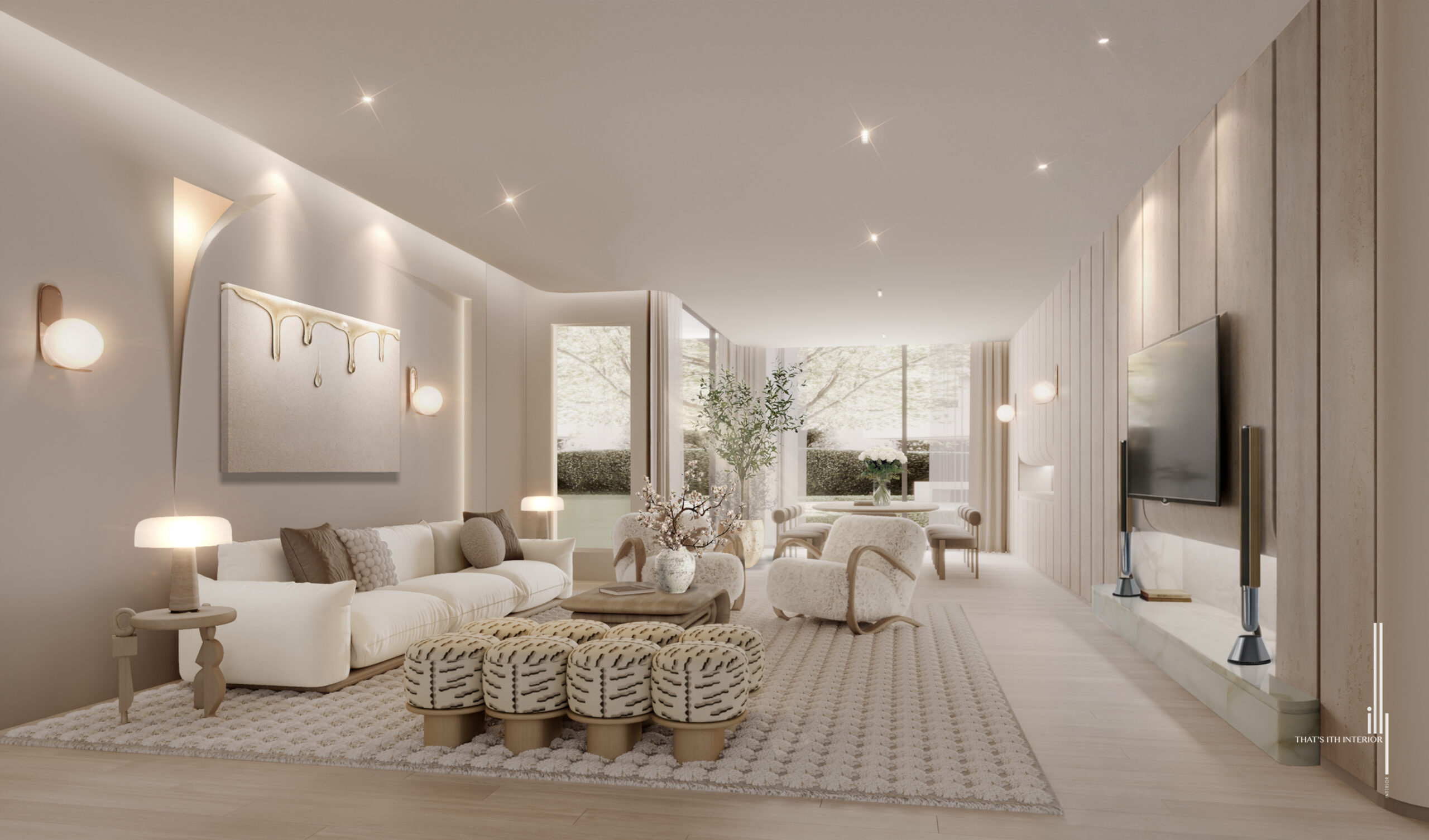
Luxury Home Interior Design for International Owners in Thailand
Many homeowners building or renovating in Thailand spend significant time elsewhere.
That adds another layer to the design process.
Remote meetings.
Material approvals.
Samples.
Decision schedules.
Mock-ups.
Site updates.
Documentation.
Clear communication becomes essential.
But efficiency should not flatten the personal nature of residential design.
A designer still needs to understand the owner intimately enough for the home to feel personal — even when the owner is thousands of kilometres away.
Local knowledge becomes particularly valuable here.
Not because an international client needs their home to become more “local.”
But because ambitious design still has to interact with local climate, builders, fabricators, materials, regulations, lead times, and construction realities.
The role of the designer is translation: international expectation into local reality without losing the individuality that made the project worth building in the first place.
What Should You Look for in a Luxury Home Interior Designer in Thailand?
A portfolio with different answers
Different families should not automatically produce identical homes.
A recognisable way of thinking is more meaningful than a repeated visual formula.
Strong spatial planning
Luxury begins with how the home works before it begins with what fills it.
Material intelligence
The designer should understand how materials feel, perform, age, and respond to Thailand’s climate.
Bespoke capability
Not because everything needs to be custom, but because private residential design sometimes requires solutions no catalogue can provide.
Technical capability
Ideas have to survive documentation, coordination, fabrication, and construction.
FF&E and art sensitivity
Architecture alone does not create a lived-in home.
Local execution knowledge
Understanding Thai construction, fabrication, craft, sourcing, and climate can make ambitious ideas more realistic.
The ability to listen — and challenge
A designer should understand what the homeowner asks for.
And also be capable of discovering what sits beneath the request.
The best residential designer does not simply translate a client’s taste. They translate a life the client may not know how to describe in design language.
That’s ITH’s Approach to Luxury Home Interior Design
At That’s ITH Interior, we do not believe a private residence should become a showroom for a designer’s signature style.
The owner is the starting point.
How they wake up.
How they gather.
How they entertain.
Where they disappear when they want privacy.
What they collect.
What they keep.
What they show.
What they hide.
What they remember.
And what they want the home to feel like when nobody else is there.
From there, the visual language can emerge.
One residence may require expressive materiality.
Another restraint.
One might be shaped around art.
Another around landscape.
One around family rituals.
Another around a collection of furniture, objects, or memories accumulated over decades.
The homes do not need to look alike.
Because the people do not.
For us, Fearless Luxury in residential design is the confidence to create what belongs to one particular owner rather than repeating somebody else’s idea of luxury.
True luxury is specificity.
Not more marble.
Not more brands.
Not more square metres.
A home becomes luxurious when the design understands its owner so precisely that another person could admire it — but could never fully inherit its meaning.
That is why the consistency in our residential work is not a signature look.
The consistency is in the judgment.
Explore That’s ITH residential and villa projects.
Planning a Luxury Home, Villa or Penthouse in Thailand?
The most valuable residential design conversations happen before the architecture, planning, lighting, materials, and lifestyle assumptions have already been fixed.
Led by founder and designer ITH Palach, That’s ITH Interior is a Bangkok-based interior design studio working across private residences, villas, penthouses, hospitality, and commercial projects in Thailand and international markets.
We collaborate with homeowners, families, architects, landscape architects, contractors, artisans, fabricators, and multidisciplinary teams to translate lifestyle, identity, architecture, climate, and long-term needs into distinctive private environments.
Contact That’s ITH Interior to discuss your next private residence, villa, penthouse, or luxury home renovation in Thailand.
Frequently Asked Questions
What is luxury home interior design in Thailand?
Luxury home interior design in Thailand is a highly personalised residential design process that responds to the homeowner, architecture, lifestyle, climate, location, and long-term use of the property.
Depending on the project scope, it may include concept design, space planning, materials, bespoke furniture, lighting coordination, FF&E, art integration, design development, technical documentation, and construction-stage services.
What makes luxury home interior design in Thailand different?
Thailand’s climate, strong indoor-outdoor lifestyle, tropical landscape, local fabrication capabilities, craft traditions, construction environment, and household patterns can all influence residential design.
The strongest projects use those conditions intelligently rather than simply importing a generic international luxury aesthetic.
How do I choose a luxury home interior designer in Thailand?
Look for strong built residential work, varied design responses across different clients, spatial planning ability, material and technical knowledge, bespoke design capability, FF&E experience, and understanding of Thailand’s climate and execution environment.
Just as importantly, look for a designer whose process begins with how you actually live.
When should a luxury home interior designer become involved?
Ideally during architecture or early planning.
Early involvement allows furniture layouts, circulation, storage, bathrooms, lighting, electrical requirements, ceilings, materials, technology, and other interior considerations to be coordinated before important decisions become difficult to change.
What should be considered when renovating a luxury home in Thailand?
A major renovation should examine what deserves to remain as carefully as what needs to change.
Existing architecture, materials, mature landscape, structural conditions, building systems, current lifestyle requirements, lighting, climate performance, and long-term flexibility should all inform the new design.
Is bespoke furniture necessary in a luxury home?
No.
Bespoke furniture and joinery are most valuable when they solve a specific architectural, functional, or personal requirement that existing products cannot address as precisely.
The strongest homes often combine bespoke pieces with sourced furniture, art, inherited objects, and personal collections.
How should a luxury home in Thailand respond to the climate?
The design should consider sunlight, heat, humidity, heavy rain, shade, ventilation, UV exposure, material performance, landscape, drainage, and the relationship between conditioned and semi-outdoor spaces.
Climate should influence planning and material decisions from the beginning rather than appearing later as a technical correction.
Can luxury home interior design still feel personal if the owner lives overseas?
Yes.
Structured communication, remote meetings, material samples, mock-ups, documented approvals, and clear decision schedules can support international owners.
But the design process should still investigate lifestyle, habits, collections, privacy, comfort, and long-term needs deeply enough for the finished home to remain genuinely personal.
How can a luxury home feel timeless?
Timelessness comes less from making the interior visually neutral and more from strong proportion, thoughtful planning, material authenticity, craftsmanship, adaptability, and an identity connected to the people and place rather than a short-lived trend.
What is the most important quality in luxury home interior design?
Specificity.
The home should understand its owner deeply enough that the finished design could not simply be transferred unchanged to another person, another life, or another place.