
Who Designed Award-Winning Hotels in Thailand?
Thailand has become one of Asia’s most important hospitality destinations.
Bangkok combines international hotels, riverside institutions, lifestyle properties, destination restaurants, and large-scale event environments.
Phuket and other resort destinations offer another world entirely — shaped by landscape, privacy, climate, and the psychology of escape.
Across the country, hospitality properties increasingly compete not only through location and service, but through the experience their spaces create.
That naturally raises a question:
Who designed the award-winning hotels in Thailand?
The answer is more complicated than naming one designer.
Major hotels are highly collaborative environments.
One studio may design the guestrooms.
Another may work on restaurants.
A specialist might design the ballroom.
Landscape, lighting, architecture, branding, art, and other disciplines may each involve different teams.
So when researching an award-winning hotel interior designer in Thailand, the more accurate question is:
Who designed the particular space that received the recognition — and what does that work reveal about their capability?
That distinction matters.
Because an award attached to a hotel name does not necessarily mean one designer created the entire property.
What Does “Award-Winning Hotel Interior Design” Actually Mean?
Interior design awards recognise specific projects, scopes, or categories.
Depending on the programme, a recognised project may be evaluated for qualities including:
- concept and creativity
- guest experience
- spatial planning
- functionality
- materiality
- craftsmanship
- innovation
- technical execution
- atmosphere
- response to place
For developers, awards can provide useful external evidence that a project has attracted professional recognition.
But the logo alone tells only part of the story.
Ask:
What exactly was recognised?
A ballroom?
A restaurant?
Guestrooms?
A hotel lobby?
The whole hotel interior?
And what design challenge did that particular space need to solve?
Awards become more useful when we understand the work behind them.
That is particularly important in hospitality, where different spaces require very different forms of design intelligence.
Why One Hotel May Have Several Designers
A hotel is not one design problem.
It is many.
A ballroom has to support celebration, different configurations, technical infrastructure, large groups, and complex service requirements.
A restaurant depends on atmosphere, acoustics, seating comfort, kitchen and service circulation, lighting, and the emotional rhythm of dining.
Guestrooms need privacy, intuitive function, acoustics, storage, lighting, durability, and comfort.
A lifestyle hotel may place far greater emphasis on communal behaviour and social interaction.
A resort may rely on landscape, climate, arrival sequence, and the relationship between public and private experience.
These spaces may exist inside one property.
But they should not necessarily be designed in the same way.
That is why accurate project credits matter.
The hotel may have one name. The design challenges inside it do not.
Royal Orchid Sheraton Bangkok Ballroom: Designing Celebration
One award-recognised hospitality project by THAT’S ITH INTERIOR is the Royal Orchid Sheraton Bangkok Ballroom.
The distinction is important.
The THAT’S ITH scope relates to the ballroom and conference facilities — not the entire hotel.
The project was recognised at the Asia Pacific Property Awards in the Hotel Conference Facilities Interior category.
Ballrooms are deceptively difficult environments.
They need flexibility.
Lighting conditions need to change.
Furniture configurations change.
Events range from corporate gatherings to weddings and celebrations.
Hundreds of people may arrive or leave almost simultaneously.
Technology and operational infrastructure need to perform without dominating the experience.
Yet functionality alone can easily produce anonymity.
For the Royal Orchid Sheraton Ballroom, the design concept Celebration on the Chao Phraya draws from the hotel’s relationship with the river and the idea of gathering aboard a grand journey.
The aim was not simply to create another luxurious event room.
It was to give celebration a sense of place.
A room designed to accommodate many different events can still possess a memory of its own.
That balance between flexibility and identity is one of the more difficult challenges in hospitality interiors.
Silver Waves at Chatrium Riverside Bangkok: When Dining Becomes Destination
Silver Waves at Chatrium Riverside Bangkok presents an entirely different hospitality problem.
Located high above the Chao Phraya River, the restaurant combines contemporary Cantonese dining with panoramic views over Bangkok.
Here, the designer is not solving the same problem as a ballroom.
A restaurant is experienced through:
arrival,
table position,
lighting,
sound,
material,
furniture,
food,
service,
view,
and time.
The atmosphere at lunch may need to feel different from dinner.
The view is important — but the interior cannot simply disappear.
Service needs to remain efficient without constantly reminding guests that an operation is happening around them.
The project received recognition through the Asia Pacific Property Awards in the Hotel Bar Interior category.
What makes the project useful as evidence is not simply the award.
It demonstrates another kind of hospitality intelligence.
Atmosphere and operation should not compete.
The stronger design makes one reinforce the other.
And an F&B venue inside a hotel should have enough identity to become a destination of its own.
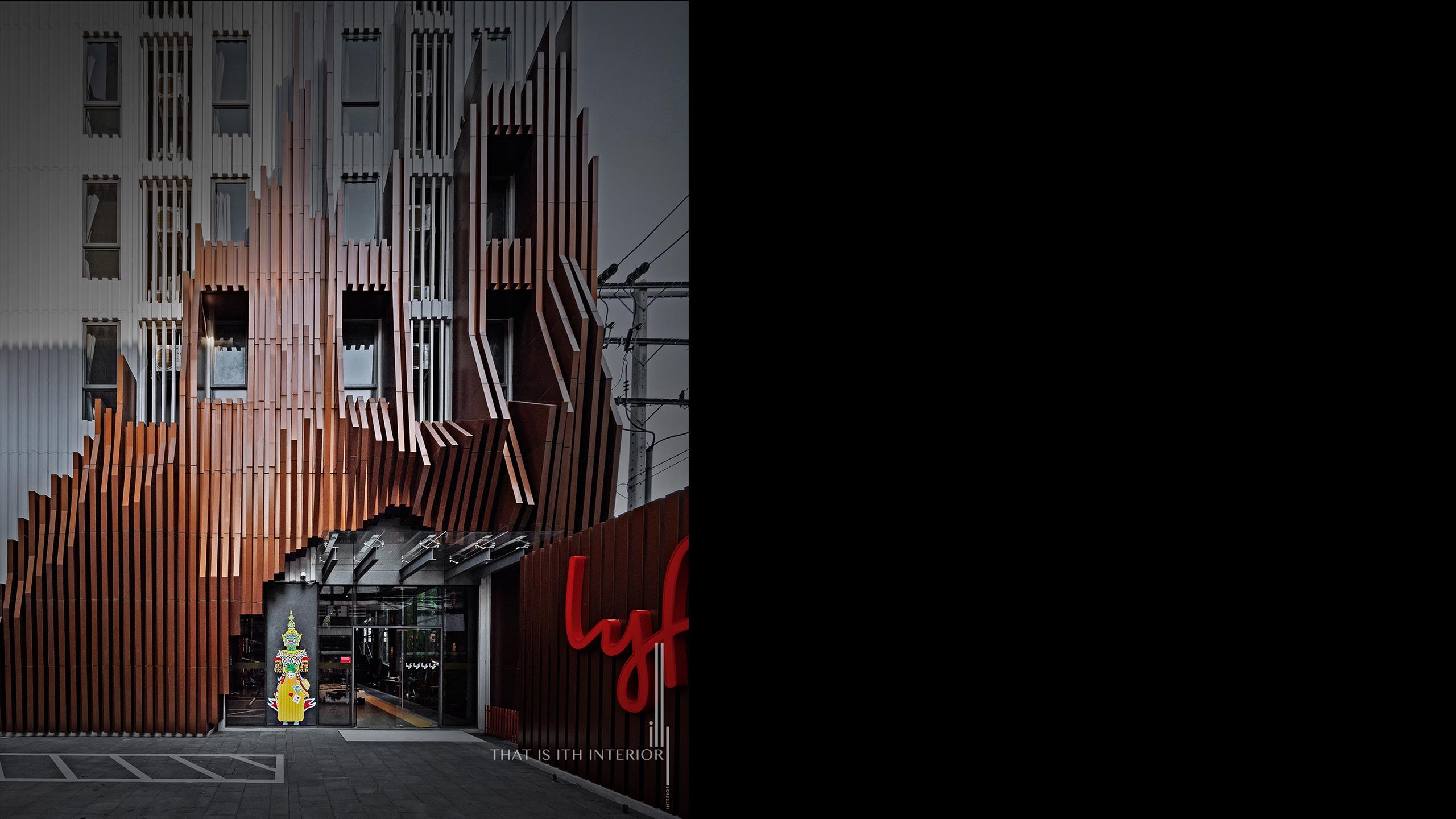
lyf Sukhumvit 8 Bangkok: Award-Winning Hospitality Without Conventional Luxury
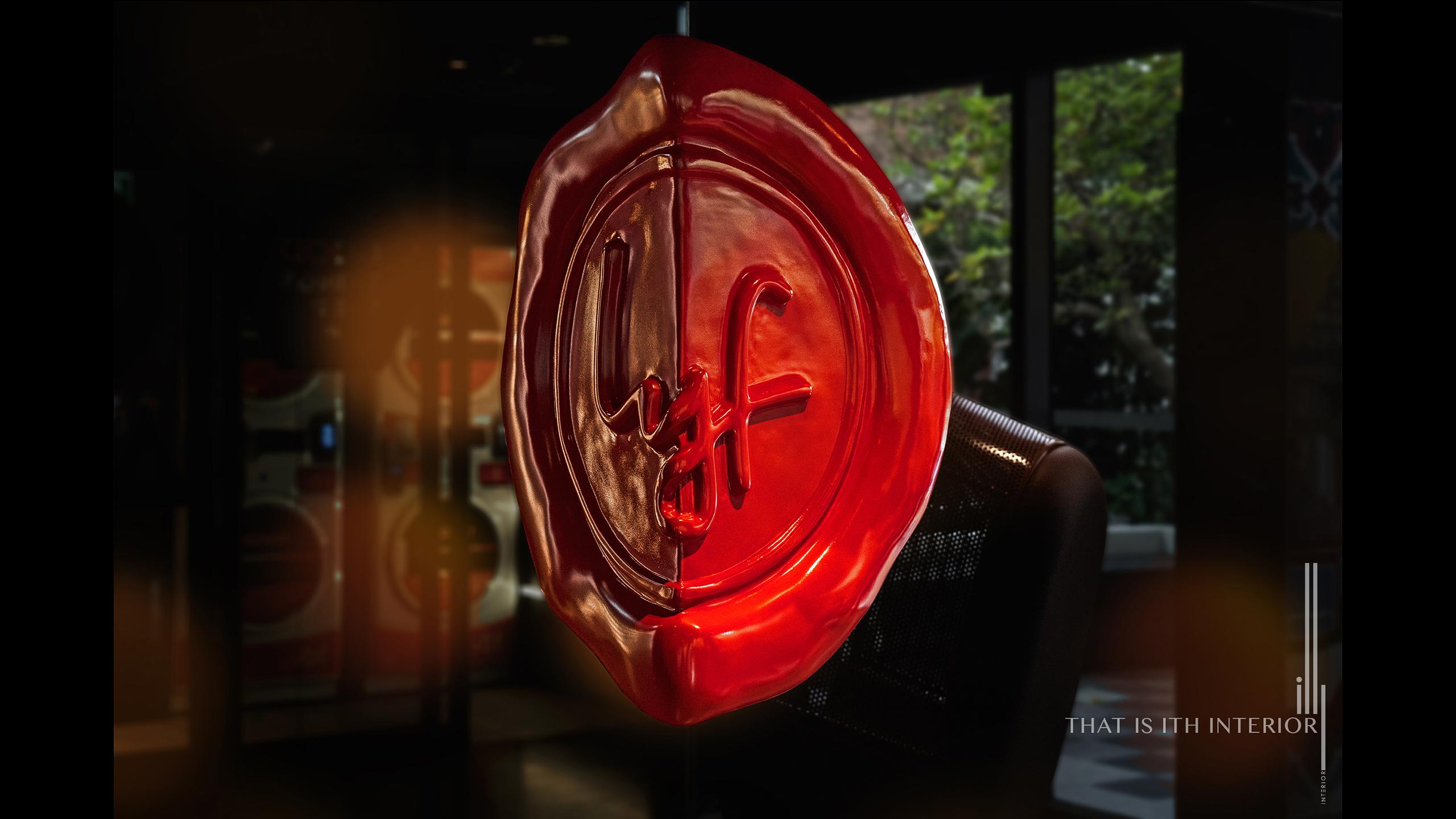
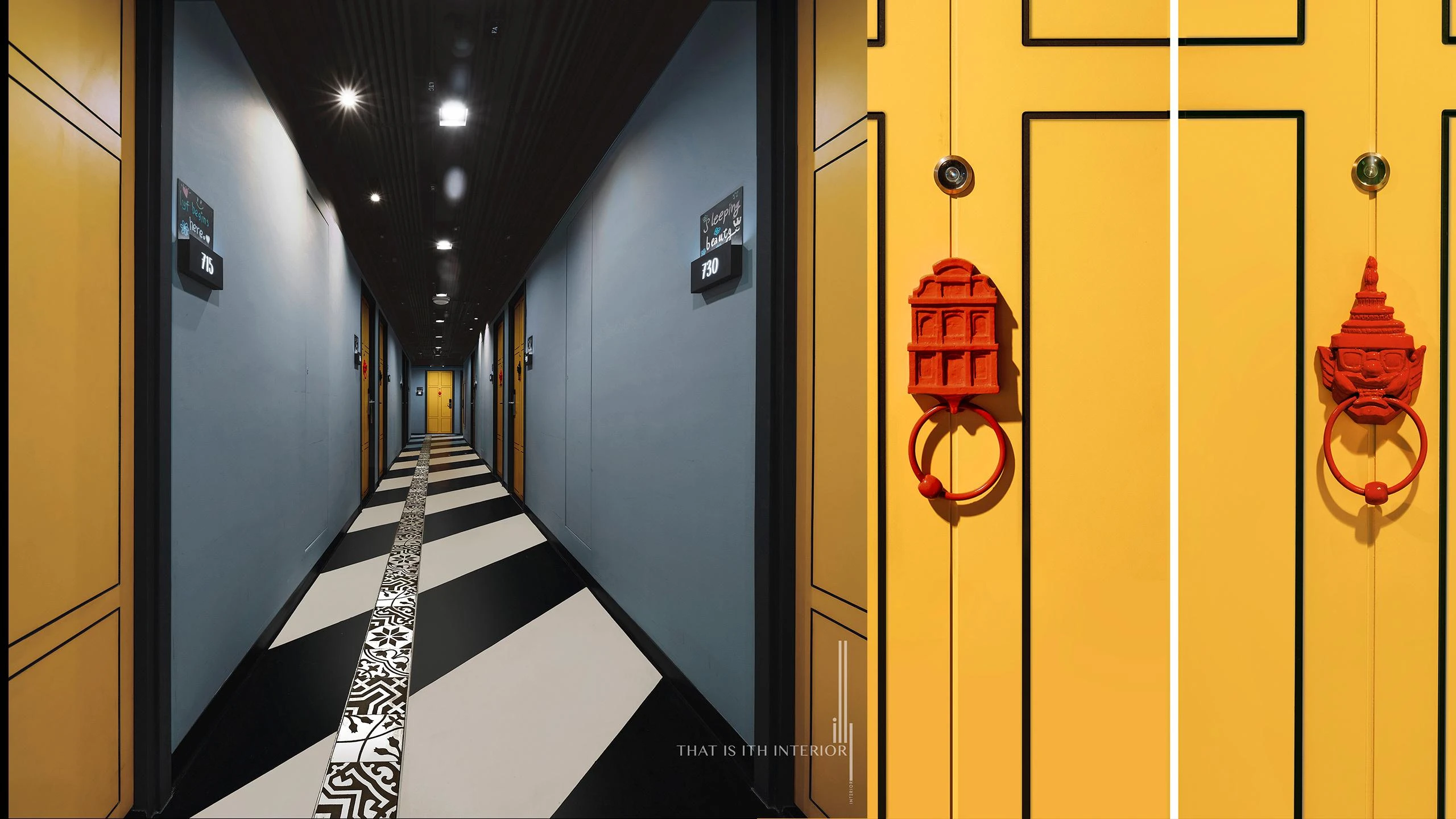
lyf Sukhumvit 8 Bangkok offers another completely different answer.
This is not traditional five-star hospitality.
The property is built around:
social interaction,
urban energy,
communal space,
informality,
and the behaviour of a younger generation of travellers.
Its design draws from memories of Bangkok — including the tuk-tuk — but translates those references with humour and contemporary attitude rather than reproducing them nostalgically.
The project has received international design recognition, including recognition within the INSIDE Hotels category at the World Architecture Festival, and DEmark 2025.
Its significance goes beyond the awards.
lyf demonstrates something fundamental about hospitality design:
Award-winning hotels do not need to share one definition of luxury.
A social lifestyle property should not behave like a grand riverside hotel.
The guest is different.
The behaviour is different.
The emotional objective is different.
Therefore, the design should be different too.
What These Projects Reveal About Hotel Interior Design
Put the three projects beside one another.
Royal Orchid Sheraton Bangkok Ballroom.
Silver Waves at Chatrium Riverside Bangkok.
lyf Sukhumvit 8 Bangkok.
They barely resemble one another.
That is precisely what makes the comparison useful.
One is about celebration and large-scale gathering.
One is about dining, atmosphere, and destination F&B.
One is about social hospitality and contemporary urban behaviour.
The design problems change.
Therefore the design language changes.
For an interior studio working across hospitality, adaptability is not inconsistency.
It can be evidence of a stronger underlying method.
The consistency does not need to be in how the projects look.
It can be in the quality of judgment behind them.
Award-Winning Hotel Design Requires More Than Beauty
Awards naturally bring attention to the visual result.
But hotels are working environments.
They operate every day.
Guests arrive continuously.
Housekeeping moves constantly.
Furniture is used repeatedly.
Restaurants go through intensive service.
Ballrooms transform.
Materials are cleaned.
Technology needs maintenance.
That means hotel interior design must reconcile two worlds.
Experience and operation.
A reception desk can be sculptural.
But staff still need to work behind it.
A restaurant can be theatrical.
But servers still need to move efficiently.
A guestroom can be visually beautiful.
But a guest arriving exhausted at midnight still needs to understand how to turn off the lights.
These details may never become the hero photograph.
Yet they often determine whether the guest experiences the hotel as genuinely luxurious.
The most successful hotel design makes complexity disappear.
The guest experiences ease.
Behind that ease may be years of coordination.
Guest Journey Matters as Much as Individual Rooms
Guests do not experience hotels as floor plans.
They experience sequences.
Approach.
Entrance.
Arrival.
Reception.
Transition.
Corridor.
Room.
Dining.
Gathering.
Retreat.
Departure.
Each moment can change the emotional temperature.
A strong arrival can create anticipation.
A corridor can gradually reduce stimulation before a guest enters the room.
A restaurant entrance can make discovery part of dining.
A ballroom foyer can prepare guests psychologically before the event itself.
This is why hospitality design becomes closer to choreography than decoration.
Space planning solves function. Guest journey design adds emotion.
The designer is not simply arranging rooms.
They are deciding what people experience — and when.
Sense of Place Should Not Become Cultural Decoration
Award-winning hospitality in Thailand does not require every property to display obvious Thai motifs.
Thailand can influence a project through:
climate,
craft,
material,
food culture,
architecture,
landscape,
social rituals,
ways of gathering,
or even a particular memory of place.
The designer’s task is interpretation.
Not illustration.
A traditional craft can become contemporary.
A familiar material can be used unexpectedly.
A vernacular principle can influence shade, threshold, or sequence without becoming a decorative motif.
Thai soul does not require Thai decoration.
The objective is not to make a hotel look local.
It is to make the hotel belong.
That distinction becomes increasingly important as global hospitality becomes visually sophisticated but also increasingly easy to reproduce.
Generic luxury is easier to copy.
Specificity is harder.
Awards Should Reveal Capability, Not Become a Formula
Recognition creates an interesting risk.
When one project succeeds, the temptation is to repeat what made it visible.
The colour.
The material language.
The dramatic gesture.
The atmosphere.
The “signature.”
But what worked for one project may become completely wrong for the next.
A lifestyle hotel needs another rhythm from a ballroom.
A restaurant needs another intensity from a guestroom.
A resort may need architecture to become almost secondary to landscape.
Recognition should create confidence — not repetition.
A strong design studio should be able to carry the same standard of thinking into a completely different brief without carrying the same visual answer with it.
That is a harder test than creating a signature style.
Built Work Still Matters More Than Award Logos
Awards can attract attention.
Built work builds trust.
A completed hospitality project shows whether the idea survived:
construction,
materials,
fabrication,
operations,
coordination,
budget,
and real use.
Look beyond the hero image.
Look at the transitions.
Joinery.
Lighting.
Furniture.
Material junctions.
Circulation.
Acoustics.
The way bespoke pieces were fabricated.
And, importantly, how the environment behaves when it is full of people.
A rendering shows what a studio can imagine.
A built project shows what its process can deliver.
For developers selecting a hospitality interior designer, that distinction matters enormously.
THAT’S ITH: Award-Recognised Hospitality Design Without a Signature Formula
THAT’S ITH INTERIOR is a Bangkok-based interior design studio founded and creatively led by ITH PALACH, whose professional design career spans more than 25 years.
The studio works across hospitality, residential, restaurant, workplace, and lifestyle projects in Thailand and international markets.
Our core belief is simple:
People are more interesting than styles.
For hospitality, that means we do not begin by asking what the property should look like.
We begin by asking:
Who is coming here?
Why are they coming?
How should they behave?
What does the brand stand for?
What does the destination contribute?
What should guests remember?
And what is the project asking for that may not yet have been said explicitly?
We call that deeper layer The Unspoken Brief.
A formal hotel brief may specify rooms, functions, brand standards, budgets, and operational requirements.
The Unspoken Brief asks:
What emotional gap is this property trying to fill?
What is missing from the market?
What should guests say about it when they return home?
Which moment needs to carry the identity?
What should never feel generic?
These questions often lead to more distinctive answers than beginning with style.
Fearless Luxury: Recognition Without Repetition
THAT’S ITH describes its design territory as Fearless Luxury.
But Fearless Luxury is not one visual language.
It does not mean every project needs to be dramatic.
Sometimes fearless means colour.
Sometimes restraint.
Sometimes craftsmanship.
Sometimes a theatrical sequence.
Sometimes allowing the landscape, view, or human behaviour to carry almost all of the emotional weight.
Fearless means having enough conviction to make the decision the project actually needs.
And luxury, for us, increasingly comes from specificity rather than excess.
That is why Royal Orchid Sheraton Ballroom, Silver Waves, and lyf Sukhumvit 8 speak completely different visual languages.
They should.
Their guests are different.
Their purposes are different.
Their behaviours are different.
The consistency is not in the aesthetic. It is in the judgment.
How Should Developers Read Hotel Design Awards?
Instead of counting trophies, ask more useful questions.
Which organisation granted the recognition?
Which project?
Which year?
Which category?
Was the project built?
What was the designer’s actual scope?
What problem was the design solving?
And is that experience relevant to your development?
Five highly relevant projects may tell a developer more than twenty unrelated awards.
A recognised ballroom project may reveal expertise in:
flexibility,
large gatherings,
technical infrastructure,
event experience,
and hospitality operations.
A recognised restaurant reveals another set of capabilities.
A lifestyle hotel provides evidence of understanding social behaviour and contemporary hospitality.
Awards provide evidence.
The category tells you what kind.
What Should Developers Look for Beyond Awards?
Before appointing a hospitality interior designer in Thailand, consider:
- relevant completed work
- design philosophy
- guest-journey thinking
- operational understanding
- experience with the required hospitality typology
- FF&E capability
- bespoke design
- material and climate knowledge
- technical development
- multidisciplinary coordination
- understanding of brand standards
- ability to protect design intent through change
And pay attention to one additional thing.
Does the designer improve the quality of the brief during the conversation?
A strong designer should ask questions that make the project clearer before drawing anything.
What is the guest really coming here for?
What should be the emotional centre of the property?
Where should money be spent?
Where can the design become quieter?
What cannot be lost during value engineering?
What should people remember?
Those questions reveal more about design intelligence than a collection of visual references.
Who Designed Award-Winning Hotels in Thailand?
There is no single answer.
Thailand’s hospitality landscape is shaped by many talented architects, interior designers, consultants, operators, artists, lighting designers, landscape designers, and specialist teams.
For clients researching a particular hotel, the most accurate approach is always to identify the project, design scope, and award category individually.
THAT’S ITH INTERIOR is one Bangkok studio with internationally recognised hospitality work across:
hotel conference and event environments,
hotel dining,
and contemporary social hospitality.
Projects including Royal Orchid Sheraton Bangkok Ballroom, Silver Waves at Chatrium Riverside Bangkok, and lyf Sukhumvit 8 Bangkok demonstrate different hospitality challenges rather than one repeated aesthetic.
For us, that difference is important.
Awards tell us the work has been noticed.
The more interesting question is why it deserved to be noticed.
And ultimately, the ambition is not to design a hotel that looks award-winning.
It is to create a place that works so precisely for its guests, operator, brand, and destination that recognition becomes a consequence.
Planning a Hospitality Project in Thailand?
The most useful time to involve an interior designer is often before the major architectural, operational, and experiential decisions are already fixed.
THAT’S ITH works with developers, hotel operators, architects, consultants, and multidisciplinary teams across Thailand and international markets.
We do not begin by asking which previous THAT’S ITH project you want yours to resemble.
We begin with:
“What should make this place impossible to confuse with another one?”
Contact THAT’S ITH INTERIOR to discuss your next hotel, resort, restaurant, ballroom, or hospitality development.
You do not need to begin with a style.
Finding the Unspoken Brief is part of the work.
Frequently Asked Questions
Who designed the Royal Orchid Sheraton Bangkok interiors?
Major hotels can involve several design teams working on different areas.
THAT’S ITH’s scope at Royal Orchid Sheraton Bangkok relates specifically to the ballroom and conference facilities, rather than the entire hotel.
The project received recognition through the Asia Pacific Property Awards in the Hotel Conference Facilities Interior category.
Who designed Silver Waves at Chatrium Riverside Bangkok?
THAT’S ITH INTERIOR designed Silver Waves at Chatrium Riverside Bangkok.
The project has received recognition through the Asia Pacific Property Awards in the Hotel Bar Interior category.
Is lyf Sukhumvit 8 Bangkok an award-recognised interior design project?
Yes.
lyf Sukhumvit 8 Bangkok has received design recognition including DEmark 2025 and international recognition within the INSIDE Hotels category at the World Architecture Festival.
Does an interior design award mean the designer created the entire hotel?
No.
Hotels often involve several architects, interior designers, lighting consultants, landscape designers, artists, engineers, and other specialists.
Always verify the precise project area and scope associated with the award.
What makes hotel interior design award-worthy?
There is no single formula.
Strong recognised hospitality projects often combine a clear concept, guest experience, operational intelligence, technical resolution, materials, craftsmanship, sense of place, and a coherent relationship between individual design decisions.
Should developers hire a designer because they have won awards?
Awards can provide useful evidence of recognised work.
They should be evaluated alongside built experience, relevant project type, technical capability, operational understanding, collaboration, and design philosophy.
Why is built work important when evaluating a hotel interior designer?
Built work reveals whether the concept survived construction, coordination, materials, fabrication, operational requirements, and real use.
Renderings communicate intention.
Completed projects demonstrate delivery.
What is The Unspoken Brief in hospitality design?
The Unspoken Brief refers to needs, behaviours, tensions, aspirations, and emotional objectives that may not appear explicitly in the formal project brief.
It can include the guest behaviour a hotel wants to encourage, a market experience that is missing, an operational frustration, or the memory the property hopes to create.
Does THAT’S ITH have a signature hotel style?
Not in the conventional sense.
Different hospitality projects are intentionally allowed to develop different visual identities.
For THAT’S ITH, the consistency lies in the thinking rather than the appearance.
Who leads THAT’S ITH INTERIOR?
THAT’S ITH is founded and creatively led by ITH PALACH, whose professional design career spans more than 25 years.
Does THAT’S ITH work on hospitality projects outside Thailand?
Yes.
The studio works across hospitality and other interior environments in Thailand and international markets, with project scope defined according to each commission.
What question should developers ask a hospitality designer before appointing them?
One useful question is:
“Why should this property feel different from every other hotel competing for the same guest?”
The answer can reveal whether the designer is approaching the project as a style exercise — or as a specific hospitality problem worth solving.