
Luxury Villa Interior Design Companies in Thailand: How to Choose
A luxury villa should feel personal before it feels impressive.
It may contain generous spaces, valuable materials, custom furniture, art, a private pool, and extraordinary architecture.
But none of those things automatically makes it a good home.
A villa succeeds when the architecture, interior, landscape, privacy, climate, and daily life begin to behave as one system.
For clients searching for a luxury villa interior design company in Thailand, the most important question is therefore not:
“Which designer creates the most luxurious-looking villas?”
A more useful question is:
“Which designer can understand how we actually want to live — and turn that into a home that could not belong quite as naturally to somebody else?”
Because the deeper luxury of a private villa is not scale.
It is control.
Control over when to gather.
When to disappear.
When to open the house to landscape.
When to close the world outside.
When to entertain.
And when the architecture should ask absolutely nothing of you.
That level of specificity requires more than good taste.
It requires judgment.
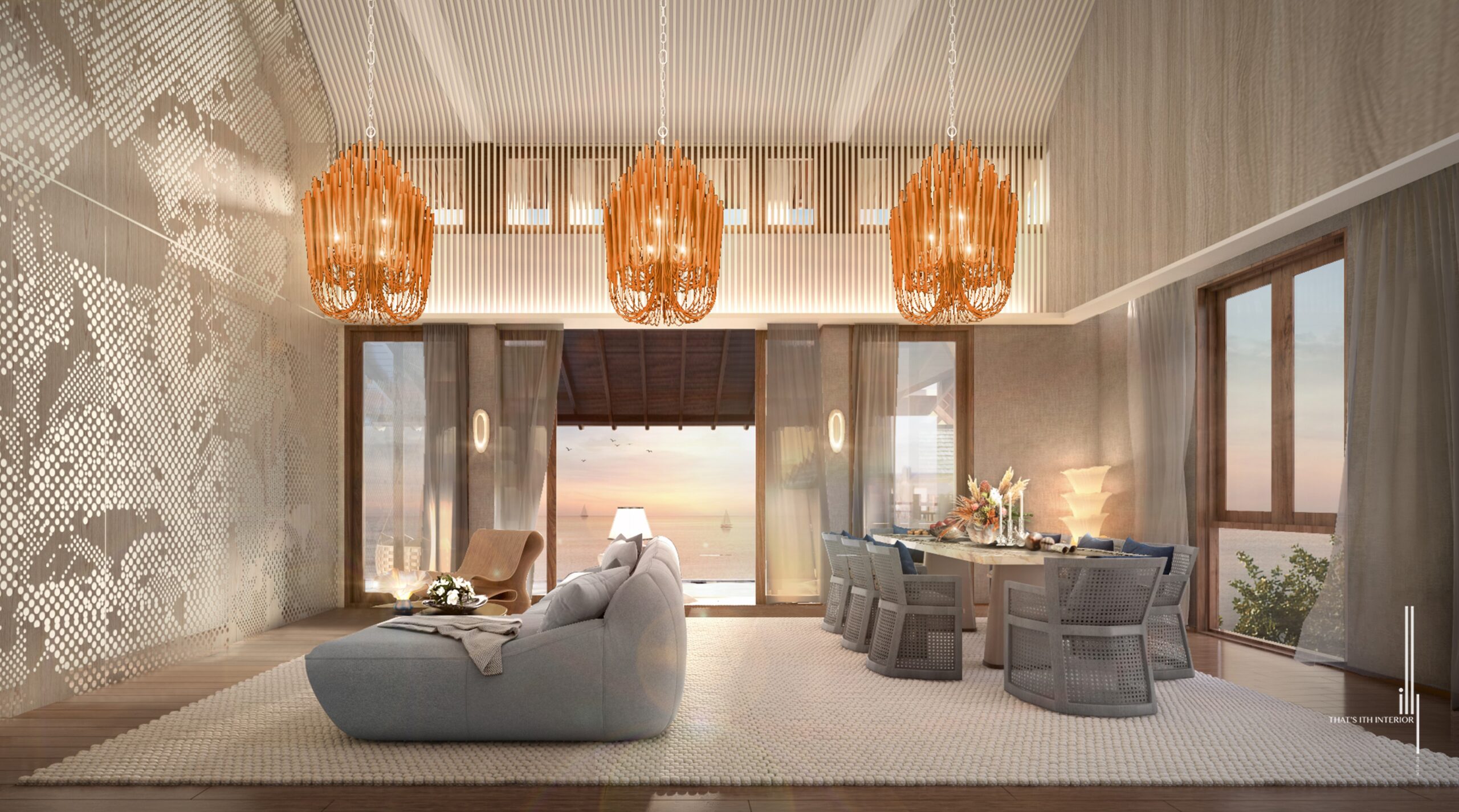
What Does a Luxury Villa Interior Design Company Do?
A luxury villa interior designer can become involved long before furniture selection.
Depending on the agreed scope, services may include:
- concept design
- space planning
- material development
- lighting direction
- FF&E
- bespoke furniture and joinery
- design development
- technical documentation
- and coordination with architects and specialist consultants
For villa projects, the relationship between interior, architecture, and landscape becomes particularly important.
A living room may open directly to a garden.
A bedroom may frame a private courtyard.
A pool may become part of the main spatial composition.
A terrace may function as another living room for much of the year.
These disciplines remain professionally distinct.
But the homeowner does not experience them separately.
They experience one home.
That is why the strongest villa projects feel less like architecture containing an interior and more like one continuous environment.
1. The Homeowner Comes Before the Style
Residential design begins with people.
Not categories.
Not “modern luxury.”
Not a Pinterest folder.
Not the designer’s signature.
A private villa is created for specific individuals whose lives rarely fit neatly into one aesthetic label.
Do they entertain often?
Cook?
Collect art?
Work from home?
Have children or extended family?
Employ household staff?
Wake early?
Stay up late?
Spend more time outside than inside?
Need complete privacy?
Want the house to feel social at weekends but almost silent during the week?
These questions influence the design more deeply than style references alone.
A client might ask for an open-plan living space because they want more family interaction.
Another may want large areas of glazing but dislike feeling visible from outside.
Someone may love minimal interiors yet own objects they would never consider removing because of who those objects remind them of.
The interesting part of the brief is sometimes the contradiction, not the preference.
A strong designer does not erase those contradictions.
They use them.
Because that is often where the house begins to become personal.
2. Look for a Designer Who Finds the Unspoken Brief
Most clients arrive with a stated brief.
Number of bedrooms.
Preferred materials.
Furniture references.
Storage requirements.
Pool.
Kitchen.
Entertainment areas.
Budget.
Timeline.
But another brief often sits underneath it.
At THAT’S ITH, we call this The Unspoken Brief.
It may be found in:
habits,
memories,
rituals,
insecurities,
attachments,
relationships,
objects,
or things clients say almost casually.
Perhaps someone says they want an enormous dining room but rarely host formal dinners.
Why?
Maybe the real desire is not dining.
It is the feeling of being a generous host.
Someone may insist on privacy while asking for expansive glass walls.
That tension is not a mistake.
It is information.
The stated brief tells the designer what the client is asking for.
The Unspoken Brief helps reveal what they are really trying to achieve.
The best luxury villa interiors often emerge from that second conversation.
3. Luxury Villa Interior Design in Thailand Should Respond to Place
Thailand does not offer one villa condition.
Bangkok.
Phuket.
Coastal environments.
Dense urban neighbourhoods.
Private compounds.
Mountain settings.
Each creates different design opportunities.
A Bangkok villa may need to negotiate:
neighbours,
urban noise,
privacy,
heat,
and limited sightlines.
A Phuket villa may engage much more directly with:
landscape,
wind,
rain,
topography,
views,
and outdoor living.
The site should influence planning.
Material choices.
Orientation.
Privacy.
Lighting.
How architecture opens and closes.
Location should have consequences.
A villa in Phuket should not simply look “tropical.”
A Bangkok villa should not simply look “urban luxury.”
The more interesting question is:
What can this particular site allow the home to become?
A strong villa should lose something essential if removed from its location.
That is a deeper form of belonging.
4. Privacy Is One of the Real Luxuries of Villa Living
Private villas are often designed around openness.
Large glazing.
Long views.
Courtyards.
Pools.
Gardens.
Indoor-outdoor living.
But openness creates another requirement:
privacy.
And privacy is more sophisticated than simply adding walls.
It involves:
sightlines,
orientation,
planting,
levels,
distance,
sound,
lighting,
circulation,
screens,
and the relationship between family, guests, staff, and neighbouring properties.
The objective is not to make the house feel defensive.
It is to give the homeowner control over exposure.
When do I want to see the world?
When do I want the world to see me?
Where can guests go?
Where does family territory begin?
Can one person entertain while another disappears?
Privacy is not simply being hidden. It is having the freedom to choose when to be visible.
That kind of control can feel more luxurious than additional square metres.
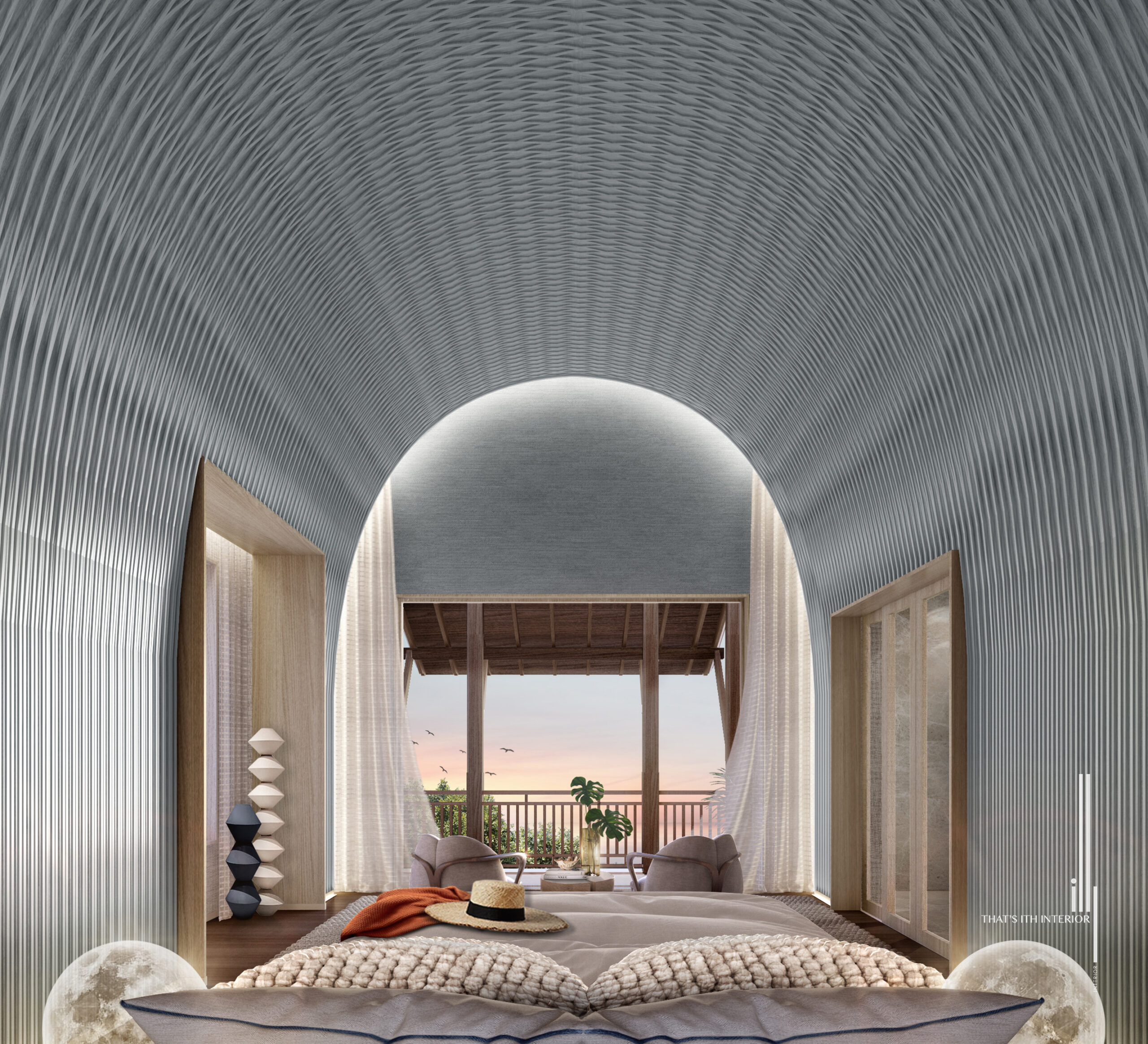
5. A Private Pool Should Be Part of the House, Not an Amenity Beside It
In Thailand, the pool often becomes central to villa life.
But the strongest private pool villa design in Thailand does not treat water as a separate feature placed outside the building.
The pool can influence:
the living room,
bedrooms,
terraces,
views,
movement,
light,
privacy,
and the emotional centre of the house.
A living room may open directly toward water.
A bedroom may have a more private relationship with the pool.
Outdoor dining may become an extension of the interior.
Reflections can change the quality of light inside.
But practical questions matter too.
Shade.
Safety.
Maintenance.
Glare.
Slip resistance.
Drainage.
Privacy.
Material transitions.
A pool becomes meaningful when it changes the way the house is lived in — not simply when it looks beautiful from above.
6. Indoor-Outdoor Living Is a Climate Problem Before It Is a Visual One
Large sliding doors do not automatically create successful tropical living.
Thailand brings:
heat,
humidity,
rain,
insects,
strong sunlight,
and changing airflow.
The design needs to work with these realities.
Deep terraces.
Covered walkways.
Courtyards.
Shaded seating.
Planting.
Cross-ventilation.
Carefully positioned openings.
Appropriate furniture.
Durable materials.
All contribute to whether outdoor living actually gets used.
The objective is not to make the villa look tropical.
It is to make tropical living comfortable.
This distinction matters.
Because many spaces photograph beautifully with every door open.
The more useful question is whether the homeowner will still want those doors open on an ordinary afternoon in April.
Good design begins where the photograph stops.
7. Landscape Should Participate in the Interior
Landscape is not simply what is left outside after the architecture is complete.
It can influence the entire interior experience.
Planting can create privacy.
A tree can become the focal point of a room.
A courtyard may bring light into the centre of the house.
A long view can determine furniture orientation.
Landscape can conceal neighbouring buildings.
A garden can create a threshold between public and private life.
This requires strong collaboration between architect, interior designer, and landscape designer.
Each discipline has its own expertise.
But the homeowner experiences one environment.
The garden should not decorate the house.
The house and garden should explain each other.
That relationship becomes especially valuable in Thailand, where climate allows exterior space to become part of everyday living rather than simply something seen through glass.
8. Modern Luxury Does Not Mean Cold Minimalism
Luxury modern villa interior design in Thailand is often associated with clean lines, large volumes, stone, timber, and expansive glazing.
But modern does not need to mean emotionally neutral.
A contemporary villa can be:
warm,
layered,
tactile,
colourful,
personal,
and deeply expressive.
The more useful distinction is not between minimal and decorative.
It is between edited and unresolved.
Modern luxury asks:
What deserves to remain?
Which material needs to dominate?
Where does art need breathing room?
Which detail deserves attention?
What can disappear?
Minimalism asks how much can be removed. Modern luxury asks what deserves to remain.
Sometimes that means restraint.
Sometimes it means one extraordinary gesture.
The objective is not emptiness.
It is clarity.
9. Bespoke Furniture Should Have a Reason to Exist
Bespoke furniture can become particularly meaningful in private villas.
A dining table might respond precisely to the way one family gathers.
A library may be designed around a particular collection.
A wardrobe may reflect one person’s routines.
A piece of furniture may solve an unusual architectural condition.
A sculptural object might carry a memory.
But custom-made does not automatically mean better.
A designer does not need to customise everything to prove the project is luxurious.
Sometimes an existing piece is already perfect.
Sometimes a vintage object brings more character.
Sometimes a chair inherited from a grandparent carries more emotional value than anything newly commissioned.
The more useful question is:
“What deserves to exist only once?”
The answer may be large.
Or almost invisible.
The important word in bespoke is not expensive. It is specific.
10. Material Selection Should Consider the Next Ten Years
Villa materials are lived with repeatedly.
The homeowner touches them.
Walks across them.
Cleans them.
Spills on them.
Watches sunlight fall on them every morning.
Sees them age.
Material quality should therefore be considered through more than a sample board.
How will timber change?
Will stone become more beautiful with use?
How much maintenance does the surface require?
How does the material behave in humidity?
Does it feel comfortable under bare feet?
Can it be repaired?
How will it look after five years?
A villa is not designed for handover day.
It is designed for what happens afterwards.
In residential design, ageing can even become part of the character.
The aim does not always need to be keeping everything permanently new.
Sometimes material that develops a beautiful patina makes the home feel increasingly lived in — and increasingly its owner’s.
11. Lighting Should Follow Life, Not Just Architecture
A villa changes through the day.
Morning.
Afternoon.
Dinner.
Entertaining.
Reading.
Rest.
Late night.
Lighting should change with it.
Natural light is the first layer.
Architectural lighting can support space and material.
Decorative lighting can contribute atmosphere and personality.
But no one lighting scene should try to do everything.
A dining area at breakfast should not necessarily feel like the same room at midnight.
A living room may need social energy when entertaining and intimacy when only two people are home.
Bedrooms should support rest rather than simply photograph dramatically.
A good home does not maintain one mood. It knows when to change it.
Lighting is one of the most powerful ways to create that adaptability.
12. Luxury Is Often About Knowing When to Stop
Large villas create temptation.
More rooms.
More material.
More furniture.
More art.
More lighting.
More custom details.
More “features.”
But eventually everything begins competing.
Everything cannot be the protagonist.
A view may need an empty wall beside it.
One important artwork may need distance.
A beautiful piece of stone may become less special when five other materials demand equal attention.
The most confident luxury interiors understand hierarchy.
Some things deserve emphasis.
Others exist to support them.
Fearless Luxury sometimes means adding something extraordinary.
Sometimes it means having enough confidence to leave the space alone.
13. A Villa Should Support Several Versions of the Same Person
People are not consistent.
At breakfast, someone may want sunlight and family noise.
At night, the same person may want darkness and absolute privacy.
Someone can love entertaining forty people and still need a room where nobody enters.
A homeowner may enjoy dramatic design in one part of the house and near silence in another.
This is why a villa does not necessarily need one emotional tone.
People contain contradictions. Good homes can too.
One of the advantages of villa scale is the ability to create different emotional territories.
Social.
Private.
Playful.
Formal.
Restorative.
Expressive.
Quiet.
The design should connect them without flattening them into sameness.
A coherent home does not need every room to have the same personality.
It needs them to belong to the same life.
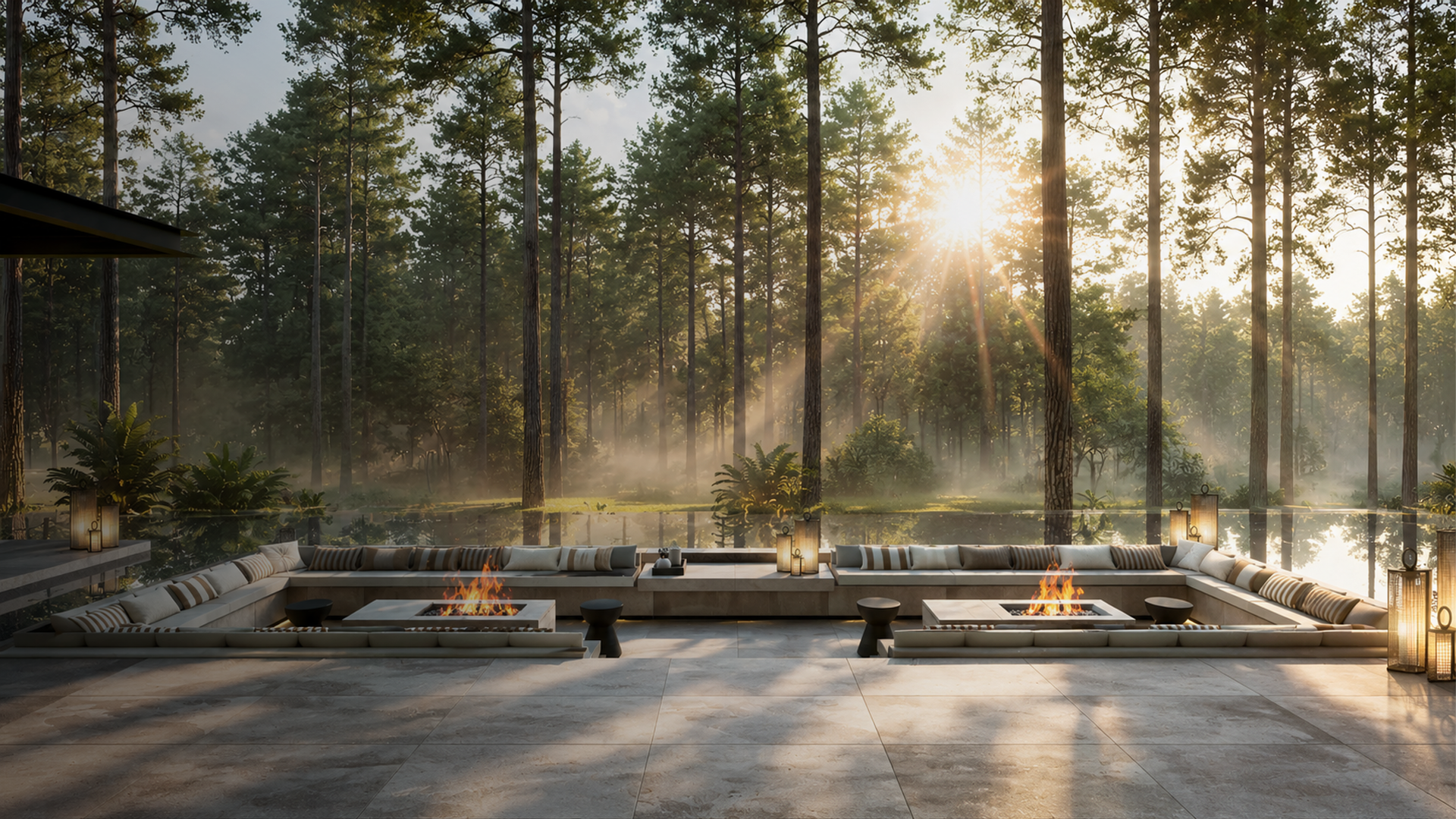
THAT’S ITH and Luxury Villa Interior Design
THAT’S ITH INTERIOR is a Bangkok-based interior design studio founded and creatively led by ITH PALACH, whose professional design career spans more than 25 years.
The studio works across private residences, villas, penthouses, hospitality, restaurants, workplaces, and lifestyle environments in Thailand and international markets.
Our core belief is:
People are more interesting than styles.
That means residential design should begin with the client rather than with a predetermined THAT’S ITH aesthetic.
How do they live?
What do they collect?
What do they show?
What do they hide?
Where do they gather?
Where do they retreat?
Which memories matter?
What does luxury mean to them rather than to the market?
Our broader design territory is Fearless Luxury.
Fearless does not always mean bold.
Sometimes the correct answer is expressive.
Sometimes restrained.
Sometimes highly crafted.
Sometimes architecture, landscape, art, or light should carry almost all of the emotional weight.
Fearless means having enough confidence to choose what the project genuinely needs.
The result should be:
Unapologetically Personal.
Different Villas Need Different Answers
THAT’S ITH has worked across residential projects in very different contexts.
The Reserve Villas – Sukhumvit 89/1
The Reserve Villas – Sukhumvit 89/1 represents luxury villa living within Bangkok.
Urban villas operate within a different relationship to:
privacy,
neighbouring properties,
landscape,
arrival,
and city life.
The architecture may be generous.
But the design still needs to create intimacy.
Openness needs control.
And luxury needs to feel residential rather than ceremonial.
ANANN Villas – Phuket
ANANN Villas – Phuket presents another condition entirely.
The development comprises twelve villas within a site shaped by both creek and mountain.
Here, landscape and climate become much more active parts of the design.
Privacy.
Cross-ventilation.
Nature.
Views.
Indoor-outdoor relationships.
All influence the experience.
The idea is not simply to create another tropical luxury villa.
It is to create the feeling of entering a world of one’s own.
That distinction matters.
The same design transplanted to Bangkok would lose much of its meaning.
And that is exactly the point.
SJ Home – Nonthaburi
SJ Home – Nonthaburi demonstrates another definition of luxury.
The design brief avoided colour, glossy finishes, and strong contrast.
Instead of compensating by adding visual drama, the project explores sophistication through:
tone,
texture,
proportion,
light,
and carefully controlled detail.
It demonstrates that Fearless Luxury does not always need to announce itself.
Sometimes confidence is quiet.
These projects look different because the people and conditions behind them are different.
The project changes. Therefore the answer changes.
How to Choose a Luxury Villa Interior Design Company in Thailand
Begin with residential experience.
But do not stop at beautiful photography.
Study complete built projects.
Then ask:
- Who leads the creative direction?
- How is the client brief developed?
- Does the designer investigate lifestyle as deeply as aesthetics?
- How does the studio work with architects and landscape designers?
- How are privacy and sightlines considered?
- How is indoor-outdoor living resolved?
- Does the team understand Thai climate and material performance?
- How are bespoke pieces developed?
- What technical services are included?
- How is lighting integrated?
- How does the studio approach FF&E?
- How are changes during construction handled?
- Does every villa in the portfolio look essentially the same?
Most importantly:
Does the designer listen for what you have not yet learned how to say?
The strongest villa design begins before the first visual concept.
It begins with understanding.
What Should a Luxury Villa Ultimately Feel Like?
Not like a catalogue.
Not like a hotel suite enlarged to residential scale.
Not like proof of how much its owner can afford.
A great villa should gradually become difficult to separate from the person living there.
The chair they always choose.
The view they seek in the morning.
The room where everyone gathers.
The corner where someone disappears after dinner.
The objects that arrived from a previous home.
The terrace that gets used far more than anyone predicted.
These are not secondary details.
Over time, they become the home.
The ultimate luxury is not having everything made for you.
It is having the right things understood about you.
That is why the most meaningful villa is not necessarily the one that could impress the greatest number of people.
It is the one that would need to change if its owner changed.
Planning a Luxury Villa in Thailand?
The most valuable time to involve an interior designer is often before architecture, landscape, lighting, and interior decisions have become separate conversations.
Early collaboration allows them to inform one another.
THAT’S ITH works with private clients, architects, landscape designers, consultants, contractors, and specialist teams on luxury residential projects in Thailand and international markets.
We do not begin by asking which previous villa you want yours to resemble.
We begin with:
“What should make this home make less sense for anybody else?”
Contact THAT’S ITH INTERIOR to begin a conversation about your villa or private residence.
You do not need to arrive with the perfect brief.
Finding the Unspoken Brief is part of the work.
Frequently Asked Questions
What does a luxury villa interior design company do?
Depending on the agreed project scope, a luxury villa interior design company may provide concept design, space planning, material development, lighting direction, FF&E, bespoke furniture and joinery, design development, technical documentation, and coordination with architects and consultants.
What is important in luxury villa interior design in Thailand?
Important considerations include lifestyle, privacy, architecture, landscape, climate, indoor-outdoor living, material performance, lighting, craftsmanship, maintenance, and long-term comfort.
The design should respond specifically to both the occupants and the site.
What is private pool villa design?
Private pool villa design integrates the interior, architecture, pool, terrace, landscape, and privacy strategy into one residential experience.
The pool should influence how the house is lived in rather than functioning only as an external amenity.
How should privacy be designed in a villa?
Privacy can be created through orientation, sightlines, landscape, screens, changes in level, controlled openings, circulation, acoustics, distance, and lighting.
The objective is not necessarily enclosure, but giving occupants control over exposure.
What makes luxury modern villa interior design timeless?
Timeless modern villa design is usually grounded in architecture, proportion, material quality, craftsmanship, lifestyle, and personal meaning rather than temporary visual trends.
A bold or colourful interior can be enduring when its design decisions have strong reasons behind them.
Does a luxury villa need bespoke furniture?
No.
Bespoke furniture is valuable when a particular client, function, collection, architectural condition, or ritual requires a solution that standard pieces cannot provide as precisely.
Custom-made does not automatically mean better.
Why is indoor-outdoor design important in Thailand?
Thailand’s climate allows terraces, gardens, courtyards, pools, and semi-outdoor spaces to become meaningful parts of daily living.
Successful design needs to consider heat, rain, humidity, shade, insects, airflow, privacy, maintenance, and furniture performance — not simply visual openness.
What is The Unspoken Brief in villa design?
The Unspoken Brief refers to the habits, relationships, memories, contradictions, rituals, attachments, fears, and aspirations that may not appear in the formal design brief but can reveal how a home should genuinely work and feel.
What does Fearless Luxury mean in residential design?
For THAT’S ITH, Fearless Luxury means having the confidence to make the decision that belongs to the particular homeowner and place rather than applying a predetermined image of luxury.
Sometimes that creates boldness.
Sometimes restraint.
Does THAT’S ITH design luxury villas?
Yes.
THAT’S ITH works across luxury villas, private residences, penthouses, and other high-end residential environments in Thailand and international markets.
Projects include The Reserve Villas – Sukhumvit 89/1 and ANANN Villas – Phuket.
Does THAT’S ITH have one villa design style?
No.
Different homeowners, sites, lifestyles, and architectural conditions require different responses.
The consistency is not in the aesthetic. It is in the judgment.
Who leads THAT’S ITH INTERIOR?
THAT’S ITH is founded and creatively led by ITH PALACH, whose professional design career spans more than 25 years.
What is one useful question when choosing a villa interior designer?
Ask:
“If another family lived here, what would you design differently?”
If the answer is “very little,” the design may not yet be personal enough.