
Best Luxury Interior Designer in Thailand: What Defines the Best?
Luxury interior design is often judged first through images.
A beautifully composed room.
An exceptional material.
A dramatic entrance.
A piece of furniture designed specifically for one place.
But the qualities that define the best luxury interior designer in Thailand go far beyond appearance.
The strongest designers understand that luxury is not created by placing expensive objects into a room.
It is created through judgment.
Every important decision has a reason.
Every material belongs.
Every space understands the people who use it.
And every project develops an identity of its own.
For homeowners, hotel owners, developers, and international clients searching for a luxury interior designer in Thailand, the useful question is therefore not:
“Who can create the most impressive image?”
It is:
“Who can understand something about this project that has not yet been fully articulated — and turn it into a place that could not meaningfully belong anywhere else?”
That distinction separates visual sophistication from genuine design authorship.
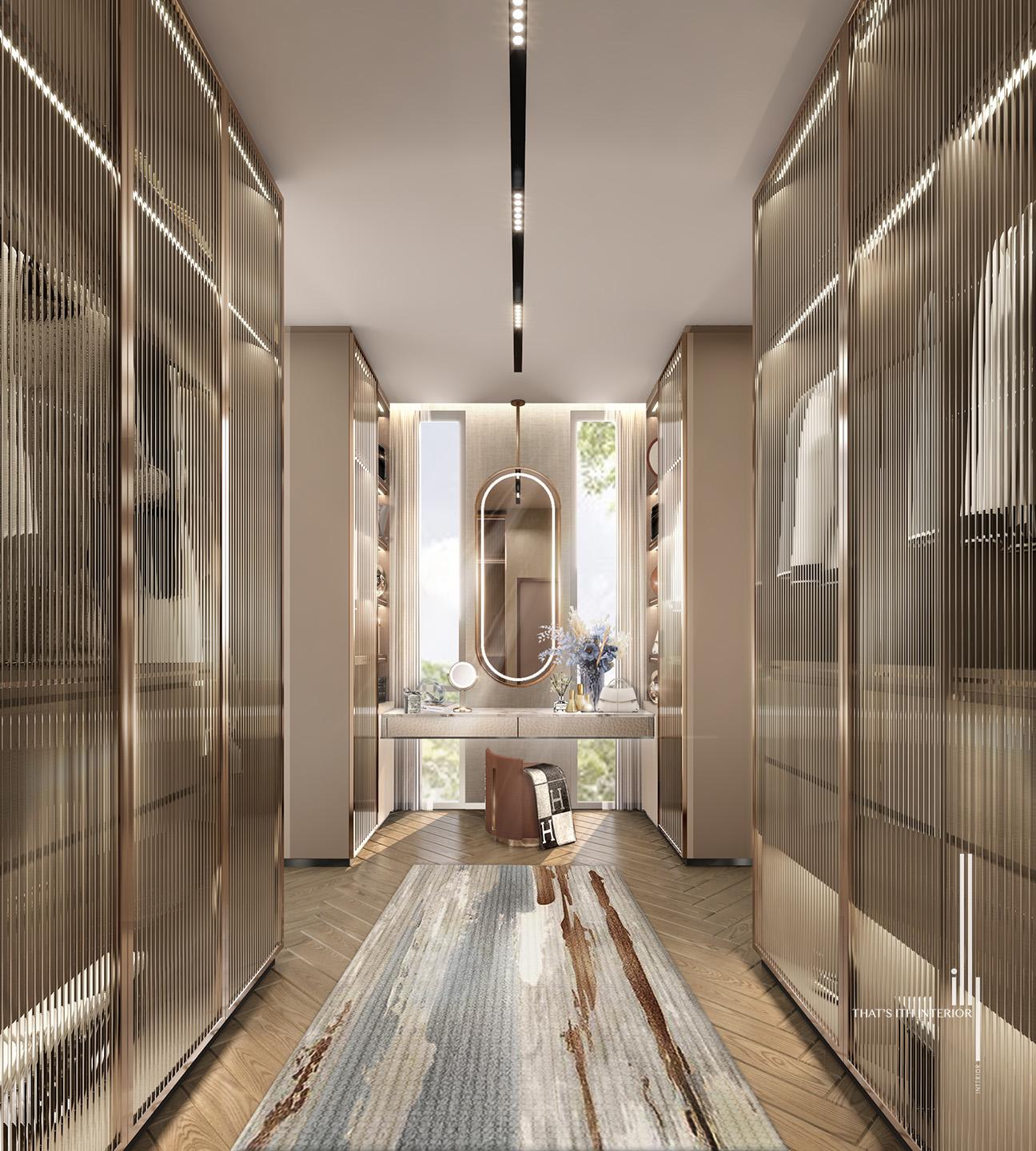
What Defines the Best Luxury Interior Designer in Thailand?
There is no universal ranking that can determine the best designer for every client or project.
Nor should there be.
A private residence requires a different kind of intelligence from a hotel.
A resort depends on different relationships between architecture, landscape, climate, and guest behaviour than an urban penthouse.
A restaurant needs to balance atmosphere with operational performance.
A workplace must understand an organisation rather than simply produce attractive offices.
The best interior designer is therefore not necessarily the designer with the most recognisable style.
It is the one whose thinking, experience, process, and capabilities are most appropriate to the problem.
Several qualities consistently distinguish exceptional luxury interior design practices:
- a clear point of view
- the ability to understand the unspoken brief
- strong completed work
- technical depth
- craftsmanship
- international perspective
- sensitivity to place
- emotional intelligence
- and the ability to create specificity without falling into formula
The strongest designers do not simply make beautiful rooms.
They make better decisions about what the room needs to become.
1. Look for a Recognisable Way of Thinking, Not Just a Recognisable Style
A visual signature can make a designer easy to identify.
The same palette.
The same furniture language.
The same architectural gestures.
The same mood.
But visual repetition and design identity are not the same thing.
A strong design philosophy provides a framework for making decisions when thousands of possible answers exist.
What should this place feel like?
Who is it for?
What matters to them?
What does the site contribute?
How should people behave here?
What should remain in their memory?
What deserves attention?
What should remain quiet?
Without a clear philosophy, luxury can easily become a collection of beautiful ingredients.
With one, individual decisions begin to belong to a larger idea.
For clients evaluating a top interior designer in Thailand, portfolio consistency should therefore be examined carefully.
Do all the projects look alike because the studio has a strong aesthetic formula?
Or do the projects look different because the designer has responded intelligently to different people, places, and purposes?
A strong designer can have a recognisable point of view without giving every client the same answer.
That is a more demanding kind of signature.
2. The Best Designers Find the Brief Behind the Brief
Clients rarely arrive with nothing.
They have images.
Preferences.
Requirements.
Brands they admire.
Colours they like.
Materials they dislike.
Rooms they need.
Budgets.
Timelines.
These things form the stated brief.
But often, the more valuable information sits underneath it.
At THAT’S ITH, we call this The Unspoken Brief.
A client may ask for a large open living room.
But perhaps what they really want is for the family to spend more time together.
Someone may say they want a minimalist home while refusing to let go of objects inherited through generations.
A client may love pink privately but hesitate to use it because they worry how guests will judge them.
A hotel developer may ask for an impressive lobby when the deeper commercial need is to establish an unmistakable first impression in a crowded market.
The designer’s role is not merely to record what has been requested.
It is to understand why.
The most interesting part of the brief is often the contradiction.
That is where generic solutions stop working.
And where more personal design can begin.
3. Luxury Should Be Specific, Not Formulaic
Luxury has changed.
There was a time when rarity was primarily defined by access.
Rare stone.
Imported furniture.
Limited-edition objects.
Highly specialised craftsmanship.
These things can still be meaningful.
But access itself is becoming less rare.
Almost anything can now be sourced globally.
Beautiful references travel instantly.
AI can generate endless images of sophisticated interiors.
Recognised products can appear in many different countries within the same month.
So another kind of rarity becomes increasingly valuable.
Specificity.
A material can be bought.
An object can be collected.
A reference can be reproduced.
But a life cannot.
A home designed around one family’s way of gathering.
A restaurant shaped by a specific cultural memory.
A hotel inseparable from its destination.
A workplace that expresses one organisation rather than a generic version of corporate success.
These are harder to reproduce because their value comes from relationships, not objects alone.
True luxury is specificity.
The project should make less sense if transferred unchanged to another owner, another site, or another city.
4. A Strong Portfolio Should Show Different Answers
One useful way to evaluate a recognised Thai interior designer is to compare several projects side by side.
Not simply the most famous ones.
Ask:
Why does this project look different from the previous one?
A private residence should respond to its occupants.
A hotel should respond to its brand, destination, operations, and guests.
A restaurant has another relationship with atmosphere, service, food, and dwell time.
A resort must negotiate landscape, climate, privacy, and the psychology of escape.
A workplace should respond to organisational behaviour and culture.
If all of these environments receive essentially the same visual answer, the studio may possess a strong style.
But it may tell you less about its ability to interpret different briefs.
People are more interesting than styles.
For THAT’S ITH, this belief is fundamental.
The client changes.
The place changes.
The behaviour changes.
So the design should change too.
The consistency is not in the aesthetic. It is in the judgment.
5. Built Work Matters More Than Perfect Images
Renderings are useful.
They communicate imagination.
Atmosphere.
Intent.
Possibility.
But a rendering does not have construction tolerances.
A stone junction.
A door that has to close.
A chair somebody needs to sit in.
Lighting that must work at 8 a.m. and midnight.
A contractor interpreting drawings.
A material exposed to heat, humidity, cleaning, or years of use.
Built work reveals something different.
A rendering shows what a studio can imagine. A completed project shows what its process can deliver.
Clients evaluating luxury interior designers should therefore study completed work carefully.
Look at:
material transitions,
joinery,
lighting integration,
furniture proportions,
craftsmanship,
construction detail,
and how the concept survives at human scale.
The closer you look, the more revealing the work becomes.
A hero photograph can hide weaknesses.
Reality rarely does.
6. Technical Expertise Does Not Compete With Creativity
Interior design is both imaginative and technical.
A powerful concept is important.
But the concept must eventually become information that somebody can:
price,
coordinate,
manufacture,
install,
and build.
Depending on the agreed scope, a luxury interior design studio may contribute to:
concept design,
space planning,
material development,
lighting coordination,
FF&E,
bespoke furniture,
joinery,
design development,
technical documentation,
consultant coordination,
and construction-stage services.
The exact appointment varies by project.
But the principle remains the same.
Creative ambition without technical discipline is only half a design.
A dramatic detail that cannot be built properly is not resolved.
A beautiful material that performs badly in its environment may be the wrong choice.
A strong concept that disappears gradually through construction has not been protected effectively.
The designer’s role continues long after the mood board.
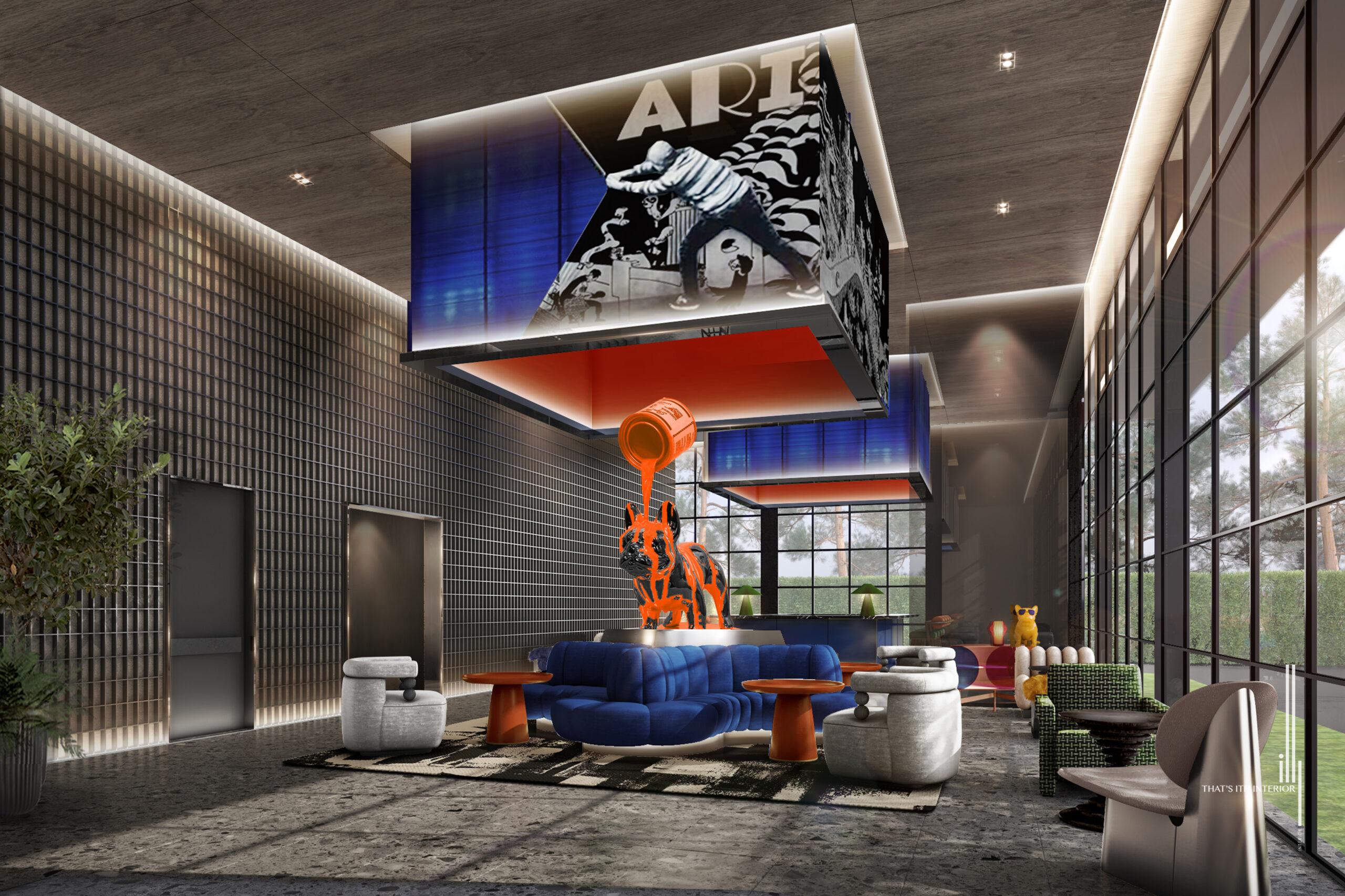
7. Craftsmanship Should Create Identity, Not Decoration
Thailand has an extraordinary ecosystem of makers.
Furniture craftsmen.
Metalworkers.
Stone specialists.
Textile producers.
Artisans.
Fabricators.
Decorative artists.
Traditional knowledge.
Modern manufacturing.
The opportunity is not simply that custom pieces can be produced locally.
It is that designers can collaborate with makers to create something that could not be found in a catalogue.
Traditional craft does not need to look traditional.
A familiar technique can be reinterpreted.
A local material can be given an unexpected role.
Handwork can coexist with highly contemporary architecture.
Thai soul does not require Thai decoration.
For a luxury interior designer in Thailand, craftsmanship can become a bridge between local intelligence and international design ambition.
But the craft should contribute to the idea.
Not become a collection of cultural references added afterwards.
The most successful result feels natural enough that the cultural intelligence may be sensed before it is consciously recognised.
8. International Perspective Matters — but Local Intelligence Matters Equally
Luxury clients increasingly live across borders.
A homeowner may divide time between Bangkok, Hong Kong, London, Singapore, or New York.
A property developer may assemble an international team of architects and consultants.
A hotel project may involve a global operator.
The interior designer therefore needs to understand international expectations.
But an international perspective does not mean making every project look internationally generic.
Local intelligence remains essential.
Climate.
Construction methods.
Material availability.
Craftsmanship.
Maintenance.
Cultural behaviour.
How people entertain.
How privacy is understood.
How buildings actually get made.
The strongest work often appears where global perspective and local intelligence meet.
International design should broaden the vocabulary. It should not erase the accent.
That distinction is particularly valuable in Thailand.
9. Emotion Is Part of Professional Design Intelligence
People do not experience interiors only through vision.
They experience:
scale,
sound,
temperature,
light,
texture,
movement,
privacy,
proximity,
and anticipation.
They notice the moment a view appears.
The transition between a social room and somewhere quiet.
How exposed or protected they feel.
Whether a restaurant encourages them to stay.
Whether a bedroom allows their nervous system to settle.
These reactions may happen before anyone consciously analyses the design.
That does not make them irrational.
It makes them human.
ITH PALACH’s current design thinking places increasing emphasis on this relationship between space and behaviour.
The idea can be expressed simply:
The room is not the protagonist. The human being is.
This human-first perspective was also highlighted when Home Journal selected ITH PALACH for its Top 50 SEA 2026, profiling his work through the same proposition.
The point is not that the room becomes unimportant.
The room becomes more important because of what it allows people to feel and do.
10. Timelessness Is Not the Same as Being Quiet
Timeless design is often confused with neutrality.
Beige.
Restrained.
Minimal.
Safe.
But a bold interior can age beautifully.
A colourful room can remain relevant.
A highly expressive object can become more enduring than something deliberately anonymous.
The question is not whether a design is visually quiet.
It is whether its strongest decisions have reasons deeper than fashion.
Architecture.
Behaviour.
Place.
Craft.
Proportion.
Material.
Memory.
Identity.
When decisions emerge from these things, they have stronger foundations.
Timelessness is not the removal of personality.
It is giving personality a reason to survive beyond the moment.
11. Bespoke Should Answer One Question: Why Does This Need to Exist?
Bespoke design is often presented as evidence of luxury.
But custom-made does not automatically mean better.
An object can be unique and still unnecessary.
For THAT’S ITH, the more useful question is:
What deserves to exist only once?
Perhaps a dining table needs to respond precisely to one family’s way of gathering.
A cabinet may be built around a specific collection.
A reception desk might integrate the operational and emotional identity of a hotel.
A piece of furniture may reinterpret a memory.
A ceiling might exist only because of one room, one client, and one particular emotional intention.
Bespoke becomes meaningful when a standard solution cannot answer the problem precisely enough.
Sometimes the best solution is custom-made.
Sometimes an existing piece is already perfect.
Sometimes an inherited object is more valuable than anything the designer could create.
The designer’s judgment lies in knowing the difference.
12. The Designer Should Know When to Challenge the Client
Listening is essential.
But listening does not mean agreeing with everything.
A client does not appoint an experienced designer simply to receive professional validation for decisions they could already make themselves.
Sometimes the most valuable contribution is:
“I understand why you want this — but I think there may be a better answer.”
That requires confidence.
But also humility.
The objective is not to prove the designer is right.
It is to protect the project.
Perhaps another solution improves:
comfort,
proportion,
function,
identity,
cost,
longevity,
or the coherence of the whole environment.
A strong designer should be able to explain the reasoning.
You are not only buying ideas. You are buying judgment.
That judgment becomes particularly valuable when there is no obvious answer.
13. Awards Matter — but Understand What They Prove
Searching for an award-winning interior designer in Thailand can be useful.
Professional recognition may indicate that completed projects have been evaluated beyond the studio itself.
But awards are not all equivalent.
Look at:
which project won,
which category,
what year,
what the recognised scope actually was,
and whether the achievement is relevant to your own project.
A hospitality award may demonstrate expertise in guest experience, operations, atmosphere, and spatial narrative.
A residential award may demonstrate different capabilities.
A kitchen award does not automatically mean the entire residence was awarded.
A ballroom award should not be presented as recognition for an entire hotel.
Accuracy matters.
Awards provide evidence.
They do not replace the need to understand the work.
THAT’S ITH: Fearless Luxury Through Specificity
At THAT’S ITH INTERIOR, we do not begin projects with a predetermined luxury aesthetic.
We begin with identity.
Who is this for?
Why here?
How should people behave?
What matters enough to protect?
What should remain in memory?
And what is the client telling us without necessarily saying it directly?
Led by ITH PALACH, whose design career spans more than 25 years, THAT’S ITH is a Bangkok-based interior design studio working across luxury hospitality, private residential, restaurants, workplaces, villas, penthouses, and lifestyle environments in Thailand and international markets.
Our core belief is simple:
People are more interesting than styles.
That is why we look for The Unspoken Brief — the memories, rituals, aspirations, fears, contradictions, attachments, and behaviours that often carry more useful information than a conventional list of aesthetic preferences.
From there, design can become more specific.
Our philosophy of Fearless Luxury is not about making every project dramatic.
Sometimes the correct answer is expressive.
Sometimes restraint.
Sometimes colour.
Sometimes material.
Sometimes an unusual relationship between scale and object.
Sometimes leaving something almost completely alone.
Fearless is not a look. It is the confidence to make the decision the project actually needs.
And the result should feel:
Unapologetically Personal.
Different Projects. Different Answers.
The THAT’S ITH portfolio deliberately spans very different identities.
MOON & BACK in Greenwich Village, New York reinterprets Thai cultural memory within an independent downtown context rather than recreating a conventional image of a Thai restaurant.
lyf Sukhumvit 8 Bangkok explores social hospitality, urban energy, collective memory, and a younger form of guest behaviour.
ANANN Villas – Phuket responds to landscape, climate, privacy, and the experience of creating a world of one’s own.
SJ Home – Nonthaburi operates within an almost opposite residential language, where the challenge involved creating richness and sophistication through restraint rather than colour, gloss, or dramatic contrast.
Scope Penthouse moves between two emotional identities — a warmer, greener world by day and a darker, more theatrical atmosphere after dark.
The Address Siam–Ratchathewi and Hyde Heritage Thonglor – The Elite Collection explore other dimensions of luxury through grand arrival and highly considered residential detail.
These projects should not look alike.
That would contradict the philosophy.
The project changes. So the answer changes.
Recognition Across Thailand and International Markets
THAT’S ITH’s work has received recognition through international and regional design programmes.
Recent achievements include two Global Winner distinctions at the International Property Awards for The Address Siam–Ratchathewi and Hyde Heritage Thonglor – The Elite Collection.
The studio has also received multiple honours through the Asia Pacific Property Awards 2026–2027, with recognised work spanning several project categories.
In New York, MOON & BACK received recognition at the Americas Property Awards 2026–2027 in the Hospitality Interior category.
lyf Sukhumvit 8 Bangkok received DEmark 2025 recognition.
In 2026, ITH PALACH was selected for Home Journal Top 50 SEA 2026, where his work was profiled around the idea:
“The Room is Not the Protagonist; The Human Being Is.”
Recognition matters.
But at THAT’S ITH, it is evidence rather than the objective.
Awards should follow work worth recognising — not become the reason the work exists.
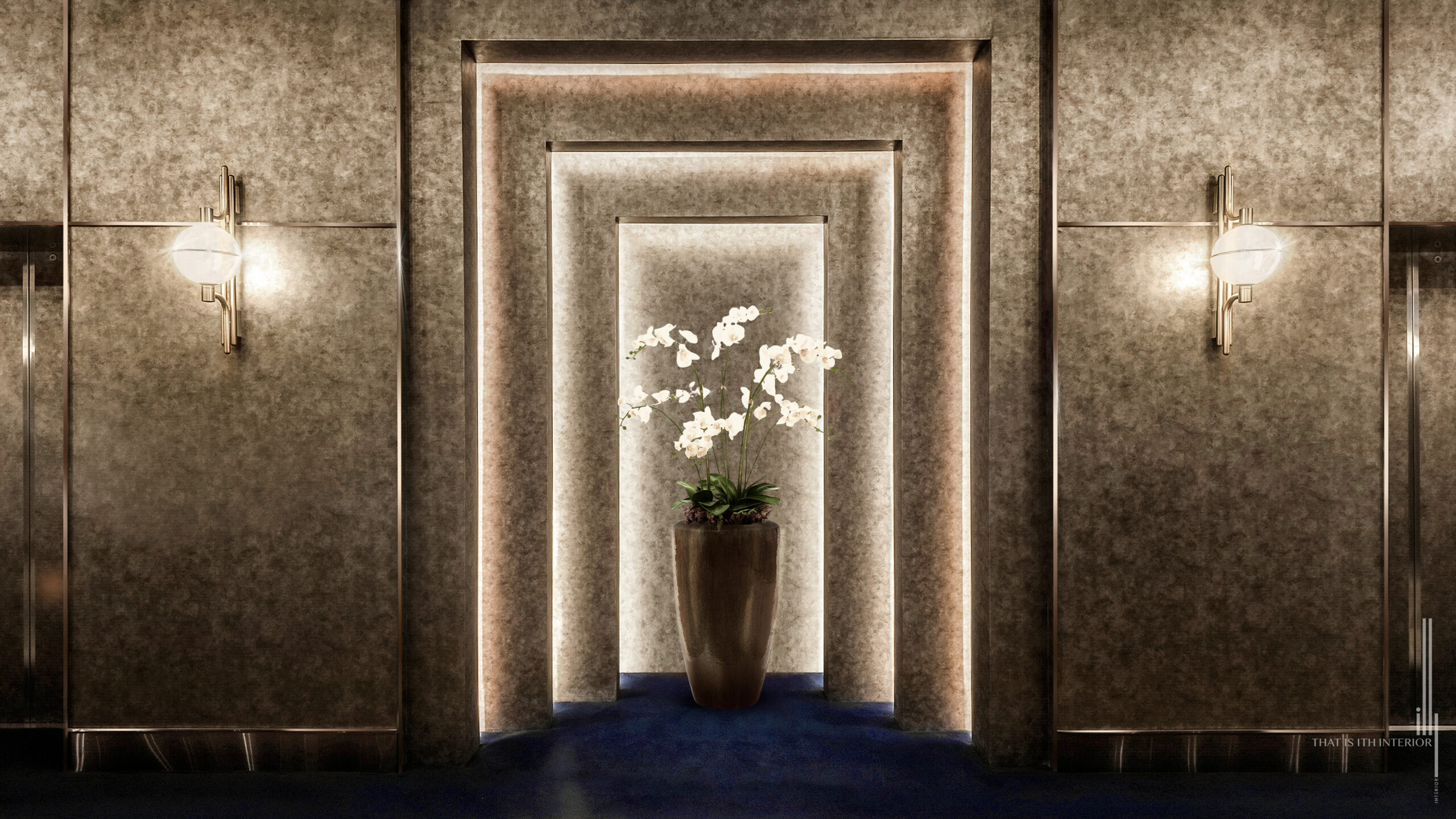
How to Choose the Right Luxury Interior Designer in Thailand
Before appointing a designer, look beyond social media.
Study completed work.
Ask why the projects are different.
Understand the philosophy.
Find out who will actually lead the design.
Clarify the agreed scope.
Ask how the team develops the brief.
Understand how architecture, lighting, materials, FF&E, bespoke pieces, and technical development are coordinated.
Ask what happens when budget changes.
When site conditions intervene.
When the client and designer initially disagree.
And look for something less tangible.
Does the conversation make you understand your own project differently?
A strong designer should not simply present beautiful answers.
They should improve the quality of the questions.
That may be one of the most valuable indicators of the relationship to come.
What Makes a Luxury Interior Designer Truly Exceptional?
The best luxury interior designer in Thailand cannot be defined by one material.
One style.
One award.
Or one photograph.
Exceptional design emerges from the combination of:
imagination,
empathy,
discipline,
technical knowledge,
craft,
curiosity,
and judgment.
The designer must understand the project before trying to express it.
The interior must support the people inside it.
The materials must have reasons to belong.
The details must survive construction.
The strongest moments need hierarchy.
And the finished environment should eventually feel so coherent that its complexity disappears.
The result may look effortless.
The decisions behind it rarely are.
That is where luxury becomes more than appearance.
It becomes specificity.
It becomes identity.
And ultimately, it becomes something more valuable than simply looking expensive:
a place that could not have belonged quite as naturally to anybody else.
Planning a Luxury Residential, Hospitality or Commercial Project in Thailand?
The most valuable time to begin a conversation with an interior designer is often before the major spatial, architectural, technical, and emotional decisions have already been fixed.
At THAT’S ITH, we work with private clients, developers, operators, architects, consultants, and multidisciplinary teams across Thailand and international markets.
We do not begin by asking which of our previous projects you want yours to resemble.
We begin with a more useful question:
“What makes this project impossible to confuse with another one?”
Contact THAT’S ITH INTERIOR to begin that conversation.
You do not need to arrive with the perfect brief.
Finding the Unspoken Brief is part of the work.
Frequently Asked Questions
Who is the best luxury interior designer in Thailand?
There is no universal answer.
The right designer depends on project type, scale, location, creative ambition, technical requirements, and the relationship between client and studio.
Look for design philosophy, completed work, technical capability, relevant experience, craftsmanship, recognition, and evidence that the studio can develop an original response rather than apply the same formula repeatedly.
What should I look for in a luxury interior designer in Thailand?
Look beyond beautiful images.
Review completed work, the designer’s philosophy, relevant project experience, technical expertise, bespoke capability, material knowledge, project process, and collaboration with architects, consultants, contractors, and makers.
Also consider whether the designer asks questions that improve your understanding of the project.
Does an award-winning interior designer guarantee a successful project?
No.
Awards provide useful evidence of professional recognition but do not guarantee that a designer will be right for every project.
The relevance of the recognised work, the studio’s process, technical capability, communication, and fit with the client remain equally important.
Why is bespoke design important in luxury interiors?
Bespoke design can create greater specificity when an existing product cannot answer a project precisely enough.
Its value does not come simply from being custom-made.
It comes from having a reason to exist.
What does Fearless Luxury mean?
For THAT’S ITH, Fearless Luxury means having the confidence to make design decisions because they are right for the project rather than because they conform to an expected image of luxury.
Sometimes the result is expressive.
Sometimes restrained.
The consistency lies in the judgment behind the decision.
What is The Unspoken Brief?
The Unspoken Brief refers to the needs, memories, behaviours, contradictions, aspirations, rituals, and emotional truths that may not appear in the client’s formal brief but can profoundly influence the design.
Discovering these clues can allow a project to become more personal and less formulaic.
Does THAT’S ITH have a signature style?
Not in the conventional sense.
THAT’S ITH deliberately works across different visual languages because different people, places, brands, and project types require different answers.
The consistency is not in the aesthetic. It is in the judgment.
Does THAT’S ITH design both residential and hospitality interiors?
Yes.
THAT’S ITH works across luxury residential, hospitality, restaurant, workplace, and other high-end interior environments.
Its residential portfolio includes private homes, villas, and penthouses, while hospitality work includes hotels, restaurants, social hospitality, and event environments.
Has THAT’S ITH received international design recognition?
Yes.
The studio’s work has received recognition through international and regional programmes including the International Property Awards, Asia Pacific Property Awards, Americas Property Awards, and DEmark.
Founder ITH PALACH was also selected for Home Journal Top 50 SEA 2026.
Who leads THAT’S ITH INTERIOR?
THAT’S ITH is founded and creatively led by ITH PALACH, whose design career spans more than 25 years.
When should I appoint a luxury interior designer?
For new builds, major renovations, hotels, villas, and complex residential projects, early involvement is generally valuable.
It allows the interior designer to contribute before major decisions involving architecture, planning, lighting, services, materials, and furniture become difficult or costly to change.
What is the most useful question to ask when choosing a designer?
Try asking:
“If you designed this project for somebody else, what would have to change?”
The answer may reveal far more about the designer’s thinking than asking what their signature style is.