
Best Hotel Interior Designer in Southeast Asia: How to Choose the Right Design Partner
Southeast Asia contains some of the world’s most compelling hospitality environments.
Dense urban hotels.
Tropical island resorts.
Historic destinations.
Lifestyle properties.
Private pool villas.
Restaurants that become destinations in their own right.
But the region is not one hospitality market.
Bangkok is not Bali.
Phuket is not Singapore.
Hanoi is not Kuala Lumpur.
Climate changes.
Culture changes.
Construction realities change.
Guest behaviour changes.
And international hotel brands often need to balance global standards with the identity of a very particular destination.
For developers and operators searching for the best hotel interior designer in Southeast Asia, an impressive portfolio is therefore only the beginning.
The stronger question is:
Can this designer understand what should remain internationally sophisticated — and what must become unmistakably local?
Because the best hospitality design in Southeast Asia should not look generically Southeast Asian.
It should belong precisely where it is.
What Defines the Best Hotel Interior Designer in Southeast Asia?
There is no single designer who is automatically right for every hospitality project in the region.
A luxury urban hotel in Bangkok asks different questions from a resort in Phuket.
A boutique property in Vietnam may need another design language from an international branded hotel in Singapore.
A highly social lifestyle property requires different thinking from a private wellness retreat.
The right designer therefore depends on:
the property,
the destination,
the brand,
the intended guest,
the operator,
the scale,
and the ambition of the development.
However, exceptional hotel interior designers tend to share several qualities.
They understand guest behaviour, not simply aesthetics.
They can translate brand identity into spatial experience.
They understand hotel operations.
They can work across cultures without flattening cultural differences.
They possess enough technical depth to protect the concept through construction.
And perhaps most importantly:
they know how to create a sense of place without turning culture into decoration.
Regional intelligence is not a regional style.
That distinction matters.
1. Hospitality Experience Must Come Before Appearance
Hotels are not static interiors.
They operate continuously.
Guests arrive at different hours.
Housekeeping moves throughout the property.
Restaurants prepare for service.
Ballrooms change configurations.
Luggage passes through corridors.
Public spaces shift between breakfast, afternoon, and late night.
A hospitality interior therefore needs to perform while creating emotion.
A sculptural reception desk still needs to support the people working behind it.
A guestroom can look immaculate yet become frustrating if lighting controls are confusing.
A restaurant can be atmospheric but fail if staff circulation constantly interrupts guests.
A bar may become visually iconic while creating operational problems nobody considered during concept design.
Hotels are not presentations.
They are living systems.
The strongest hospitality interior designers understand that operations are not constraints added after creativity.
They are part of the creative problem.
When operation and experience reinforce one another, the guest rarely notices the complexity.
The hotel simply feels right.
2. Guest Journey Is a Design Discipline
Guests do not experience hotels as floor plans.
They experience time.
Arrival.
Threshold.
Reception.
Waiting.
Lift.
Corridor.
Guestroom.
Restaurant.
Bar.
Pool.
Spa.
Departure.
Each moment changes expectation.
That makes hotel interior design closer to choreography than decoration.
A carefully considered entrance can create anticipation.
A narrow approach may make the lobby beyond feel more generous.
A corridor can gradually shift the guest from social energy toward privacy.
A restaurant entrance can create discovery.
A resort lobby can frame landscape at precisely the moment when the view will have the greatest emotional effect.
Space planning solves function. Guest journey design adds emotion.
The best hotel designers understand both.
Not Every Moment Should Be Memorable
There is also a danger in designing hospitality purely around visual impact.
Statement lobby.
Statement staircase.
Statement restaurant.
Statement bar.
Statement room.
Eventually, every space competes with the next.
But memory needs hierarchy.
Everything cannot be the protagonist.
One moment may deserve drama.
Another should prepare for it.
A highly expressive restaurant may become more powerful after a restrained transition.
An extraordinary landscape may require the interior to become quieter.
Guestrooms may need to provide emotional relief from active public areas.
The designer’s job is therefore not simply to create memorable spaces.
It is to decide what deserves to be remembered.
3. Southeast Asia Requires Regional Intelligence — Not a Regional Formula
Southeast Asia is extraordinarily diverse.
Thailand.
Singapore.
Indonesia.
Vietnam.
Malaysia.
The Philippines.
Cambodia.
And neighbouring markets each contain different relationships between:
climate,
culture,
craft,
construction,
tourism,
religion,
food,
social behaviour,
and ideas of hospitality.
A strong regional designer should understand that diversity rather than search for a universal “Southeast Asian” aesthetic.
Tropical conditions may create common practical questions:
heat,
humidity,
rain,
strong sunlight,
material durability,
indoor-outdoor relationships.
But the cultural answers should remain specific.
Craft traditions differ.
Urban conditions differ.
Patterns of gathering differ.
Construction supply chains differ.
Guest expectations differ.
The value of regional experience is not knowing what Southeast Asia should look like.
It is knowing which questions change when the destination changes.
For international developers, this ability to translate between global ambition and local reality can become one of the designer’s most valuable contributions.
4. Sense of Place Should Be Felt, Not Illustrated
Today’s guests have experienced many beautiful hotels.
Exceptional stone.
International furniture brands.
Sophisticated lighting.
Perfectly styled public spaces.
These qualities are increasingly expected.
What is harder to reproduce is belonging.
Sense of place is often misunderstood as a visual exercise.
Traditional motifs.
Recognisable patterns.
Local objects.
Cultural symbols.
These can sometimes be appropriate.
But the more sophisticated response is interpretive.
A designer might begin with:
local architecture,
craftsmanship,
landscape,
materials,
food culture,
climate,
social rituals,
history,
or an unexpected local memory.
A vernacular principle may influence the way shade is created.
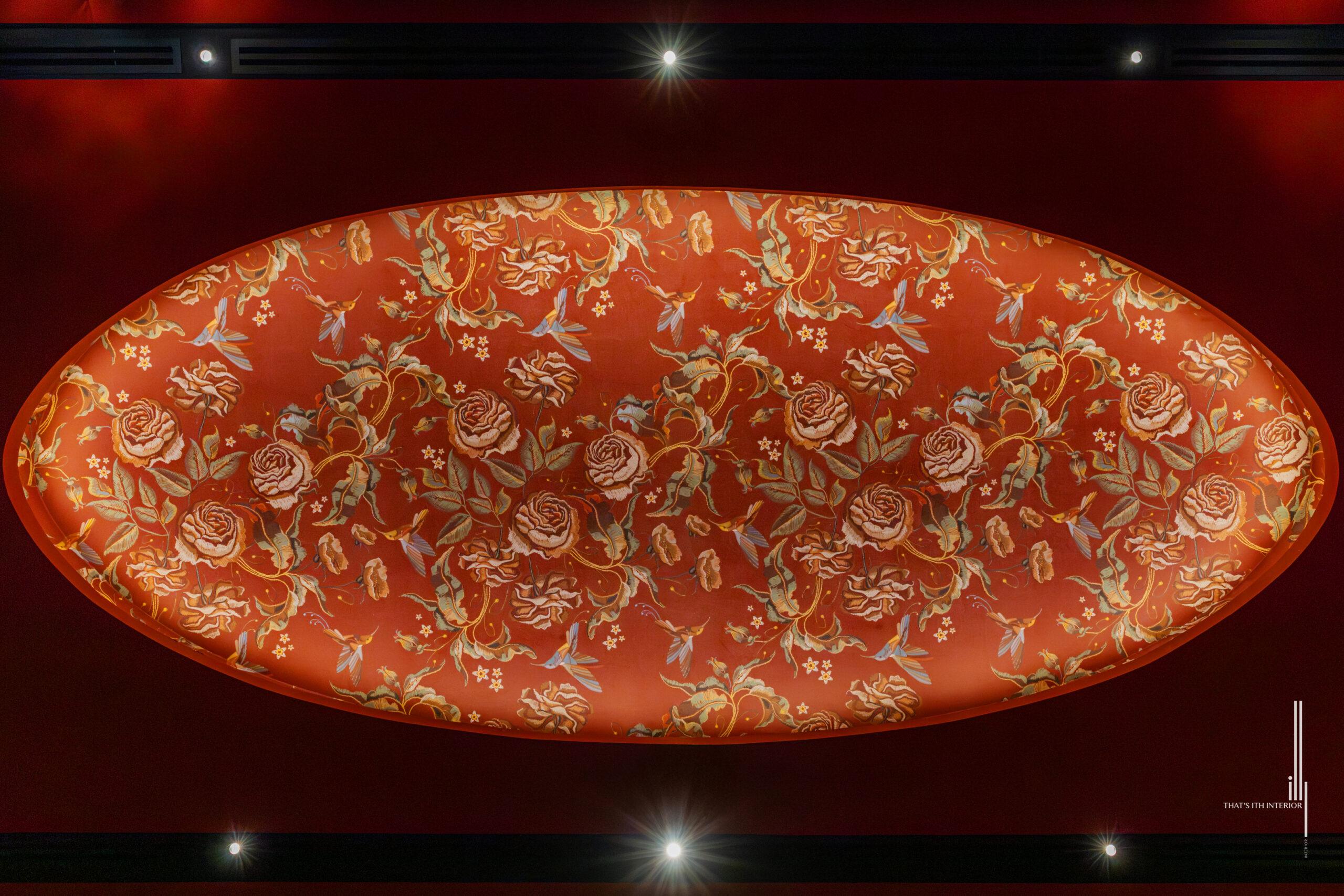
A traditional making technique can become a contemporary screen.
A familiar material might be used in an unfamiliar way.
A cultural reference may influence spatial sequence without appearing literally anywhere.
The objective is not to make the hotel look local.
It is to make the hotel belong.
This distinction is especially important in Southeast Asia, where rich cultural traditions can easily become simplified into visual shorthand.
The strongest projects respect culture enough to interpret it rather than costume it.
5. International Hotel Brands Need Interpretation, Not Just Compliance
International brands often arrive with detailed standards.
Guestrooms.
Bathrooms.
Accessibility.
Furniture.
Lighting.
Technology.
Safety.
Operations.
Brand positioning.
Those standards matter.
But compliance alone does not create identity.
The designer must understand where consistency protects the brand — and where local interpretation makes the property more valuable.
A successful branded hotel should clearly belong to its parent brand.
But it should also feel particular to Bangkok, Phuket, Bali, Hanoi, Singapore, or wherever it exists.
That requires negotiation between:
developer,
operator,
designer,
architect,
brand team,
consultants,
and local project conditions.
Brand consistency should create expectation. Local intelligence should create memory.
One without the other can produce either confusion or anonymity.
The best designers understand where that balance lies.
6. Technical Expertise Protects the Concept
Hotels are among the most technically complex interior environments.
Architecture.
Structure.
Mechanical systems.
Electrical systems.
Lighting.
Kitchens.
Acoustics.
Technology.
Signage.
Landscape.
Fire and life safety.
Operations.
Specialist equipment.
All intersect.
A strong concept can gradually lose clarity as these systems enter the project.
Not because anyone intends to weaken the design.
But because hundreds of individual decisions accumulate.
This is where technical capability becomes part of creative capability.
Design development turns broad ideas into precision.
Construction information allows someone to price, coordinate, manufacture, and build them.
Material specifications connect appearance with performance.
Bespoke furniture drawings transform an idea into something a maker can actually produce.
Creativity does not end when the concept presentation is approved.
In complex hospitality projects, some of the most important creative decisions happen afterwards.
7. Protecting Design Intent Requires Knowing What Can Change
Almost every hotel changes between first concept and opening day.
Budgets shift.
Brand requirements evolve.
Technical issues appear.
Products become unavailable.
Construction reveals limitations.
Value engineering happens.
The designer’s job is not to resist every change.
That would be unrealistic.
The more valuable skill is understanding which parts of the idea are flexible — and which parts carry its identity.
A stone may be substituted.
A decorative detail may simplify.
A furniture piece may change.
But perhaps the arrival sequence cannot.
Perhaps one crafted intervention carries the entire concept.
Perhaps the lighting hierarchy is essential to the emotional experience.
Protecting design intent does not mean refusing change. It means knowing what the project cannot afford to lose.
And good value engineering should remove cost before it removes the idea.
This kind of judgment is difficult to assess through renderings alone.
Built work reveals it much more clearly.
8. Craftsmanship Can Become Competitive Identity
Travellers have seen many expensive hotels.
Imported furniture and rare materials alone are no longer guarantees of memorability.
Craft can create another kind of value.
A commissioned artwork.
A hand-finished surface.
A custom piece of furniture.
A locally developed element interpreted through a contemporary lens.
But craft becomes powerful only when it belongs to the project.
The objective should not be to fill the hotel with artisanal objects.
It is to ask:
What deserves to exist only here?
One bespoke piece with a strong reason to exist may create more identity than twenty custom details competing for attention.
This is particularly relevant in Southeast Asia, where extraordinary craft traditions coexist with sophisticated modern fabrication.
For a designer, the opportunity is not simply to use local craft.
It is to collaborate with makers to create something that feels both contemporary and rooted.
Thai soul does not require Thai decoration.
The same principle applies throughout the region.
Local identity becomes stronger when it is translated rather than merely displayed.
9. A Diverse Hospitality Portfolio Can Reveal More Than a Signature Style
A ballroom is not a guestroom.
A restaurant is not a resort.
A lifestyle hotel is not a wellness retreat.
A social hotel requires another kind of intelligence from an ultra-private luxury property.
When evaluating an award-winning interior design firm in Thailand or Southeast Asia, look at the diversity of its hospitality work.
Do the projects all rely on the same visual language?
Or does the studio adapt its thinking to different:
brands,
audiences,
destinations,
operations,
and behaviours?
A varied portfolio can reveal whether the studio has one answer or a method for discovering many.
A recognisable way of thinking is often more valuable than a recognisable way of styling.
For hospitality developers, this matters enormously.
Because you are not commissioning the designer’s previous hotel.
You are asking them to discover yours.
10. Awards Strengthen Credibility — but Relevance Matters More
International recognition can be useful.
It indicates that particular projects have been evaluated beyond the studio itself.
But awards should always be interpreted carefully.
Which project received recognition?
Which category?
What was the actual design scope?
Was it built?
What challenge did it solve?
And how relevant is that experience to your project?
An award for a ballroom can reveal expertise in event environments, spatial identity, flexibility, and hospitality operations.
A recognised restaurant demonstrates another form of capability.
A lifestyle hotel reveals something different again.
Awards provide evidence. The work tells you what that evidence means.
The strongest question is not:
“How many awards has this designer won?”
It is:
“What capabilities do those recognised projects reveal — and are those the capabilities my project needs?”
THAT’S ITH: Hospitality Design From Bangkok to International Markets
THAT’S ITH INTERIOR is a Bangkok-based design studio led by founder and Creative Director ITH PALACH, whose professional design career spans more than 25 years.
The studio works across hospitality, residential, restaurant, workplace, and lifestyle environments in Thailand and international markets.
Our core belief is simple:
People are more interesting than styles.
For hospitality projects, this means we do not begin with a predetermined visual language.
We begin with the property.
The destination.
The brand.
The guest.
The operator.
The behaviour.
The architecture.
The culture.
And the question:
What should people remember about this place?
We call the territory around this approach Fearless Luxury.
Not luxury as excess.
Not luxury as one aesthetic.
But luxury as the confidence to make decisions specific enough that they belong to this project rather than to an idea of what luxury is supposed to look like.
Sometimes that means theatre.
Sometimes restraint.
Sometimes saturated colour.
Sometimes natural materiality.
Sometimes local craft.
Sometimes allowing the landscape to do almost all the work.
The consistency is not in the aesthetic. It is in the judgment.
The Unspoken Brief in Hospitality
A hotel brief usually contains many explicit requirements.
Room count.
Brand standards.
Facilities.
Target market.
Operational requirements.
Budget.
Programme.
But there is often another layer underneath.
The Unspoken Brief.
What is the guest really coming here for?
What behaviour does the property want to encourage?
What emotional gap exists in the market?
What does the destination already offer too much of?
What is missing?
What does the brand want guests to say about the property when they return home?
Where does the operator need design to work harder?
What should never feel generic?
These questions can lead to very different design decisions from simply asking for a visual style.
For THAT’S ITH, discovering this hidden layer is often where a more distinctive hospitality identity begins.
Recognised Hospitality Projects With Different Identities
THAT’S ITH’s portfolio demonstrates several very different hospitality conditions.
Royal Orchid Sheraton Bangkok Ballroom
The THAT’S ITH scope at Royal Orchid Sheraton Bangkok centres on the ballroom.
The project required the design to accommodate celebration, gathering, flexibility, technology, and the operational realities of a major hospitality environment while creating its own emotional identity.
The concept, Celebration on the Chao Phraya, draws from the hotel’s relationship with the river rather than treating the ballroom as an anonymous function room.
The project received recognition through the Asia Pacific Property Awards in the Hotel Conference Facilities Interior category.
Its lesson is simple:
A highly functional hospitality space does not need to be anonymous.
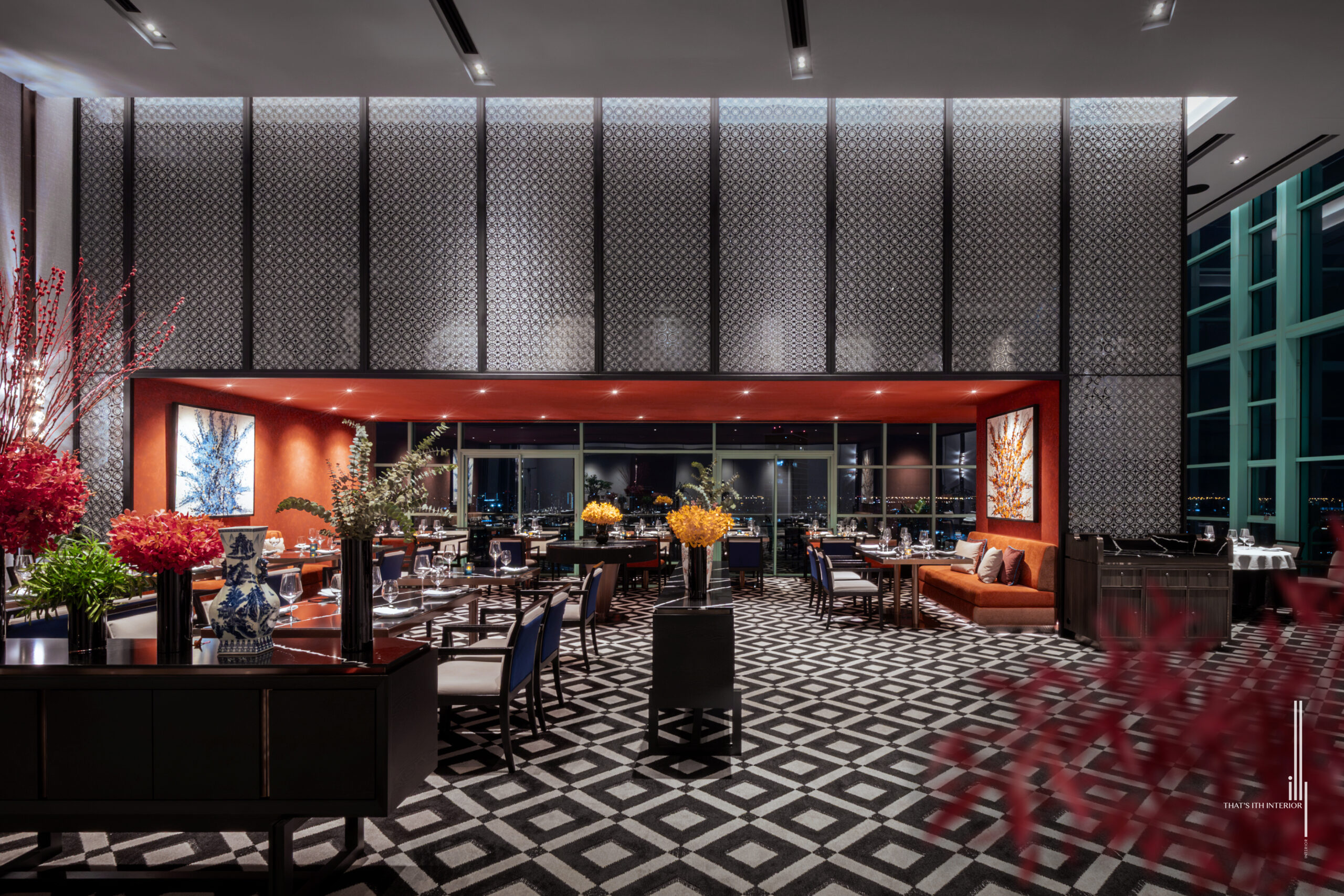
Silver Waves at Chatrium Riverside Bangkok
Silver Waves at Chatrium Riverside Bangkok asks another set of questions.
A restaurant needs to create atmosphere while supporting:
service,
circulation,
comfort,
lighting,
dining behaviour,
and its relationship with the surrounding hotel.
The project also received recognition through the Asia Pacific Property Awards.
The relevant capability here is not the ability to repeat a ballroom idea.
It is the ability to understand a completely different hospitality typology.
Different behaviour requires a different design response.
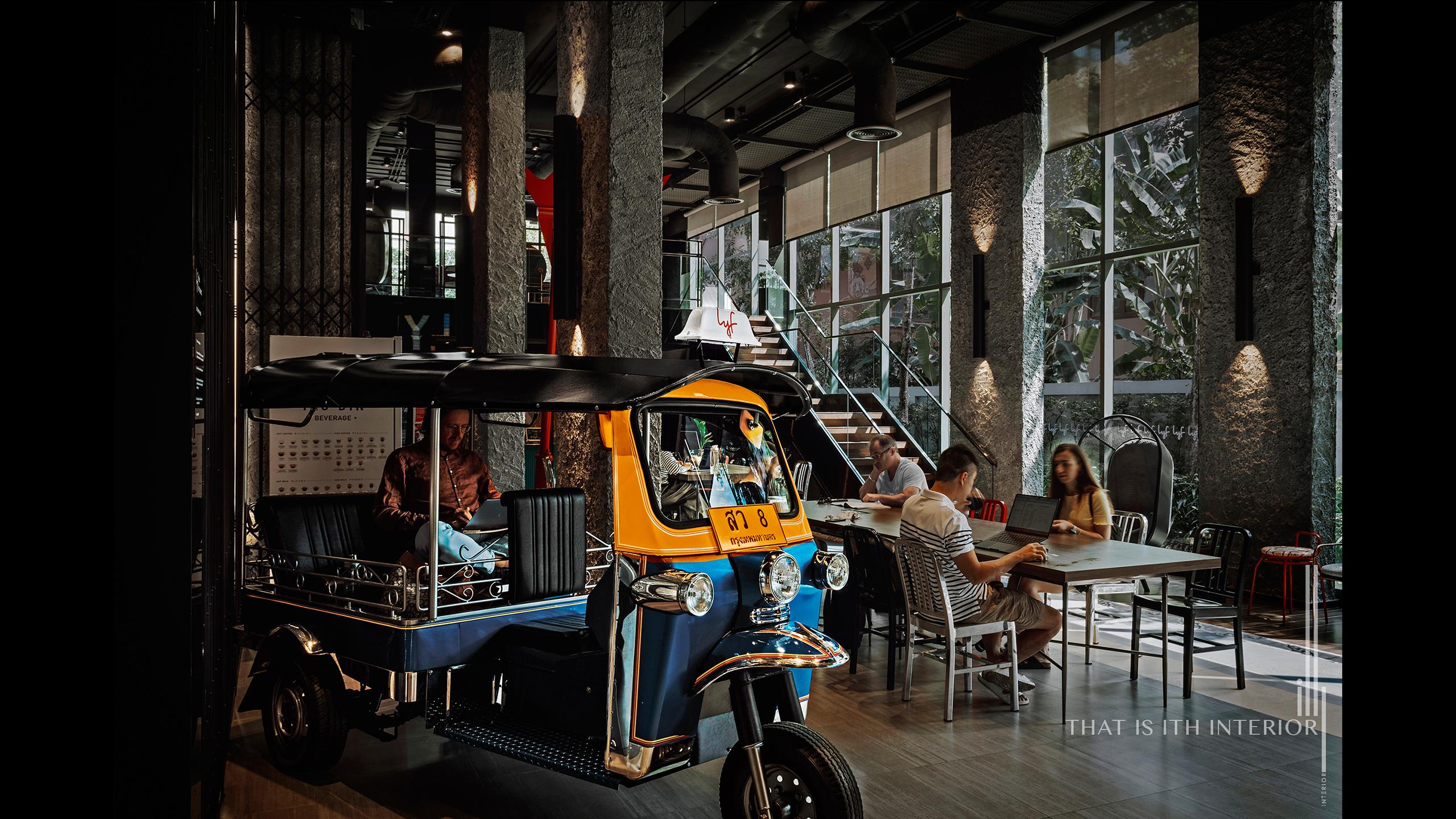
lyf Sukhumvit 8 Bangkok
lyf Sukhumvit 8 Bangkok represents another form of hospitality entirely.
The project explores social behaviour, Bangkok memory, urban energy, and communal experience rather than conventional ideas of five-star luxury.
The tuk-tuk becomes part of the memory language of the project — translated with humour and contemporary attitude rather than reproduced nostalgically.
The project received DEmark 2025 recognition and has also gained international attention within hospitality design.
Its importance lies partly in what it demonstrates:
Memorable hospitality does not require one definition of luxury. It requires a clear understanding of who the guest is.
MOON & BACK, New York
THAT’S ITH’s hospitality thinking also extends beyond Southeast Asia.
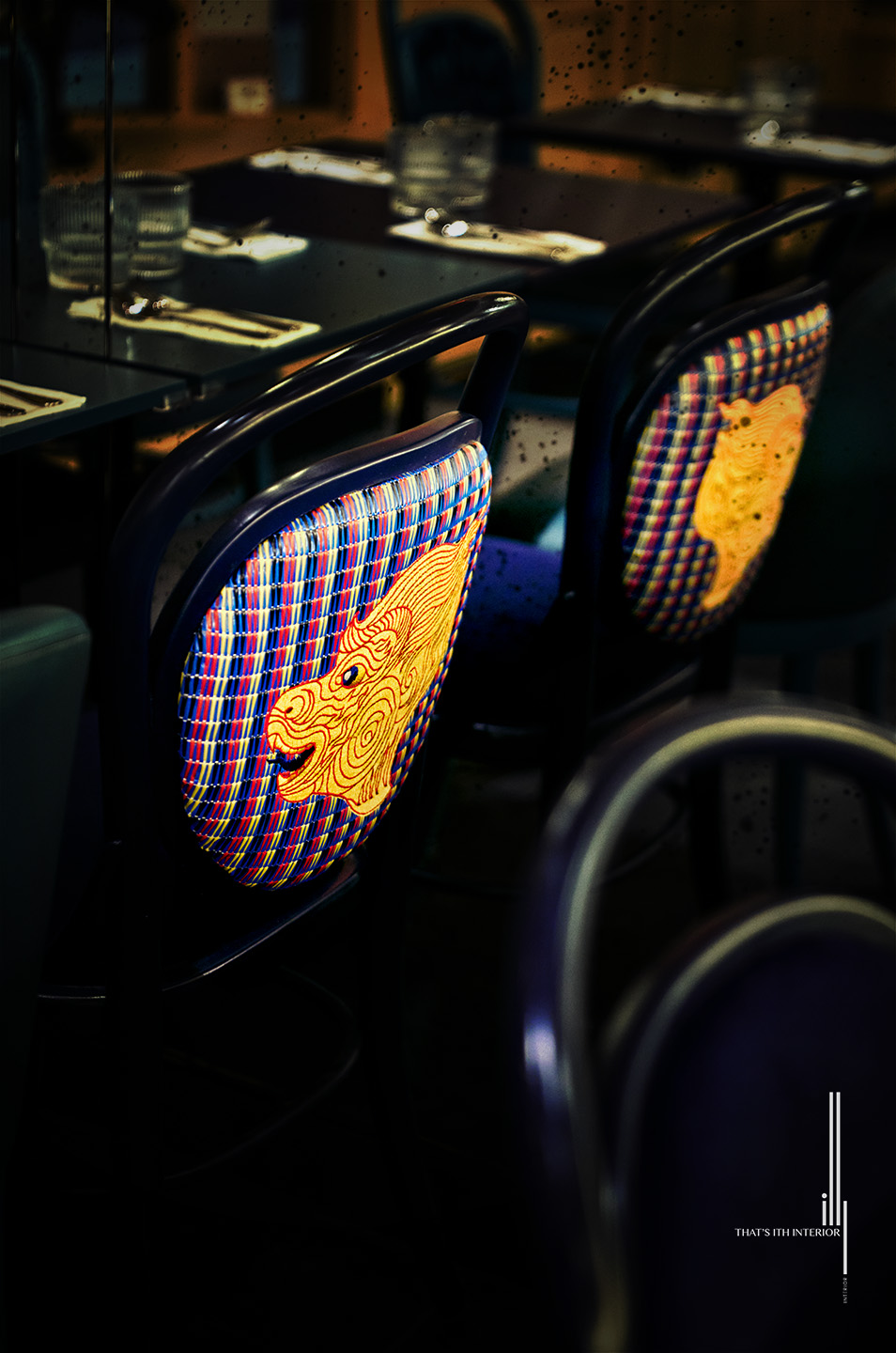
At MOON & BACK in Greenwich Village, New York, Thai cultural memory is translated into a contemporary restaurant environment without relying on the conventional visual vocabulary of a Thai restaurant.
The project received recognition at the Americas Property Awards 2026–2027 in the Hospitality Interior category.
The project reinforces a principle that applies equally across Southeast Asia:
Cultural identity becomes more powerful when it is understood deeply enough not to need explanation.
A Southeast Asian Studio Should Understand Both Local and Global Grammar
Regional designers can bring an important advantage to international projects.
Not because Southeast Asian designers should produce a particular regional aesthetic.
But because working across the region develops sensitivity to difference.
Climate.
Craft.
Cultural behaviour.
Hospitality rituals.
Construction.
Landscape.
Urban density.
Material performance.
At the same time, international clients expect sophisticated communication, coordination, technical standards, and global hospitality awareness.
The strongest work sits between these worlds.
Local intelligence. Global grammar.
For THAT’S ITH, the aim is not to make a project appear more international by removing what makes it local.
It is to make local intelligence sophisticated enough to communicate internationally.
How Developers Should Evaluate a Hotel Interior Designer
When selecting a studio, developers should ask beyond the usual portfolio questions.
Does the studio understand the intended guest?
Can it work effectively with the operator?
Does it understand local construction conditions?
Can it translate brand positioning into spatial experience?
Does the portfolio demonstrate completed work?
Can the team coordinate with multidisciplinary consultants?
Does it understand F&B as well as other hospitality environments?
Can it develop bespoke elements intelligently?
Does it understand how materials perform in the relevant climate?
How does the studio respond when budget changes?
How is design intent protected through value engineering?
Who actually leads the creative direction?
And perhaps most importantly:
Can the designer explain why this particular hotel should feel the way it does?
A strong answer to that question usually reveals more than a style presentation.
It reveals the quality of the thinking.
The Best Hotel Design Creates Both Memory and Performance
The best hotel interior designer in Southeast Asia is not simply the studio capable of creating the most dramatic lobby.
Hospitality design has to perform.
It has to support operations.
Express a brand.
Respond to place.
Create comfort.
Age intelligently.
Work with real people.
And remain relevant after the opening photographs have disappeared from social media.
The most successful hospitality interiors balance all of these demands without exposing the complexity behind them.
The guest experiences:
ease,
emotion,
discovery,
comfort,
and memory.
Behind that apparent simplicity is often extraordinary discipline.
That is where hospitality design becomes more than appearance.
It becomes behaviour.
Identity.
Operation.
Culture.
And experience working together.
For THAT’S ITH, that is the ambition behind Designing Places People Remember.
Not because every room needs to demand attention.
But because the right moments should become impossible to confuse with anywhere else.
Planning a Hotel, Resort, Restaurant or Hospitality Project in Southeast Asia?
The most useful time to involve the right interior designer is often before the major architectural, operational, and experiential decisions are already fixed.
Early collaboration allows:
architecture,
guest journey,
brand,
operations,
lighting,
FF&E,
materials,
and sense of place
to develop together.
THAT’S ITH works with developers, operators, architects, consultants, and multidisciplinary project teams across Thailand and international markets.
We do not begin by asking which of our previous hospitality projects you want yours to resemble.
We begin with:
“What should make this property impossible to confuse with another one?”
Contact THAT’S ITH INTERIOR to discuss your next hospitality development.
You do not need to begin with a style.
Finding the Unspoken Brief is part of the work.
Frequently Asked Questions
Who is the best hotel interior designer in Southeast Asia?
There is no universal answer.
The right designer depends on the type of property, location, operator, brand, scale, technical requirements, and creative ambition.
Developers should compare relevant built hospitality experience, design philosophy, regional knowledge, technical capability, project process, and the studio’s ability to create specific responses for different destinations.
Why is Southeast Asian experience important in hotel design?
The region contains very different climates, cultures, construction environments, craft traditions, guest behaviours, and hospitality markets.
Regional experience can help a designer understand these realities while working to international hospitality expectations.
What should developers look for in a hotel interior design portfolio?
Look beyond hero images.
Study built work, project diversity, guest-experience thinking, sense of place, technical quality, F&B experience, operational understanding, FF&E, bespoke capability, and whether different projects genuinely receive different design responses.
Should hotel developers choose an award-winning interior design firm?
Awards can provide useful evidence of recognised project quality.
However, developers should also examine the relevance of the awarded project, actual design scope, completed work, technical capability, collaboration process, and experience with similar hospitality environments.
What makes a hotel interior memorable?
Memorable hotels typically combine clear identity, guest journey, atmosphere, comfort, craftsmanship, operational intelligence, and a meaningful relationship with place.
Memorability does not require every space to be dramatic.
Often, it depends on giving the right moments enough emphasis.
What does sense of place mean in hotel design?
Sense of place means allowing the destination to influence the design in meaningful ways.
This may come through climate response, architecture, craft, landscape, materials, social rituals, local history, or contemporary cultural interpretation rather than literal decorative motifs.
How should international hotel brands balance global standards with local identity?
Brand standards should protect essential guest expectations and operational consistency.
The designer should then identify where local architecture, culture, craft, climate, materiality, and behaviour can give the individual property its own identity without weakening the brand.
What is The Unspoken Brief in hospitality design?
The Unspoken Brief refers to needs and opportunities that may not appear explicitly in the formal project brief — such as the emotional experience guests should have, behaviours the hotel wants to encourage, market gaps, cultural tensions, operational frustrations, or the memory the property hopes to create.
Does THAT’S ITH work with hotel and hospitality projects?
Yes.
THAT’S ITH works across hospitality environments including hotels, restaurants, ballrooms, social hospitality, F&B, and related projects in Thailand and international markets.
Does THAT’S ITH work outside Southeast Asia?
Yes.
The studio has experience in international markets, including MOON & BACK in New York, alongside work in Thailand and other locations.
Project scope and collaboration arrangements are defined according to each commission.
Who leads THAT’S ITH?
THAT’S ITH INTERIOR is founded and creatively led by ITH PALACH, whose professional design career spans more than 25 years.
What is THAT’S ITH’s approach to hotel interior design?
The studio begins with identity rather than a predetermined visual style.
It studies the destination, guest, brand, architecture, operations, culture, and behaviour before defining the design language.
The objective is not to make every hotel look recognisably THAT’S ITH.
It is to make each property feel unmistakably itself.
The consistency is not in the aesthetic. It is in the judgment.