
Luxury Hospitality Design Studio Bangkok: What Sets the Best Apart
Bangkok understands hospitality.
Not through one definition of luxury, but through extraordinary variety.
Grand riverside hotels sit beside intimate boutique properties.
International brands coexist with independent lifestyle destinations.
Restaurants can be deeply rooted in Thai culture while speaking an entirely contemporary design language.
Resorts, bars, ballrooms, wellness environments, and social spaces all ask guests to behave differently.
For a Luxury Hospitality Design Studio in Bangkok, this creates a more interesting challenge than simply designing beautiful interiors.
The real task is to translate identity into experience.
How should guests arrive?
What should they notice?
Where should they gather?
When should the environment become quieter?
How should the property belong to its destination?
And what will guests remember after many other beautiful places have blurred together?
The most distinctive hospitality studios are not necessarily defined by a recognisable style. They are defined by the quality of their judgment.
That is what developers, owners, and operators should look for.
Why Bangkok Is an Important Setting for Luxury Hospitality Design
Bangkok contains almost every version of contemporary hospitality.
International luxury hotels.
Large convention properties.
Boutique hotels.
Lifestyle brands.
Fine dining.
Independent restaurants.
Bars.
Wellness.
Long-stay hospitality.
Each serves a different audience.
A five-star riverside property may need to accommodate large-scale events while creating a strong sense of occasion.
A lifestyle hotel may need social spaces that encourage strangers to interact.
A restaurant may need enough identity to become a destination independent of the hotel containing it.
A boutique property may rely more on intimacy than grandeur.
These are not simply different aesthetic categories.
They are different behavioural and operational problems.
Bangkok also brings specific realities.
Heat.
Humidity.
Strong daylight.
Seasonal rain.
Dense urban conditions.
Local construction practices.
Regional craftsmanship.
Material availability.
International operators.
And guests arriving with increasingly global expectations.
The value of a Bangkok-based hospitality design studio is therefore not simply local access.
It is translation.
The ability to translate international ambition into local reality.
And local intelligence into an experience that can still resonate internationally.
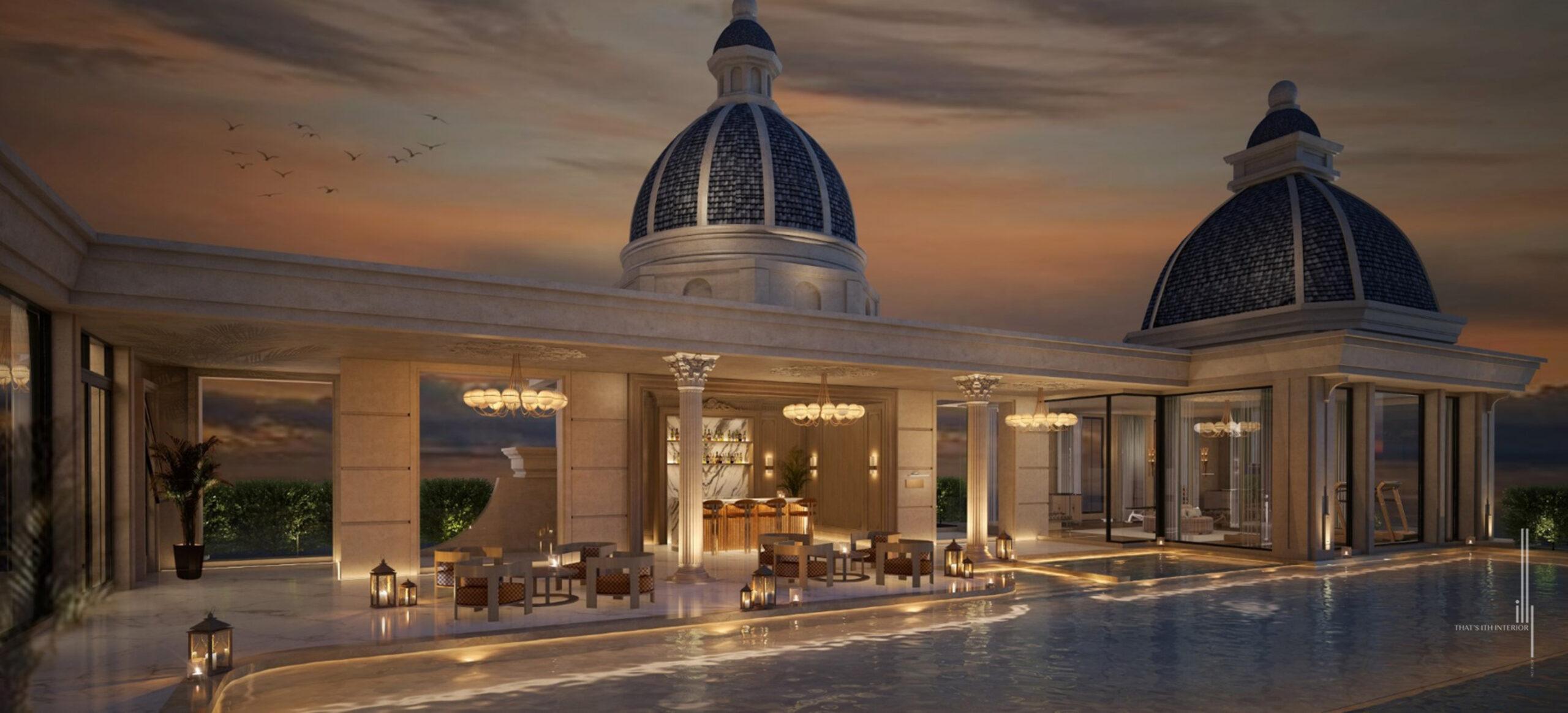
1. The Best Studios Begin With Identity, Not Hotel Style
Hospitality projects often begin with visual references.
Luxury.
Contemporary.
Tropical.
Modern.
Boutique.
Lifestyle.
These terms can help describe taste.
But they are rarely strong enough to become a concept.
A more useful starting point asks:
Why this hotel?
Why this location?
Why this guest?
Why this brand?
What should people feel here?
What should they remember tomorrow?
And what would disappear if this property were moved to another city?
A strong hospitality concept should give later decisions a reason.
Planning.
Materials.
Lighting.
Furniture.
Art.
FF&E.
Bespoke details.
Arrival.
Guestrooms.
Restaurants.
Public spaces.
Identity creates a framework for all of them.
Without that framework, even an expensive hotel can become an elegant collection of familiar references.
Brand Identity Should Be Experienced, Not Applied
A hotel brand is not simply:
a logo,
a colour palette,
signage,
or graphic guidelines.
Guests experience a brand spatially.
Through the scale of the lobby.
How formal or informal check-in feels.
Whether the restaurant invites participation or distance.
How social spaces behave.
How guestrooms transition from activity toward rest.
How staff and guests interact with the architecture.
A hospitality designer therefore has to translate brand values into behaviour and atmosphere.
Brand should be experienced, not wallpapered onto the interior.
That becomes especially important for international brands operating in Thailand.
Consistency matters.
But consistency should not eliminate place.
The challenge is understanding what must remain recognisable — and what should belong specifically to Bangkok, Phuket, Chiang Mai, or another destination.
2. Guest Journey Matters More Than a Collection of Beautiful Rooms
Guests do not experience hotels as plans.
They experience sequences.
Approach.
Entrance.
Arrival.
Reception.
Waiting.
Lift.
Corridor.
Guestroom.
Restaurant.
Bar.
Spa.
Pool.
Event.
Return.
Departure.
These moments accumulate into one perception of the property.
That is why hospitality interior design needs to think beyond individual rooms.
Space planning solves function. Guest journey design adds emotion.
An arrival might use compression before revealing volume.
A restaurant may begin changing atmosphere before the guest reaches the dining room.
A corridor might deliberately reduce stimulation before the guest enters a private room.
A resort may reveal landscape slowly rather than immediately.
The spaces between destinations are part of the experience too.
Not Every Moment Should Be Dramatic
Hospitality design can easily become obsessed with impact.
A statement lobby.
A statement staircase.
A statement bar.
A statement ceiling.
A statement room.
Soon, every space is competing.
Everything cannot be the protagonist.
A memorable experience requires hierarchy.
Some moments deserve spectacle.
Others need silence.
A dramatic public space may make calm guestrooms more valuable.
An extraordinary view may need a restrained interior.
One bespoke object may have more impact when the environment around it becomes quieter.
A strong hospitality studio needs to know not only how to create attention.
It needs to know where attention is worth spending.
3. Human Behaviour Should Shape Hospitality Design
The most useful question is not always:
“What should this room look like?”
Sometimes it is:
“What do we want people to do here?”
That question changes design.
A social hotel needs spaces that make interaction possible without forcing it.
A bar may need people to feel comfortable staying longer.
A lobby may need to accommodate waiting without feeling like a waiting area.
A restaurant may want energy at one hour and intimacy at another.
A resort needs to give guests permission to withdraw.
People also behave differently while travelling.
They wake early for hotel breakfast.
Wear robes they would never wear at home.
Take longer baths.
Spend an hour doing nothing beside a pool.
Talk to strangers.
Celebrate differently.
Travel changes behaviour because unfamiliar environments temporarily loosen everyday routines.
This creates an opportunity for design.
A hotel does not simply contain the trip. Sometimes it helps create the version of ourselves we become while travelling.
That is why human behaviour sits at the centre of strong hospitality thinking.
The room matters.
But the person inside it matters more.
4. Creative Ambition Has to Work With Operations
Hotels are not presentations.
They are working environments.
Guests arrive and leave continuously.
Staff move through the building.
Housekeeping operates every day.
Food is prepared and served.
Luggage travels.
Furniture gets used repeatedly.
Materials are cleaned.
Technology needs maintenance.
Deliveries happen out of view.
A visually extraordinary interior that makes these processes difficult is not fully resolved.
A reception desk has to support the people working behind it.
A restaurant layout needs to support service as well as atmosphere.
A bar needs preparation, storage, cleaning, seating, lighting, and circulation.
A ballroom needs flexibility, technology, service access, and different configurations.
A guestroom needs to work not only for the photograph but for the exhausted traveller arriving at midnight with two suitcases and three devices to charge.
Good hospitality design makes operational complexity almost disappear from the guest’s point of view.
That apparent ease is rarely simple to achieve.
Hospitality Design Has to Survive Repetition
Opening day is only the beginning.
Furniture is used thousands of times.
Luggage crosses the same floor.
Materials face cleaning, humidity, sunlight, food, drinks, and constant physical contact.
Technology dates.
Operational needs evolve.
That means materials and details should be considered for their future as seriously as for their first photograph.
The most expensive option is not always the best one.
Cost and perceived value are not the same thing.
A material earns its place through a combination of:
appearance,
performance,
maintenance,
tactility,
ageing,
and relevance to the concept.
A timeless hotel is not necessarily neutral.
It is one whose strongest decisions have deeper reasons than fashion alone.
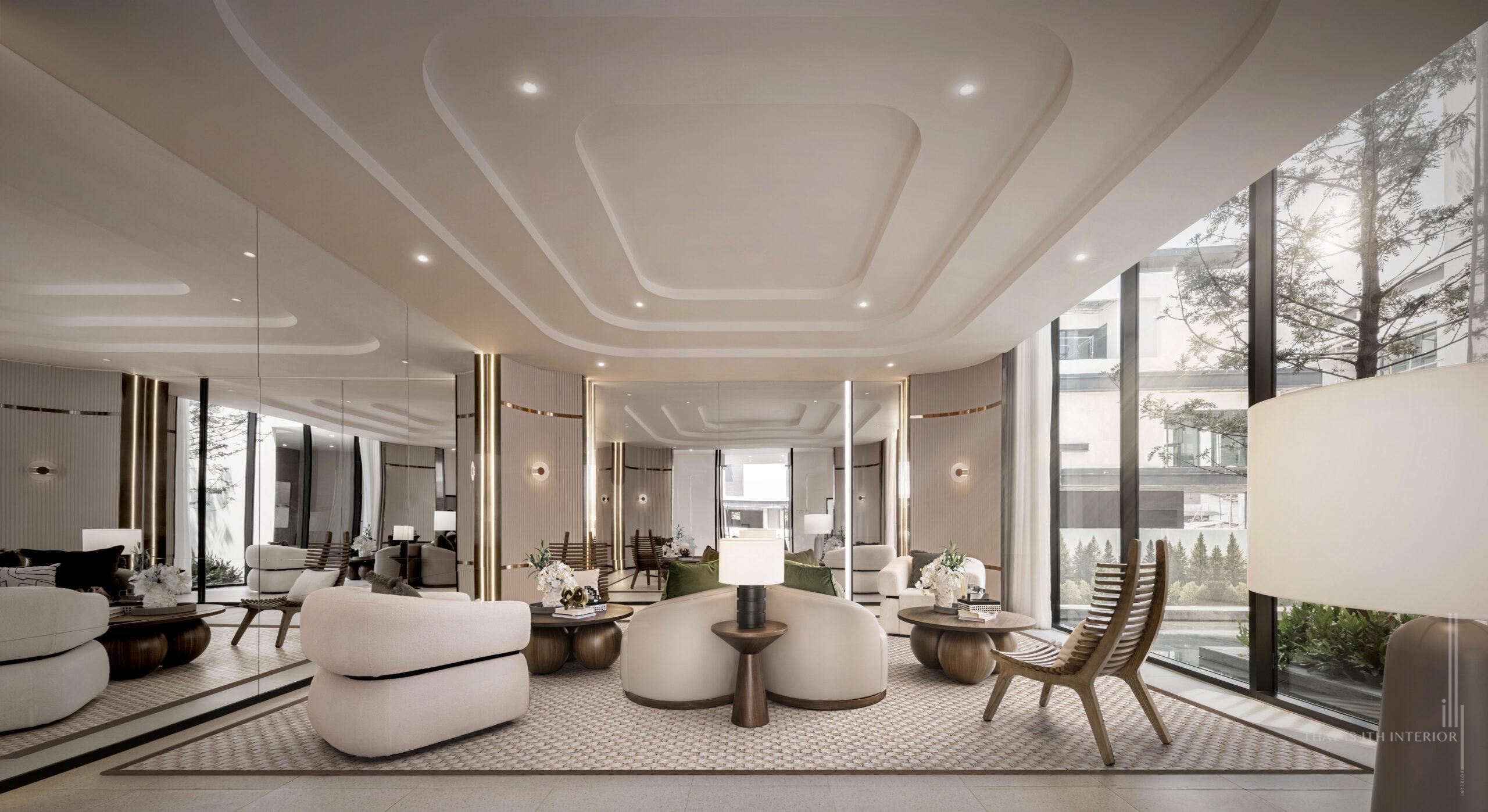
5. Sense of Place Should Be Felt — Not Decorated
Thailand offers extraordinary creative material.
Craft.
Architecture.
Textiles.
Ceramics.
Landscape.
Food culture.
Climate.
Material traditions.
Ways of gathering.
But sense of place becomes weaker when culture is treated as a catalogue of visual motifs.
A hotel does not need obvious Thai decoration to belong to Thailand.
A weaving technique may become a contemporary screen.
A vernacular idea about shade can influence architecture.
A traditional material may appear in an unfamiliar form.
Local making can become part of bespoke furniture.
Spatial rhythm may carry cultural intelligence without displaying a recognisable symbol.
The goal is not to make the property look local. It is to make it belong.
This is especially important in international hospitality.
Guests are increasingly familiar with polished global luxury.
Generic sophistication is easier to reproduce.
Specificity is harder.
A strong hotel should lose something essential if removed from its destination.
6. Bespoke Design Should Create Specificity, Not Simply Exclusivity
Bespoke design can be powerful in hospitality.
Custom lighting.
Furniture.
Art.
Screens.
Joinery.
Architectural installations.
But bespoke should not exist simply because a hotel is expensive.
The more useful question is:
What deserves to exist only here?
A reception desk might integrate operational requirements while expressing the identity of arrival.
A bar could become architecture rather than furniture.
A custom light may mark the emotional centre of a room.
A crafted screen might reinterpret local making while providing privacy.
Bespoke work becomes valuable when it combines:
identity,
function,
craft,
and specificity.
One strong piece with a clear reason to exist can often create more memory than many competing custom details.
Uniqueness without judgment is simply uniqueness.
The designer’s role is deciding where bespoke work will matter.
7. Technical Development Is Part of Creative Design
A beautiful concept image is not the project.
It is the beginning of one.
Between concept and completion lie:
space planning,
design development,
materials,
lighting,
FF&E,
bespoke detailing,
technical information,
fabrication,
coordination,
and construction.
Depending on the agreed scope, a hospitality interior design studio may work alongside:
architects,
operators,
engineers,
lighting consultants,
kitchen consultants,
landscape designers,
branding teams,
contractors,
fabricators,
and specialist suppliers.
Each layer can strengthen the design.
Or gradually weaken it.
That is why technical development should not be treated as something separate from creativity.
A design idea has to be translated into information someone can:
price,
coordinate,
manufacture,
and build.
A rendering shows what a studio can imagine. A built project shows what its process can deliver.
That distinction matters enormously when selecting a hospitality partner.
Protecting Design Intent Through Change
Almost every hospitality project changes.
Budgets shift.
Operator requirements evolve.
Technical conditions appear.
Materials become unavailable.
Construction reveals constraints.
Value engineering begins.
The designer’s role is not to refuse every change.
That would be unrealistic.
The real skill is knowing what can change — and what cannot — without destroying the central idea.
Perhaps one material can be substituted.
A detail can simplify.
A furniture piece can change.
But perhaps the arrival sequence is essential.
Or the lighting hierarchy.
Or one bespoke intervention carries the identity of the entire space.
Protecting design intent does not mean refusing change. It means knowing what the project cannot afford to lose.
And good value engineering should remove cost before it removes the idea.
That kind of judgment rarely appears in a rendering.
It becomes visible in the built work.
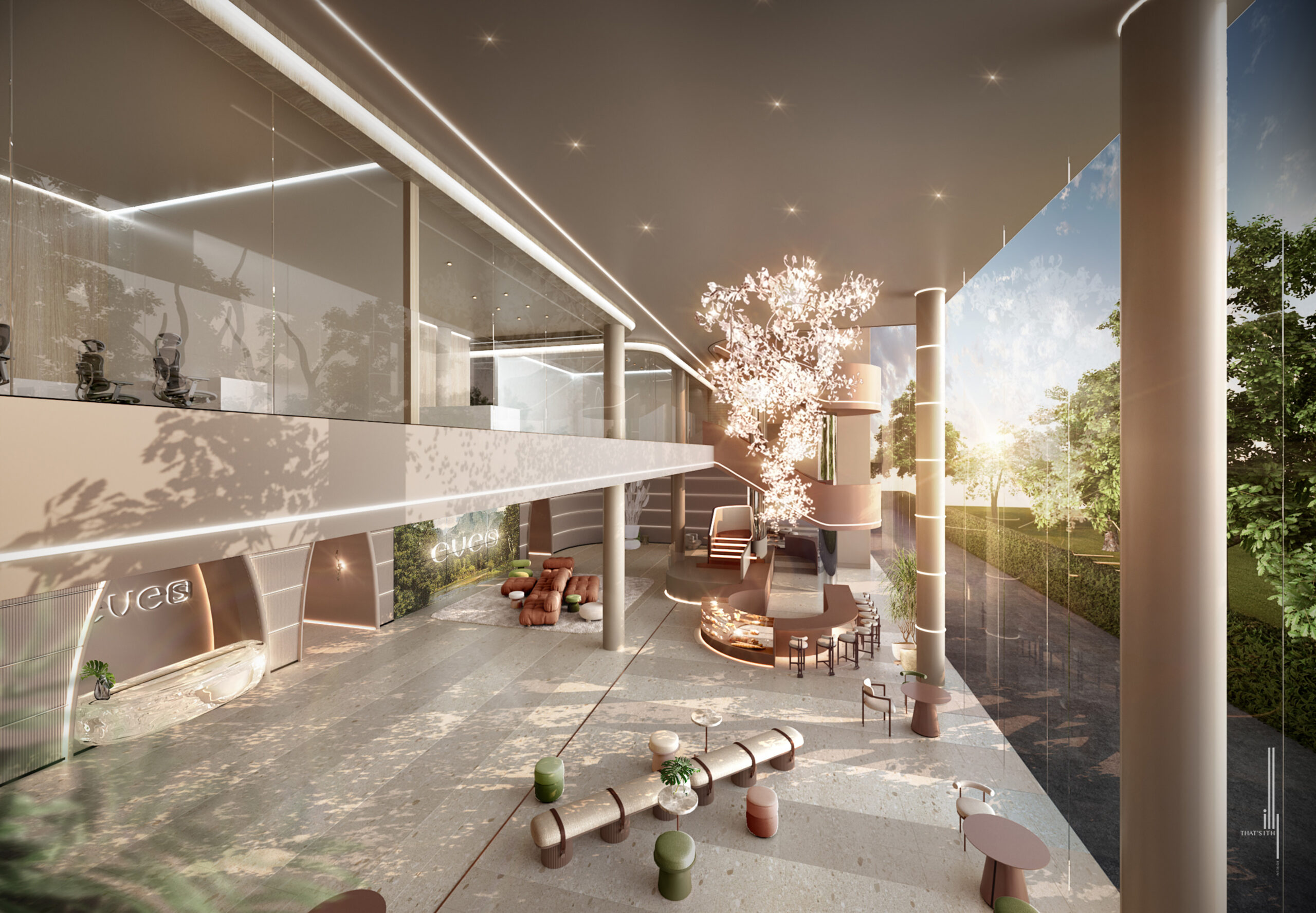
A Portfolio Should Demonstrate Different Answers
One of the most revealing qualities of a hospitality studio is not whether all its projects look connected.
It is whether the studio can explain why they are different.
A ballroom does not ask the same questions as a restaurant.
A lifestyle hotel does not behave like a resort.
A restaurant needs another kind of identity from a guestroom.
A social space may need energy.
A wellness environment may need stillness.
For hotel developers, this versatility matters.
A studio should not need to impose its favourite visual language in order to demonstrate authorship.
A recognisable way of thinking can be more valuable than a recognisable way of decorating.
That is the kind of consistency THAT’S ITH aims to build.
THAT’S ITH: Fearless Luxury in Hospitality Design
At THAT’S ITH INTERIOR, we do not begin hospitality projects by asking which of our previous projects the new property should resemble.
We begin with identity.
Where is it?
Who is coming?
Why are they coming?
What does the brand stand for?
How should guests behave?
What should they remember?
What does the architecture offer?
What should the destination contribute?
And which parts of the experience should become unmistakably specific to this property?
Led by ITH PALACH, whose design career spans more than 25 years, THAT’S ITH is a Bangkok-based interior design studio working across hospitality, residential, restaurant, workplace, and lifestyle projects in Thailand and international markets.
Our philosophy of Fearless Luxury is not a fixed aesthetic.
Sometimes a project requires theatre.
Sometimes restraint.
Sometimes colour.
Sometimes quiet materiality.
Sometimes the landscape should be the protagonist.
The decision depends on what the project actually needs.
The consistency is not in the aesthetic. It is in the judgment.
This human-first perspective also reflects the wider philosophy of founder ITH PALACH, who was selected for Home Journal Top 50 SEA 2026 under the editorial theme “The Room is Not the Protagonist; The Human Being Is.”
For us, that idea applies directly to hospitality.
Beautiful rooms matter.
But what people do, feel, and remember inside them matters more.
Hospitality Projects With Different Identities
The diversity of THAT’S ITH’s hospitality portfolio demonstrates how different briefs can produce very different responses.
Royal Orchid Sheraton Bangkok Ballroom
The scope at Royal Orchid Sheraton Bangkok centres on the ballroom — an environment with very different responsibilities from a lobby, restaurant, or guestroom.
The concept, Celebration on the Chao Phraya, responds to the hotel’s relationship with the river while giving the ballroom an identity built around gathering and occasion.
The project received recognition in the Hotel Conference Facilities Interior category at the Asia Pacific Property Awards.
Its design challenge combines:
celebration,
large-scale gathering,
flexibility,
technology,
operations,
and atmosphere.
A ballroom has to accommodate many different events.
That does not mean it has to become anonymous.
Silver Waves at Chatrium Riverside Bangkok
Silver Waves at Chatrium Riverside Bangkok represents another hospitality condition.
A dining environment must establish enough identity to become a destination while also supporting:
food,
service,
circulation,
lighting,
views,
comfort,
and different moments of the dining experience.
The project has also received recognition through the Asia Pacific Property Awards.
For THAT’S ITH, the relevant lesson is not the award itself.
It is that atmosphere and operation should not become competing priorities.
The strongest hospitality design allows one to strengthen the other.
lyf Sukhumvit 8 Bangkok
lyf Sukhumvit 8 Bangkok asks an entirely different question again.
Rather than conventional five-star luxury, the project explores social hospitality, urban energy, collective memory, and the behaviour of a younger lifestyle audience.
The design draws from memories associated with Bangkok and the tuk-tuk, translating them rather than reproducing them literally.
The project received DEmark 2025 recognition and has also been recognised internationally within hospitality design.
Its importance within the studio’s portfolio is partly what it demonstrates:
memorable hospitality does not require every property to share the same definition of luxury.
It requires clarity about who the project is for.
From Hospitality Intelligence to Residential Design
THAT’S ITH also works extensively across high-end residential design.
The two disciplines are different.
That distinction matters.
Hospitality can teach designers about:
arrival,
sequence,
lighting,
atmosphere,
materiality,
service,
and emotional memory.
Those principles can enrich a home.
But a private residence should not simply imitate a hotel.
A hotel serves changing guests.
A home serves the same people repeatedly.
A hotel may need a powerful brand identity.
A home should reveal personal identity.
A hotel arrival can be theatrical.
The entrance to a private house may need familiarity and privacy.
Hospitality intelligence can improve residential life. Hospitality theatre should only be used where it belongs.
This is why the studio’s residential projects — including The Reserve Villas – Sukhumvit 89/1, ANANN Villas – Phuket, Hyde Penthouse, and SJ Home – Nonthaburi — are approached through their own residential logic rather than treated as miniature hospitality projects.
They borrow principles.
Not identities.
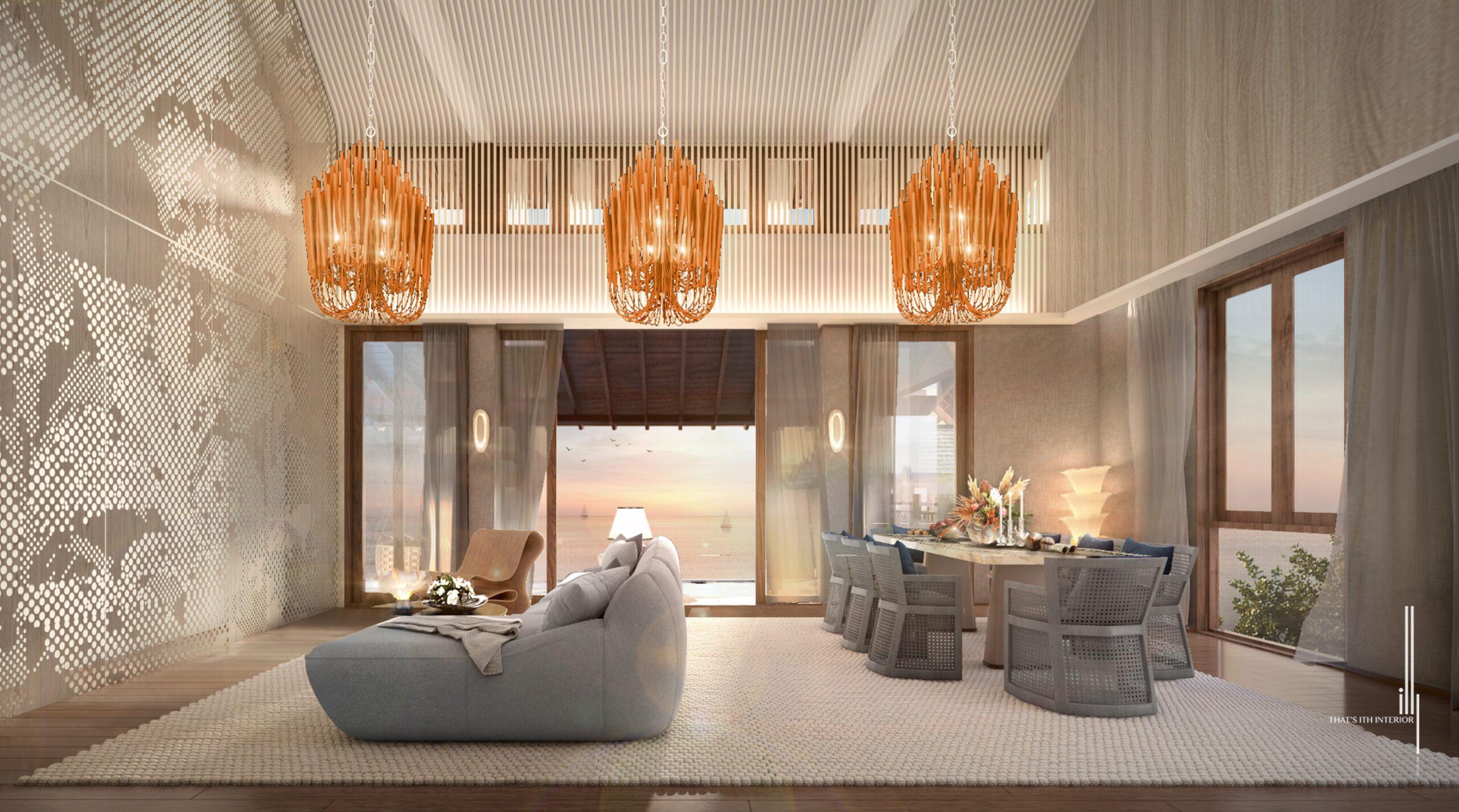
What Should Developers Look for in a Luxury Hospitality Design Studio?
A strong portfolio is important.
Awards and recognition can add confidence.
But developers and operators should investigate deeper.
Ask:
- Can the studio explain why its hospitality projects look different?
- Does it understand guest behaviour, not only aesthetics?
- Can it translate brand strategy into spatial experience?
- Does it understand hotel and F&B operations?
- Does the team have relevant built work?
- Can it develop FF&E and bespoke elements with purpose?
- Does it understand materials beyond the sample board?
- Can it translate concept into technical information?
- How does it collaborate with operators, architects, consultants, and contractors?
- What happens when value engineering begins?
- How does the studio protect design intent through construction?
- Which services are actually included in the proposed scope?
And there is another useful test.
Does the conversation make the project clearer before the studio has designed anything?
The strongest design partners should be able to ask questions that improve the brief.
What is the guest really coming here for?
Which moment should carry the identity?
Where should money be spent?
Where should design become quieter?
What will still matter after the opening photographs are forgotten?
These are not simply creative questions.
They are commercial design questions too.
What Truly Sets a Luxury Hospitality Design Studio Apart?
Not style alone.
Not awards alone.
Not expensive materials.
Not the most dramatic renderings.
A distinctive hospitality studio needs to connect several forms of intelligence.
Brand.
Human behaviour.
Guest journey.
Operations.
Place.
Material.
Craft.
Technical execution.
Commercial reality.
And emotion.
The difficult part is not possessing each one individually.
It is making them become one experience.
At THAT’S ITH, that is the ambition behind Designing Places People Remember.
Not because every space needs to be spectacular.
But because the most important moments should feel so specific to the property that they become difficult to confuse with anywhere else.
A hotel should belong to its destination.
A restaurant should possess its own memory.
A resort should become part of the journey itself.
And a hospitality environment should continue working when the cameras leave and real guests arrive.
Beautiful is not the end of the brief.
Memorable, operationally intelligent, and unmistakably itself — that is where the more interesting work begins.
Planning a Hospitality Project in Thailand?
The most valuable design conversations often happen before the major architectural, operational, and experiential decisions are already fixed.
Whether you are developing:
a hotel,
resort,
restaurant,
bar,
ballroom,
wellness destination,
or another hospitality environment,
early design involvement allows guest experience, architecture, operations, lighting, materials, FF&E, and brand identity to inform one another.
THAT’S ITH works with developers, operators, architects, and multidisciplinary teams to develop hospitality environments with distinct identities and clear experiential intent.
Contact THAT’S ITH INTERIOR to discuss your next hospitality development.
You do not need to begin with a style.
Begin with the more valuable question:
“What should people remember about this place?”
Frequently Asked Questions
What does a luxury hospitality design studio in Bangkok do?
Depending on the agreed scope, a hospitality design studio may work across concept development, space planning, guest journey, materials, FF&E, bespoke design, lighting coordination, design development, and technical documentation.
The role is to connect brand identity, guest experience, operations, and the physical environment.
What makes a hospitality interior design studio different from a general interior design company?
Hospitality projects require specialised understanding of guest behaviour, brand identity, operations, repeated commercial use, service circulation, durability, maintenance, and multidisciplinary coordination.
A strong hospitality studio combines those requirements with creative and experiential thinking.
Why hire a Bangkok-based hospitality design studio for a project in Thailand?
Local knowledge can help a design team understand climate, fabrication, materials, construction practices, cultural context, and project realities in Thailand.
Its value should go beyond supplier access.
The more important capability is translating international project expectations into something appropriate and buildable locally without losing design ambition.
How important is brand identity in luxury hotel design?
Brand identity should influence more than logos and graphic elements.
It can affect arrival, planning, atmosphere, materials, furniture, lighting, social behaviour, service, and the emotional rhythm of the guest journey.
What is guest journey design?
Guest journey design considers how people experience a hospitality property as a sequence rather than a collection of independent rooms.
Arrival, reception, circulation, guestrooms, dining, amenities, transitions, and departure can all contribute to the overall emotional experience.
How important are hotel operations to interior design?
Extremely important.
Reception, housekeeping, luggage, F&B service, staff circulation, maintenance, storage, cleaning, and other operational systems influence planning and detail.
Good design integrates these requirements without allowing them to dominate the guest experience.
What role does bespoke design play in luxury hospitality?
Bespoke design can create identity when it responds to a project-specific function, narrative, architectural condition, craft opportunity, or guest experience.
Not every element needs to be custom-made.
The more useful question is what deserves to exist only in that property.
Does luxury hospitality design need to look expensive?
No.
Exceptional materials can contribute to luxury, but perceived quality also comes from proportion, comfort, craftsmanship, lighting, acoustics, service, intuitive planning, and attention to detail.
The most expensive solution is not automatically the most luxurious.
Can hospitality design expertise improve luxury home interiors?
Yes, when translated rather than copied.
Hospitality experience can inform arrival, lighting, comfort, sequencing, materiality, and atmosphere.
A home, however, must respond to particular residents, privacy, belongings, relationships, and long-term routines rather than behave like temporary accommodation.
What should developers look for in a hospitality design portfolio?
Look beyond hero images.
Review completed work, project diversity, guest-experience thinking, operational understanding, FF&E, bespoke capability, material knowledge, technical development, and evidence that different brands and destinations receive genuinely different design responses.
When should a hospitality interior designer join the project?
Ideally during early concept or planning stages.
Early collaboration allows interior design, architecture, operations, brand, lighting, FF&E, and guest experience to influence one another before major decisions become difficult or expensive to change.
What is THAT’S ITH’s approach to hospitality design?
THAT’S ITH begins with identity rather than a predetermined style.
The studio studies the destination, brand, audience, architecture, operations, behaviour, and experience before developing the visual language.
The objective is not to make every property look recognisably THAT’S ITH.
It is to create places that feel unmistakably themselves.
The consistency is not in the aesthetic. It is in the judgment.