
Behind Award-Winning Hotel Interior Design: What Makes Hospitality Memorable
A memorable hotel is rarely defined by one extraordinary room.
It is remembered through a sequence of experiences.
The moment a guest arrives.
The transition from a lively lobby to a quieter corridor.
The atmosphere of a restaurant after dark.
The feeling of entering a guestroom that immediately makes sense.
The places where people gather.
And the moments where they can disappear.
These experiences may feel effortless.
Behind them is a complex relationship between architecture, brand identity, human behaviour, operations, material performance, technical coordination, and creative judgment.
That is why award-winning hotel interior design is about far more than creating impressive spaces.
It is about understanding how people experience a place — and translating that understanding into an environment that feels distinctive, intuitive, functional, and difficult to mistake for somewhere else.
The strongest hospitality interiors do more than attract attention. They create experiences worth remembering.
What Makes Hotel Interior Design Award-Winning?
Hotel design sits at an unusual intersection.
It needs imagination.
But it also has commercial and operational responsibility.
A hotel must communicate identity while functioning every day.
Its interiors need to create emotion without compromising:
comfort,
circulation,
durability,
maintenance,
service,
and operational efficiency.
The challenge becomes even greater at the luxury end.
Guests may not consciously analyse every design decision, but they experience the combined effect of all of them.
The weight of a door.
The way a corridor becomes quieter.
The lighting beside the bed.
The ease of finding reception.
The distance between restaurant tables.
The way a material feels under the hand.
The moment a view is finally revealed.
A strong hospitality project therefore begins with questions such as:
What makes this destination distinctive?
Who is the guest?
What should they feel when they arrive?
What should they remember?
What does the brand need to communicate?
How should operations support the experience without dominating it?
And what needs to remain convincing after years of use?
International awards may recognise creativity, functionality, materiality, innovation, execution, or other qualities depending on the programme.
But recognition is only one measure.
The deeper achievement is creating a hotel where the important decisions feel as though they all belong to the same idea.
1. Create the Narrative Before Choosing the Style
Every hotel has material for a story.
Location.
Architecture.
History.
Brand.
Neighbourhood.
Landscape.
Culture.
Guest behaviour.
The problem begins when style is chosen before any of those things have been understood.
Modern.
Contemporary.
Minimal.
Tropical.
Luxury.
These words can describe visual direction.
They are rarely strong enough to become the reason a hotel exists.
A waterfront property in Bangkok might begin with its relationship to the river.
An urban lifestyle hotel may respond to the energy, movement, or contradictions of its neighbourhood.
A destination resort may begin with landscape, climate, distance from everyday life, or the rituals of retreat.
These projects should not share the same design language simply because all of them belong to hospitality.
A narrative gives later decisions a reason.
Materials begin to belong.
Furniture has context.
Lighting supports atmosphere.
Artwork gains relevance.
Transitions become part of the story.
Without a clear idea, luxury can easily become a collection of expensive things.
With one, even a relatively simple gesture can become meaningful.
The strongest hospitality design therefore does not begin with:
“What should this hotel look like?”
It begins with:
“Why should this particular hotel exist in this particular way?”
2. Design the Guest Journey, Not Just the Rooms
Guests do not experience a hotel as a floor plan.
They experience time.
Arrival.
Threshold.
Reception.
Waiting.
Movement.
Discovery.
Rest.
Dining.
Gathering.
Retreat.
Departure.
Interior design connects those moments.
That means the spaces between the obvious destinations matter too.
A corridor is not simply the distance between the lift and the room.
A lift lobby can mark a shift in emotional tempo.
The approach to a restaurant can create anticipation before the guest sees the dining room.
A transition from a social public space to a guestroom floor can gradually reduce:
sound,
light,
scale,
and visual stimulation.
Space planning solves function. Guest journey design adds emotion.
The hotel becomes stronger when both happen together.
Designing the First Impression
The lobby is important.
But arrival begins before the lobby.
The approach.
Landscape.
Entrance.
Threshold.
Sound.
Temperature.
Light.
The first sightline.
And the moment a guest understands where they need to go.
A memorable arrival does not necessarily require the largest chandelier or the most expensive material in the building.
Sometimes it comes from sequence.
A compressed entrance before an open volume.
A framed landscape view.
A deliberate pause.
A sudden change in light.
An artwork seen only after turning a corner.
A memorable arrival is about sequence, not size.
The question is not how to impress the guest as quickly as possible.
It is how to make the hotel’s identity emotionally legible.
Designing Guestrooms Around Real Behaviour
Guestrooms are experienced very differently from marketing photographs.
A real guest arrives tired.
Carries luggage.
Charges several devices.
Needs somewhere to put a bag.
May work.
Eat.
Shower.
Sleep.
Wake in the dark.
Look for a switch.
Open curtains.
Make coffee.
And leave.
Good guestroom design understands those behaviours before arranging the image.
Where does luggage go?
Can two people move comfortably?
Can one person sleep while another uses the bathroom?
Is there enough light to dress?
Can the room become genuinely dark?
Can the controls be understood without instruction?
Is the desk actually usable?
Is the chair comfortable beyond five minutes?
Luxury in a guestroom is often the feeling that somebody thought about the inconvenience before the guest had to experience it.
The complexity has already been resolved.
That is why the room feels effortless.
3. Balance Creative Vision With Hotel Operations
Hotels are not presentations.
They are working environments.
Guests arrive continuously.
Staff move constantly.
Furniture is used repeatedly.
Surfaces are cleaned.
Food is served.
Luggage travels.
Housekeeping needs access.
Maintenance happens.
Deliveries arrive.
Operational systems exist behind almost every visible experience.
That means every creative decision has consequences.
A beautiful reception desk must still allow staff to work effectively.
A dramatic restaurant layout must support service circulation.
A hotel bar needs storage, equipment, lighting, seating, and staff movement.
A guestroom requires housekeeping access as much as atmosphere.
A ballroom must accommodate different types of events while maintaining a coherent identity.
Operational intelligence does not weaken creativity. It gives creativity a chance to survive real use.
The strongest hospitality design makes this complexity almost disappear from the guest’s point of view.
That is the illusion.
Behind apparent ease is usually a great deal of planning.
4. Materials, Lighting and Craftsmanship Should Create Atmosphere — Not Display Expense
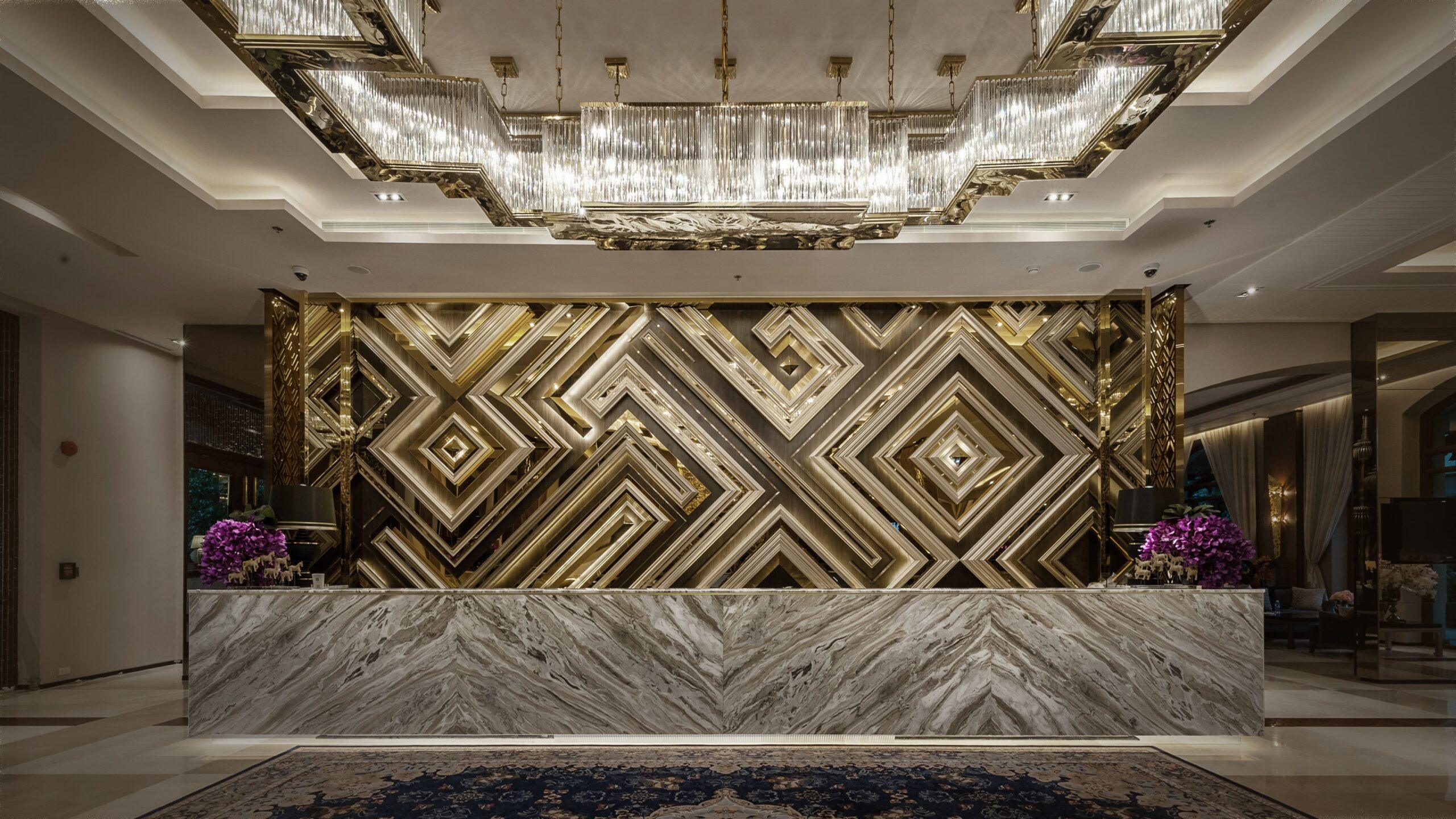
Luxury is often communicated through materials.
Stone.
Timber.
Metal.
Textile.
Glass.
Leather.
Craft.
But expensive finishes do not automatically create an exceptional interior.
A rare stone used without hierarchy can still feel ordinary.
A modest material used with extraordinary proportion, craft, or lighting can become memorable.
Cost and perceived value are not the same thing.
The more useful question is:
What should this material contribute?
Warmth?
Weight?
Acoustic softness?
Precision?
Reflection?
Tactility?
A relationship with place?
A warm timber surface may soften a monumental room.
A textured wall can make a restaurant feel more intimate.
Metal may introduce precision into an otherwise soft interior.
Stone can establish permanence.
Craft can reveal evidence of making.
Materials become powerful when they participate in the experience rather than merely signal price.
Lighting Creates Different Versions of the Same Hotel
Lighting changes:
material,
colour,
scale,
people,
art,
and atmosphere.
In hospitality, it also changes behaviour.
A lobby at breakfast time should not necessarily feel identical at midnight.
A restaurant may move from daylight into intimacy.
A bar may become progressively more theatrical.
A guestroom needs practical light and emotional light.
These are not the same thing.
Lighting is not simply what allows people to see the interior. It determines which version of the interior they experience.
The strongest lighting feels integrated with architecture rather than added as an effect afterwards.
It creates hierarchy.
Where should attention go?
What can disappear?
What should glow?
What should remain in shadow?
That is where lighting becomes design rather than equipment.
Bespoke Design Should Solve Something
Custom furniture and crafted architectural elements can give a hotel identity.
But bespoke work is not valuable simply because it is unique.
A banquette may solve a difficult plan.
A screen can create privacy while carrying the concept.
A bespoke light can define an important point in the guest journey.
A reception desk can integrate operational needs while becoming the visual anchor of arrival.
Bespoke becomes powerful when specificity and purpose meet.
The question is not:
“How much of this hotel can we customise?”
It is:
“What deserves to exist only here?”
One exceptional object with a strong reason to exist can sometimes carry more identity than an entire room filled with custom pieces.
5. Make the Hotel Belong to Its Place
International luxury can easily become interchangeable.
Excellent stone.
International furniture.
Beautiful lighting.
Sophisticated art.
Immaculate detailing.
Move the same combination to another city and very little changes.
That is where place becomes important.
In Thailand, a hotel may respond to:
climate,
local craft,
landscape,
urban behaviour,
food culture,
architecture,
material traditions,
or the ways people gather.
But a sense of place does not require literal motifs.
A hotel does not need to look conventionally Thai to belong to Thailand.
A traditional making technique can become contemporary.
A vernacular spatial principle can influence shade or sequence.
Local craft can appear through fabrication rather than ornament.
A cultural reference can become abstract.
The goal is not to make a property look local. It is to make it belong.
That distinction matters especially for well-travelled guests.
They have already seen generic international luxury.
Specificity gives them a reason to remember this property.
6. Design for Memory — but Do Not Make Everything Memorable
Hospitality design naturally wants attention.
The temptation is to make every zone dramatic.
Statement lobby.
Statement ceiling.
Statement bar.
Statement restaurant.
Statement corridor.
Statement room.
Eventually, there is no hierarchy.
Memory does not work that way.
Everything cannot be the protagonist.
One moment may deserve spectacle.
Another may need stillness.
A dramatic entrance can become more powerful when followed by restraint.
An extraordinary view may require the interior to become quieter.
A highly expressive restaurant can coexist with deliberately calm guestrooms.
A bespoke object can become iconic because the things around it do not compete.
Award-winning hospitality interiors often demonstrate not only what the designer chose to emphasise.
They reveal what the designer had the confidence to leave alone.
7. Design for the Hundredth Experience, Not Only the First
Opening day receives enormous attention.
Photography.
PR.
Guests arriving for the first time.
But hospitality operates through repetition.
The same employee may see the lobby every day.
A returning guest may use the same restaurant repeatedly.
Housekeeping interacts with the room hundreds of times.
Furniture is touched.
Materials age.
Technology dates.
The design therefore needs sensory endurance.
The first impression matters. But so does the hundredth.
This means asking how materials will age.
How easily items can be maintained.
Whether a dramatic detail remains practical.
Whether furniture continues to be comfortable.
Whether the design depends too heavily on a temporary trend.
Timelessness does not require neutrality.
A bold hotel can age beautifully.
A colourful interior can endure.
What matters is whether its strongest decisions have deeper reasons than fashion alone.
8. Understand When Hospitality Thinking Can — and Cannot — Translate Into a Home
Beautiful hotels naturally influence the way people imagine luxury living.
Layered lighting.
Soft acoustics.
Exceptional bedding.
Comfortable furniture.
Carefully choreographed arrival.
Material richness.
A sense of retreat.
These ideas can enrich residential design.
But copying hotel aesthetics literally is rarely enough.
A home has different responsibilities.
A hotel room may be experienced for three nights.
A bedroom at home may be experienced for twenty years.
A lobby needs to welcome changing guests.
A living room belongs to the same people every day.
A hotel needs brand identity.
A home needs personal identity.
The valuable lesson from hospitality is not how to make a home look like a hotel. It is how to design an experience deliberately.
That distinction creates more interesting residential work.
Hospitality-Inspired Bedrooms
Hotel guestrooms can offer useful lessons in:
lighting,
acoustics,
comfort,
bedside functionality,
storage,
and visual calm.
Those principles can improve a private bedroom.
But the room should still reveal the owner.
Objects.
Habits.
Personal rituals.
Books.
Art.
Privacy.
A home should not feel temporary simply because it feels refined.
Luxury Villas and Resort Intelligence
Luxury villas can benefit greatly from hospitality thinking.
Arrival can be choreographed.
Views can be revealed.
Landscape can become part of the spatial experience.
Social and private zones can carry different emotional energy.
But a private villa should not function like a resort.
The owner does not need to be treated like a guest inside their own home.
Hospitality intelligence can improve residential life. Hospitality theatre should only appear when it genuinely belongs.
The intention has to change.
THAT’S ITH: The Thinking Behind Award-Winning Hospitality Interiors
At THAT’S ITH INTERIOR, we do not begin by asking how to create an award-winning project.
We begin by asking what makes this particular project worth remembering.
Where is it?
Who is coming?
Why are they coming?
How should they feel?
What should they discover?
What should remain with them afterwards?
Led by ITH PALACH, whose design career spans more than 25 years, THAT’S ITH is a Bangkok-based interior design studio working across hospitality, residential, restaurant, workplace, and commercial interiors in Thailand and international markets.
Our philosophy of Fearless Luxury is not about excess.
It is the confidence to make distinctive decisions because they are right for the project — and the discipline to carry those decisions through planning, materials, FF&E, craftsmanship, technical development, and built reality.
A hotel lobby should not resemble every other luxury lobby.
A restaurant should not depend on the trend of the moment.
A resort should belong to its destination.
A ballroom should understand what celebration means in that particular place.
And a private home should reveal the people living inside it.
Different projects.
Different purposes.
Different answers.
The consistency is not in the aesthetic. It is in the judgment.
Royal Orchid Sheraton Bangkok Ballroom: Designing Celebration
At the Royal Orchid Sheraton Bangkok Ballroom, the challenge was not simply to create a luxurious event interior.
The project needed to support gathering, ceremony, and celebration while belonging to a hotel with a powerful relationship to the Chao Phraya River.
The design concept — Celebration on the Chao Phraya — uses the river and the atmosphere of movement as part of the narrative.
Rather than treating the ballroom as an isolated function room, the aim was to give an event space its own emotional identity.
The project received recognition at the Asia Pacific Property Awards 2026 in the Hotel Conference Facilities Interior category.
But the more important design lesson is broader.
A ballroom is highly functional.
It needs flexibility.
Operational capability.
Technology.
Different event configurations.
Yet functionality does not require anonymity.
Even a room designed to host many different events can possess a memory of its own.
That is where hospitality design becomes more than decoration.
Silver Waves at Chatrium Riverside Bangkok: Giving a Restaurant Its Own Identity
Silver Waves at Chatrium Riverside Bangkok presents a different hospitality problem.
A restaurant inside a hotel needs enough identity to feel like a destination of its own while remaining part of a larger property.
Food.
Service.
View.
Lighting.
Furniture.
Guest behaviour.
Operational circulation.
All need to work together.
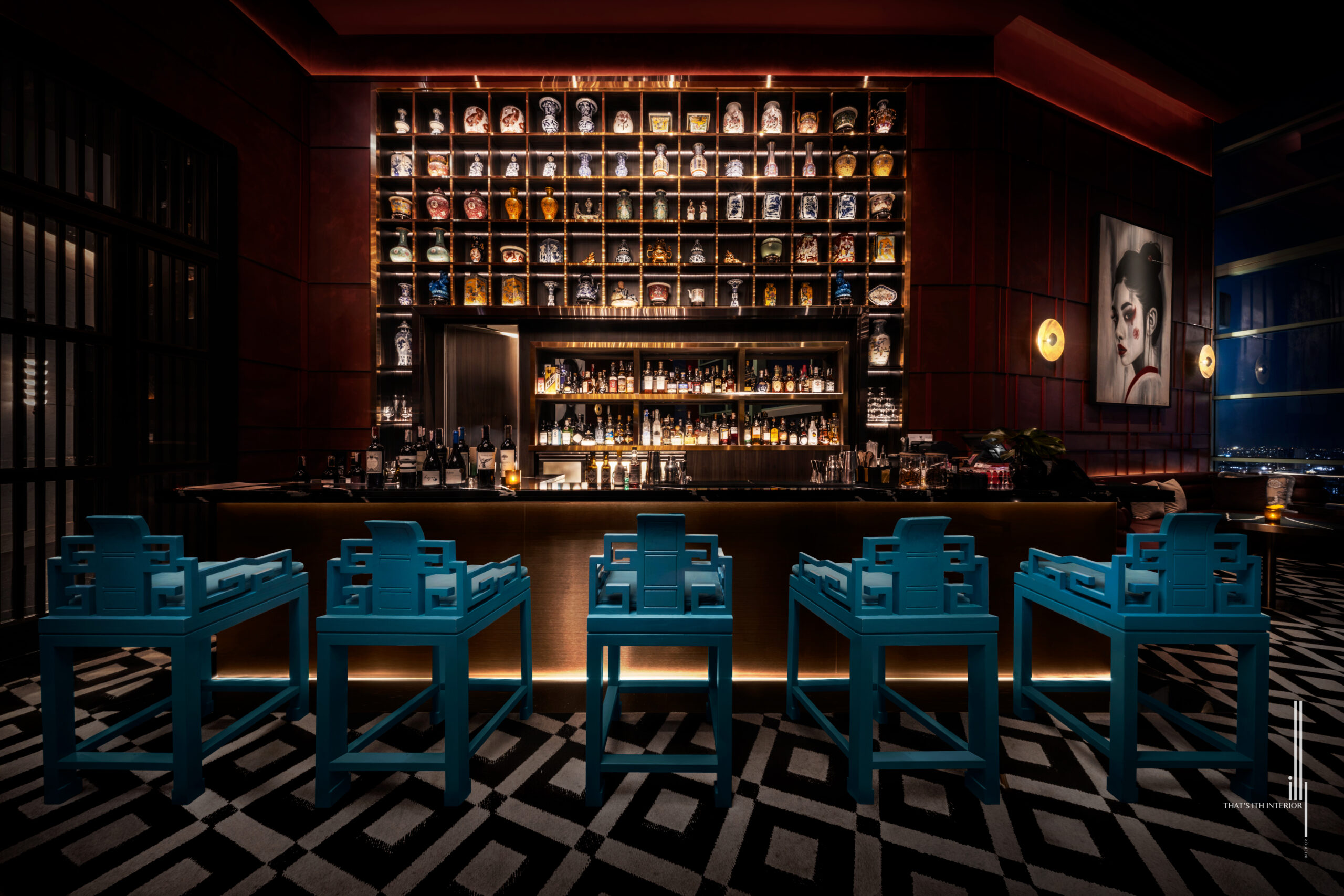
The project received recognition at the Asia Pacific Property Awards 2026 in the Hotel Bar Interior category.
For THAT’S ITH, the significance lies not in applying one hospitality formula to another project.
It lies in recognising that a restaurant asks different questions from a ballroom, lobby, or guestroom.
Atmosphere and operation are not competing priorities.
The strongest design makes one support the other.
lyf Sukhumvit 8 Bangkok: Hospitality Without Conventional Luxury
Luxury hospitality is also changing.
Not every memorable hotel needs to communicate refinement through marble, chandeliers, or traditional ideas of grandeur.
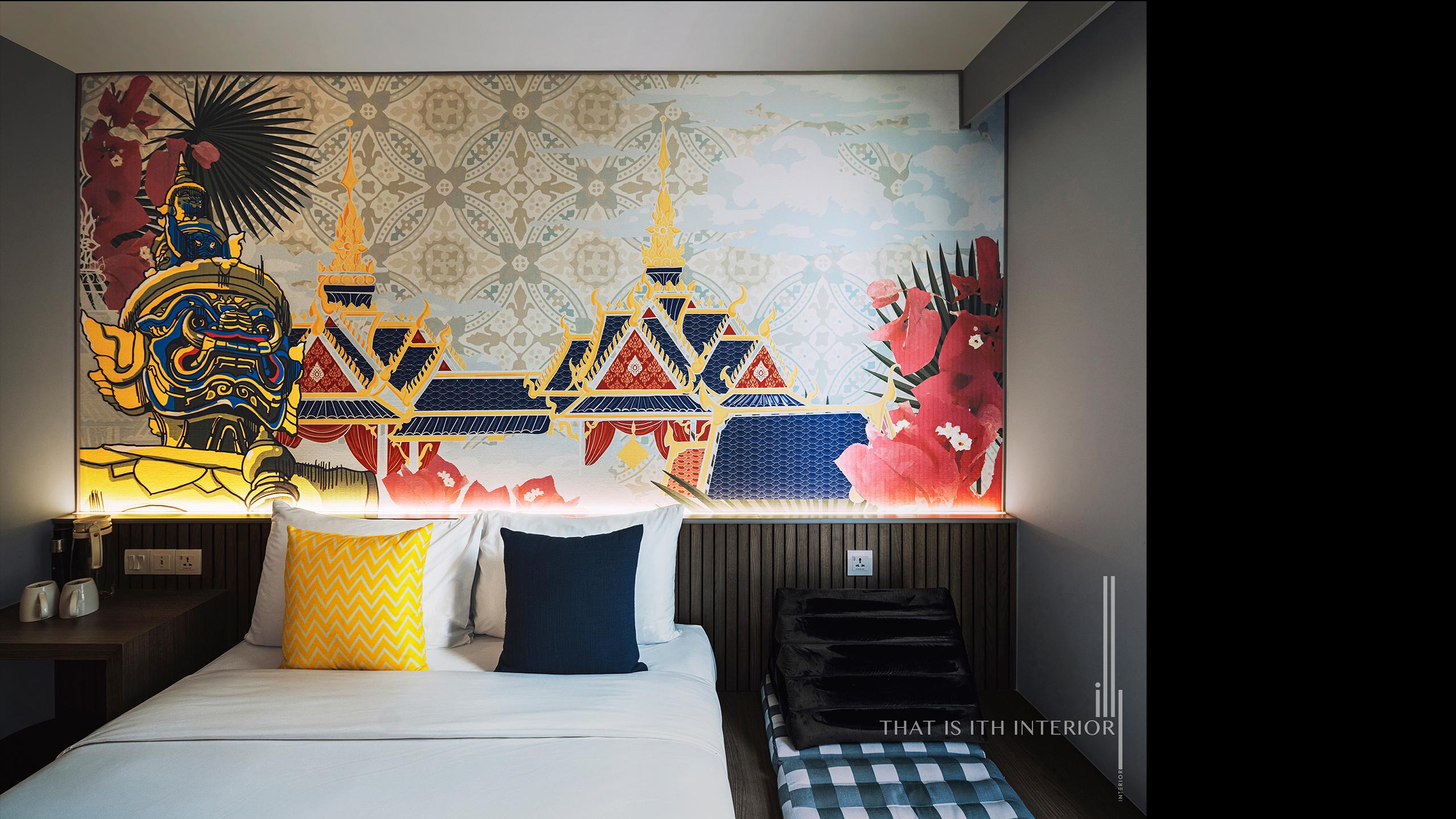
At lyf Sukhumvit 8 Bangkok, the design belongs to another type of hospitality experience — social, energetic, youthful, and shaped around collective memory and interaction.
Its visual language is deliberately different from traditional five-star luxury.
That difference is precisely the point.
The project demonstrates that memorable hospitality can emerge from understanding:
who the guests are,
how they behave,
what they share,
and how the environment can turn those behaviours into identity.
Design excellence does not require every hotel to aspire to the same definition of luxury.
It requires clarity about what this hotel is trying to become.
That principle is central to how we approach hospitality.
What Hotel Developers Should Look for in an Interior Designer
A compelling portfolio matters.
Awards can provide useful reassurance.
But developers should look beyond both.
Ask whether the studio can explain why its projects became different.
Look for evidence of:
- built hospitality experience
- concept development
- guest-journey thinking
- operational understanding
- strong space planning
- material and climate knowledge
- FF&E capability
- bespoke design
- technical development
- consultant coordination
- understanding of long-term maintenance
- ability to work with operators, architects, contractors, and specialist teams
And pay attention to another question:
Does the designer make the project clearer during the conversation?
A strong hospitality designer should not simply present attractive answers.
They should ask questions that change the quality of the brief.
What is the guest really coming here for?
What part of the hotel carries the brand most powerfully?
Where should money be spent?
What should become simpler?
Which part of the concept cannot afford to disappear during value engineering?
How should the property be remembered?
These are not aesthetic questions alone.
They are design strategy.
Protecting the Idea Through Reality
Almost every hotel changes between concept and completion.
Budget changes.
Operator requirements evolve.
Technical issues emerge.
Products become unavailable.
Construction creates limitations.
Value engineering happens.
The designer’s role is not to refuse every change.
That would be unrealistic.
The real skill is understanding what can change without weakening the project — and what cannot.
Protecting design intent does not mean refusing change. It means knowing what the project cannot afford to lose.
One material may be replaceable.
One custom detail may simplify.
A piece of furniture may change.
But perhaps the arrival sequence cannot.
Perhaps the guestroom lighting hierarchy is essential.
Perhaps one crafted element carries the entire identity.
Good value engineering removes cost before it removes the idea.
That judgment is one of the less visible reasons why experienced hospitality design teams matter.
Creating Hospitality Spaces People Remember
Award-winning hotel interior design is rarely the result of one dramatic gesture.
It emerges from many decisions working together.
A clear narrative.
An intuitive guest journey.
Operational intelligence.
Materiality.
Lighting.
Craftsmanship.
A sense of place.
Technical discipline.
And an understanding of when to create impact — and when to stop.
At THAT’S ITH, our aim is not simply to make hospitality projects more visually impressive.
It is to make them more specific.
Specific to the destination.
Specific to the brand.
Specific to the guest.
Specific to the experience.
Because people rarely remember every beautiful place they visit.
They remember the ones that could not have been anywhere else.
Contact THAT’S ITH INTERIOR to discuss your next hotel, resort, restaurant, ballroom, or hospitality development.
The first conversation does not need to begin with style.
It can begin with a better question:
“What should people remember about this place when everything else has blurred together?”
Frequently Asked Questions
What is award-winning hotel interior design?
Award-winning hotel interior design refers to hospitality projects that have received professional recognition through design competitions or awards programmes.
Depending on the programme, recognition may relate to creativity, functionality, innovation, materiality, technical execution, guest experience, or overall design quality.
What makes a hotel interior memorable?
A memorable hotel usually combines a distinctive identity with a coherent guest journey.
Arrival, spatial sequence, lighting, materials, furniture, acoustics, operations, guestrooms, restaurants, and transitional spaces all contribute to how the property is experienced and remembered.
How do hotel interior designers create a guest journey?
Designers consider how guests move through the property over time rather than treating each room independently.
Arrival, reception, circulation, corridors, guestrooms, restaurants, bars, amenities, and departure can be designed as connected emotional experiences.
Why are hotel operations important to interior design?
Hotels are working environments.
Reception, housekeeping, luggage, food service, storage, staff circulation, maintenance, and other operational requirements directly affect planning.
Strong hospitality design integrates those systems without allowing them to dominate the guest experience.
Why is lighting important in luxury hotel design?
Lighting influences material, atmosphere, spatial hierarchy, comfort, and behaviour.
Hotels often need several lighting conditions throughout the day, while guestrooms require intuitive control for practical tasks, relaxation, and sleep.
Does bespoke design make a hotel more luxurious?
Not automatically.
Bespoke design becomes valuable when a custom element strengthens identity or solves a project-specific functional, spatial, or experiential requirement.
The goal should not be to customise everything.
It is to identify what deserves to exist only in that property.
How important is sense of place in hospitality design?
Sense of place can differentiate a property from generic international luxury.
Local identity may be expressed through climate response, craft, materials, architecture, landscape, culture, spatial principles, or contemporary reinterpretation rather than literal decorative motifs.
Can hotel interior design principles be used in luxury homes?
Yes.
Principles such as spatial sequencing, layered lighting, comfort, intuitive planning, materiality, and emotional atmosphere can improve residential design.
But they need to be adapted to personal routines, privacy, belongings, and long-term living rather than simply reproducing the appearance of a hotel.
What is the difference between hotel interior design and luxury villa design?
Hotel design needs to respond to changing guests, brand positioning, operational systems, repeated use, service, and commercial requirements.
A private villa is centred more closely on particular residents, privacy, landscape, climate, everyday routines, and long-term personal use.
Both require strong spatial and technical coordination, but the brief is fundamentally different.
What should developers look for in an award-winning hotel interior designer?
Look beyond awards.
Review completed hospitality projects, concept development, guest-journey thinking, operational understanding, space planning, FF&E, material knowledge, bespoke capability, technical development, and collaboration with multidisciplinary teams.
The portfolio should also show different answers for different destinations, brands, and audiences rather than one repeated visual formula.
When should a hotel interior designer join the project?
Ideally during early concept or planning stages.
Interior design can influence architecture, guest flow, operations, lighting, material strategy, FF&E, guestrooms, public areas, and technical coordination before major decisions become difficult or expensive to change.
Should a hotel be designed to win awards?
No.
Recognition can be valuable, but the primary objective should be to create a property that works for the owner, operator, staff, brand, and guests.
The hotel should deserve attention because the design is good — not be designed merely to attract attention.