
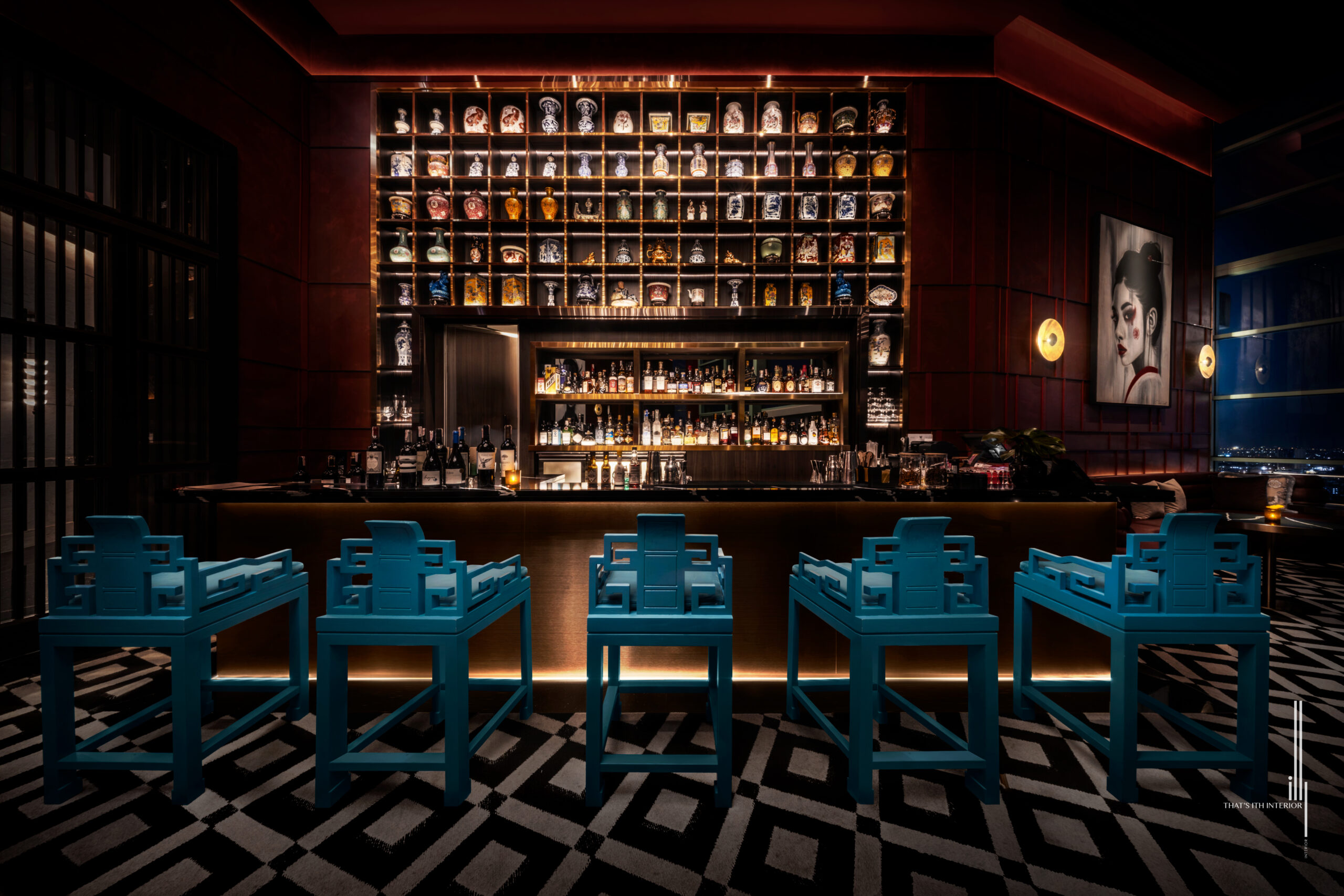
Restaurant Interior Design Bangkok: What to Look For in a High-End Dining Space
Bangkok does not have one restaurant identity.
A fine-dining destination inside a five-star hotel behaves differently from an intimate chef-led restaurant in a converted house.
A rooftop venue has a completely different relationship with the city from a restaurant hidden behind an understated entrance.
A contemporary Thai concept should not communicate place in the same way as an international restaurant arriving in Bangkok for the first time.
That variety is what makes Restaurant Interior Design in Bangkok particularly interesting — and particularly demanding.
Beautiful materials are no longer enough on their own.
Neither is a photogenic bar.
Or an expensive chair.
Or a ceiling designed to become the hero image on opening night.
The strongest restaurant interiors in Bangkok create a relationship between food, service, location, behaviour, and atmosphere so specific that the experience feels difficult to separate from the place itself.
That requires more than designing a beautiful dining room.
It requires understanding what this restaurant needs to become.
Begin With the Restaurant, Not the Interior Style
Restaurant design should begin with the business and dining concept.
What is being served?
How formal is the service?
Who is the guest?
How long should they stay?
Does the restaurant need to work from lunch through late evening?
Is the chef part of the guest experience?
Does the bar have its own audience?
How important is private dining?
How much of the kitchen should be visible?
Those questions affect the interior far more profoundly than deciding whether it should look modern, minimal, contemporary, or luxurious.
A precise tasting-menu restaurant may need controlled lighting, conversational privacy, and greater distance between tables.
A social dining concept may benefit from a visible bar, more active circulation, and a stronger relationship between guests.
A restaurant inside a hotel may need to establish an independent identity strong enough that people visit even when they are not hotel guests.
A strong Luxury Restaurant Concept Design in Thailand begins when the spatial idea grows out of the restaurant itself rather than being applied to it afterwards.
When the concept is clear, decisions begin to have reasons.
Materials.
Furniture.
Lighting.
Music.
Art.
Arrival.
Layout.
They stop behaving as separate design gestures and begin to feel like parts of one experience.
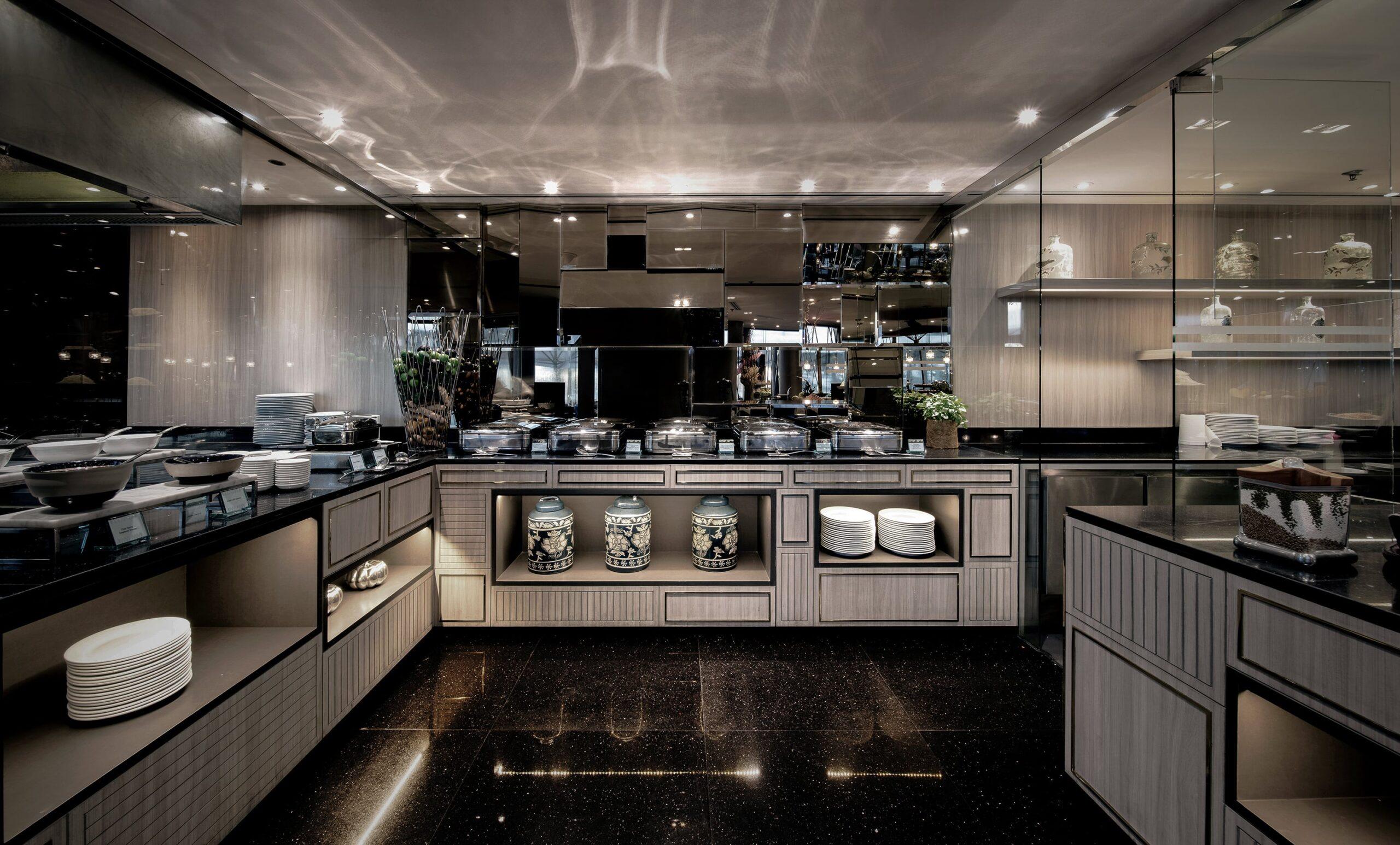
Bangkok Should Influence the Design Without Becoming a Theme
Bangkok is dense.
Layered.
Fast.
Tropical.
Social.
Sometimes chaotic.
Sometimes surprisingly private.
A restaurant can respond to that context in completely different ways.
One may embrace the city.
Another may deliberately protect guests from it.
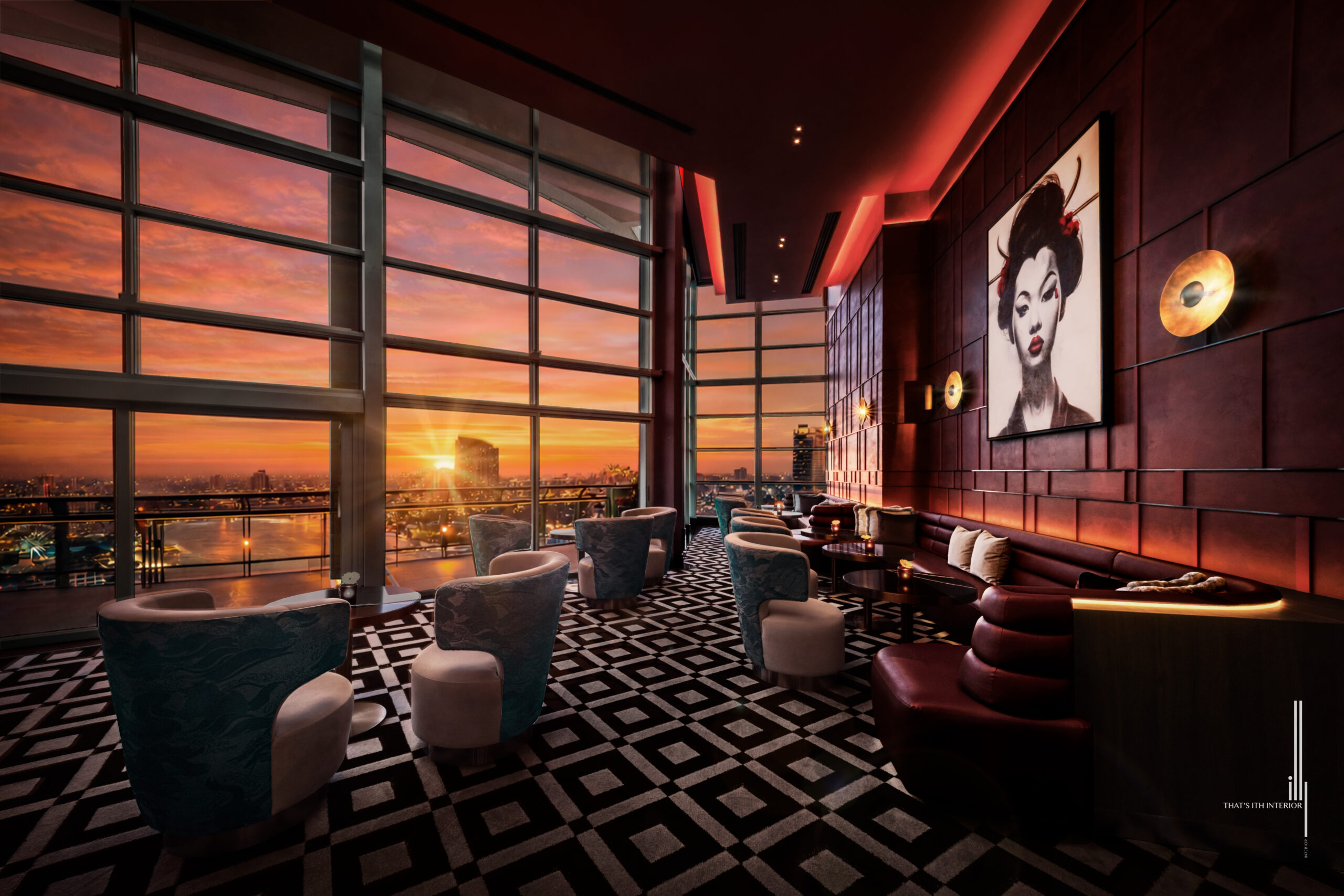
A rooftop venue can use the skyline as part of the emotional experience.
A riverside restaurant has another relationship with movement, water, and view.
A restaurant on Sukhumvit may sit within intense urban density.
A venue inside a heritage building carries another set of opportunities and constraints.
The point is not to make every restaurant “look Bangkok.”
That quickly becomes superficial.
Sense of place is not created by adding symbols of place. It is created by understanding what this particular location allows the restaurant to do.
Sometimes Bangkok should be visible everywhere.
Sometimes the most luxurious response to Bangkok is making the city disappear.
Location Should Change the Design Answer
The same culinary concept placed in three different parts of the city should not automatically produce the same restaurant.
A river view may become part of the arrival.
A narrow urban site might benefit from sequence and compression.
A high-rise restaurant can use elevation and city light.
A hotel dining room may need stronger internal identity because the guest passes through another brand before arriving.
A mall restaurant may need to establish atmosphere almost immediately because the surrounding environment is visually intense.
Context is not something the designer decorates around. It is part of the brief.
The more specific that relationship becomes, the less likely the finished restaurant is to feel interchangeable.
Design the Arrival as Part of the Meal
Guests begin forming an opinion before they sit down.
Sometimes before they even enter.
Signage.
Façade.
Threshold.
Lighting.
Host position.
Waiting.
Sound.
The first glimpse.
All establish expectation.
Bangkok restaurants often sit within complicated environments:
hotels,
shopping destinations,
office towers,
mixed-use developments,
high-rise buildings,
or dense streets.
That makes arrival especially important.
The restaurant may need to separate itself psychologically from what surrounds it.
A concealed entrance can build anticipation.
A dark transition can prepare the eye for a brighter interior.
A visible bar can communicate social energy immediately.
A corridor can slow the guest down before revealing the dining room.
Arrival design succeeds when guests already understand something about the restaurant before anyone has explained the concept to them.
The experience does not begin at the table.
It begins at the threshold.
Decide What to Reveal — and What to Withhold
One of the easiest ways to weaken a restaurant is to show everything immediately.
The bar.
The kitchen.
The main dining room.
The feature wall.
The artwork.
The view.
All in one first glance.
Sometimes that is appropriate.
Often it removes the possibility of discovery.
A restaurant can behave more like a story.
Reveal one thing.
Then another.
Allow a corridor to create anticipation.
Use a screen to partially conceal activity.
Frame a view rather than expose the entire room.
Let guests discover the private dining room later.
Hospitality becomes more memorable when information is choreographed rather than simply displayed.
In a city where visual stimulation is everywhere, the confidence to withhold can be as powerful as the confidence to create spectacle.
Guest Flow and Service Flow Must Be Designed Together
Restaurant planning is one of the clearest examples of interior design needing to resolve emotion and operation simultaneously.
Guests move between:
entrance,
table,
bar,
private dining,
restrooms,
terraces,
and sometimes open kitchen areas.
Staff repeatedly move between:
kitchen,
pass,
bar,
service stations,
tables,
storage,
and clearing routes.
Those systems should coexist without constantly colliding.
A beautiful plan can fail quickly if waiters repeatedly cross the arrival route.
A service station can destroy an important view.
A poorly positioned door can interrupt an otherwise elegant table arrangement hundreds of times every night.
This is where the expertise associated with a Restaurant Interior Architect in Thailand or an experienced hospitality interior designer becomes particularly important.
The guest should experience simplicity precisely because the operational complexity has already been solved elsewhere.
Good restaurant planning makes effort disappear.
Do Not Maximise Seats Before Understanding the Experience
Capacity matters commercially.
But every additional table changes something.
Circulation.
Acoustics.
Privacy.
Service.
Energy.
Dwell time.
Perceived exclusivity.
The question therefore should not only be:
“How many seats can fit?”
It should also be:
“At what point does another table begin to change the restaurant we are trying to create?”
A fine-dining restaurant may benefit from greater distance between tables.
A social restaurant may intentionally use closer relationships to generate energy.
A bar-driven concept may allocate valuable floor area to counter seating because that behaviour is central to the brand.
Seat count is not just mathematics.
It is part of the character of the restaurant.
Lighting Should Change With Bangkok After Dark
Bangkok restaurants frequently live very different lives across the day.
Lunch may rely heavily on natural light.
Afternoon can bring stronger sun.
After sunset, the entire relationship with the city changes.
Restaurant lighting should therefore be developed as a sequence rather than one fixed scene.
Table lighting affects the food.
Faces need to feel comfortable.
Art may require focus.
The bar may gradually become more prominent.
Architecture can recede or emerge.
Not every surface deserves equal illumination.
Projects such as River Barge demonstrate how hospitality atmosphere can shift through light, view, and changing patterns of use.
The strongest restaurant lighting does not simply illuminate the interior. It decides what the restaurant becomes after dark.
That distinction matters in Bangkok, where evening can completely transform how a space relates to the city outside.
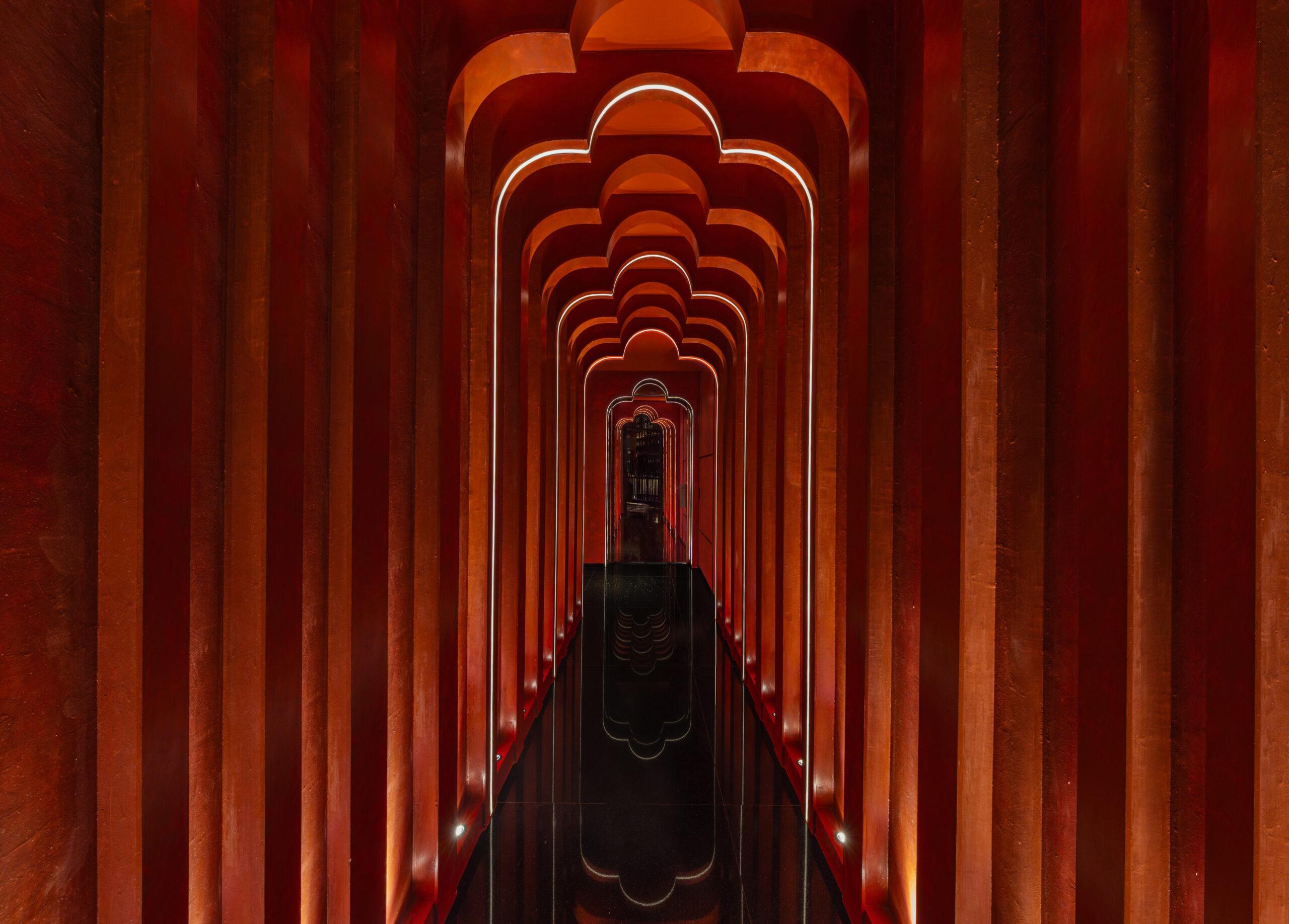
Lighting Should Flatter People as Much as Architecture
Designers understandably focus on how lighting reveals materials.
But restaurant lighting also falls on people.
A beautifully lit wall and poorly lit face is not a successful hospitality environment.
Guests spend most of the evening looking at one another.
That means light needs to consider:
skin tones,
glare,
table position,
eye level,
reflections,
and the relationship between direct and indirect sources.
Luxury is sometimes remarkably simple.
People stay longer in places where they feel good — including places where they feel good looking at themselves and each other.
Treat Acoustics as Part of Fine Dining
Bangkok restaurants often use highly expressive hard materials.
Stone.
Glass.
Metal.
Tile.
High ceilings.
Reflective surfaces.
All can create extraordinary interiors.
They can also create rooms where people cannot hear one another.
For Fine Dining Interior Design in Thailand, acoustic comfort is especially important because conversation is part of the dining experience.
But acoustic design does not mean removing all sound.
A restaurant should still feel alive.
The correct acoustic character depends on the concept.
A bar can contain more audible energy.
A tasting-menu restaurant may require greater conversational privacy.
A social dining room might sit somewhere between the two.
Upholstery.
Ceiling treatments.
Curtains.
Screens.
Wall materials.
Furniture.
Specialist acoustic solutions where required.
All can contribute.
Acoustic luxury is not silence. It is the ability to create energy without forcing guests to compete with the room in order to speak.
Guests rarely compliment the acoustic strategy.
They simply know whether they want to stay.
Furniture Shapes the Social Behaviour of the Restaurant
Restaurant furniture is not simply FF&E.
Its scale and placement influence behaviour.
Banquettes create one kind of social relationship.
Loose tables create another.
Bar seating changes how solo guests interact with the room.
A communal table can create energy.
High-backed seating can create psychological privacy.
The distance between two chairs can make conversation feel intimate or awkward.
Furniture also has to correspond to dwell time.
A short casual lunch and a three-hour tasting menu do not require the same ergonomic performance.
A chair may be beautiful and still be completely wrong for the restaurant.
Furniture becomes part of architecture when its scale, comfort, and position actively determine how people experience the room.
That is why custom pieces can be valuable when standard furniture cannot resolve the exact relationship between space, behaviour, and identity.
Bespoke Furniture Should Solve Something
Bespoke is particularly useful in restaurant design.
But custom-made should not automatically be treated as superior.
A bespoke banquette may follow an unusual wall.
A communal table can organise a room.
A chair can interpret a material or cultural idea.
A screen can combine privacy, acoustic function, and identity.
But if a commercially available chair already works perfectly, designing another one simply to claim exclusivity may add complexity without adding value.
Bespoke becomes meaningful when the restaurant itself is the reason the object had to exist.
Not because the object needed to prove it was expensive.
Use Materials With Enough Restraint to Create Identity
Luxury restaurants can easily become overloaded.
Stone.
Metal.
Timber.
Mirror.
Decorative plaster.
Statement tile.
Crafted screens.
Textiles.
Art.
Each may be beautiful.
Together, they can make the concept difficult to read.
The strongest Luxury Restaurant Interior Design in Thailand often uses a more controlled material language.
One stone can create permanence.
Timber can introduce warmth.
Metal can bring precision.
Textile can soften both acoustics and visual character.
Craft can create specificity.
Material richness does not depend on quantity.
It depends on relationships.
Rough against polished.
Warm against cool.
Reflective against matte.
Precise against handmade.
A sophisticated palette allows each material to contribute something different rather than asking every material to become a feature.
Bangkok’s Craft Capability Can Create Distinction Without Cliché
Thailand offers strong capabilities across craft, furniture, timber, metalwork, ceramics, textiles, and specialist fabrication.
The opportunity is not simply to make a restaurant look more “Thai.”
That can become predictable quickly.
A more interesting approach is reinterpretation.
A weaving technique might influence a ceiling.
Ceramics can become architectural rather than decorative.
A traditional making process can be expressed through contemporary geometry.
A regional material can appear in an unexpectedly refined form.
This creates local identity without turning culture into costume.
Craft becomes most valuable when it makes the restaurant harder to reproduce — not merely easier to label as local.
That is a more sophisticated form of belonging.
The Bar Needs a Strategic Role Before It Needs a Design
A beautiful bar is not automatically a useful one.
Its role has to be understood first.
Is it the first point of arrival?
The social centre?
A pre-dinner space?
A late-night destination?
A waiting area?
A place for solo guests?
A secondary function supporting the restaurant quietly?
That answer should influence everything else.
Counter height.
Seating.
Equipment.
Back-bar display.
Lighting.
Storage.
Bartender movement.
Guest circulation.
Visibility.
A strong bar can extend dwell time and give a restaurant another reason to be visited.
But it should not dominate simply because bars photograph well.
The bar should become important because the restaurant needs it to be important.
Private Dining Should Feel Like Access, Not Isolation
Private dining has significant value in Bangkok’s high-end hospitality market.
Family celebrations.
Executive dinners.
International guests.
Brand events.
VIP entertaining.
These rooms need acoustic privacy and operational independence.
But they should not feel like the main restaurant’s leftover function room.
A different material palette.
A bespoke table.
A stronger artwork.
A lower ceiling.
A particular view.
A more intimate lighting condition.
These can give the room a different emotional value while still keeping it connected to the wider identity.
Private dining should feel like gaining access to another layer of the restaurant, not being removed from it.
That subtle distinction changes how exclusive the experience feels.
Design for Photography Without Designing Only for Photography
Bangkok’s dining culture is highly visible online.
Guests often encounter a restaurant digitally before physically entering it.
That means recognisable design can contribute significantly to awareness.
But a restaurant is experienced for hours.
A photograph lasts seconds.
Comfort still matters.
Acoustics matter.
Service matters.
Lighting matters.
Furniture matters.
Circulation matters.
Projects such as Moon & Back – New York and Silver Waves at Chatrium Riverside Bangkok demonstrate how strong visual identity can emerge from a larger design concept rather than isolated “photo moments.”
The most shareable restaurant moment is usually more powerful when the photograph captures a genuine design idea rather than a feature created only for the camera.
Instagrammability should be a consequence.
Not the brief.
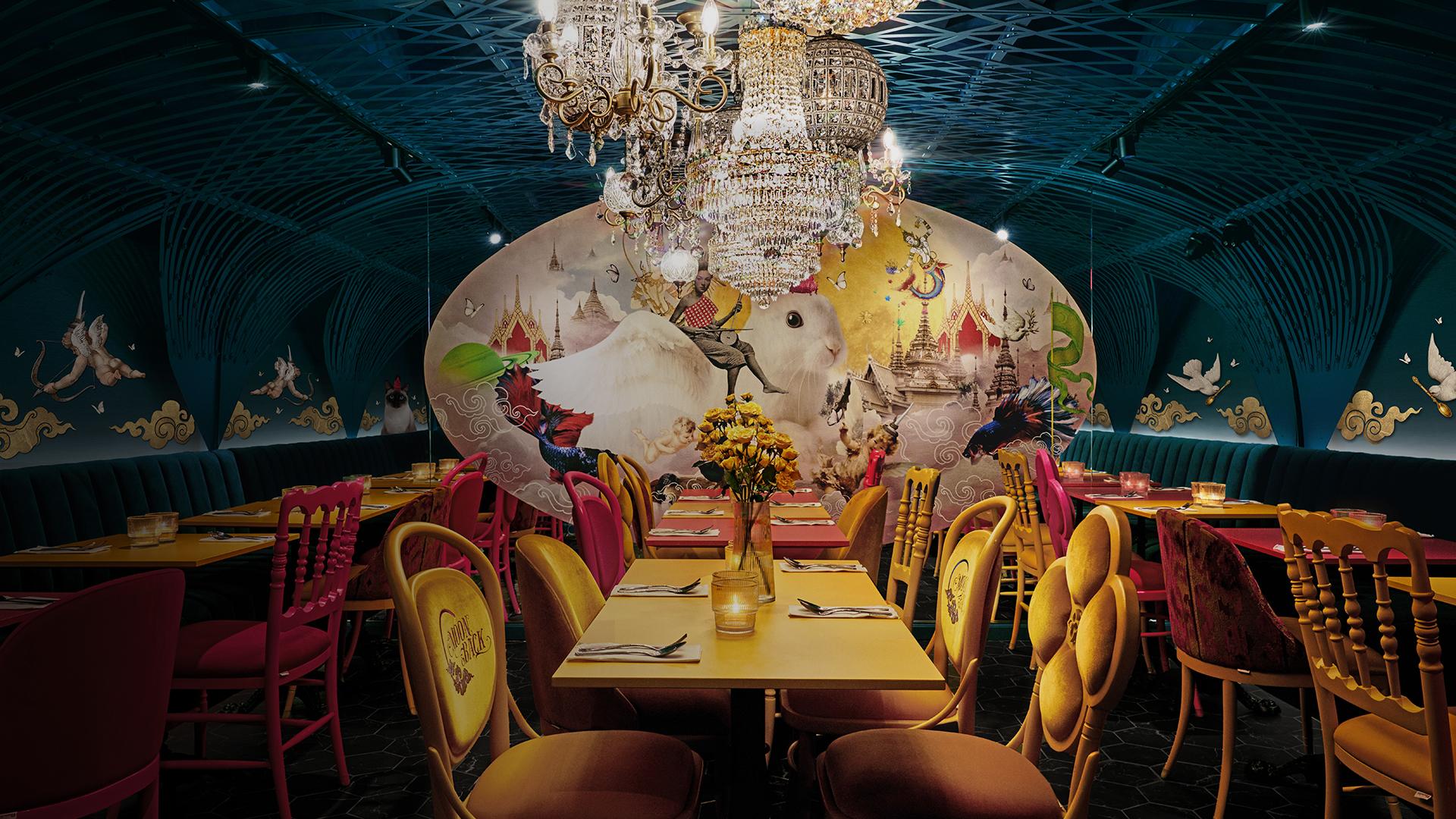
Design the Restroom Like It Still Belongs to the Restaurant
The guest journey does not stop outside the dining room.
Restrooms are one of the few parts of the restaurant guests often experience alone.
That creates a different emotional opportunity.
The scale can change.
Colour can intensify.
Lighting can become more theatrical.
Materiality can shift.
A playful side of the concept can emerge.
But the room should still belong to the same restaurant.
Secondary spaces can change the tone of the story without changing the story itself.
A memorable restaurant should not suddenly become generic the moment the guest leaves the dining room.
Understand Bangkok’s Tropical Conditions
Restaurants in Bangkok exist inside a tropical environment.
Heat.
Humidity.
Strong daylight.
Heavy rain.
Air-conditioning.
Material behaviour.
Transitions between interior and exterior.
These conditions matter particularly for restaurants with:
terraces,
open façades,
rooftops,
gardens,
or semi-outdoor areas.
A terrace that looks beautiful but becomes uncomfortable for much of the day is not fully resolved.
A material that performs well indoors may behave very differently near an open exterior edge.
Thresholds need to account for rain.
Lighting needs to change between strong daylight and evening.
Air-conditioning and exterior openings need thoughtful coordination.
Climate should influence the design concept rather than appear only as a technical problem afterwards.
Bangkok’s climate can create extraordinary restaurant experiences when the design works with it intelligently.
Restaurant Interiors Should Age With Dignity
Opening night is the easiest moment for a restaurant to look perfect.
The more meaningful test comes later.
Thousands of chairs pulled out.
Tables cleaned repeatedly.
Shoes across flooring.
Bar surfaces used every night.
Upholstery replaced.
Lighting maintained.
Operational changes.
Furniture repaired.
A restaurant interior should be designed with this future in mind.
Materials need to age appropriately.
Custom furniture should be repairable where practical.
Upholstery should be replaceable.
Lighting systems should remain serviceable.
Technical access should not destroy the design when maintenance eventually becomes necessary.
Luxury is not only how beautifully a restaurant opens. It is how convincingly the design survives being successful.
What Should You Look for in a High-End Restaurant Designer in Thailand?
A High-end Restaurant Designer in Thailand should understand far more than aesthetics.
Look for experience in:
- hospitality concept development
- guest journey
- operational planning
- lighting
- acoustics
- FF&E
- bespoke furniture
- materials
- bar planning
- kitchen relationships
- technical coordination
- construction documentation
- collaboration with operators and consultants
A portfolio should also show variation.
A fine-dining restaurant should not look like a bar simply because both came from the same studio.
A hotel restaurant should not automatically receive the same design language as an independent chef-led concept.
A Bangkok restaurant should not be interchangeable with one designed somewhere else.
The strongest restaurant designers have a recognisable quality of judgment without forcing every restaurant into a recognisable style.
That difference matters.
The Question to Ask Before Choosing a Restaurant Interior Designer
Do not ask only:
“Do I like their portfolio?”
Ask:
“Can they explain why each restaurant became different?”
The explanation should involve more than style.
Food.
Audience.
Location.
Operation.
Brand.
Behaviour.
Culture.
Light.
Service.
Memory.
If every answer eventually returns to the designer’s own preferred aesthetic, the restaurant may end up expressing the studio more strongly than the business it was meant to represent.
Great restaurant design needs authorship.
But the author should still understand whose story is being told.
That’s ITH’s Approach to Restaurant Interior Design in Bangkok
At That’s ITH Interior, we do not begin a restaurant with a predetermined aesthetic.
We begin with the dining experience.
The food.
The location.
The audience.
The service.
The architecture.
The energy.
The cultural context.
And the memory guests should leave with.
Then we ask how space can amplify those things.
One restaurant may need expressive energy.
Another may become more powerful through restraint.
A bar may define one project.
A view may define another.
A crafted surface may become the cultural memory.
A controlled entrance may create more emotional impact than the dining room itself.
The answers change because the restaurants change.
For us, Fearless Luxury in restaurant design means having the confidence to create something distinctive — and enough judgment not to let the interior compete with the reason guests came in the first place.
We do not aim for a recognisable restaurant style.
The consistency is in the thinking.
And the final test is not whether people remember every material.
It is whether the restaurant leaves a memory specific enough that they cannot easily confuse it with somewhere else.
That is Designing Places People Remember.
Explore That’s ITH hospitality projects to discover our work across restaurants, bars, hotels, and destination hospitality.
Planning a Restaurant Project in Bangkok?
The strongest restaurant interiors are developed when culinary concept, brand, operations, architecture, kitchen planning, and interior design can influence one another before the project has already fragmented into separate decisions.
Led by founder and designer ITH Palach, That’s ITH Interior is a Bangkok-based interior design studio working across restaurants, bars, hotels, residential, and commercial projects in Thailand and international markets.
We collaborate with restaurant owners, chefs, operators, hotel groups, developers, architects, kitchen consultants, lighting designers, contractors, and multidisciplinary teams to translate culinary identity, operations, location, behaviour, and brand into memorable dining environments.
Contact That’s ITH Interior to discuss your next restaurant, bar, or hospitality project in Bangkok or Thailand.
Frequently Asked Questions
What defines restaurant interior design in Bangkok?
Restaurant interior design in Bangkok combines culinary identity, guest experience, operational planning, lighting, acoustics, materials, furniture, climate awareness, and a meaningful response to the restaurant’s location.
The strongest restaurants do not simply adopt a fashionable hospitality aesthetic. They create a spatial identity specific to the food, audience, service, brand, and context.
What makes luxury restaurant interior design in Thailand successful?
Strong luxury restaurant design balances identity with comfort, operational intelligence, material quality, lighting, acoustics, craftsmanship, and long-term performance.
Luxury does not necessarily mean visual abundance. Precision, restraint, ease, and specificity can be equally powerful.
What is important in fine dining interior design in Thailand?
Fine-dining environments benefit from carefully controlled lighting, acoustic comfort, appropriate table spacing, comfortable furniture, material quality, and enough visual restraint for food, service, and conversation to remain central.
How should a Bangkok restaurant respond to its location?
The response should depend on the site.
A rooftop may engage with the skyline, a riverside restaurant with water and movement, a heritage property with existing architecture, while an urban restaurant in a dense neighbourhood may deliberately create an inward-looking retreat.
The objective is not to add obvious Bangkok references but to allow the location to influence the experience.
Why is arrival important in restaurant design?
Arrival establishes expectation before guests sit down.
Entrance, signage, lighting, threshold, host position, waiting, and the first view can communicate character and help separate the restaurant psychologically from the environment around it.
Why are acoustics important in restaurant interior design?
Sound affects comfort, intimacy, energy, and conversation.
Fine dining usually requires greater acoustic control, while a social restaurant may intentionally retain more audible energy. The correct acoustic environment depends on the concept.
Does a luxury restaurant need bespoke furniture?
No.
Bespoke furniture is most valuable when it solves a specific spatial, ergonomic, operational, or conceptual requirement.
Strong restaurant interiors often combine project-specific pieces with carefully selected existing furniture.
How important is the bar in restaurant design?
Its importance depends on the concept.
The bar may become the arrival point, social centre, late-night destination, waiting area, or a quieter supporting function.
Its operational role should be understood before its visual design is developed.
Should Bangkok restaurants be designed for social media?
Social media visibility can support awareness, but the physical guest experience should remain the priority.
Strong visual moments work best when they emerge naturally from the restaurant’s identity rather than being inserted purely as photo opportunities.
When should a restaurant interior designer join the project?
Ideally during concept development or early planning.
Early involvement allows guest flow, kitchen relationships, bar, private dining, lighting, services, materials, and operational requirements to influence one another before major spatial decisions become difficult to change.
What should I look for in a high-end restaurant designer in Thailand?
Look for strong hospitality experience, concept development, operational planning, lighting and acoustic knowledge, material expertise, FF&E and bespoke capability, technical coordination, and a portfolio showing different responses to different restaurant concepts.
Most importantly, look for someone who can answer one question clearly:
What should guests remember about this restaurant that they could not remember about another one?