
19 Luxury Restaurant Interior Design Ideas That Create a More Memorable Dining Experience
Luxury restaurant interior design is not created by adding as many impressive things as possible.
It is created by deciding which things deserve to matter.
A dramatic bar can carry an entire room.
A carefully framed view may make an elaborate ceiling unnecessary.
One bespoke light can become more memorable than twenty decorative fixtures.
And a restrained entrance that reveals the restaurant slowly can create more emotion than showing everything from the door.
The strongest luxury restaurant interior design ideas are really ideas about attention: what should guests notice, when should they notice it, and what should remain in their memory after the meal is over?
That distinction is important.
These are not trends to copy.
They are design moves that can be interpreted differently according to the food, brand, location, service model, and personality of each restaurant.
1. Build the Restaurant Around One Strong Idea
Many restaurants become visually complicated because too many attractive references survive the design process.
The stone came from one mood board.
The lighting from another.
The furniture from somewhere else.
The bar has its own idea.
The bathroom has another.
Individually, everything may be beautiful.
Together, nothing feels inevitable.
A stronger restaurant often begins with one central thought.
That idea may come from:
- the cuisine
- the chef
- a cultural memory
- the location
- a ritual
- a material
- a historical reference
- a particular emotion
- or even one contradiction
Once that central idea is clear, it becomes a filter.
Does this material belong?
Does this chair strengthen the character?
Should this light be here?
Does the arrival prepare guests for what follows?
One strong idea does not mean every detail needs to look the same. It means every detail has a reason to belong to the same world.
2. Design the Reveal, Not Just the Entrance
Luxury dining often benefits from anticipation.
Not every restaurant needs to explain itself immediately.
A darker passage can lead toward a brighter dining room.
A narrow entrance can compress before opening into a larger volume.
A curtain may conceal the main room.
A glimpse through a screen can reveal only enough to create curiosity.
In another concept, the opposite may be more appropriate: the entire bar and energy of the dining room might be visible immediately from outside.
The point is not concealment.
It is control.
The designer should decide how much of the restaurant the guest deserves to know in the first five seconds.
This is particularly powerful in hotel restaurants and mixed-use developments, where the restaurant may need to create its own independent identity within a much larger building.
Arrival is not simply circulation.
It is storytelling through sequence.
3. Let the Bar Become Architecture
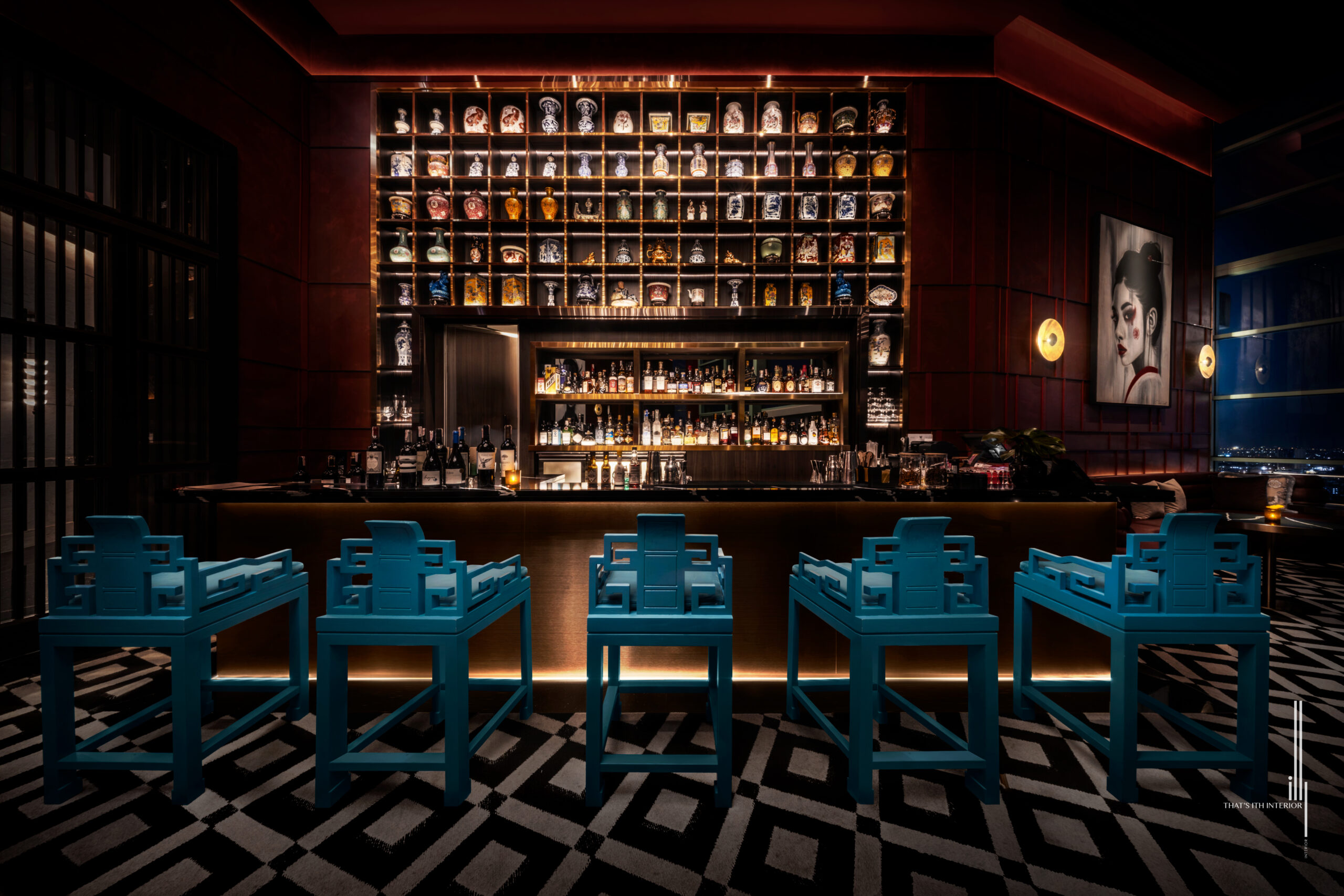
A bar can be more than a counter.
In the right concept, it can organise the whole room.
It may become sculptural.
Monolithic.
Transparent.
Crafted.
Reflective.
Quiet.
Or deliberately theatrical.
The strongest bar designs integrate operational requirements into the architecture rather than treating equipment, storage, lighting, display, and guest seating as unrelated problems.
The back bar deserves equal attention.
Instead of conventional rows of bottles, it might incorporate:
art,
mirrors,
crafted screens,
framed views,
lighting,
material depth,
or deliberately controlled transparency.
A great bar is not furniture placed inside a restaurant. It is architecture with hospitality happening around it.
It can also give the restaurant a second identity — a reason to visit before dinner, after dinner, or without dinner at all.
4. Light the Experience, Not the Room
Restaurant lighting should not begin with the question:
“How bright should it be?”
A better question is:
“What should guests notice first?”
The food?
The person opposite them?
A piece of art?
The bar?
A crafted wall?
The architecture?
Different elements deserve different levels of visual authority.
Tables need enough light for food to remain appealing.
Faces need flattering illumination.
Background surfaces can recede.
A private dining table may sit within its own pool of light.
A bar may become increasingly prominent later in the evening.
Accent lighting can reveal texture, while decorative fittings can become sculptural when the architecture gives them enough space to matter.
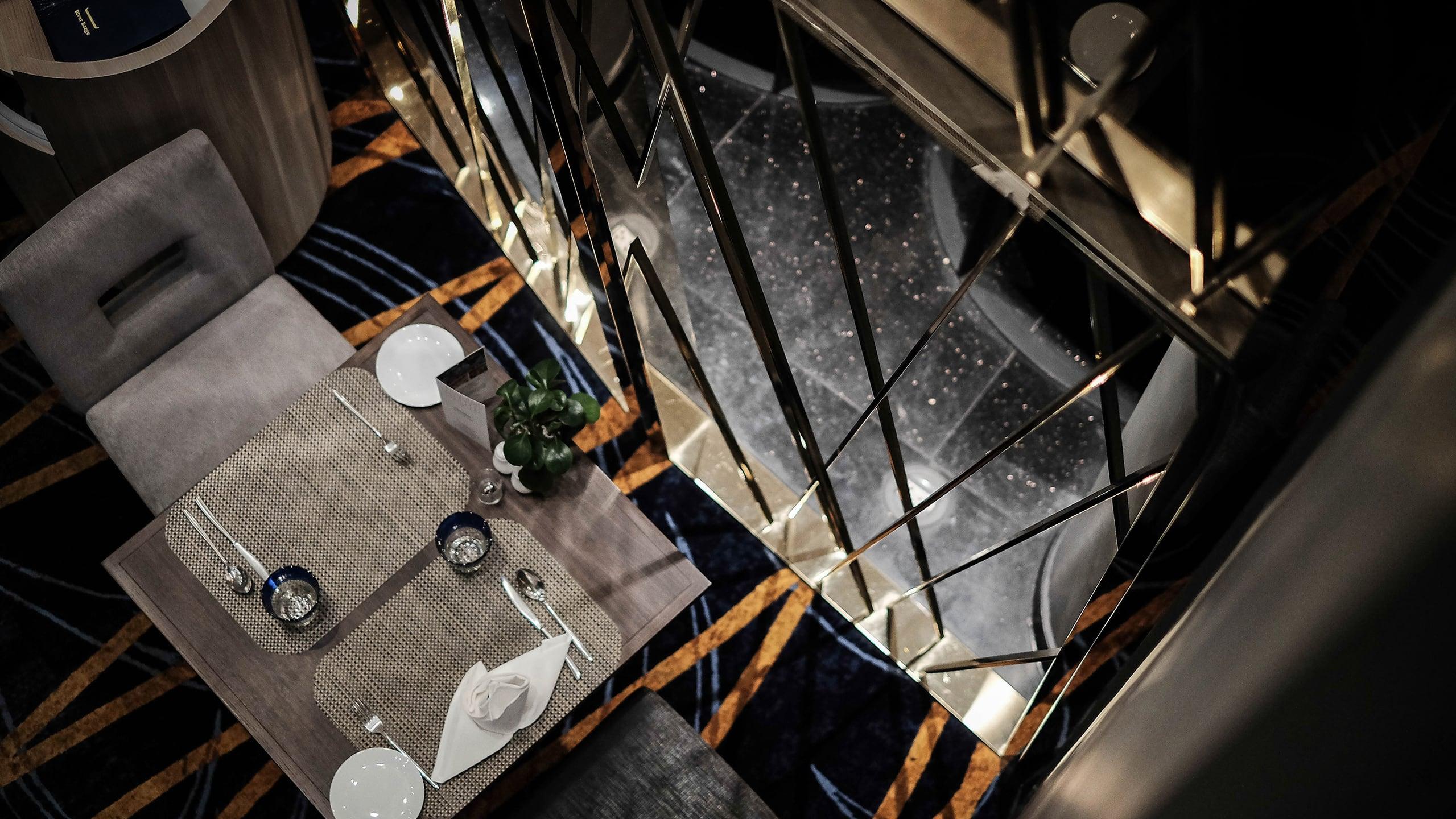
Projects such as Moon & Back – New York and River Barge demonstrate how lighting contributes to atmosphere rather than simply visibility.
Good restaurant lighting creates hierarchy.
The entire room does not need to be equally visible to be fully experienced.
5. Create Intimacy Without Building More Walls
A restaurant can feel social and private at the same time.
That tension is one of the most interesting things to design.
Solid partitions are only one tool.
Intimacy can also come from:
- banquettes
- curved seating
- high-backed chairs
- planting
- screens
- changes in level
- table orientation
- ceiling height
- lighting
- furniture spacing
A table can remain part of the larger room while feeling psychologically protected.
Too close, and guests feel exposed.
Too far apart, and the restaurant loses atmosphere.
The correct balance depends on the concept.
Fine dining may require greater conversational privacy.
A lively restaurant may benefit from more visible social energy.
Luxury often exists in the precise distance between feeling part of the room and feeling that your table belongs only to you.
6. Use Bespoke Furniture as an Anchor, Not a Requirement
Restaurants contain a large amount of furniture.
That makes bespoke design a powerful opportunity for identity.
A communal table can become the centre of a restaurant.
A banquette can integrate lighting, screening, and architecture.
A chair can carry a particular material or cultural reference.
A custom service piece can solve an operational problem while becoming part of the visual language.
But every piece does not need to be custom-made.
In fact, designing everything from scratch can make the interior feel overworked.
A stronger approach often combines a few project-specific anchors with carefully selected existing pieces.
Bespoke becomes meaningful when the restaurant itself is the reason the object had to be designed.
Not because “custom-made” sounds more luxurious.
7. Create Richness Through Contrast Rather Than Quantity
Luxury does not require a large material palette.
Often, the opposite produces more depth.
Rough beside polished.
Warm beside cool.
Matte beside reflective.
Heavy beside delicate.
Crafted beside precise.
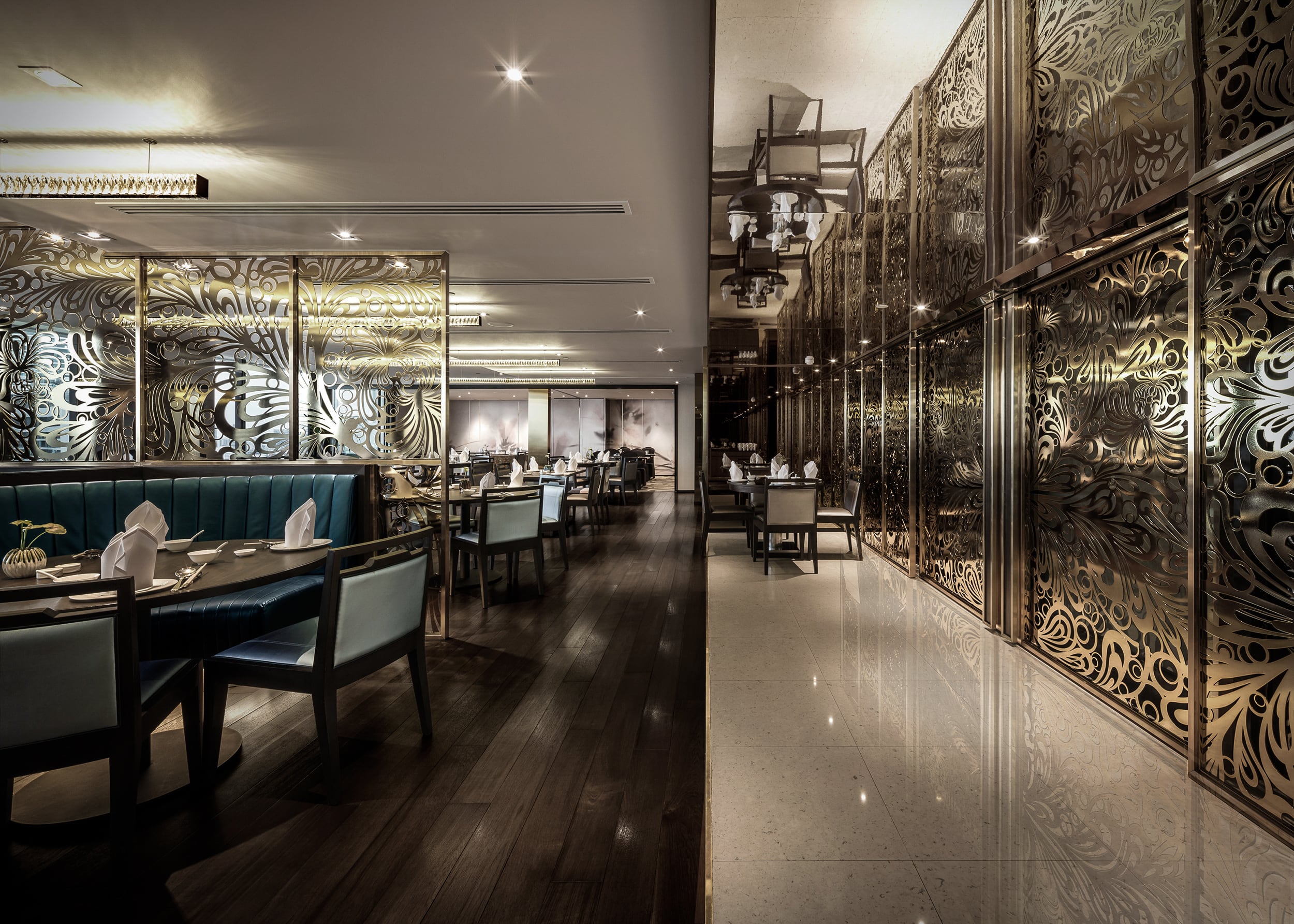
At Silver Waves at Chatrium Riverside Bangkok, material and spatial character help create a distinctive restaurant identity without relying on endless competing finishes.
The interesting part is not each material in isolation.
It is the relationship between them.
A restrained room can feel extremely rich when surfaces respond differently to light, touch, and distance.
Material richness comes from tension and contrast — not from showing the guest how many samples were available.
8. Translate Local Culture Instead of Decorating With It
Thailand offers an enormous amount of cultural design intelligence.
Craft.
Ceramics.
Textiles.
Architecture.
Food rituals.
Patterns.
Landscape.
Materials.
Everyday objects.
But local identity does not need to appear as literal symbolism.
A weaving technique might influence a screen.
Traditional ceramics could be commissioned at another scale.
A familiar architectural rhythm might inform the layout rather than the façade.
A local material might become highly contemporary joinery.
The most interesting cultural references are often transformed enough that guests feel the connection before they necessarily identify the source.
The strongest local restaurant design does not ask, “How do we make this look Thai?”
It asks:
“What can we learn from this place that another place could not teach us?”
That is the difference between cultural styling and cultural intelligence.
9. Give Fine Dining Enough Silence
Fine dining already contains visual information.
Food.
Tableware.
Service.
Wine.
Movement.
People.
Adding high-intensity design everywhere can make the experience exhausting.
This creates an opportunity for restraint.
Exceptional proportion.
Beautiful materials.
Comfortable furniture.
Controlled lighting.
One significant artwork.
A single crafted moment.
A carefully considered view.
The interior can remain highly distinctive without demanding attention from every direction.
Sometimes the most confident luxury dining room is the one that knows when it has already said enough.
For Fine Dining Interior Design in Thailand, this can also help create longevity by allowing the restaurant’s identity to depend on something deeper than a fashionable visual effect.
10. Curate the Kitchen as Theatre
An open kitchen can create extraordinary energy.
But not every aspect of food production needs an audience.
Rather than exposing everything, the restaurant can frame specific moments.
A chef’s counter.
Live fire.
Plating.
Pastry.
Wine.
A finishing station.
The pass.
Glass can preserve visual connection while controlling sound.
Architecture can frame the kitchen so it feels intentional rather than operational equipment accidentally visible from the dining room.
Projects such as The Emporia demonstrate how culinary production can become part of hospitality experience.
The best kitchen theatre does not show guests everything. It shows them what is worth watching.
11. Integrate Art Before There Is an Empty Wall
Artwork should not automatically arrive at the end of a project to solve whatever blank surfaces remain.
It can participate in the concept much earlier.
A commissioned work may respond to the food.
A sculpture can define arrival.
Photography might create a connection with place.
An installation could change how guests move through a room.
When art is considered early, it can influence:
wall dimensions,
lighting,
sightlines,
materials,
furniture,
and spatial hierarchy.
One important piece can sometimes create stronger identity than an entire collection.
Art becomes more powerful when the architecture makes room for it — physically and conceptually.
12. Use the Ceiling to Change How the Room Feels
Restaurant ceilings do far more than conceal mechanical systems.
They influence:
scale,
acoustics,
intimacy,
lighting,
movement,
and the perceived boundaries of a space.
A high ceiling may create drama.
A lower condition over a banquette can create intimacy.
Suspended forms can define zones without walls.
Timber, textile, crafted screens, acoustic elements, or integrated lighting can change how a large room is perceived.
The challenge is that the ceiling also needs to coordinate significant technical complexity.
Air-conditioning.
Sprinklers.
Speakers.
Lighting.
Access.
Acoustics.
Services.
The best restaurant ceilings turn technical necessity into emotional architecture.
The guest should not see the coordination.
They should simply feel the result.
13. Treat Acoustic Comfort as Invisible Luxury
Acoustics remain one of the easiest things to ignore in a rendering.
And one of the easiest things to notice once the restaurant is full.
Guests should feel the energy of the room.
They should not need to shout across the table.
Fine dining may require substantial conversational privacy.
A lively bar may intentionally retain more noise.
The correct acoustic environment depends on the concept.
Upholstery.
Ceiling systems.
Curtains.
Screens.
Furniture.
Textured surfaces.
Specialist acoustic materials.
All can help control reverberation.
Acoustic quality is invisible luxury because guests often recognise it most clearly when it is missing.
A beautiful restaurant that nobody can comfortably talk in has only solved half the experience.
14. Give Different Zones Different Tempos
Large restaurants benefit from variation.
Main dining.
Bar.
Private dining.
Chef’s counter.
Lounge.
Terrace.
These areas do not need identical moods.
In fact, they probably should not have them.
A bar may be energetic.
The dining room more composed.
Private dining more intimate.
A terrace relaxed.
The design challenge is making those zones feel different without making them feel unrelated.
Lighting can shift.
Furniture can change.
Material intensity can increase or decrease.
Acoustic character can vary.
But something should continue across the restaurant.
A colour.
A detail.
A material.
A proportion.
A conceptual idea.
Variety makes the restaurant interesting. Coherence makes the variety feel intentional.
15. Use Mirrors to Edit Reality
Mirrors remain powerful restaurant design tools.
But “making the room look bigger” is probably the least interesting reason to use them.
A mirror can:
multiply light,
extend the depth of a bar,
reflect landscape,
create unexpected sightlines,
repeat activity,
or make the restaurant appear more socially energetic.
But placement matters.
A beautiful mirror that reflects a service station is doing exactly what it was designed to do — unfortunately.
A reflective wall can also change intimacy if guests suddenly see themselves or other tables constantly.
A mirror should reveal something worth seeing.
It should edit reality.
Not merely duplicate whatever happens to be in front of it.
16. Make Private Dining Feel Like a Discovery
Private dining is increasingly important for:
celebrations,
executive dinners,
brand events,
VIP guests,
and intimate gatherings.
But the private room should not feel like the main restaurant’s spare bedroom.
It can provide another layer of the concept.
A more intimate ceiling.
A different material.
A bespoke table.
A commissioned artwork.
A special view.
Another lighting condition.
Greater acoustic privacy.
Something should make entering the room feel like gaining access to another part of the restaurant’s personality.
Private dining should feel like discovering a secret chapter — not being removed from the main story.
17. Let the Restroom Change the Tone Without Changing the Story
Restaurant design does not stop when guests leave the dining room.
Restrooms are part of the journey.
And because guests experience them briefly and often alone, they provide an unusual opportunity.
The scale can change.
Colour can become more intense.
Lighting can become theatrical.
Materiality can shift.
A sense of humour can appear.
A more intimate side of the concept may emerge.
But the surprise should still belong to the restaurant.
Random novelty is easy.
Narrative continuity is harder.
A secondary space becomes memorable when it continues the same story in another voice.
18. Design for the Restaurant Five Years After Opening
Opening day is the easiest moment for a restaurant interior to look perfect.
The harder question is:
What happens after thousands of guests?
Chairs move.
Upholstery wears.
Table edges receive impact.
Surfaces are cleaned repeatedly.
Lighting components need replacement.
Technology changes.
The operator may adjust the seating mix.
Good design anticipates this.
Materials should be chosen for durability and maintenance.
Custom furniture should be repairable where possible.
Upholstery should be replaceable.
Lighting should remain serviceable.
Operational areas should survive the intensity of real use.
Luxury is not only how beautifully a restaurant opens. It is how gracefully the idea survives being used.
Highly distinctive design does not need to date quickly.
A strong identity can be bold and still endure when it grows from concept, proportion, craft, and experience rather than one fashionable visual language.
19. Create One Moment the Guest Cannot Confuse With Anywhere Else
This may be the most important idea.
Not every surface needs to become memorable.
Trying to create twenty “moments” often produces none.
Instead, identify one or two emotional anchors.
The bar.
A ceiling.
A view.
An artwork.
A staircase.
A corridor.
A table.
A piece of craft.
A private dining room.
A moment of transition.
Then allow the rest of the restaurant to build toward, support, or deliberately contrast with it.
Memory needs hierarchy too.
Guests may forget the exact stone.
The chair manufacturer.
The lighting specification.
The ceiling height.
But they remember:
“that restaurant with the…”
That sentence matters.
Because recognisable memory is often what separates a beautiful restaurant from a place with identity.
Luxury becomes more memorable when the designer has enough confidence to concentrate attention rather than distribute it everywhere.
How Should You Use Luxury Restaurant Interior Design Ideas?
The danger of an article like this is turning nineteen ideas into nineteen requirements.
That would defeat the point.
A restaurant does not need:
a dramatic entrance,
a sculptural bar,
an open kitchen,
a statement ceiling,
custom furniture,
an art installation,
a theatrical bathroom,
and a secret private dining room
simply because each can be interesting.
Design is not addition.
It is selection.
A restaurant might need only three of these ideas.
Another might require completely different ones.
The useful question is:
Which decisions amplify the identity of this restaurant — and which are simply attractive ideas looking for somewhere to live?
That judgment is what separates concept from decoration.
What Should a High-End Restaurant Designer Consider First?
A High-end Restaurant Designer in Thailand should begin with the restaurant’s identity and operational model before developing the visual language.
Who is the guest?
What are they coming to eat?
How long should they stay?
What is the price positioning?
What is the service model?
How much of the kitchen should be visible?
What role does the bar play?
Does private dining matter?
How should lunch feel different from dinner?
Where does energy need to happen?
Where does the restaurant need quiet?
And perhaps most importantly:
What should guests remember that another restaurant could not convincingly give them?
Those answers provide far more useful design direction than selecting finishes too early.
That’s ITH’s Approach to Luxury Restaurant Interior Design
At That’s ITH Interior, we do not begin restaurant design by asking which ideas we can put into the room.
We begin by asking what the restaurant is trying to become.
The food.
The audience.
The location.
The service.
The brand.
The culture.
The behaviour.
The emotional ambition.
And the memory the guest should leave with.
From there, the right design moves become clearer.
A bar may need to become the social centre.
A ceiling may create intimacy.
A piece of craft could carry the cultural story.
A restaurant might need theatrical arrival.
Another might need almost no visual drama at all.
One project may depend on colour.
Another on light.
Another on the relationship between the dining room and the city outside.
The answers change because the restaurants change.
For us, Fearless Luxury in restaurant design is not the freedom to add more.
It is the confidence to make a strong decision — and the restraint to know when that decision has already said enough.
That is also why we do not aim for every restaurant to look recognisably That’s ITH.
The consistency is not in the aesthetic. It is in the judgment.
And the ultimate goal is not simply to create a restaurant people describe as beautiful.
It is to create a place they can still describe after they leave.
That is what Designing Places People Remember means in hospitality.
Explore That’s ITH hospitality projects to discover our work across restaurants, bars, hotels, and destination hospitality.
Planning a Luxury Restaurant or Bar Project?
The strongest restaurant concepts develop when food, operations, brand, architecture, and interior design can influence one another before the project has already fragmented into separate decisions.
Led by founder and designer ITH Palach, That’s ITH Interior is a Bangkok-based interior design studio working across restaurants, bars, hotels, residential, and commercial projects in Thailand and international markets.
We collaborate with restaurant owners, chefs, hotel groups, operators, developers, architects, kitchen consultants, lighting designers, contractors, fabricators, and multidisciplinary teams to translate culinary identity, behaviour, operations, and brand into memorable dining environments.
Contact That’s ITH Interior to discuss your next restaurant, bar, or hospitality project.
Frequently Asked Questions
What are the best luxury restaurant interior design ideas?
The strongest ideas depend on the restaurant concept, but useful approaches include creating one strong narrative, designing a memorable arrival, making the bar an architectural anchor, using precise lighting, creating intimacy through furniture, integrating bespoke pieces selectively, controlling acoustics, using material contrast, curating visible kitchen activity, and creating one or two memorable spatial moments.
The goal is not to use every idea. It is to identify which ones strengthen the restaurant’s particular identity.
How can luxury restaurant interior design in Thailand feel local without becoming literal?
Local craft, material knowledge, food culture, architecture, colour, rituals, and patterns of everyday life can be translated into contemporary design rather than reproduced as obvious motifs.
The objective is to make the restaurant belong to its context rather than simply look culturally themed.
What works well for fine dining interior design in Thailand?
Fine dining often benefits from strong proportions, controlled lighting, acoustic comfort, excellent furniture, refined materials, art, and a limited number of carefully chosen focal moments.
The interior should create atmosphere while allowing food, service, and conversation to remain important.
Should every luxury restaurant have bespoke furniture?
No.
Bespoke furniture is most valuable when it responds to the architecture, comfort, operations, brand, or concept more precisely than an existing product can.
A few meaningful custom pieces can create stronger identity than customising everything without hierarchy.
Why is restaurant lighting so important?
Lighting affects food, faces, material perception, intimacy, visual hierarchy, and how the restaurant changes from day to night.
It can direct attention without adding more physical objects to the interior.
How can a restaurant create intimacy without reducing capacity dramatically?
Furniture orientation, banquettes, screens, lighting, planting, table spacing, ceiling changes, level changes, and acoustic treatment can create psychological privacy without relying entirely on permanent walls.
How important are acoustics in a luxury restaurant?
Very.
Guests may tolerate visual imperfections more easily than a room where conversation becomes difficult.
Acoustic quality should respond to the concept: fine dining may require greater conversational privacy, while a lively bar may intentionally retain more audible energy.
Should a luxury restaurant use an open kitchen?
Only when visibility strengthens the experience.
A chef’s counter, live fire, plating station, pastry area, or other selected activity may be more effective than exposing the entire kitchen.
The design should decide what is genuinely worth showing.
What should a private dining room feel like?
It should feel connected to the restaurant’s overall identity while offering another level of intimacy or exclusivity.
A different material, artwork, table, ceiling condition, lighting atmosphere, or view can make it feel like a deeper layer of the restaurant rather than a secondary function room.
How can restaurant interiors remain relevant for longer?
Build the identity around the restaurant’s food, place, brand, guest experience, strong proportions, durable materials, craft, and operational logic rather than relying heavily on a short-lived visual movement.
Maintenance, repairability, replaceable components, and material ageing should also be considered from the beginning.
What should a high-end restaurant designer in Thailand prioritise first?
Identity and behaviour.
Before deciding how the restaurant should look, understand how it should work, how it should feel, who it is for, and what guests should remember that they could not experience in exactly the same way somewhere else.