
Restaurant Interior Design Trends Shaping Memorable Dining
The most useful restaurant interior design trends are rarely about a particular colour, furniture silhouette, or material suddenly appearing everywhere.
Those things change quickly.
The more interesting shifts reveal something deeper:
how people want to eat,
how they want to socialise,
how long they want to stay,
what they increasingly find exhausting,
and what still feels memorable after hundreds of beautifully designed restaurants have begun to look surprisingly similar.
That distinction matters.
Because a restaurant that copies a trend may look current for a moment.
A restaurant that understands why the trend appeared has a better chance of remaining relevant after the image itself has moved on.
The value of a restaurant design trend is not the visual result. It is the change in human behaviour the visual result is trying to answer.
Here are 14 restaurant interior design trends worth understanding — not as instructions for what a restaurant should look like, but as signals of how dining culture is changing.
1. Identity Is Becoming More Important Than Recognisable Style
Beautiful restaurants are no longer rare.
Guests see extraordinary hospitality interiors constantly through travel, social media, hotels, restaurants, and design platforms.
That creates an unexpected problem:
generic sophistication has become easier to reproduce — and harder to remember.
A curved banquette.
Travertine.
Warm timber.
A sculptural pendant.
Muted colours.
These may all be beautiful.
But if the same visual vocabulary appears in ten restaurants, beauty alone does not create identity.
This is why restaurant interior design is increasingly moving toward more specific questions:
Why this restaurant?
Why this food?
Why this location?
Why this material?
Why should a guest remember this place rather than another beautifully designed restaurant in the same city?
A strong concept gives later decisions a reason.
Lighting.
Furniture.
Art.
Circulation.
Materials.
Sound.
Arrival.
All can begin telling the same story.
The strongest restaurant interiors are becoming less interested in looking like a category and more interested in becoming unmistakably themselves.
2. Luxury Is Becoming More Selective
Luxury restaurant interiors have spent years demonstrating value through visual intensity.
Large installations.
Reflective surfaces.
Sculptural ceilings.
Rare stone.
Statement lighting.
Highly theatrical architectural moments.
Those tools still have power.
But spectacle is no longer automatically sophisticated simply because it is dramatic.
Another expression of luxury is becoming increasingly important:
selection.
One exceptional material rather than six.
One beautifully crafted detail.
Better acoustics.
More comfortable furniture.
More precise lighting.
A bar executed exceptionally well.
A room confident enough not to fill every surface.
This is not necessarily “quiet luxury.”
The restaurant can still be bold.
The shift is that boldness needs a reason.
The question is moving from “How much can this dining room display?” to “Which moments actually deserve the guest’s attention?”
That is a very different design discipline.
3. Multisensory Design Is Becoming More Deliberate
A restaurant cannot be understood through a photograph.
Guests experience far more than the visual composition.
They hear conversation.
Feel the chair.
Notice the table temperature beneath their hands.
Smell food and materials.
Experience air-conditioning or evening air.
Move between light and darkness.
Feel the weight of cutlery.
Notice whether a room makes them speak louder or lean closer.
These elements have always existed.
What is changing is the level of intentionality around them.
Luxury Restaurant Interior Design in Thailand has an additional sensory opportunity because the boundary between conditioned interiors, semi-outdoor terraces, landscape, tropical evening temperatures, water, natural sound, and artificial atmosphere can be unusually rich.
The goal is not to overload every sense.
It is alignment.
When lighting, sound, tactility, temperature, scent, material, and food appear to belong to the same idea, the restaurant becomes more convincing.
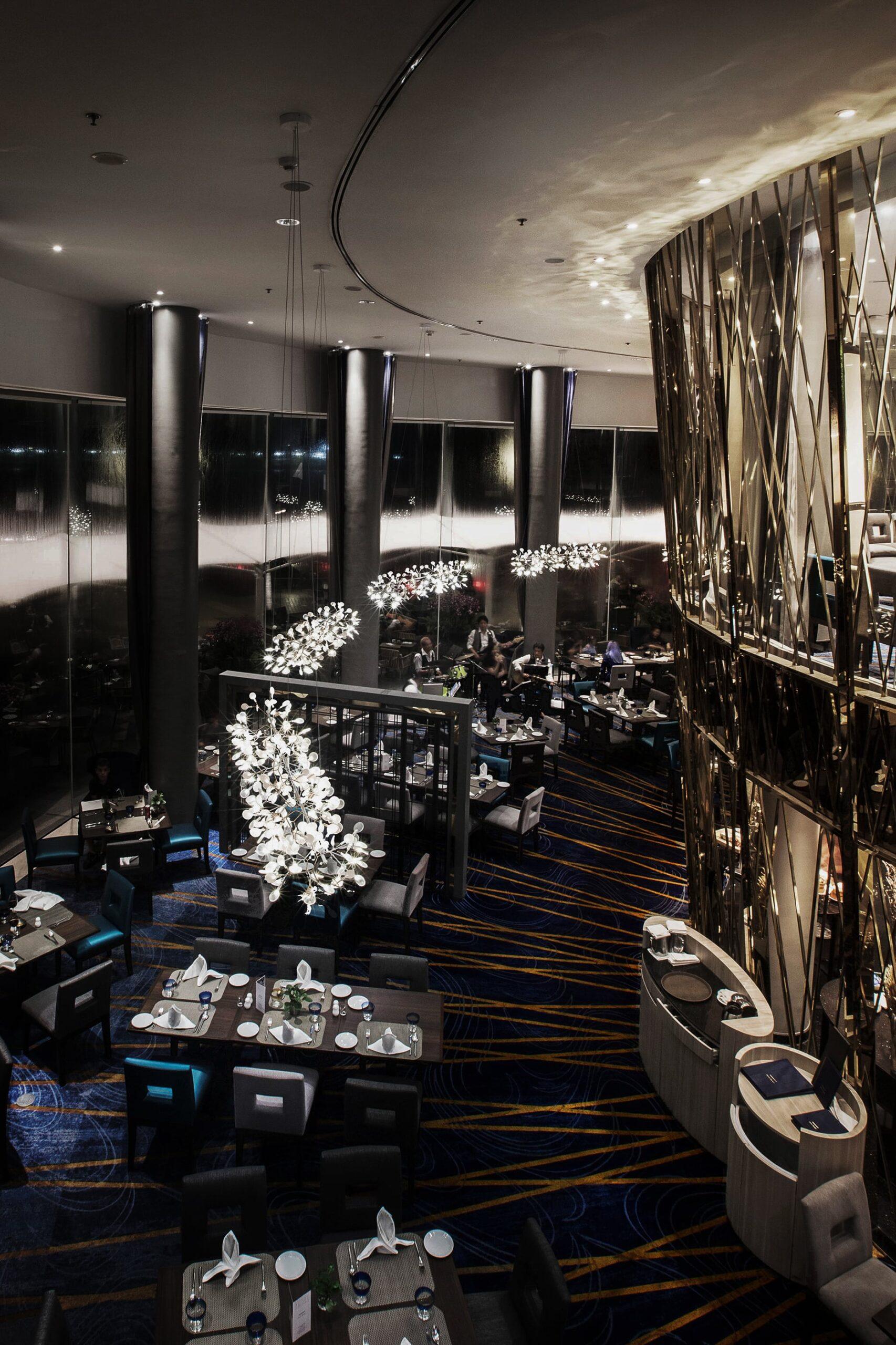
Projects such as Moon & Back – New York and River Barge demonstrate how hospitality identity can extend beyond visual styling into the larger experience of place.
Guests may forget individual details. They remember when all of the senses seemed to be telling the same story.
4. Bespoke Craft Is Becoming More Valuable Because Everything Else Is Easier to Access
Luxury furniture, lighting, materials, and international brands are increasingly accessible across global hospitality markets.
That democratisation is positive.
But it also means recognisable objects create less distinction than they once did.
A chair anyone can specify remains a beautiful chair.
It just cannot carry the entire identity of a restaurant.
This is increasing the value of project-specific elements:
custom furniture,
crafted lighting,
commissioned art,
hand-finished surfaces,
screens,
ceramics,
metalwork,
textiles,
or pieces developed directly with local makers.
But bespoke work is only valuable when it has a reason.
A custom object created merely to prove exclusivity is still decoration.
A custom object connected to the food, site, culture, or story can become part of the restaurant’s memory.
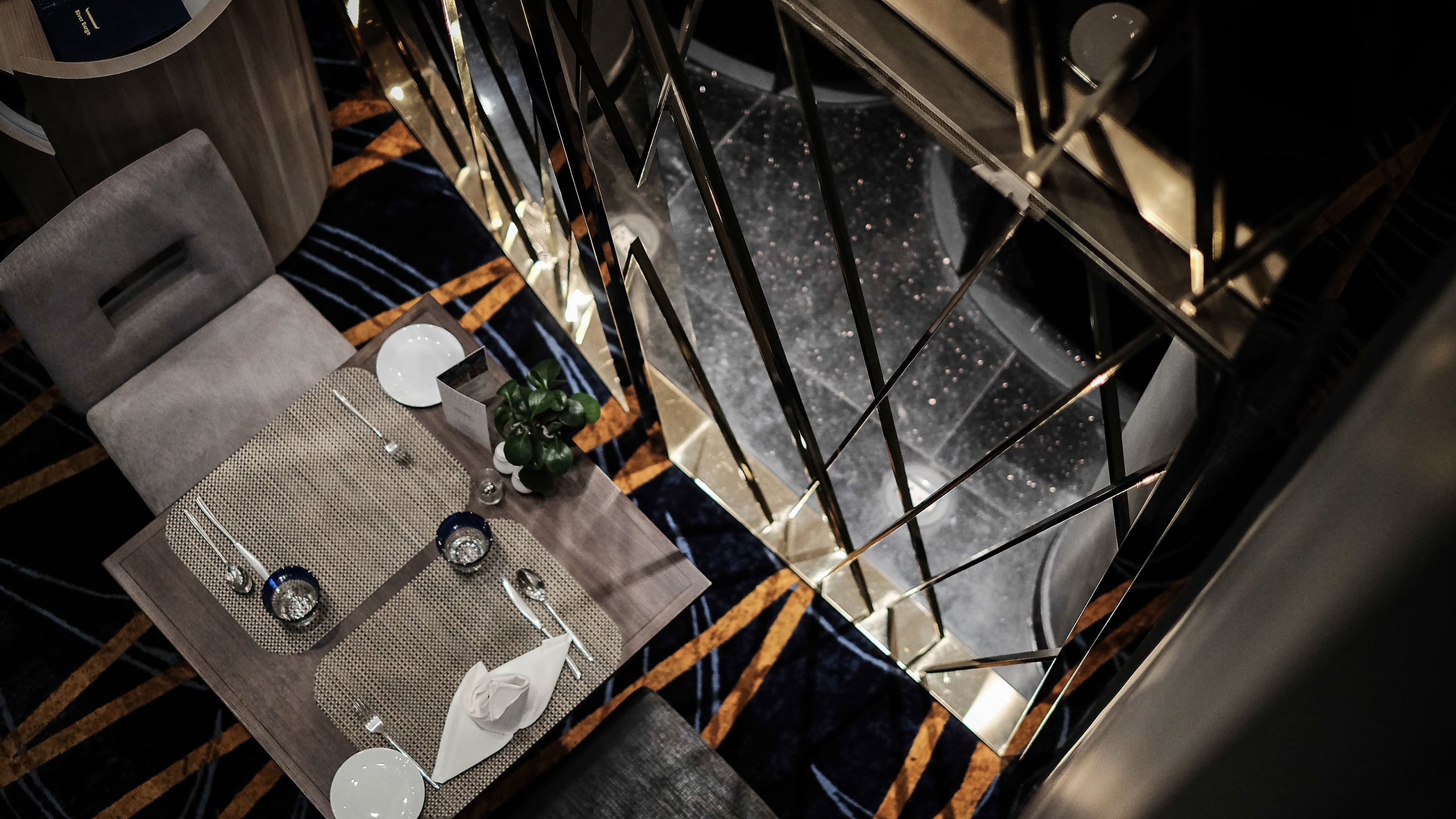
The strongest bespoke element is not simply something guests have never seen before. It is something they cannot imagine belonging anywhere else.
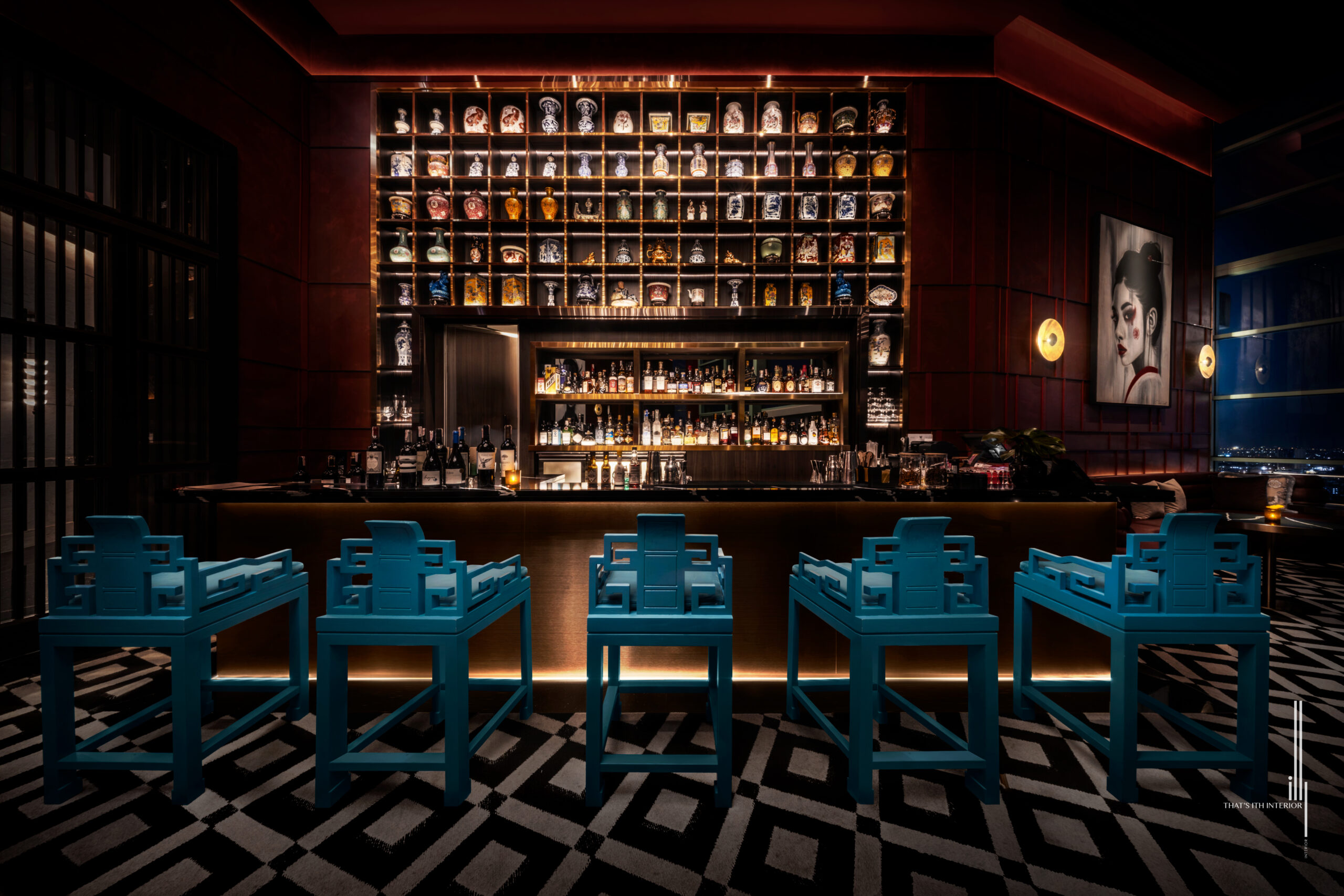
5. The Bar Is Becoming a Destination, Not a Waiting Area
The restaurant-bar relationship continues to evolve.
The bar may now be:
the first point of arrival,
the most social part of the room,
a place for solo dining,
a pre-dinner destination,
a post-dinner destination,
or a venue people visit without eating in the restaurant at all.
That gives the bar greater spatial and commercial importance.
Its design has to consider:
energy,
service,
equipment,
display,
guest seating,
lighting,
bartender movement,
storage,
durability,
and its relationship with the dining room.
A successful bar can also change how the restaurant behaves over time.
Dinner may slow down while the bar remains active.
A guest may arrive early and stay longer.
A hotel restaurant may gain an evening identity it did not previously have.
A well-designed bar gives the restaurant more than one reason to visit.
6. Open Kitchens Are Becoming More Edited
Open kitchens were once treated almost as an all-or-nothing gesture.
Expose the culinary process.
Show the chefs.
Reveal the energy.
That approach remains valuable.
But visibility itself is no longer automatically interesting.
Not every part of food production deserves equal theatrical importance.
The more sophisticated direction is curation.
A chef’s counter.
Live fire.
Plating.
Pastry.
A wine room.
A finishing station.
A particular moment of preparation.
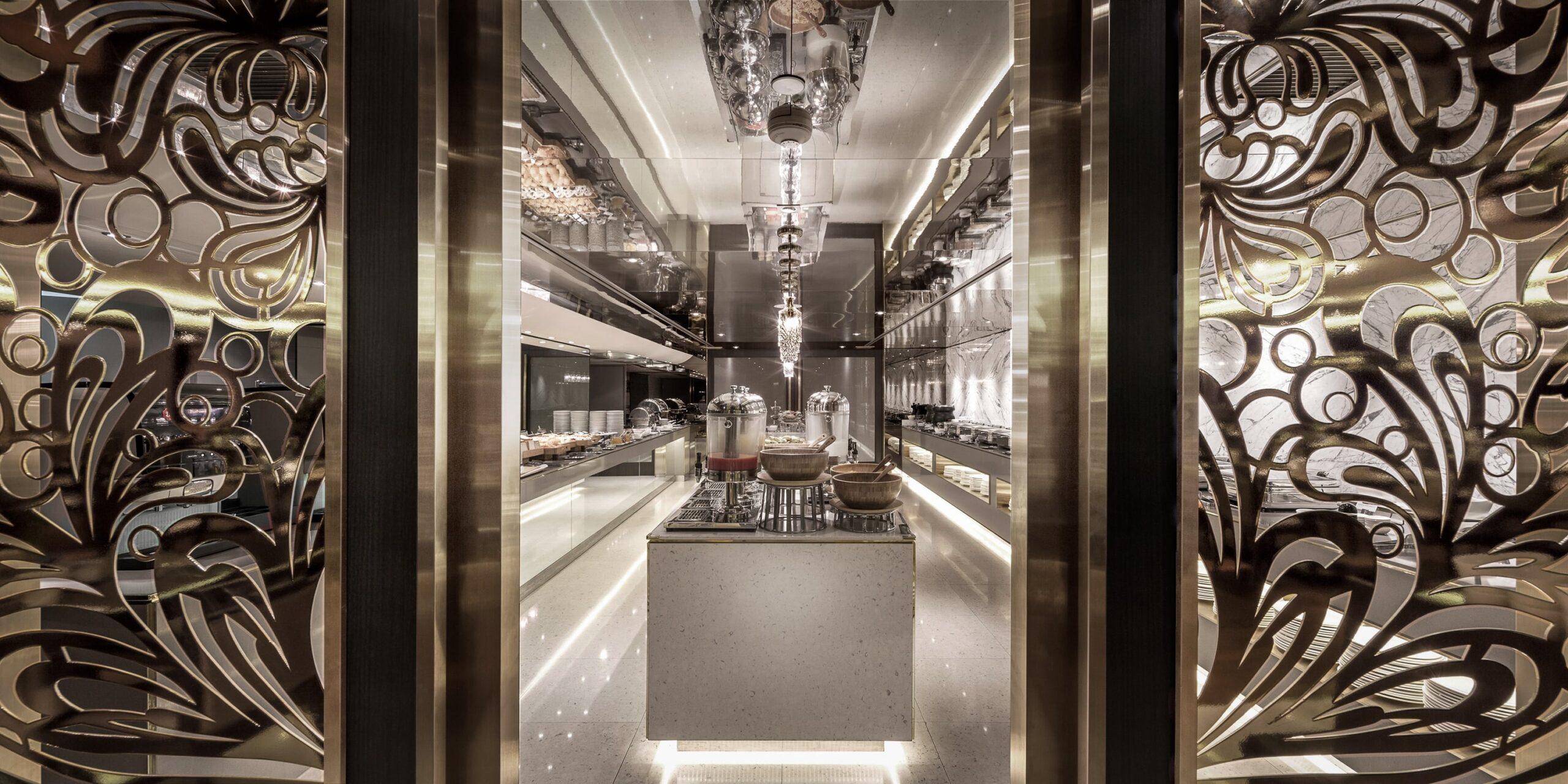
Projects such as The Emporia can demonstrate how the culinary process becomes part of the guest experience without requiring every operational activity to become performance.
This is the same principle applied to the rest of the restaurant:
what should the guest see?
And what is more powerful when hidden?
The future of visible kitchens may be less about showing everything and more about deciding what is genuinely worth revealing.
7. Fine Dining Is Becoming Less Ceremonial
Fine dining does not need to stop being refined.
But refinement no longer has to feel formal in the traditional sense.
The white-tablecloth idea of luxury has been gradually expanding toward something warmer, more conversational, and psychologically relaxed.
That shift affects the interior.
Furniture can become more comfortable.
Materials warmer.
Lighting less rigid.
Spacing more natural.
The room may still be extraordinarily precise, but it does not necessarily need to constantly remind the guest that they are participating in a formal occasion.
For Fine Dining Interior Design in Thailand, this creates an interesting opportunity.
Thai hospitality already contains ideas of warmth, generosity, sociability, and informality that can coexist beautifully with high levels of refinement.
Luxury can remain precise without becoming stiff.
And sometimes making a guest feel comfortable enough to stop noticing the formality is the more sophisticated achievement.
8. Restaurants Are Designing for Dwell Time, Not Only Dining Time
A restaurant increasingly competes for more than one meal.
Guests may:
meet,
work,
drink,
stay after dinner,
move from dining to bar,
return later,
or use the restaurant differently depending on the time of day.
This changes the interior brief.
One seating type may not be enough.
A restaurant may benefit from:
- dining tables
- bar seating
- lounge areas
- communal tables
- counters
- private dining
- semi-private zones
Lighting can gradually evolve throughout the evening.
Music and acoustics can shift.
Different areas can become more or less active.
When a restaurant supports more than one behaviour, it can become part of a guest’s lifestyle rather than simply somewhere they went for one meal.
But longer dwell time only works if the furniture is comfortable enough to deserve it.
Which is why this trend cannot be separated from ergonomics, acoustics, lighting, and service.
9. Flexibility Is Becoming More Architectural
Restaurant flexibility used to mean moving tables.
Now the brief may require a restaurant to accommodate:
private dinners,
brand events,
celebrations,
executive meetings,
chef collaborations,
product launches,
different seating capacities,
and several service formats.
The challenge is creating that flexibility without designing a room so neutral that it communicates nothing.
Screens.
Curtains.
Lighting scenes.
Acoustic treatments.
Movable furniture.
Sliding partitions.
Spatial zoning.
These can allow one environment to behave differently while preserving the restaurant’s identity.
Flexible restaurant design should change its configuration — not forget who it is.
This distinction matters particularly for restaurants within hotels and mixed-use developments, where operational demands can change frequently.
10. Material Authenticity Is Replacing Artificial Perfection
Hospitality has spent years pursuing immaculate finishes.
Perfect stone.
Perfect timber.
Perfectly uniform surfaces.
That precision can still be beautiful.
But there is growing appreciation for materials that reveal more evidence of the hand, origin, and passage of time.
Natural stone with movement.
Timber with grain.
Handmade ceramics.
Woven material.
Plaster with subtle variation.
Patinated metal.
Crafted surfaces.
These materials create another form of richness because repeated visits can reveal things a first photograph cannot.
They can also help create connection to place without resorting to literal cultural motifs.
A local material does not need to look traditional.
A handmade surface does not need to look rustic.
Material authenticity becomes powerful when the material is allowed to reveal what it actually is rather than being forced into anonymous perfection.
11. Sustainability Is Shifting From Material Claims to Longevity
Restaurant interiors experience intense use.
Furniture is moved.
Floors receive constant traffic.
Tables are cleaned repeatedly.
Concepts change.
Operators rebrand.
This makes sustainability more complicated than specifying several materials with environmentally attractive credentials.
A material that needs replacing after a short period may ultimately be less intelligent than a durable alternative designed for years of use.
Restaurant design is therefore increasingly considering:
repairability,
durability,
adaptability,
regional sourcing,
retention of existing architectural elements,
replaceable components,
and long-term material performance.
This is especially important because restaurant interiors can have shorter commercial cycles than residential or hotel projects.
The sustainable question is not only “What is this made from?” It is also “How long should this deserve to remain?”
A space nobody feels compelled to replace prematurely may represent one of design’s most meaningful contributions to sustainability.
12. Social Media Is Becoming Less Literal
Restaurants know guests will photograph them.
That reality is not disappearing.
But designing a sequence of obvious “Instagram moments” can become predictable very quickly.
The more interesting direction is recognisability through identity.
A distinctive bar.
A framed view.
A particular colour.
An unexpected threshold.
One sculptural light.
A material composition.
A bathroom.
A piece of art.
Something may become photographed repeatedly not because a designer labelled it a photo spot, but because it naturally became part of what people remember.
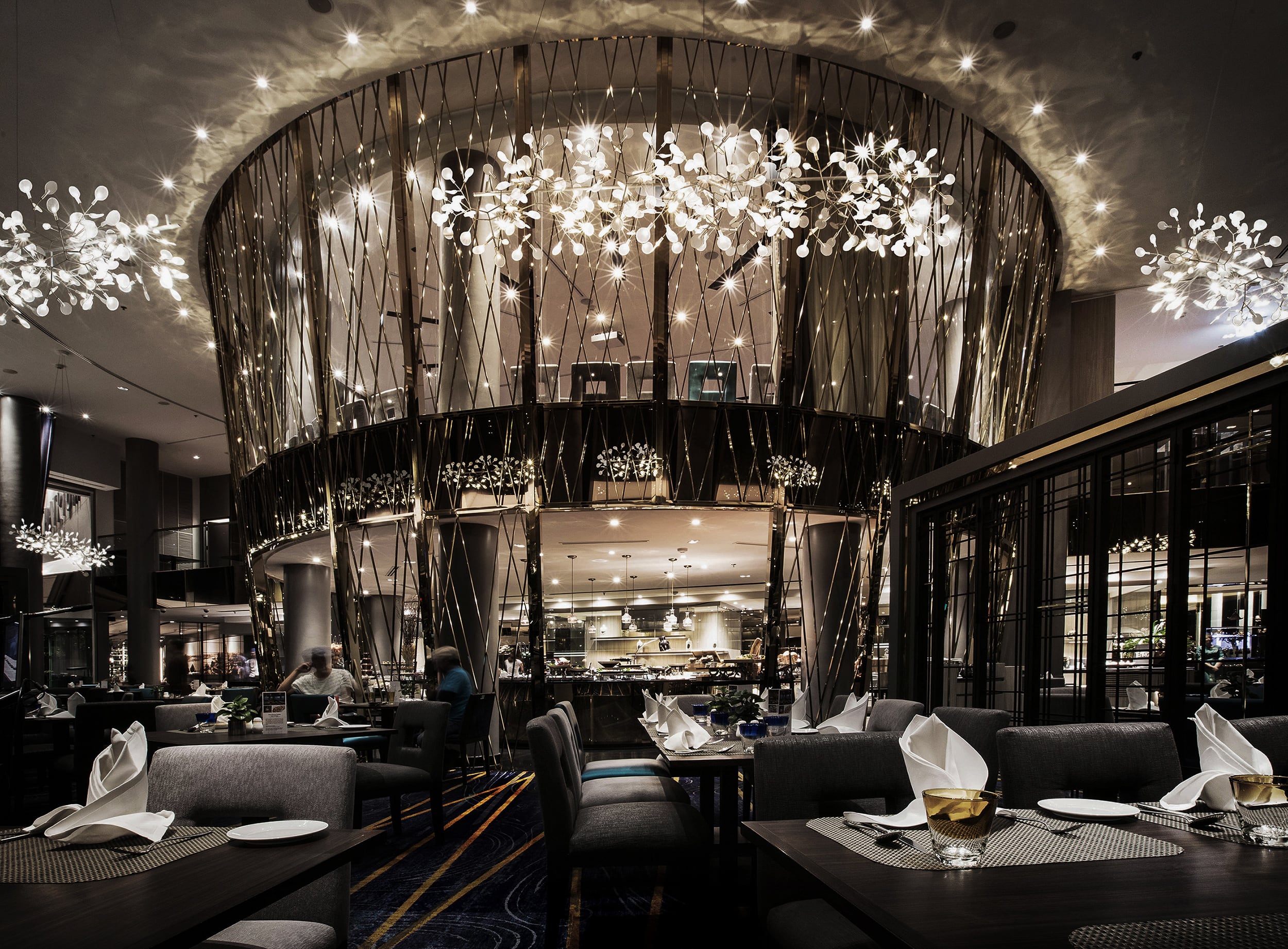
Projects such as Silver Waves at Chatrium Riverside Bangkok show how a restaurant can create recognisable visual moments within a larger dining identity.
The strongest social-media moment is often a consequence of memorable design rather than the reason the design exists.
A restaurant should be worth photographing because it was worth experiencing first.
13. Local Identity Is Becoming More Abstract — and More Intelligent
Restaurant interior design in Thailand has enormous cultural material available to it.
Craft.
Food rituals.
Landscape.
Architecture.
Colour.
Patterns.
Textiles.
Materials.
Ways of gathering.
Everyday objects.
But local identity does not have to appear as literal Thai decoration.
In fact, literal reference can sometimes reduce culture to styling.
A more interesting approach is translation.
A weaving technique can influence a screen.
A spatial rhythm from traditional architecture can appear within a contemporary plan.
A local material can be treated in an unexpected way.
A familiar object can become abstracted into furniture or lighting.
The result may look globally contemporary while remaining deeply connected to where it was made.
The objective is not to make a restaurant look local. It is to make it belong.
This idea becomes particularly important for Luxury Restaurant Concept Design in Thailand, where clients may want international sophistication without cultural anonymity.
14. Technology Is Becoming Quieter
Restaurants depend increasingly on technology.
POS.
Reservations.
Ordering.
Kitchen systems.
AV.
Acoustics.
Lighting controls.
Digital interfaces.
Payment.
Operational analytics.
But guests do not need to constantly see the sophistication behind the experience.
In luxury hospitality, technology is strongest when it makes service easier while allowing the human and emotional qualities of the restaurant to remain dominant.
That means guest-facing interfaces should be intuitive.
Operational equipment should be integrated.
Screens should not automatically become visual focal points.
Controls should appear where they are needed rather than where they interrupt the interior.
The more technologically sophisticated a restaurant becomes, the less the technology should need to announce itself.
The ultimate luxury may simply be that everything works.
The Bigger Trend: Restaurants Are Becoming Less About Decoration and More About Behaviour
Looking across these shifts, something larger becomes visible.
Identity.
Comfort.
Multisensory design.
Craft.
Bars.
Curated kitchens.
Longer dwell time.
Flexible spaces.
Acoustics.
Local context.
Invisible technology.
These are not isolated visual trends.
They point toward one larger change:
restaurant design is becoming more interested in how people behave than in how restaurants are supposed to look.
That is significant.
Because behaviour survives style.
A particular material may disappear from trend reports.
But people will still want comfort.
They will still need to hear one another.
They will still respond to anticipation.
They will still remember spaces with character.
They will still want restaurants that give them a reason to come back.
Designers who understand those needs can change the visual language without losing the intelligence underneath it.
Should Restaurants Follow Interior Design Trends?
Yes — but probably not in the way the word “follow” suggests.
Restaurant owners and designers should understand trends.
They reveal cultural movement.
Changes in social behaviour.
Guest expectations.
Technology.
Ideas of luxury.
Attitudes toward sustainability.
But using trends as direct visual instructions creates obvious risk.
A restaurant designed around one fashionable aesthetic can date as quickly as the imagery that inspired it.
The more useful question is:
What human need is this trend revealing?
If warm materials are becoming popular, is the real shift about colour — or are guests becoming tired of sterile environments?
If relaxed fine dining is growing, is it really about furniture — or about changing ideas of status and formality?
If bespoke craft is increasing, is the important trend handmade objects — or a desire for greater specificity in a world of increasingly replicable design?
Use trends as evidence of changing behaviour, not as instructions for what a restaurant should look like.
That distinction can turn trend awareness from imitation into design intelligence.
That’s ITH’s Perspective on Restaurant Interior Design Trends
At That’s ITH Interior, trends help us understand the cultural environment a restaurant is entering.
They do not determine what that restaurant should become.
Identity still comes first.
The food.
The brand.
The location.
The audience.
The service.
The behaviour.
The emotional intention.
And the memory the guest should leave with.
Relevant trends can then be interpreted through that identity rather than copied onto it.
One restaurant may need restraint at exactly the moment the market is becoming more theatrical.
Another may need an unapologetically dramatic gesture when the broader trend is toward quiet luxury.
Both can be right.
Because design is not a referendum on what everybody else is doing.
For us, Fearless Luxury means having the confidence to follow an idea because it belongs to the restaurant — whether or not that idea happens to align with the visual language of the moment.
That is also why we do not aim for every restaurant to look recognisably That’s ITH.
The food changes.
The audience changes.
The location changes.
The story changes.
So the design should change too.
The consistency is not in the aesthetic. It is in the judgment.
And ultimately, the goal is not to design the restaurant people recognise as trendy.
It is to create places people remember after the trend is gone.
Explore That’s ITH hospitality projects to see how different restaurants, bars, hotels, and hospitality concepts develop distinct spatial identities.
Planning a Restaurant, Bar or Hospitality Project?
The strongest restaurant concepts are developed when food, brand, operations, architecture, and interior design can influence one another early.
Led by founder and designer ITH Palach, That’s ITH Interior is a Bangkok-based interior design studio working across restaurants, bars, hotels, private residences, and commercial projects in Thailand and international markets.
We collaborate with restaurant owners, chefs, hotel groups, operators, developers, architects, kitchen consultants, lighting designers, contractors, and multidisciplinary teams to translate food, behaviour, operations, location, and brand identity into memorable dining environments.
Contact That’s ITH Interior to discuss your next restaurant, bar, or hospitality project.
Frequently Asked Questions
What are the most important restaurant interior design trends?
The most significant shifts include stronger identity-led design, more selective expressions of luxury, multisensory environments, bespoke craft, more important bar spaces, curated open kitchens, less formal fine dining, longer dwell time, flexible dining environments, authentic materials, sustainability through longevity, subtler social-media thinking, more abstract local identity, and quieter technology.
The deeper pattern is a move from decoration toward behaviour and experience.
What is changing in luxury restaurant interior design in Thailand?
Luxury is increasingly being expressed through precision rather than obvious abundance.
Comfort, acoustics, bespoke craftsmanship, lighting, cultural specificity, operational ease, and stronger identity can communicate sophistication as effectively as dramatic visual gestures.
How are fine dining interior design trends changing?
Many contemporary fine-dining environments are becoming less rigidly ceremonial while remaining highly refined.
Warmer materials, greater comfort, softer lighting, conversational layouts, and less visual formality can allow guests to relax without reducing the precision of the dining experience.
Are bars becoming more important in restaurant design?
Often, yes.
Bars can extend dwell time, create another revenue opportunity, activate the restaurant later in the evening, support solo dining, and give guests another reason to visit independently from a full meal.
Their role should still respond to the individual restaurant concept.
Are open kitchens still a restaurant design trend?
Yes, but visibility can be more selective.
Instead of exposing every operational function, restaurants may frame particular culinary moments such as live fire, chef counters, plating, pastry, or wine, allowing production to become part of the experience without turning the entire kitchen into theatre.
Why is bespoke design becoming more important in restaurants?
As widely available furniture and materials become easier to access globally, bespoke elements can help create greater specificity.
The strongest bespoke work is connected to the restaurant’s food, site, story, culture, or operational needs rather than being custom-made solely for exclusivity.
What does multisensory restaurant design mean?
Multisensory restaurant design considers not only visual appearance but also acoustics, lighting, tactility, comfort, temperature, scent, materiality, furniture, and other sensory conditions that shape how guests experience the space.
Should restaurants follow current interior design trends?
Restaurants should understand trends but avoid copying them literally.
The behavioural and cultural changes underneath a trend are usually more valuable than its temporary visual expression.
How can restaurants use social media without becoming overly Instagram-driven?
Create a strong overall identity first.
Distinctive views, bars, thresholds, lighting, materials, art, or crafted details can then become naturally recognisable and shareable because they genuinely belong to the restaurant rather than being added purely as photo opportunities.
What makes a restaurant interior feel timeless?
A restaurant is more likely to age well when its identity comes from the food, brand, location, guest behaviour, strong proportions, durable materials, craftsmanship, operational intelligence, and cultural relevance rather than one short-lived visual movement.
What should restaurant owners focus on beyond design trends?
Identity.
The most important question is not which trend the restaurant should follow, but what this particular restaurant should become that another restaurant could not convincingly copy.