
Luxury Villa Interior Design in Bangkok: What Makes It Different
A luxury villa in Bangkok has to resolve a particular contradiction.
It exists inside one of Southeast Asia’s most energetic urban environments, yet the experience of coming home is often expected to feel private, calm, and almost completely removed from that intensity.
Traffic may be only minutes away.
Neighbouring buildings may sit surprisingly close.
The tropical climate encourages openness, while privacy sometimes demands exactly the opposite.
And unlike a condominium, where much of the architectural framework has already been decided, a private villa gives the owner far greater freedom to shape the relationship between architecture, interior, landscape, service, and daily life.
Luxury villa interior design in Bangkok is therefore not simply about designing a larger, more expensive home. It is about creating a highly controlled private world within a very specific urban and tropical context.
The strongest villas decide carefully what should open.
What should be screened.
Where landscape should enter.
Where the city should disappear.
And how an entire property can feel coherent rather than like a collection of impressive rooms.
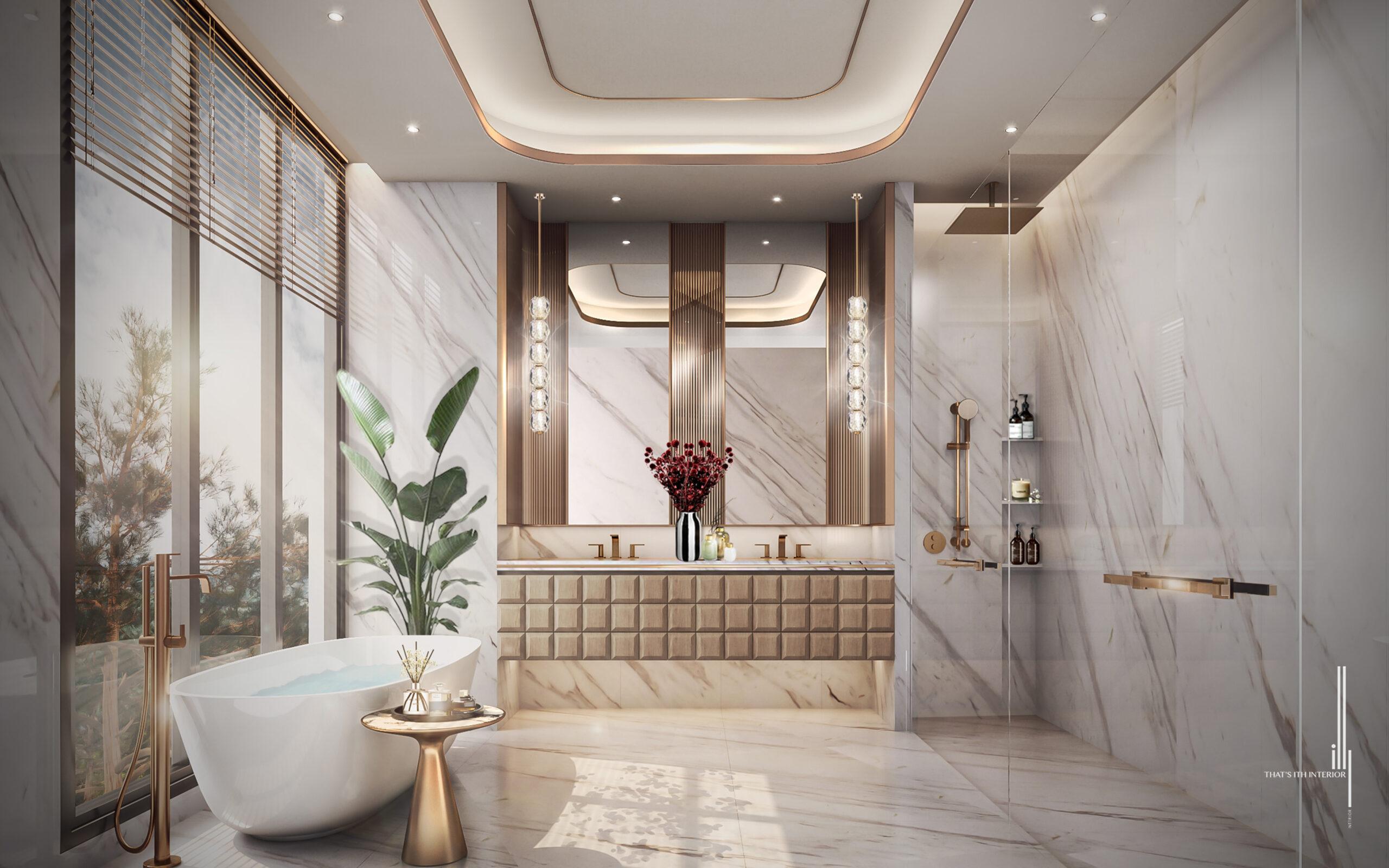
What Is Luxury Villa Interior Design in Bangkok?
Luxury villa interior design in Bangkok is the planning and development of a private villa around the lifestyle of its occupants, the architecture, site, climate, privacy, landscape, service requirements, and long-term use of the property.
Depending on the project and agreed scope, this may include:
- client discovery and briefing
- concept design
- space planning
- interior planning alongside architecture
- material and finish development
- lighting coordination
- bespoke furniture and joinery
- FF&E selection and specification
- art integration
- indoor-outdoor planning
- technical design and documentation
- coordination with architects, landscape architects and consultants
- procurement support
- construction-stage design services
- styling and installation support
But those services are only the tools.
The real objective is more specific.
A luxury villa should become so precisely connected to one household and one site that moving the same design unchanged somewhere else would make it lose part of its meaning.
1. In Bangkok, Privacy Can Become One of the Greatest Luxuries
A city villa often has to create privacy differently from a large countryside residence.
The site may be surrounded by neighbouring houses.
A taller building might overlook the property.
The road may sit close to the entrance.
Views may need to be carefully selected rather than maximised in every direction.
This can actually produce stronger design.
Instead of treating every façade as transparent, architecture can become selective.
A courtyard can bring light into the centre of the house without opening it toward neighbours.
Landscape can form a visual buffer.
A solid wall can protect one side while another side opens completely toward a garden.
Windows can frame specific pieces of greenery rather than reveal everything beyond the property line.
Privacy does not have to mean enclosing the villa. It means giving the owner control over what the house reveals.
That distinction matters.
A home can feel remarkably open internally while remaining deeply protected from the city around it.
Design Privacy in Layers
Privacy is not simply public versus private.
A large villa may contain several degrees of access.
Arrival.
Formal entertaining.
Informal family areas.
Guest rooms.
Home office.
Children’s spaces.
Principal suite.
Staff areas.
Service circulation.
Each can have a different relationship with the others.
Guests may be able to move comfortably between the entrance, living room, dining room, powder room, bar, and terrace without ever crossing deeply private family areas.
A bedroom wing can feel secluded without being physically remote.
A study may remain visually connected while acoustically protected.
The most luxurious privacy is often the kind that works so naturally nobody notices how carefully it was planned.
2. Let the Site Shape the Interior Before Choosing a Style
A villa should not begin with a Pinterest image and then be forced onto the land.
The site already contains information.
Orientation.
Sunlight.
Existing trees.
Neighbouring buildings.
Approach.
Noise.
Views.
Road access.
Landscape.
Architecture.
The interior should respond.
A narrow urban site may benefit from internal courtyards.
A larger property might organise itself around a central garden.
One exceptional tree could become more important than a panoramic view.
A difficult neighbour-facing boundary might become an opportunity for a dramatic textured wall, art, or indirect light.
Projects such as The Reserve Villas Sukhumvit 89/1 demonstrate why residential design becomes stronger when the architecture and interior are understood as one experience rather than two separate layers.
The site should not merely contain the villa. It should help explain why the villa became this particular villa.
3. Architecture, Interior and Landscape Should Feel Like One Project
The professional scopes may be separate.
The homeowner should not feel that separation.
Architecture establishes mass, structure, openings, and volume.
Landscape shapes privacy, shade, arrival, outlook, and outdoor life.
Interior design determines how the architecture is actually inhabited.
When those disciplines develop independently, problems often appear at the boundaries.
A beautifully designed living room may look toward weak landscape.
A perfect garden composition may be hidden behind poorly positioned furniture.
A pool may fight the architectural geometry rather than reinforce it.
A terrace may technically exist but feel disconnected from daily life.
The strongest villa design allows all three disciplines to influence one another.
The resident should experience one home — not an architect’s building, an interior designer’s rooms, and a landscape designer’s garden.
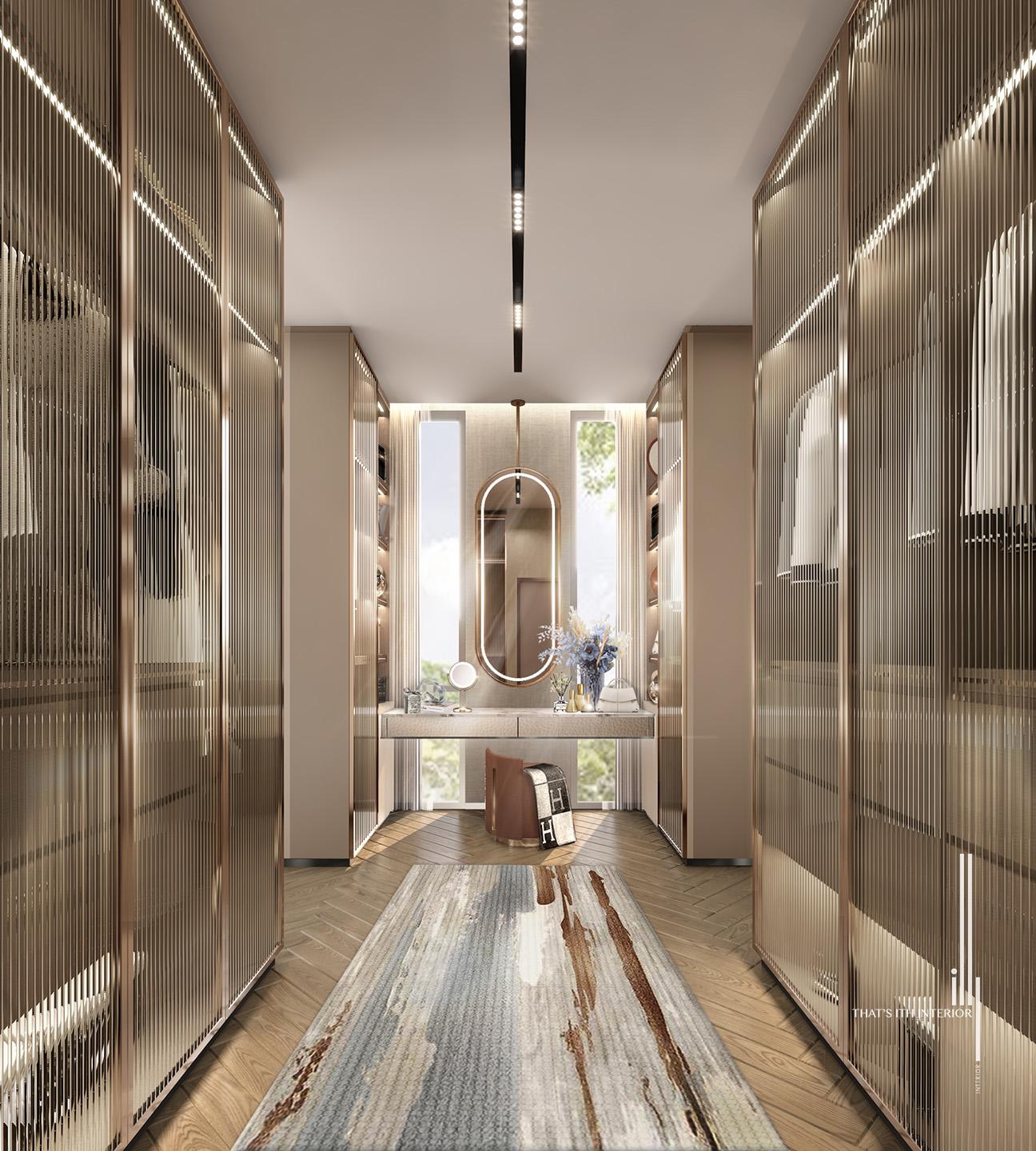
4. Indoor-Outdoor Living Requires More Than Glass
Bangkok’s climate makes indoor-outdoor living extremely attractive.
It also makes it technically demanding.
Heat.
Humidity.
Heavy rain.
Strong sun.
Glare.
Insects.
Air-conditioning.
Maintenance.
All influence whether an outdoor or semi-outdoor space will genuinely be used.
Large sliding doors can create a dramatic photograph.
But what happens at 2 p.m.?
What happens during heavy rain?
What happens when nobody wants to open the house but still wants to feel connected to the garden?
Successful indoor-outdoor design needs to consider:
- shade
- roof overhangs
- thresholds
- drainage
- floor levels
- air movement
- furniture
- material performance
- glazing
- lighting
- privacy
- landscape
- conditioned and semi-conditioned zones
The goal is not maximum openness. It is the right amount of openness in the right place.
Design the Threshold, Not Just the Rooms
Some of the most memorable moments in a tropical villa happen between inside and outside.
A shaded veranda.
A covered walkway.
A courtyard.
A deep window reveal.
A semi-outdoor lounge.
A transition beside water.
These spaces are neither fully interior nor exterior.
That ambiguity is part of their richness.
Instead of treating thresholds as leftover areas between important rooms, villa design can make them experiences in their own right.
5. The Pool Should Belong to the Architecture
A private swimming pool is often one of the most visually dominant elements of a luxury villa.
Yet it can easily feel like a feature added after the house.
The better approach is to consider water as part of the spatial composition.
A pool can:
- extend the visual axis of a living room
- reflect architecture
- introduce movement through light
- create separation between zones
- become part of arrival
- anchor a courtyard
- belong privately to a bedroom wing
- become the social heart of the villa
Material relationships matter too.
Stone may continue toward the water.
Architectural lines may align with the edge of the pool.
Interior lighting and pool lighting can work together after dark.
The landscape can shape privacy around it.
A pool becomes luxurious when it belongs to the identity of the house — not simply because the house has one.
6. Use Space Generously, Not Excessively
Large villas create an unusual design temptation:
empty space begins to look like a problem.
So it gets filled.
Another console.
Another armchair.
Another artwork.
Another stone.
Another decorative feature.
Eventually a large home can feel smaller because too many objects compete for attention.
Space itself has value.
A single artwork gains presence when the wall around it remains quiet.
A sculptural piece of furniture needs enough room to be seen.
A long sightline becomes more powerful without unnecessary interruption.
Even circulation can become part of the experience.
A slower approach to an important room.
A compressed corridor opening into a generous volume.
A moment of visual silence between highly expressive spaces.
Luxury is not always what occupies the space. Sometimes it is the confidence to leave part of the space unoccupied.
7. Materials Should Be Chosen for Bangkok Five Years From Now — Not Only Handover Day
Material selection is particularly important in Thailand.
Humidity.
Strong sunlight.
Air-conditioning.
Rain.
Touch.
Cleaning.
Outdoor exposure.
Maintenance.
These affect how finishes behave over time.
The question should not only be:
How does it look?
But also:
How will it age?
How will it feel?
How will it be cleaned?
Will it fade?
Will it patina?
Will timber movement become a problem?
Will the owner enjoy natural variation or find it frustrating?
A luxury material that looks perfect for six months and becomes difficult to live with is not particularly luxurious.
Projects such as Baan Suan – Nakhon Si Thammarat illustrate how material, landscape, and climate can become part of the long-term experience of a private home.
A good material should not merely survive life. Ideally, life should make it richer.
Material Quantity Is Not Material Quality
Luxury villas can easily become catalogues of premium finishes.
Stone in one room.
Another stone in the next.
Timber.
Metal.
Decorative plaster.
Leather.
Glass.
Textile.
All individually beautiful.
Together, potentially exhausting.
A more controlled material palette can make quality more visible.
When there are fewer materials, the eye notices:
the veining.
the grain.
the junction.
the craftsmanship.
the way light moves across the surface.
Restraint does not make a villa less luxurious. It makes quality harder to hide.
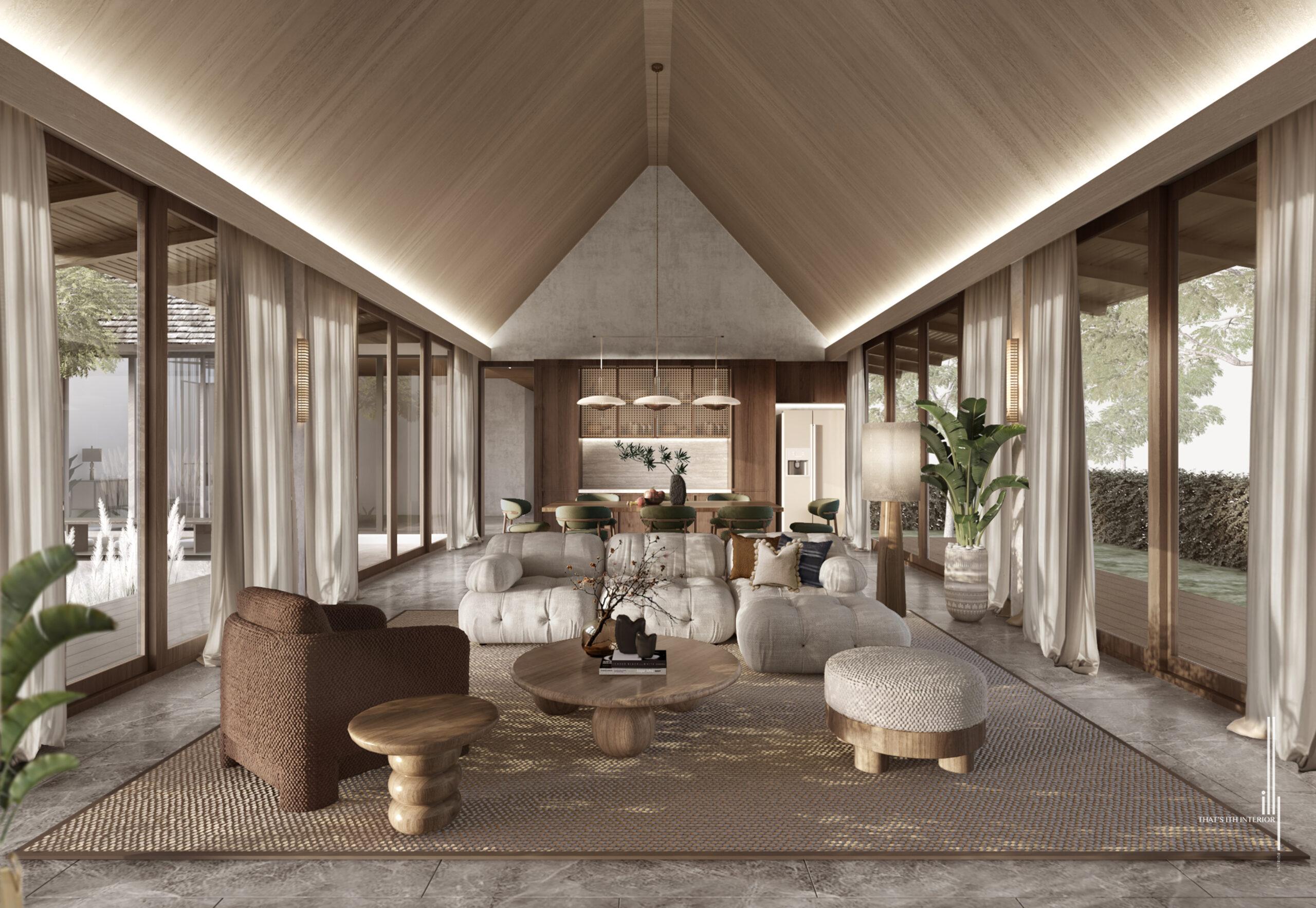
8. Bespoke Design Should Solve Something Specific
Private villas offer extraordinary opportunities for bespoke design.
But “custom-made” should not become another decorative badge.
The strongest bespoke pieces begin with a reason.
A dining table shaped around how the family gathers.
A bar designed for the way the owner entertains.
A display piece developed around a collection.
A dressing room organised around somebody’s actual wardrobe.
A screen responding to sunlight and privacy.
A staircase becoming part of the architectural identity.
A bench positioned for one specific view.
A bespoke object becomes meaningful when another client would have needed a different answer.
There is no need to customise everything.
Some of the strongest homes mix:
bespoke pieces,
international furniture,
local craft,
art,
vintage objects,
family pieces,
and things collected over years.
The luxury lies in the composition.
Not the percentage that was custom-made.
9. A Bangkok Villa Should Understand How the Household Entertains
Entertaining is not universal.
Some households host thirty people regularly.
Others invite four friends.
Some entertaining happens formally.
Some gravitates toward the kitchen.
Some immediately moves outdoors.
Some families want guests to experience almost the entire home.
Others want social life completely separated from family life.
The villa should respond accordingly.
Furniture layouts.
Guest circulation.
Powder rooms.
Dining.
Kitchen relationships.
Bar.
Terrace.
Pool.
Service access.
Acoustics.
All change depending on behaviour.
There is no standard luxury entertaining plan. There is only a plan unusually precise for the people using it.
The Kitchen Often Reveals the Truth About the Household
A luxury kitchen should not be designed from assumptions.
Some owners cook every day.
Some cook socially.
Some have a professional chef.
Some need a show kitchen and a separate heavy-cooking kitchen.
Some families eat together around a kitchen island far more often than at the formal dining table.
That reality should influence:
- appliance selection
- ventilation
- pantry planning
- storage
- service circulation
- preparation
- waste
- dining relationships
- visibility from social spaces
A bigger kitchen is not automatically a better kitchen. Precision is more useful than size.
10. Service Planning Is Part of Luxury
Many substantial Bangkok villas operate with another layer of daily life that guests rarely see.
Deliveries.
Housekeeping.
Laundry.
Storage.
Food preparation.
Staff.
Maintenance.
Waste.
Security.
Back-of-house circulation.
If these functions are planned poorly, they constantly interrupt family life.
Staff circulation crosses social spaces.
Deliveries pass through principal areas.
Laundry travels unnecessarily through the house.
Storage appears wherever space happens to remain.
Good planning can make that complexity almost invisible.
This is one place where lessons from hospitality design can become useful in residential work.
Luxury is sometimes created by things the homeowner never has to think about.
11. Acoustics Can Determine Whether a Large Home Feels Intimate
Large rooms.
Stone floors.
Glass.
High ceilings.
Open plans.
All can create beautiful architecture.
They can also create difficult acoustics.
Conversation becomes less comfortable.
Sound travels between levels.
Entertainment affects private areas.
A visually calm home can feel surprisingly noisy.
Acoustic quality should therefore influence the design early.
Furniture.
Rugs.
Curtains.
Upholstery.
Wall treatments.
Doors.
Zoning.
Ceiling materials.
Specialist acoustic solutions where required.
A villa does not need to become silent.
It needs to control sound according to the experience of each space.
Visual luxury attracts attention first. Acoustic comfort often determines how long people want to remain.
12. Let Private Rooms Become Emotionally Quieter
A villa does not need one mood.
In fact, it probably should not have one.
Formal social spaces may be expressive.
A dining room may be dramatic.
A bar can become playful.
The principal bedroom may need almost the opposite.
Private rooms can use:
softer materials,
lower light,
controlled views,
better acoustics,
less visual competition,
more tactile surfaces,
and closer relationships with landscape.
The transition between moods can make a villa feel richer than repeating one luxurious aesthetic everywhere.
A sophisticated home knows when to perform — and when to stop performing.
13. Lighting Should Change the Villa After Dark
Residential lighting is not simply about making surfaces visible.
It changes the emotional identity of the villa.
Bangkok daylight may be bright and intense.
Evening can create something completely different.
Indirect light can reveal architectural volume.
Low-level lighting can make circulation feel calmer.
Art can emerge.
Landscape can remain perceptible without being floodlit.
A dining table can become intimate even inside a large room.
A pool can create reflected movement.
The strongest schemes establish hierarchy.
Not every wall needs light.
Not every tree needs illumination.
Not every decorative fixture needs to become a statement.
A well-designed villa should not look like the same house with the lights turned on. Night deserves its own experience.
14. Technology Should Reduce Friction
Contemporary luxury villas may include integrated control of:
- lighting
- climate
- curtains
- security
- access
- audio
- entertainment
- pool systems
- irrigation
- energy systems
Technology can add significant comfort.
It can also add significant annoyance.
Multiple apps.
Confusing keypads.
Visible sensors.
Interfaces nobody remembers how to use.
The objective should be simplicity.
Systems should be considered early enough to coordinate switches, screens, sensors, speakers, access points, equipment, and future maintenance.
The smarter the house becomes, the less effort its owner should need to spend proving they are smart enough to use it.
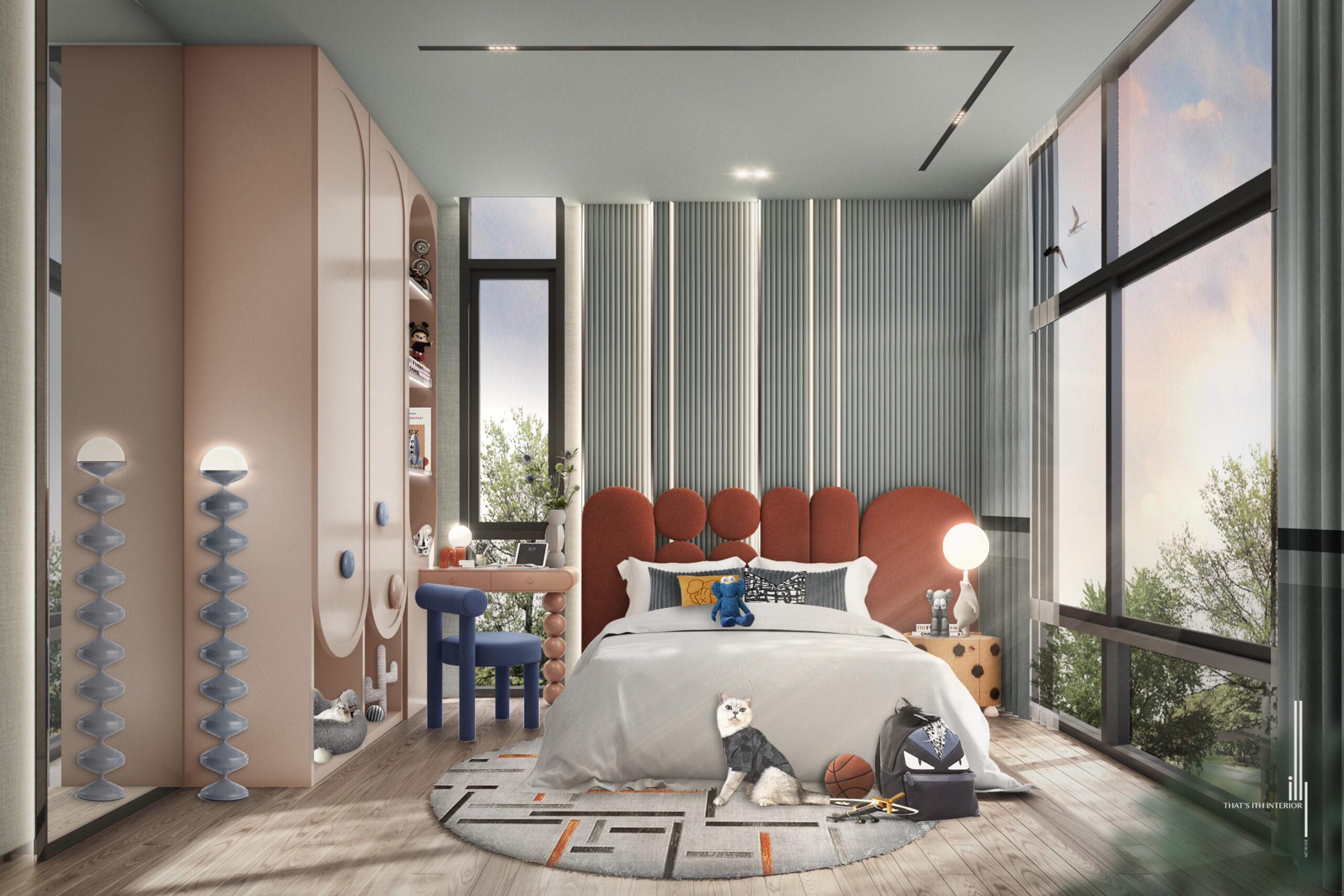
15. Design for Bangkok — But Do Not Design a Bangkok “Look”
A Bangkok villa does not need to contain obvious Thai motifs to belong here.
Context can operate more deeply.
Climate.
Shade.
Landscape.
Ways of gathering.
Service patterns.
Material knowledge.
Local fabrication.
Craft.
Construction intelligence.
Thailand has strong capabilities across furniture manufacturing, joinery, stone, metalwork, textiles, decorative finishing, and specialist fabrication.
That creates opportunities for a villa to be internationally sophisticated while also benefiting from local making knowledge.
A traditional technique can be abstracted.
A regional material can be used unexpectedly.
Craft can appear through precision rather than decoration.
A house does not need to look conventionally Thai to demonstrate that it understands Thailand.
16. A Luxury Villa Should Be Designed for Change
A private villa may remain with one household for many years.
Life will not remain still.
Children grow.
Parents age.
Work enters or leaves the house.
Collections expand.
Technology changes.
Entertaining changes.
A room may eventually need another purpose.
That does not mean every room should become generic and flexible.
It means the architecture should avoid unnecessary rigidity.
Useful proportions.
Infrastructure.
Storage.
Access.
Lighting.
Furniture arrangements.
Future accessibility.
All can create options.
Timelessness is not the absence of personality. It is having an identity strong enough to survive change.
Working With International Homeowners in Bangkok
Many private homeowners building in Thailand spend significant time overseas.
That makes communication part of design quality.
Remote meetings.
Samples.
Mock-ups.
Decision schedules.
Material approvals.
Site reports.
Documented changes.
Clear responsibility.
All become more important.
But efficiency should never turn a personal residence into an impersonal process.
The designer still needs to understand:
how the owner lives,
what they value,
what they collect,
how they entertain,
what privacy means to them,
and what they expect from the home years from now.
Local knowledge is particularly useful when translating those expectations into the realities of Thai construction, climate, fabrication, sourcing, and project delivery.
Distance should change how the project is communicated — not how personal the final home becomes.
What Should You Look for in a Luxury Villa Interior Designer in Bangkok?
Strong residential planning
A large floor plan does not automatically mean a well-planned home.
Look for clear thinking around circulation, privacy, family life, entertaining, and service.
Architecture and landscape awareness
Villa interiors do not stop at the glass.
The designer should understand the relationship between interior, building, pool, terrace, and landscape.
Understanding of Bangkok’s climate
Sun, humidity, heat, rain, material performance, shade, and indoor-outdoor living should influence design decisions early.
Bespoke design capability
Private villas often benefit from furniture and joinery developed around the specific architecture and household.
Material knowledge
The designer should understand how materials feel, age, perform, and require maintenance.
Technical capability
Ideas need to survive documentation, consultant coordination, fabrication, and construction.
A varied built portfolio
Different clients and sites should produce different homes.
A recognisable way of thinking is more valuable than repeating the same visual signature.
Local execution knowledge
Understanding Thai contractors, makers, fabrication capabilities, sourcing, and project conditions can help ambitious design become buildable reality.
The ability to listen and challenge
A designer should understand the brief.
And sometimes understand what sits underneath the brief more clearly than the brief itself explains.
The strongest villa interior designer does not impose a lifestyle onto the house. They discover the lifestyle already there and make it spatially coherent.
That’s ITH’s Approach to Luxury Villa Interior Design in Bangkok
At That’s ITH Interior, we do not begin a villa by deciding what luxury should look like.
We begin with the site and the people.
Where does the city need to disappear?
Where should landscape enter?
How does the family gather?
How do they retreat?
Who cooks?
How do guests arrive?
What should remain visible?
What should remain private?
What does the house need to feel like at noon?
And what should it become after midnight?
From there, the architecture, interior, landscape, lighting, materials, furniture, and details can begin to form one identity.
Projects such as The Reserve Villas Sukhumvit 89/1, SJ Home – Nonthaburi, ANANN Villas Phuket, and Baan Suan – Nakhon Si Thammarat speak different visual languages because the places and people behind them are different.
The conditions change.
So the answer changes.
For us, Fearless Luxury in a private villa is the confidence to create what belongs to one owner and one place rather than repeating an inherited image of luxury living.
Not more marble.
Not more furniture.
Not more features.
More specificity.
A truly luxurious villa should feel difficult to separate from the people who live there and the place where it was built.
We do not aim for a recognisable villa style.
The consistency is in the judgment.
Explore That’s ITH residential and villa projects.
Planning a Luxury Villa in Bangkok or Thailand?
The most valuable villa design conversations happen before the architecture, planning, landscape, lighting, service strategy, and interior language have already been fixed.
Led by founder and designer ITH Palach, That’s ITH Interior is a Bangkok-based interior design studio working across private villas, residences, hospitality, and commercial projects in Thailand and international markets.
We collaborate with homeowners, developers, architects, landscape architects, contractors, artisans, fabricators, and multidisciplinary teams to translate site, climate, lifestyle, architecture, and identity into distinctive private environments.
Contact That’s ITH Interior to discuss your next luxury villa, private residence, or residential development in Bangkok or Thailand.
Frequently Asked Questions
What defines luxury villa interior design in Bangkok?
Luxury villa interior design in Bangkok combines personalised residential planning with privacy, climate response, landscape, indoor-outdoor living, service planning, materials, bespoke design, and strong coordination between architecture and interior.
The strongest projects respond specifically to both the household and the urban or suburban site rather than applying a standard villa aesthetic.
How is villa interior design different from condominium interior design?
A villa usually involves a stronger relationship between interior, architecture, landscape, pools, terraces, service areas, privacy, and site planning.
A condominium interior typically works within a more established building envelope, while a villa may allow the design team to influence many more relationships between inside and outside.
How can a Bangkok villa feel private without becoming enclosed?
Privacy can be created through orientation, landscape, courtyards, controlled openings, level changes, screening, zoning, and carefully planned sightlines.
The goal is to allow the household to live openly within the property while controlling exposure to neighbours, streets, and guest areas.
Why is indoor-outdoor design important in a Bangkok villa?
Thailand’s climate and landscape can make terraces, pools, gardens, courtyards, and semi-outdoor spaces an important part of residential life.
Successful indoor-outdoor design considers shade, heat, rain, humidity, privacy, furniture, drainage, materials, glazing, ventilation, and air-conditioning rather than simply using large glass openings.
What should be considered when designing a private pool villa in Thailand?
The pool should relate to architecture, privacy, landscape, shade, sightlines, interior spaces, materials, maintenance, and the way the household actually uses the property.
It works best when considered as part of the spatial composition rather than a separate amenity.
Do luxury villas need bespoke furniture?
Not necessarily.
Bespoke furniture and joinery are most valuable when they respond to unusual architecture, specific family habits, collections, views, storage requirements, or important moments in the design.
Existing pieces can be equally appropriate when they suit the space.
How should materials be selected for villas in Bangkok?
Materials should be evaluated for appearance, tactility, maintenance, humidity, sunlight, ageing, cleaning, indoor or outdoor exposure, and how the owner feels about natural variation or patina.
A successful luxury material should remain appropriate after years of real use, not only on completion day.
Why is service planning important in a luxury villa?
Large private homes may involve housekeeping, staff kitchens, laundry, storage, deliveries, waste, maintenance, and back-of-house circulation.
Planning these functions carefully allows the villa to operate smoothly without practical activities constantly interrupting private or social spaces.
When should a luxury villa interior designer join the project?
Ideally during the architectural or early planning stage.
Early involvement allows interior planning, furniture, lighting, glazing, landscape relationships, service circulation, materials, technology, and other requirements to be coordinated before major decisions become difficult to change.
What should I look for in a luxury villa interior designer in Bangkok?
Look for strong residential planning, built villa experience, understanding of tropical climate and privacy, indoor-outdoor design capability, material knowledge, bespoke design experience, technical coordination, and a portfolio that responds differently to different owners and sites.
Most importantly, look for a designer who understands that luxury villa design is not about reproducing an image of luxury — it is about creating a private world precise enough to belong to one particular household.