
Modern Luxury Villa Interior Design: 6 Ideas for a More Considered Home
Modern luxury villa interior design is often reduced to a familiar visual formula.
Clean lines.
Neutral stone.
Warm timber.
Large expanses of glass.
A few sculptural pieces of furniture.
That can produce a beautiful villa.
It can also produce one that looks remarkably similar to hundreds of others.
Modern luxury villa interior design is not simply about making a villa look more minimal or contemporary. It is about creating clarity between architecture, interior, landscape, materials, and the way people actually live.
The luxury comes from precision.
What should be open?
What should be protected?
Which material deserves attention?
Where should the landscape become part of the room?
And what can be removed because the architecture is already doing enough?
The strongest modern villas do not feel decorated.
They feel resolved.
What Defines Modern Luxury Villa Interior Design?
Modern luxury villa interior design combines contemporary spatial thinking with high-quality materials, craftsmanship, comfort, and a strong relationship between inside and outside.
It often values:
- architectural clarity
- strong proportions
- fewer, more intentional materials
- indoor-outdoor living
- natural light
- privacy
- bespoke detailing
- landscape integration
- restrained technology
- furniture selected or designed specifically for the scale of the space
But none of these qualities should become a formula.
A tropical villa in Phuket should not automatically look like an urban villa in Bangkok.
A weekend retreat for two should not behave like a multi-generational family home.
And a modern villa should not become so committed to visual purity that the people inside it have to adapt themselves to the design.
Modern luxury is most convincing when clarity serves life, rather than life serving clarity.
1. Let Architecture, Interior and Landscape Become One Idea
The strongest modern villas rarely feel as though an architect designed the shell, an interior designer filled it, and a landscape designer decorated what remained outside.
The disciplines may be separate professionally.
The experience should not be.
Architecture determines volume.
The interior determines how that volume is inhabited.
Landscape shapes views, shade, privacy, approach, and the relationship with climate.
When these layers develop together, decisions begin to reinforce one another.
A wall may continue into the landscape.
A courtyard may organise the interior plan.
A material may move from inside to outside.
A pool may extend an architectural axis.
A tree may become the focus of an entire room.
The guest or homeowner should experience one place, not three consultant packages.
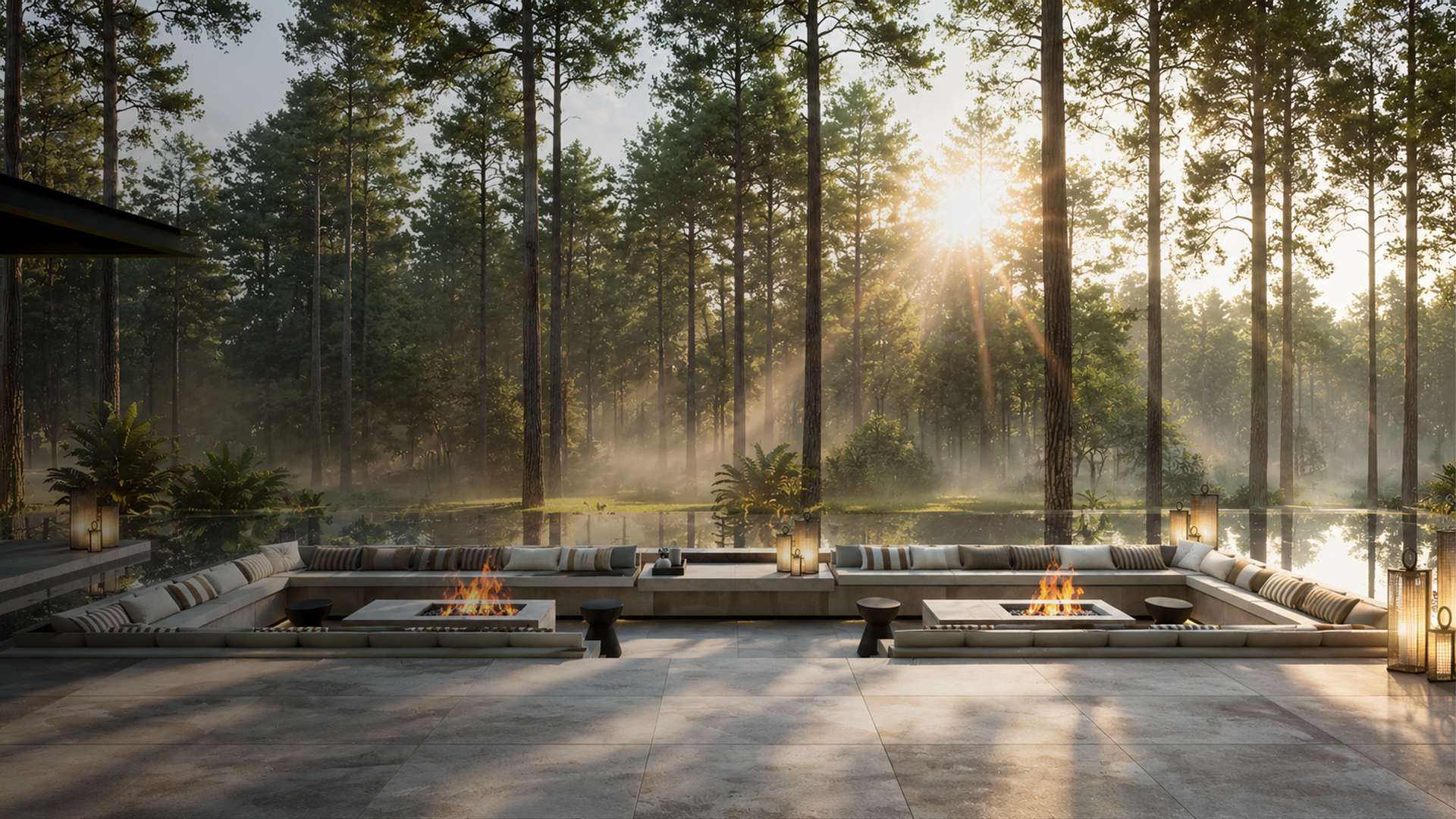
Projects such as ANANN Villas Phuket and The Title Villa Kirara Phuket illustrate how interior living can become closely connected with landscape, water, privacy, and the larger spatial experience.
Let the Architecture Do More
Modern luxury often becomes stronger when the architecture carries part of the visual work.
A beautifully proportioned opening may not need decoration around it.
A long wall may need one piece of art rather than six.
A double-height volume may need carefully controlled lighting rather than multiple visual statements.
A framed landscape view may be stronger than another expensive object.
This is where restraint becomes useful.
Not because minimalism is automatically sophisticated.
But because everything cannot be the protagonist.
When architecture already creates drama, the interior sometimes needs the confidence to support rather than compete with it.
2. Use Fewer Materials — But Make Them Matter More
Modern luxury villas often benefit from a more controlled material palette.
Not because fewer materials are inherently better.
Because repetition can create coherence.
Stone used in several related ways.
Timber appearing across architecture, joinery, and furniture.
Metal returning in carefully selected details.
Plaster forming a calm background against stronger tactile surfaces.
When the palette is edited, each material becomes more visible.
Its grain.
Texture.
Finish.
Junctions.
How it responds to light.
How it ages.
Material restraint only works when the materials themselves are good enough to survive attention.
Material Honesty Matters More Than Visual Perfection
Modern luxury does not require every surface to look immaculate forever.
In fact, overly perfect finishes can sometimes make a villa feel less human.
Natural stone varies.
Timber changes.
Metal develops character.
Hand-applied finishes reveal subtle irregularity.
The objective is not imperfection for its own sake.
It is allowing materials to retain some evidence of what they actually are.
A convincing material usually feels more luxurious than one pretending to be another.
Build a Material Hierarchy
Not every surface needs to be special.
If the floor is dramatic, the walls may need to become quieter.
If one stone wall is visually powerful, repeating equally expressive materials around it can dilute its impact.
If a bespoke staircase becomes a sculptural focal point, nearby furniture may need restraint.
Modern luxury depends heavily on hierarchy.
The question is not how many exceptional materials a project can afford. It is which ones deserve to be noticed.
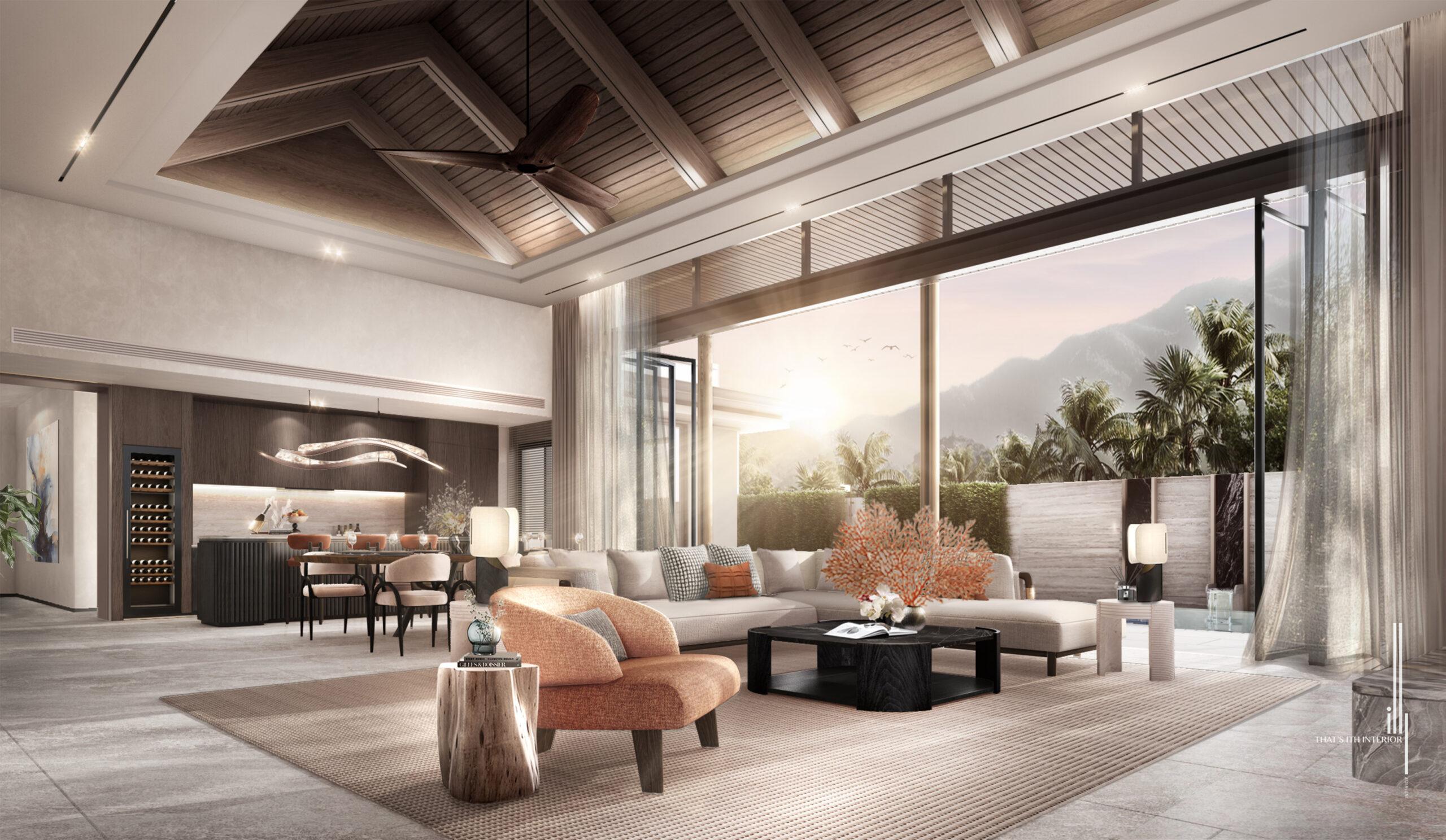
3. Make Indoor-Outdoor Living More Intelligent Than “Large Glass Doors”
Indoor-outdoor living is central to many modern luxury villas, particularly in Thailand.
But simply opening the façade does not create good indoor-outdoor design.
Real integration depends on:
- shade
- rain protection
- thresholds
- floor levels
- furniture
- ventilation
- privacy
- materials
- drainage
- landscape
- lighting
- air-conditioning strategy
- how spaces are used at different times of day
A terrace might look like an extension of the living room in a photograph but become unusable at 2 p.m. because nobody considered sun exposure.
A completely transparent room may appear dramatic but create privacy problems at night.
The goal is therefore not to eliminate every boundary.
The goal is to design the boundary intelligently enough that moving between inside and outside feels effortless.
Frame the Landscape Rather Than Showing Everything
More glass is not automatically more sophisticated.
A carefully framed view can sometimes create more emotional impact than an uninterrupted panorama.
Architecture can edit what the eye sees.
A narrow opening might focus attention on one tree.
A long horizontal window might emphasise water.
A courtyard can bring landscape deep into the plan while protecting privacy.
A solid wall can make the next view more powerful because it has been withheld.
This is another form of luxury:
not giving everything away at once.
Design the Pool as Part of the Spatial Composition
In a modern private pool villa, water can become part of the architecture.
It can align with structural lines.
Reflect the building.
Extend a sightline.
Separate public and private zones.
Create movement through reflected light.
Or become the centre of family and social life.
The pool should therefore be considered early enough to influence the interior rather than appearing as an amenity attached afterwards.
4. Use Modernity Without Making the Villa Feel Cold
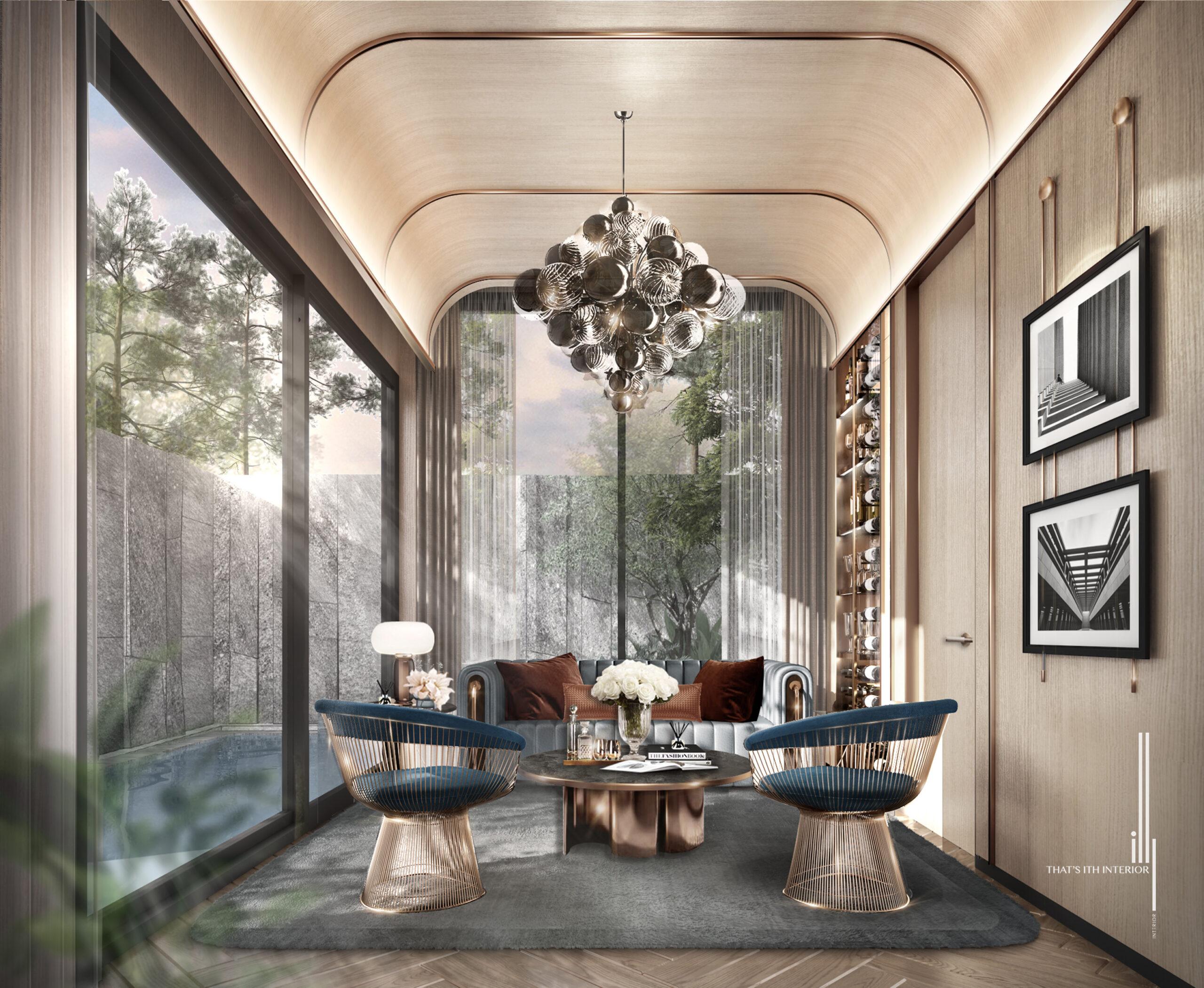
One risk of contemporary villa design is confusing clarity with emotional emptiness.
Concrete.
Glass.
Stone.
Minimal detailing.
Monochrome furniture.
All can create extraordinary spaces.
Together, without enough warmth, they can also create a home that feels closer to a gallery.
Modern luxury does not have to be cold.
Warmth can come from:
- timber
- textiles
- art
- books
- objects
- soft lighting
- tactile surfaces
- planting
- colour
- personal collections
- imperfect craft
- spaces designed for actual human behaviour
The objective is not to soften every architectural edge.
It is to balance architectural discipline with evidence that people actually live there.
A modern villa should feel edited, not sterilised.
Furniture Should Restore Human Scale
Large architectural volumes can make ordinary furniture feel visually insignificant.
But simply increasing furniture size can make the space feel like a hotel lobby.
A more intelligent approach uses furniture to bring large architecture back toward the human body.
Multiple conversation areas.
Lower lighting.
Rugs that define zones.
Seating arranged around behaviour rather than symmetry.
Bespoke pieces where standard dimensions genuinely fail.
The architecture may be monumental.
Living should still feel intimate.
5. Let Bespoke Elements Carry Identity
A restrained modern villa provides the perfect setting for bespoke design.
Because there are fewer competing elements, one project-specific object can become extremely powerful.
A dining table developed around a family.
A staircase designed as part of the architecture.
A screen responding to the sun.
A piece of joinery developed around a collection.
A commissioned artwork.
A custom light occupying a double-height volume.
The value is not that it is unique.
The value is why it needed to be unique.
A bespoke piece should solve something, communicate something, or become inseparable from the place around it.
If an existing object already performs beautifully, there is no reason to redesign it simply to claim exclusivity.
Modern luxury is not customising everything. It is knowing what is worth making only once.
Lighting Should Reveal Architecture, Not Decorate It
Modern villa lighting works best when it supports space.
A concealed source can reveal texture.
A narrow beam can emphasise artwork.
Indirect light can make a ceiling appear lighter.
Low lighting can bring intimacy to a large room after sunset.
Exterior lighting can extend the perceived interior into landscape without turning the garden into a stage set.
Decorative fixtures still have a place.
But they should not compensate for weak architectural lighting.
The strongest lighting scheme understands that a villa becomes an entirely different place after dark.
6. Design Modern Luxury Around Climate and Time
A modern villa should not only look good in one photograph.
It should continue to work through morning, afternoon, rain, heat, evening, and years of occupation.
This is particularly important for modern luxury villa interior design in Thailand.
Shade Is Part of Modern Architecture
Deep roof overhangs.
Screens.
Covered terraces.
Courtyards.
Recessed glazing.
Landscape.
These are not merely practical responses to heat.
They shape light and shadow.
They create transitions.
They change how spaces are used.
And they can become central to the architectural identity of the villa.
In a tropical modern villa, shade can be as important a design material as stone or timber.
Materials Need to Survive the Climate
A modern aesthetic often exposes materials more clearly because there is less decoration hiding them.
That makes poor ageing even more visible.
Outdoor timber.
Metal.
Stone.
Upholstery.
Sealants.
Hardware.
Paint.
All need to respond appropriately to humidity, UV exposure, rain, heat, and maintenance conditions.
A detail that looks exceptionally refined at handover but deteriorates rapidly is not sophisticated design.
It is a temporary image.
Technology Should Disappear Into the Experience
Contemporary villas often include extensive lighting control, climate systems, security, automated shading, AV, and smart-home technology.
But modern luxury should not look like a showroom for systems.
The best technology feels intuitive.
It supports comfort.
It reduces friction.
And visually, it knows when to disappear.
The smarter the home becomes, the less its owners should have to think about operating it.
Modern Luxury Villa Renovation: Editing Can Be More Powerful Than Adding
Not every modern villa begins on a blank site.
Existing villas often contain strong bones hidden beneath too many layers.
Renovation may involve:
- removing unnecessary partitions
- simplifying an overly complicated ceiling
- reducing the material palette
- opening selected sightlines
- improving natural light
- reorganising circulation
- replacing decorative gestures with stronger proportions
- creating a more meaningful relationship with the landscape
Projects such as The Reserve Villas Sukhumvit 89/1 show how residential design can use editing and rethinking rather than simply adding more.
Sometimes the most transformative design decision is deciding what the villa no longer needs.
Modern Luxury Does Not Mean Neutral
Neutral palettes remain common in contemporary villas because they allow proportion, texture, art, landscape, and materiality to carry more visual weight.
But modern luxury is not defined by beige.
Colour can be powerful precisely because the architecture around it is controlled.
A deep-toned dining room.
A vivid artwork.
A coloured stone.
A textile.
A lacquered element.
A single unexpected piece of furniture.
The key is deliberate use.
Colour should contribute to identity rather than appear because a trend report said the room needed an accent.
Restraint does not mean absence of personality.
Why Modern Luxury Villa Design Must Be Site-Specific
One of the great dangers of modern villa design is how easily its visual language travels.
Glass.
Stone.
Timber.
Concrete.
Clean lines.
Infinity pool.
Beautiful landscape.
The same image can appear in Bangkok, Phuket, Bali, Dubai, Los Angeles, or almost anywhere else.
That is precisely why site-specific thinking matters.
A modern villa should respond to:
- orientation
- climate
- views
- landform
- surrounding buildings
- vegetation
- culture
- household
- privacy
- way of living
Modernism provides a language.
It should not provide the finished answer.
If a villa could be lifted from one site and placed unchanged on another without losing anything, it may be modern — but it is not yet specific enough to be truly luxurious.
Modern Luxury Villa Interior Design in Thailand
Thailand provides a particularly rich environment for contemporary villa design.
Climate encourages a close relationship between inside and outside.
Landscape can become part of daily life.
Shade can become architecture.
Courtyards can introduce both privacy and nature.
And the country’s ecosystem of furniture makers, joinery workshops, stone specialists, metal fabricators, textile producers, craftspeople, and other makers creates significant opportunities for bespoke work.
The opportunity is not to make a modern villa look traditionally Thai.
Nor is it to import an international minimalist formula unchanged.
The more interesting direction is translation.
Local material knowledge can inform contemporary detailing.
Craft can become abstract rather than decorative.
A familiar technique can be used at an unfamiliar scale.
International design literacy and local making intelligence can exist together.
A modern villa in Thailand should not need obvious cultural symbols to demonstrate that it understands where it is.
How Modern Luxury Villa Design Differs From General Luxury Villa Design
Luxury villa design can take many forms.
Classical.
Eclectic.
Highly decorative.
Tropical.
Contemporary.
Minimal.
Modern luxury is one particular approach within that broader category.
Its emphasis tends to fall more heavily on:
- architectural clarity
- spatial proportion
- controlled material palettes
- clean detailing
- integration between architecture and interior
- restraint
- contemporary furniture
- invisible technology
- intentional indoor-outdoor relationships
But modern luxury should never become rigid.
A modern villa can still contain memory.
Craft.
Colour.
Art.
Emotion.
Patina.
Eccentricity.
The objective is not to remove personality.
It is to give personality enough clarity to be understood.
A Framework for Modern Luxury Villa Interior Design
Before making a major design decision, ask:
- Does this strengthen the relationship between architecture and interior?
- Does it respond to this particular site and climate?
- Is the material adding something meaningful, or simply adding another finish?
- Does the design balance openness with privacy?
- Will the space remain comfortable when the photograph is over?
- Does bespoke work have a genuine reason to exist?
- Can the detail age and be maintained realistically?
- Would this villa still have an identity if every fashionable object disappeared?
That last question matters.
Because the strongest modern villa should not depend on styling to tell us who it is.
That’s ITH’s Approach to Modern Luxury Villa Interior Design
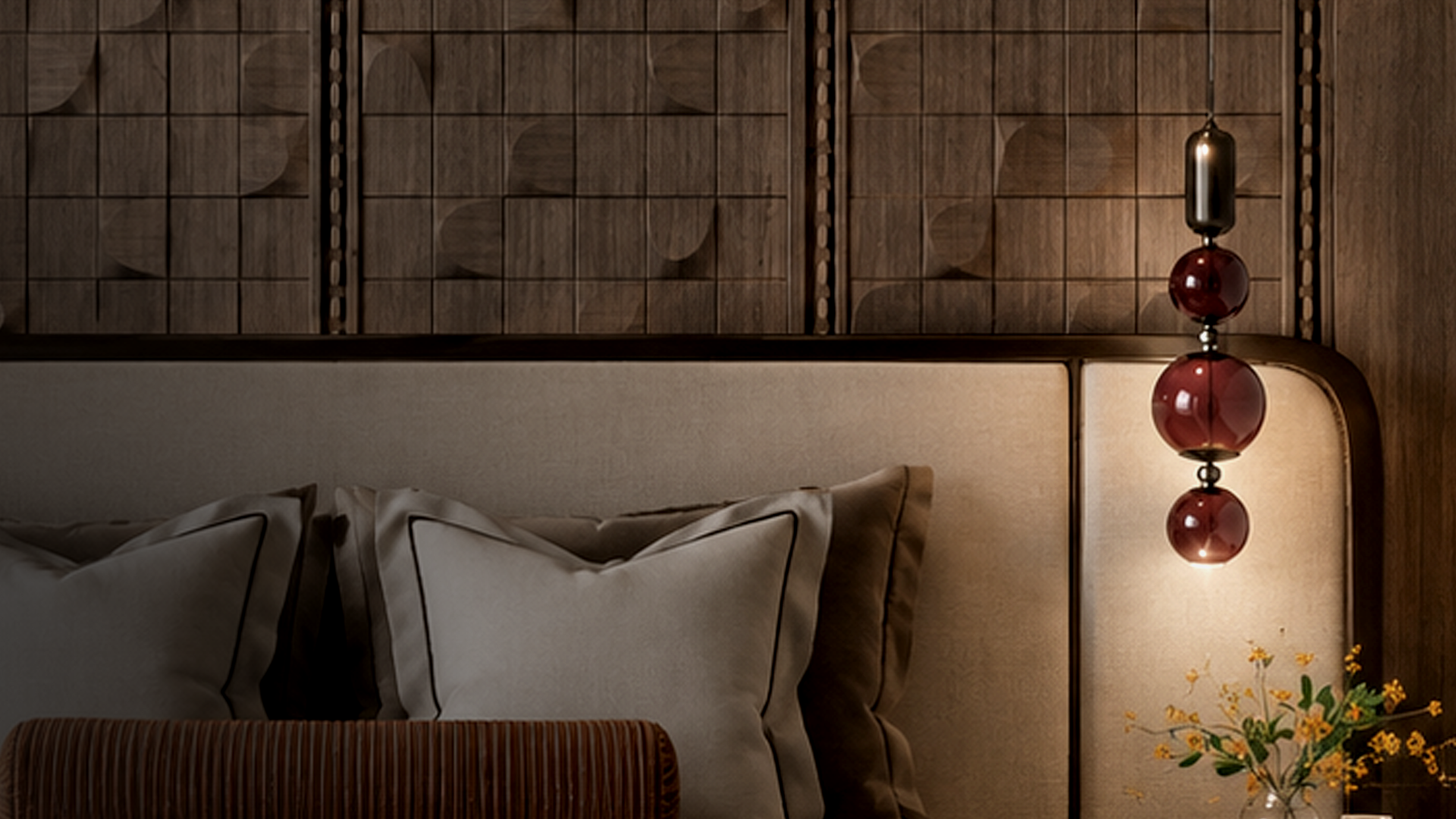
At That’s ITH Interior, we do not see modern luxury as a visual formula.
We see it as a discipline of clarity and judgment.
Knowing what architecture should lead.
Knowing when interiors should become quieter.
Knowing where material deserves attention.
Knowing when a view should be framed rather than fully exposed.
Knowing which object should be bespoke.
And knowing what should simply disappear.
We begin with the people and the place.
Who lives here?
How do they gather?
How much privacy do they need?
How does the sun move across the site?
Where should the landscape enter the home?
What should the villa feel like at noon — and after midnight?
Projects such as ANANN Villas Phuket, The Title Villa Kirara Phuket, Baan Suan – Nakhon Si Thammarat, and SJ Home – Nonthaburi can therefore speak very different visual languages.
The architecture changes.
The site changes.
The people change.
So the answer should change too.
For us, Fearless Luxury in a modern villa is not about making the house more minimal or more dramatic.
It is the confidence to edit until what remains has a reason.
We do not aim for a recognisable modern villa style.
The consistency is in the judgment.
Explore That’s ITH modern villa and residential projects, or read more luxury villa interior design ideas from the studio.
Planning a Modern Luxury Villa in Thailand?
The most valuable villa design conversations happen before the architecture, landscape, planning, and material language have already been fixed.
Led by founder and designer ITH Palach, That’s ITH Interior is a Bangkok-based interior design studio working across villas, private residences, hospitality, and commercial projects in Thailand and international markets.
We collaborate with homeowners, developers, architects, landscape architects, contractors, and multidisciplinary teams to translate lifestyle, site, climate, architecture, and identity into distinctive built environments.
Contact That’s ITH Interior to discuss your next modern villa, private residence, or residential development.
Frequently Asked Questions
What is modern luxury villa interior design?
Modern luxury villa interior design combines contemporary spatial clarity with high-quality materials, craftsmanship, comfort, bespoke detailing, and strong integration between architecture, interior, and landscape.
It communicates luxury through precision and specificity rather than relying primarily on ornament or visual abundance.
Is modern luxury villa interior design the same as minimalist villa design?
No.
Modern luxury may use minimalist principles such as restraint, clean lines, and controlled material palettes, but it can also include colour, texture, art, craft, and expressive details.
The defining quality is intentionality rather than simply reduction.
What materials are commonly used in modern luxury villas?
Stone, timber, concrete, metal, glass, plaster, and high-quality textiles are common, but there is no required palette.
Materials should be selected according to architecture, climate, use, maintenance, ageing, and the identity of the villa rather than because they are associated with a particular modern aesthetic.
Does a modern luxury villa have to use neutral colours?
No.
Neutral palettes are common because they allow architecture, texture, landscape, and art to become more prominent, but colour can be used boldly when it has a clear role within the concept.
Modern luxury is about control, not beige.
Why is indoor-outdoor living important in modern villa design?
Villas often have direct relationships with gardens, pools, courtyards, terraces, and landscape.
Designing thresholds, shade, materials, privacy, views, and climate response together allows exterior areas to function as genuine extensions of the interior rather than separate amenities.
How should a modern villa respond to Thailand’s tropical climate?
The design should consider sun, shade, heat, rain, humidity, ventilation, UV exposure, material durability, drainage, air-conditioning zones, and the relationship between conditioned and semi-outdoor spaces.
Climate should influence the concept from the beginning rather than being treated as a technical problem afterwards.
Can an existing villa be renovated into a modern luxury home?
Yes.
A modern renovation may involve simplifying materials, improving spatial relationships, removing unnecessary decoration, opening selected sightlines, introducing more natural light, improving indoor-outdoor connections, and refining architectural details.
Modernisation does not necessarily require rebuilding everything.
Should furniture in a modern luxury villa be bespoke?
Not necessarily.
Bespoke furniture can be valuable when unusual scale, architecture, lifestyle, collections, or specific functional requirements make standard pieces less appropriate.
The strongest interiors often combine custom work with carefully selected existing pieces.
How can a modern luxury villa avoid looking generic?
Begin with the site and household rather than a visual formula.
Orientation, landscape, climate, privacy, family behaviour, materials, craft, art, and the architecture itself should influence the design strongly enough that the villa could not simply be reproduced unchanged elsewhere.
What should I look for in a modern luxury villa interior designer in Thailand?
Look for strong spatial thinking, built villa experience, understanding of tropical climate, material knowledge, indoor-outdoor design capability, bespoke design experience, technical coordination, and a portfolio that responds differently to different sites.
Most importantly, look for a designer who understands that modern luxury is not about making every villa look the same kind of modern — it is about giving each villa enough clarity to become unmistakably its own.