
Hotel Interior Design Companies in Bangkok: What to Look For
Bangkok is one of Asia’s most competitive hotel markets.
International luxury properties sit alongside boutique hotels, lifestyle brands, business hotels, riverside destinations, serviced residences, and independent hospitality concepts.
For developers, that creates opportunity.
It also creates a harder problem.
Beautiful hotels are no longer unusual.
A new property therefore needs more than visual polish.
It needs a reason to exist.
For clients searching for a hotel interior design company in Bangkok, the strongest design partner should be able to translate:
brand,
location,
guest behaviour,
operations,
architecture,
and commercial ambition
into one coherent experience.
Because a Bangkok hotel is not simply somewhere inside the city.
It is a way of editing the city for the guest.
Some properties amplify Bangkok’s energy.
Others protect guests from it.
Some reveal the river.
Some turn inward.
Some encourage strangers to meet.
Others make privacy feel like the ultimate luxury.
Understanding which version of Bangkok the hotel should offer is where meaningful design begins.
Why Hotel Interior Design in Bangkok Is Particularly Demanding
Bangkok hotels serve unusually diverse audiences.
International tourists.
Business travellers.
Weekend guests.
Long-stay residents.
Local diners.
Wedding guests.
Conference delegates.
People coming only for cocktails.
People who may never book a room at all.
This matters because many Bangkok hotels function as more than accommodation.
Restaurants can become city destinations.
Ballrooms operate as social infrastructure.
Bars attract local audiences.
Lobbies become meeting places.
A hotel’s public identity may therefore be experienced as much by Bangkok residents as by overnight guests.
Different properties need different priorities.
A riverside hotel may use the Chao Phraya as part of its identity.
A neighbourhood boutique hotel may need a close relationship with the streets around it.
A lifestyle property may depend on social interaction.
A luxury urban hotel may offer something almost opposite:
relief from the city.
There is no single Bangkok hotel aesthetic.
And there should not be.
The design should emerge from the particular role the property wants to play in the city.
1. Local Context Should Influence the Design Without Becoming a Theme
Bangkok has a strong identity.
But it is not one identity.
Historic districts.
Dense commercial areas.
The river.
Old shophouses.
High-rise towers.
Residential neighbourhoods.
Markets.
Food culture.
Contemporary art.
Craft traditions.
Nightlife.
Infrastructure.
Traffic.
Tropical weather.
Bangkok is layered, contradictory, energetic, and constantly changing.
A hotel does not need to illustrate all of this.
In fact, trying to make a hotel visibly “Bangkok” through obvious symbols can easily reduce the city to decoration.
A stronger approach asks:
What about this particular part of Bangkok matters to this property?
For one hotel, it may be the river.
For another, neighbourhood life.
For another, urban movement.
For another, the contrast between the intensity outside and calm inside.
Sense of place becomes stronger when it is specific.
The goal is not to make a hotel look local. It is to make it belong.
That may be communicated through material, behaviour, spatial sequence, craft, light, scale, or even the way the property meets the street.
It does not require a decorative explanation.
2. A Bangkok Hotel Needs to Decide Its Relationship With the City
This is a question that deserves more attention.
Should the hotel continue the city?
Or interrupt it?
A lifestyle property may allow Bangkok’s social energy to flow inside.
A boutique hotel might amplify the character of its neighbourhood.
A resort-like urban hotel may deliberately create separation.
A luxury property could make the transition from traffic, heat, noise, and density into calm one of its most valuable experiences.
There is no correct answer.
But there should be an answer.
Every hotel edits reality for its guest.
It chooses what to reveal.
What to soften.
What to exaggerate.
What to remove.
That choice can become one of the strongest foundations for the design concept.
3. Hotel Brand Identity Should Be Spatial
A hotel brand is experienced physically long before the guest reads its brand statement.
Arrival.
Reception.
Furniture.
Lighting.
Sound.
Guestroom.
Restaurant.
Bar.
Service.
The distance between people.
The level of formality.
How quickly staff interaction happens.
Whether guests are encouraged to linger.
These things communicate positioning.
A luxury hotel interior designer in Thailand therefore needs to understand brand strategy as more than colour, logo, and graphic standards.
Interior is brand you walk into.
If a brand promises social connection but every seating arrangement isolates people, something is inconsistent.
If it promises restoration while guests move through visually aggressive spaces all day, the promise weakens.
If a luxury brand talks about intuitive service but the guest cannot work out the lighting controls, the brand has failed at the scale of a switch.
The strongest interiors make the brand believable through behaviour.
4. Luxury Modern Hotel Lobby Design in Bangkok Should Start With Behaviour
Hotel lobbies carry significant responsibility.
They may function simultaneously as:
arrival,
reception,
waiting,
meeting,
lounge,
social space,
and the first major expression of the property.
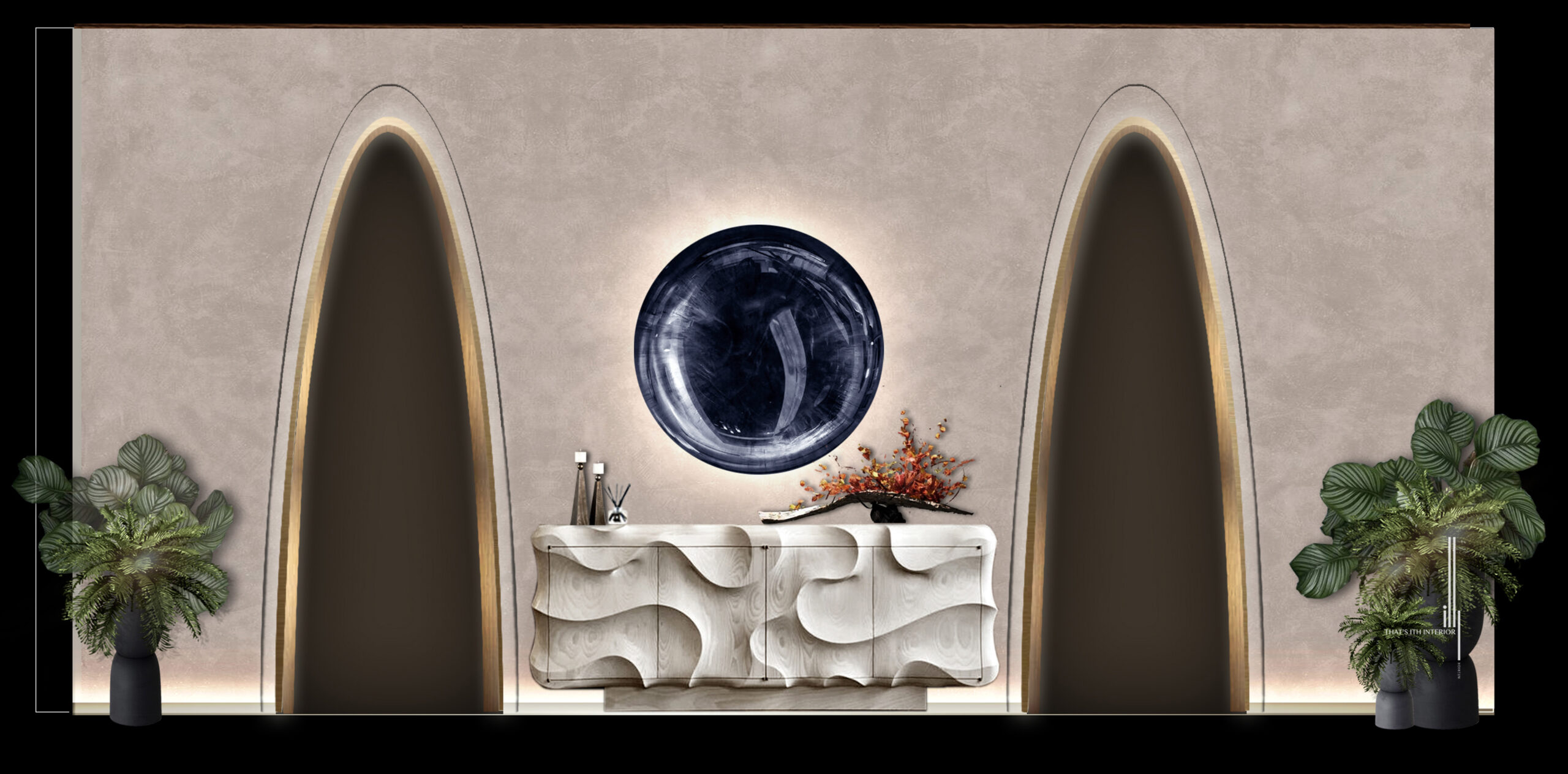
That is why successful luxury modern hotel lobby design in Bangkok should begin with behaviour as much as appearance.
Where does the guest arrive?
Where does luggage move?
When are they acknowledged?
Where do people wait?
Where can someone meet a visitor without interrupting circulation?
Should guests remain in the lobby or move quickly onward?
Do local visitors use the space too?
These questions affect:
furniture placement,
circulation,
lighting,
acoustics,
scale,
privacy,
and sightlines.
A lobby does not need to be enormous to feel important.
A memorable arrival is about sequence, not size.
The transition from Bangkok outside to the world of the hotel inside may itself be the design.
5. Guestrooms Need to Work When Guests Are Tired
Hotel rooms are often photographed when perfectly styled.
Guests experience them under rather different conditions.
After a flight.
Late at night.
Jet-lagged.
Carrying luggage.
Trying to charge several devices.
Attempting to find the blackout switch without turning on every light in the room.
That is where design quality becomes very human.
Where does the suitcase go?
Can both sides of the bed charge a phone?
Is the wardrobe easy to understand?
Can someone use the bathroom without disturbing their partner?
Does the room become genuinely dark?
Can the guest work comfortably?
Does the air-conditioning feel intuitive?
A guest should not need to learn the room.
True luxury is often the feeling that someone solved the inconvenience before you encountered it.
Beauty still matters.
But beauty and usability should reinforce one another.
A room that photographs beautifully yet creates repeated friction is not fully resolved.
6. Boutique Hotel Interior Design in Bangkok Needs Concentrated Identity
Boutique hotels often have fewer rooms and smaller public areas.
That does not make the design simpler.
It gives each decision more responsibility.
A small reception may carry the entire arrival experience.
One staircase might become part of the property’s identity.
A restaurant may become the social centre.
One corridor, courtyard, or object may appear repeatedly in guests’ memories and photographs.
A boutique hotel does not compete on room count. It competes on memory.
This gives boutique properties creative freedom.
But freedom needs editing.
Not every wall needs an idea.
Not every room needs a statement.
The strongest boutique hotel interior design in Bangkok identifies the few moments that should carry the personality — then gives them enough space to matter.
Specificity becomes more valuable than visual quantity.
7. Bangkok Hotels Often Have Two Audiences: Travellers and Locals
This is one of Bangkok’s most interesting hospitality conditions.
Many hotel restaurants, bars, ballrooms, brunch venues, and meeting spaces are used heavily by people who are not staying in the hotel.
That means public areas sometimes need to serve two psychological journeys.
For the traveller, the hotel is temporary home.
For the local guest, it may be:
dinner,
a wedding,
a business meeting,
Sunday brunch,
or Friday-night drinks.
Those people arrive with different expectations.
Their relationship with the hotel is different.
A destination restaurant cannot rely entirely on captive hotel guests.
A ballroom may influence how Bangkok residents perceive the entire property.
A bar needs enough identity to compete with independent venues around the city.
In Bangkok, the hotel’s public spaces can become part of the city even when the guestrooms remain private from it.
That tension creates interesting design opportunities.
8. Five-Star Hotel Design Requires Invisible Precision
Five-star hospitality depends on many things guests should barely notice.
Arrival should feel easy.
Circulation should be clear.
Service should happen without constantly entering the foreground.
Furniture should remain comfortable over time.
Acoustics should allow conversation.
Lighting should change through the day.
Materials should maintain quality.
Guestroom controls should feel intuitive.
Operational planning should support the staff delivering the experience.
This is why five-star hotel design in Thailand cannot be reduced to expensive finishes.
Guests may never consciously notice good circulation.
But they notice queues.
They may never compliment the location of a service station.
But they notice when service constantly passes through their sightline.
They may not analyse acoustics.
They simply know whether dinner felt comfortable.
Good hotel operations become part of luxury precisely when guests do not need to think about them.
That requires operational intelligence early in the design process.
9. Restaurants, Bars, and Ballrooms Should Not Become Smaller Versions of the Lobby
Large hotels need overall identity.
But identity does not require every environment to look the same.
A breakfast restaurant has one emotional job.
A destination restaurant another.
A cocktail bar changes again.
A ballroom needs ceremony, flexibility, technology, and large-scale gathering.
Guestrooms require intimacy.
Trying to force one visual language across all of them can flatten the experience.
Consistency does not require repetition.
The hotel should feel like one property with several personalities.
The larger concept should hold those environments together while allowing each one to respond to its particular behaviour.
Guests experience variation as part of hospitality.
Especially during longer stays.
10. Bangkok-Based Studios Can Translate International Ambition Into Local Reality
For international developers and hotel brands, working with a Bangkok-based interior design studio can provide useful local intelligence.
Materials.
Manufacturers.
Craftspeople.
Fabricators.
Suppliers.
Construction practices.
Climate.
Consultant networks.
But proximity alone is not the advantage.
The more important value is translation.
International projects may involve:
global brand standards,
overseas architects,
international operators,
specialist consultants,
local contractors,
and regional fabrication.
Someone needs to understand both sides.
Local intelligence. Global grammar.
The goal is not to dilute international ambition to make construction easier.
Nor is it to ignore local realities in pursuit of an image.
The stronger design partner helps the concept become buildable locally without losing what made the idea valuable.
11. Technical Coordination Is Part of Creative Design
Hotels contain complex systems.
Air-conditioning.
Lighting.
Electrical.
Fire protection.
Plumbing.
Acoustics.
Kitchens.
Technology.
Signage.
Security.
Building management.
Each one intersects with the interior.
A ceiling that appears effortless may contain intense coordination.
A bathroom may involve:
architecture,
waterproofing,
plumbing,
lighting,
ventilation,
stone,
glass,
joinery,
and hardware
within a few square metres.
This is why technical development cannot be separated completely from creative quality.
A beautiful concept that does not survive coordination is not a finished idea.
Depending on the agreed scope, the interior designer may prepare detailed documentation, coordinate with consultants, develop FF&E and bespoke elements, and review design intent through later project stages.
Clients should understand these responsibilities clearly before appointment.
12. Built Work Reveals What Renderings Cannot
Renderings are important.
They communicate imagination.
Atmosphere.
Intent.
But they do not show construction tolerances.
Material transitions.
Furniture comfort.
How light actually falls.
Whether bespoke pieces were fabricated well.
How details meet when viewed from twenty centimetres away.
Or how the interior behaves when filled with people.
A rendering shows what a studio can imagine. A built project shows what its process can deliver.
When comparing hotel interior design companies in Bangkok, study completed work carefully.
Look beyond the hero shot.
Look at:
junctions,
lighting,
furniture,
circulation,
materials,
ceilings,
bathrooms,
custom details,
and the less glamorous areas guests use repeatedly.
The things nobody photographs often tell you the most about professional discipline.
13. Thai Identity Does Not Require Thai Decoration
Bangkok hotel projects naturally raise questions about cultural identity.
How Thai should the hotel feel?
The answer does not need to begin with motifs.
Thailand can enter the design through:
craft,
material,
behaviour,
proportion,
social rituals,
food culture,
light,
landscape,
or memory.
A craft technique can be translated.
A familiar object can be reconsidered.
A way of gathering may influence furniture planning.
A local memory can become an abstract spatial idea.
Thai soul does not require Thai decoration.
This is particularly important for internationally positioned hotels.
The objective is neither generic global luxury nor decorative cultural theatre.
It is something more intelligent:
a property sophisticated enough to travel internationally without becoming anonymous locally.
14. The Best Design Companies Know What Cannot Be Lost
Almost every hotel changes during development.
Budget.
Operator comments.
Technical conflicts.
Availability.
Construction conditions.
Value engineering.
The designer’s responsibility is not to treat every original detail as sacred.
Some things can change.
Others carry the identity of the project.
The skill lies in knowing which is which.
Perhaps the stone changes.
Perhaps a furniture specification changes.
Perhaps one detail simplifies.
But the arrival sequence cannot disappear.
Or one crafted piece carries the brand identity.
Or the lighting hierarchy defines the emotional experience.
Protecting design intent does not mean refusing change. It means knowing what the project cannot afford to lose.
Good value engineering should remove cost before it removes the idea.
THAT’S ITH as a Hotel Interior Design Company in Bangkok
THAT’S ITH INTERIOR is a Bangkok-based design studio founded and creatively led by ITH PALACH, whose professional design career spans more than 25 years.
The studio works across hospitality, restaurant, residential, workplace, and lifestyle environments in Thailand and international markets.
Our core belief is:
People are more interesting than styles.
For hotels, that means we do not begin by asking what a THAT’S ITH hotel should look like.
We begin with:
Who is the guest?
Why are they coming?
What version of Bangkok should this property reveal?
What should the brand feel like physically?
How should people behave?
What should operations make effortless?
And what should remain in memory?
Our broader design territory is Fearless Luxury.
Fearless does not mean every project needs to be loud.
Sometimes the right answer is theatrical.
Sometimes calm.
Sometimes highly crafted.
Sometimes colourful.
Sometimes the most confident decision is to remove something.
Fearless means having enough conviction to make the decision the project genuinely needs.
The projects may look different.
The consistency is not in the aesthetic. It is in the judgment.
Finding the Unspoken Brief in Hotel Design
Hotel briefs contain plenty of information.
Brand standards.
Target guests.
Room counts.
Functions.
Budgets.
Operational requirements.
Technical requirements.
But another layer often exists underneath.
We call it The Unspoken Brief.
What is the guest really coming here for?
What experience is missing from the market?
What does this hotel need to make people feel that competitors do not?
What behaviour should the property encourage?
What should local guests think of it?
What should travellers tell someone when they return home?
What must never feel generic?
Those questions can reveal a more distinctive concept.
Because sometimes the most valuable part of the brief is the thing nobody has written down yet.
Bangkok Hospitality Projects With Different Identities
THAT’S ITH has worked across several very different hospitality environments in Bangkok.
Royal Orchid Sheraton Bangkok Ballroom
THAT’S ITH’s scope at Royal Orchid Sheraton Bangkok focuses specifically on the ballroom and conference facilities, rather than the entire hotel.
The project required the design to combine:
celebration,
large-scale gathering,
flexibility,
technical infrastructure,
and operational performance.
The concept, Celebration on the Chao Phraya, responds to the hotel’s riverside context and gives the ballroom a sense of place rather than treating it as an anonymous event room.
The project received recognition through the Asia Pacific Property Awards in the Hotel Conference Facilities Interior category.
It demonstrates that:
Functionally flexible spaces do not need to surrender identity.
Silver Waves at Chatrium Riverside Bangkok
Silver Waves at Chatrium Riverside Bangkok presents another hospitality condition.
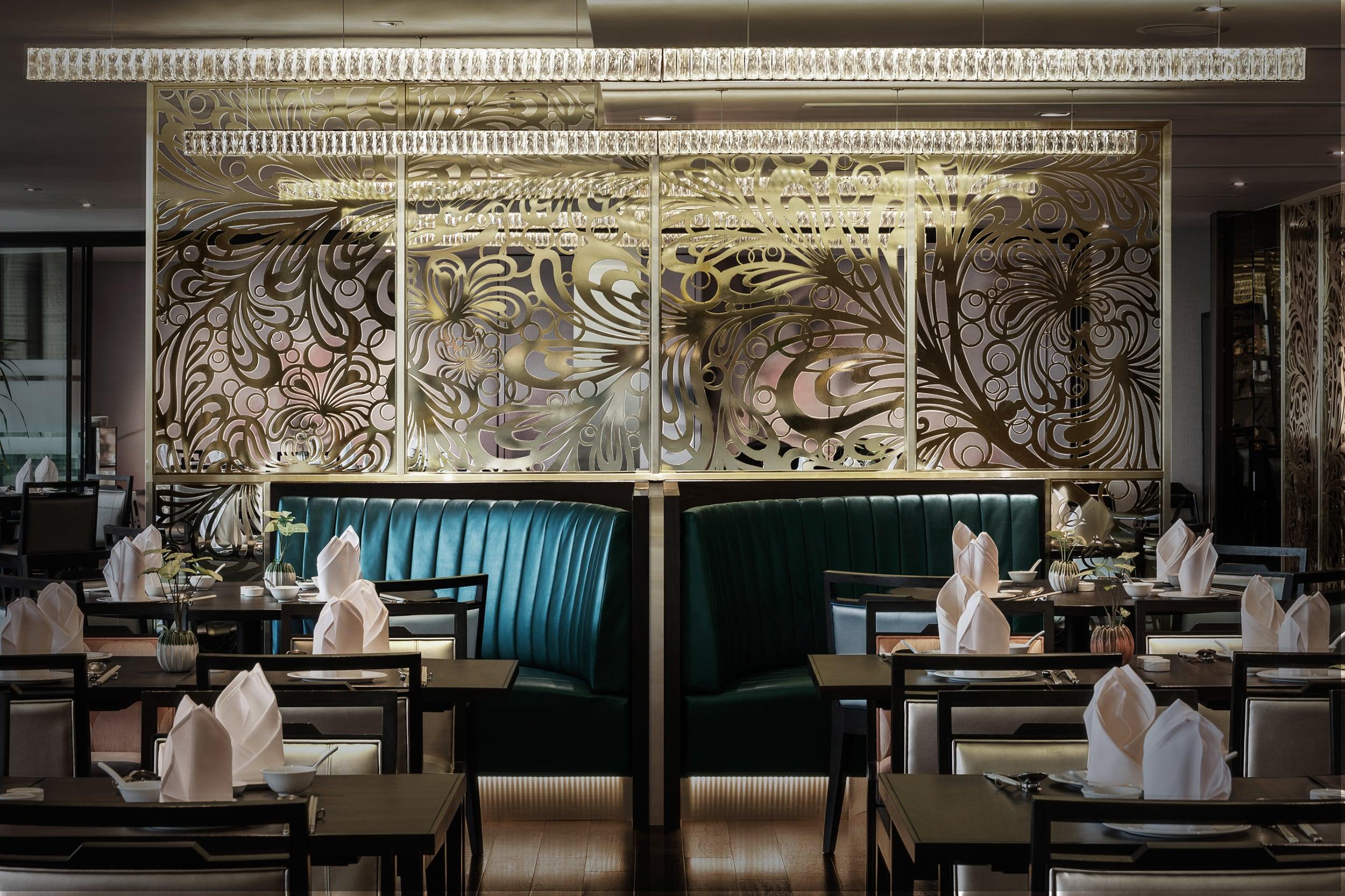
A restaurant inside a hotel needs to work as part of the property while possessing enough character to become a destination in its own right.
Dining experience, lighting, service, furniture, atmosphere, material, and the riverside view need to work together.
The project has also received recognition through the Asia Pacific Property Awards.
The design challenge is completely different from a ballroom.
And it should look different.
lyf Sukhumvit 8 Bangkok
lyf Sukhumvit 8 Bangkok explores contemporary social hospitality.
Its identity is energetic, urban, informal, and behaviour-driven.
Bangkok memory — including the tuk-tuk — is translated with humour rather than treated nostalgically.
The project received DEmark 2025 recognition and international recognition within hospitality design.
Again, the design language changes.
Because the guest changes.
The brief changes.
The behaviour changes.
The project changes. Therefore the answer changes.
How to Compare Hotel Interior Design Companies in Bangkok
Begin with relevant hospitality experience.
Then look deeper.
Ask:
- Does the studio understand the intended guest?
- Who leads the creative direction?
- How is the hotel concept developed?
- How is the guest journey considered?
- Does the studio understand operations?
- What services are included in the appointment?
- How is FF&E handled?
- How are bespoke elements developed?
- How does the studio work with hotel operators?
- How is technical information coordinated?
- How are local materials and fabricators evaluated?
- Does the portfolio demonstrate built work?
- Can the studio work across guestrooms, F&B, event spaces, and public areas where relevant?
- How does the team respond when budget or technical conditions change?
- Does every project look essentially the same?
And perhaps the most revealing question is:
Can the designer explain why this hotel should feel the way it does before explaining what it should look like?
That answer reveals whether the studio is designing an image.
Or an experience.
What Should a Bangkok Hotel Give Guests That the City Cannot?
Bangkok already offers enormous stimulation.
Food.
Nightlife.
Culture.
Shopping.
Traffic.
Movement.
Noise.
Colour.
People.
Energy.
A hotel does not need to compete with all of it.
Sometimes the more valuable thing the hotel can provide is contrast.
Calm.
Privacy.
Order.
Slowness.
A controlled view.
A moment when the city disappears.
Another property may do the opposite.
It may invite Bangkok inside.
Social life.
Street energy.
Local food.
Neighbourhood culture.
There is no universal answer.
But there should be a clear point of view.
A Bangkok hotel becomes more distinctive when it understands not only what it wants to add to the city — but what it wants to edit out.
That is where design becomes strategic.
Planning a Hotel Project in Bangkok?
The most useful time to involve the interior designer is often before the most important decisions involving architecture, brand, operations, guest journey, lighting, and technical systems have already been fixed.
THAT’S ITH works with developers, operators, architects, consultants, and multidisciplinary teams across hospitality projects in Bangkok, Thailand, and international markets.
We do not begin by asking which previous hotel you want yours to resemble.
We begin with a more useful question:
“Why should this particular hotel exist in this particular way?”
Contact THAT’S ITH INTERIOR to discuss your next hotel or hospitality development.
You do not need to begin with the perfect style.
Finding the Unspoken Brief is part of the work.
Frequently Asked Questions
What does a hotel interior design company in Bangkok do?
Depending on the agreed appointment, a hotel interior design company may provide concept design, space planning, guest journey development, material strategy, FF&E, bespoke furniture, design development, technical documentation, and coordination with other project consultants.
Exact responsibilities vary between projects and should be confirmed before appointment.
Why hire a Bangkok-based hotel interior designer?
A Bangkok-based studio can bring knowledge of local climate, materials, fabrication, craftspeople, suppliers, construction practices, and consultant networks.
Its greatest value is often the ability to translate international project ambitions into locally intelligent and executable solutions.
What makes luxury modern hotel lobby design successful?
A strong hotel lobby combines identity, intuitive circulation, guest comfort, operational function, appropriate acoustics, lighting, furniture planning, and a clear emotional introduction to the property.
The most dramatic lobby is not necessarily the most successful.
What should I look for in a luxury hotel interior designer in Thailand?
Look for relevant completed hospitality work, guest-experience thinking, understanding of operations, technical capability, material knowledge, a clear design philosophy, FF&E expertise, and experience collaborating with multidisciplinary project teams.
Why is guestroom usability so important?
Guests often enter guestrooms tired and unfamiliar with the property.
Lighting, storage, luggage, charging, bathrooms, acoustics, blackout, comfort, and intuitive controls can significantly affect how luxurious the room actually feels in use.
Why does Bangkok hotel design need to consider local guests?
Many Bangkok hotel restaurants, bars, meeting spaces, and ballrooms also serve local residents.
These spaces may therefore influence the hotel’s reputation within the city as much as the experience of overnight guests.
What does sense of place mean for a Bangkok hotel?
Sense of place does not require literal Thai motifs.
It can emerge through climate response, materials, craft, neighbourhood character, behaviour, food culture, urban context, light, spatial sequence, or another project-specific interpretation of Bangkok.
What is The Unspoken Brief?
The Unspoken Brief refers to behaviours, ambitions, tensions, operational needs, cultural clues, and emotional objectives that may not appear explicitly in the formal hotel brief but can significantly influence the identity of the project.
Does THAT’S ITH have hotel interior design experience in Bangkok?
Yes.
THAT’S ITH has worked across hospitality environments in Bangkok including Royal Orchid Sheraton Bangkok Ballroom, Silver Waves at Chatrium Riverside Bangkok, and lyf Sukhumvit 8 Bangkok.
Does THAT’S ITH have one signature hotel style?
No.
Different brands, guests, locations, and operational requirements should produce different design responses.
The consistency is not in the aesthetic. It is in the judgment.
Who leads THAT’S ITH INTERIOR?
THAT’S ITH is founded and creatively led by ITH PALACH, whose professional design career spans more than 25 years.
When should a hotel interior designer join a project?
Ideally during early concept or planning stages.
Early involvement allows architecture, operations, guest journey, brand, lighting, FF&E, materials, and technical requirements to inform one another before major decisions become difficult or expensive to change.
What is a useful question when comparing hotel interior design companies in Bangkok?
Ask:
“What should this hotel give the guest that Bangkok outside already does not?”
The answer can reveal whether the designer truly understands the relationship between the property, its city, and its audience.