
Luxury Hotel Design Companies in Thailand: What Sets the Best Apart
Luxury hotels are rarely remembered because of one beautiful object.
Guests remember the feeling of arriving.
The relief of entering a calm lobby after a long journey.
The energy of a restaurant after sunset.
The privacy of a guestroom.
The moment a landscape or city view is finally revealed.
These experiences are created through hundreds of connected decisions.
For developers and hotel owners searching for luxury hotel design companies in Thailand, the challenge is therefore not simply finding a studio capable of creating impressive interiors.
It is finding a design partner capable of turning:
brand,
place,
guest behaviour,
operations,
architecture,
and commercial ambition
into one coherent experience.
The strongest luxury hotel design is emotional enough to be remembered — and disciplined enough to work every day.
That combination is what separates a beautiful hotel from a genuinely successful one.
What Does Luxury Hotel Design in Thailand Involve?
Luxury hotel interior design can extend far beyond furniture and finishes.
Depending on the agreed scope, an interior design studio may contribute to:
- concept design
- space planning
- guest journey development
- public-area design
- guestroom design
- material strategy
- FF&E
- bespoke furniture and joinery
- lighting coordination
- design development
- technical documentation
- multidisciplinary coordination
- and construction-stage design review
Not every studio provides every service, and responsibilities may be divided differently between interior designer, architect, operator, lighting consultant, procurement team, contractor, and other specialists.
The scope should therefore be clarified early.
But whatever the appointment, the essential challenge remains the same:
Can the creative idea survive the journey from presentation to built reality?
A concept has limited value if it cannot be delivered.
And a beautiful hotel has limited value if guests find it frustrating to use.
Luxury hotel design requires both imagination and discipline.
1. The Best Hotel Design Begins With Identity
A luxury hotel needs a reason to feel the way it does.
That reason might emerge from:
the site,
architecture,
neighbourhood,
landscape,
history,
culture,
brand,
target guest,
or an unexpected story discovered during research.
A strong concept then becomes a filter for hundreds of later decisions.
Which materials belong?
Where should the experience become dramatic?
Where should it become quiet?
What does the guest encounter first?
Which parts of the property should feel social?
Which should feel private?
How should guestrooms relate emotionally to public spaces?
What gives this hotel an identity that its competitors cannot simply reproduce?
Without a clear idea, even a highly polished five-star property can become interchangeable.
Beautiful stone.
International furniture.
Immaculate detailing.
Perfect lighting.
And yet somehow nowhere.
A hotel should not simply look luxurious. It should know why it exists in this particular way.
2. Five-Star Hotel Design Is About More Than Expensive Materials
Luxury is often communicated through visible ingredients.
Premium stone.
Custom furniture.
Art.
Metalwork.
Fine textiles.
Craftsmanship.
These things can contribute enormously to a hotel.
But cost alone does not create luxury.
Guests experience quality through the relationship between many things:
proportion,
comfort,
lighting,
acoustics,
material tactility,
privacy,
service,
temperature,
spatial clarity,
and ease of use.
A hotel filled with expensive materials can still feel generic.
Another may use fewer overtly luxurious elements but create a much stronger sense of value through intelligent planning and beautifully resolved detail.
Cost and perceived value are not the same thing.
The more sophisticated question is not:
“How many premium materials can we introduce?”
It is:
“Where will quality actually be felt?”
That answer may lead to exceptional craft.
Or better acoustics.
A more comfortable chair.
A beautifully resolved bathroom.
A calmer arrival.
A guestroom where every switch happens to be exactly where somebody expects it.
Sometimes true luxury is not what guests notice.
It is what they never need to struggle with.
3. The Lobby Should Set the Emotional Tone — Not Simply Make a Statement
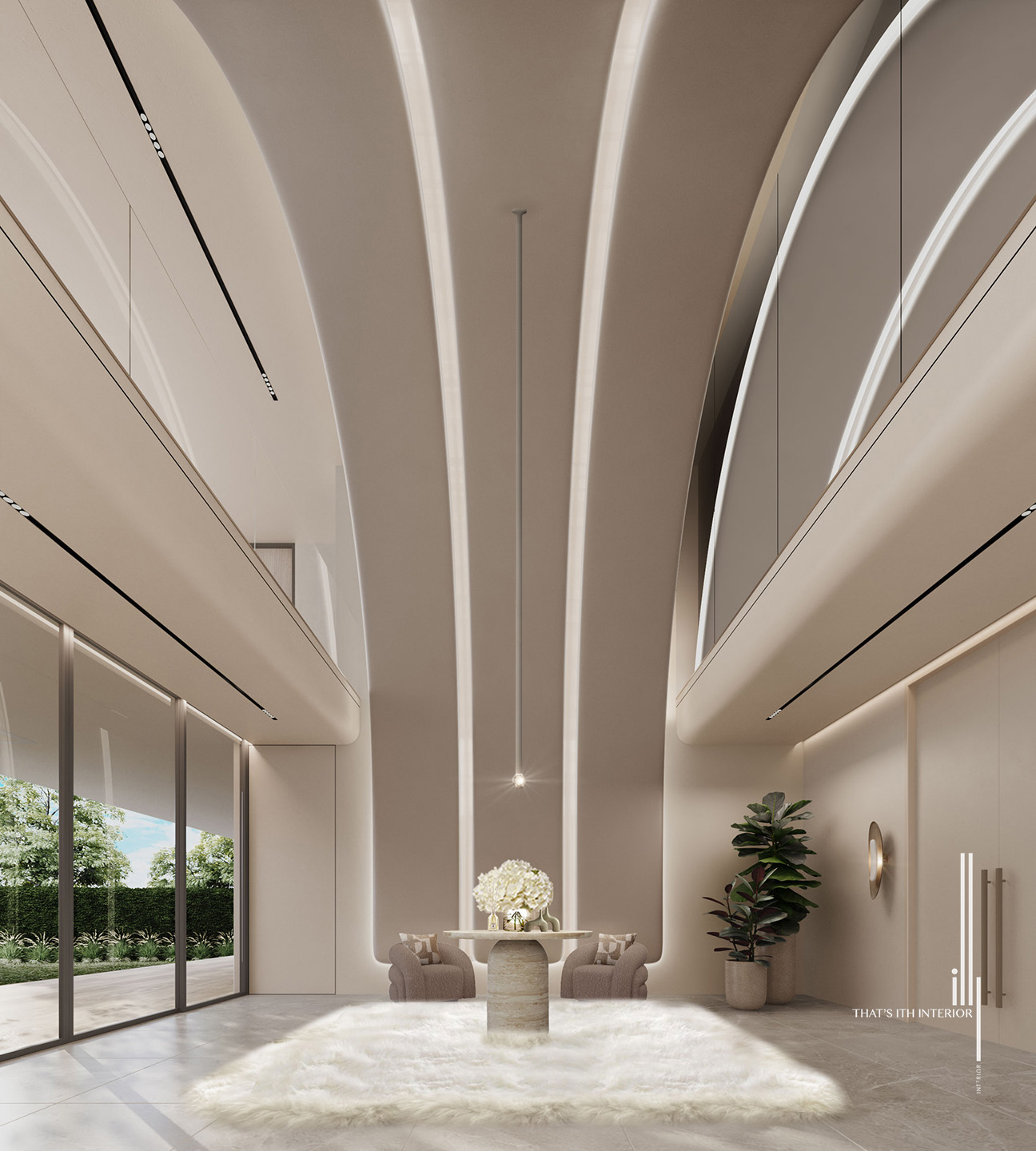
The lobby is often the first major interior guests encounter.
That makes luxury hotel lobby design in Thailand particularly important.
But a successful lobby does not automatically require the largest chandelier, most expensive stone, or most dramatic volume.
Different hotels need different beginnings.
A resort might create anticipation by withholding the landscape before revealing it.
An urban hotel may need to create immediate separation from the intensity of Bangkok outside.
A lifestyle hotel may place social activity at the centre of arrival.
A luxury business property may prioritise calm, clarity, and effortless movement.
The lobby should tell guests what kind of hotel they have entered before anyone has to explain it.
That is brand experience translated into space.
And arrival begins before reception.
The drop-off.
Door.
Threshold.
Sound.
Temperature.
First sightline.
Where luggage goes.
Where people pause.
These details collectively determine the emotional first impression.
4. Guestrooms Need to Work for Real People
Guestrooms are among the most repeated environments in any hotel.
They are also where guests experience the property most privately.
A successful guestroom therefore has to perform beyond photography.
Where does the suitcase go?
Can somebody charge a phone on both sides of the bed?
Can one guest use the bathroom without disturbing another?
Are the lighting controls understandable at midnight?
Does the room become genuinely dark?
Is there enough storage without forcing guests to discover it?
Does the desk actually work?
Can someone sit comfortably without rearranging the furniture?
These questions may sound ordinary.
But the answers often determine whether a room feels genuinely luxurious.
The best guestroom design resolves inconvenience before the guest has to experience it.
Elegance and usability should reinforce one another.
The room can still have personality.
But personality should not come at the expense of rest, privacy, comfort, or intuitive use.
5. Guest Journey Matters More Than a Collection of Beautiful Rooms
Guests do not experience a hotel as a floor plan.
They experience sequence.
Arrival.
Reception.
Transition.
Lift.
Corridor.
Room.
Restaurant.
Bar.
Wellness.
Gathering.
Retreat.
Departure.
Each moment influences the next.
That makes hotel design closer to choreography than decoration.
Space planning solves function. Guest journey design adds emotion.
A corridor can gradually lower the emotional energy after a lively lobby.
A restaurant entrance can create anticipation before the dining room appears.
A ballroom foyer can prepare guests psychologically for celebration.
A resort can reveal landscape slowly enough that the final view has greater impact.
These transitional moments often receive less attention than the hero spaces.
But they can determine whether the hotel feels like one coherent experience or a collection of separate interiors.
6. Not Every Space Should Be the Protagonist
Luxury hotel projects naturally create pressure for visual impact.
Statement lobby.
Statement staircase.
Statement restaurant.
Statement bar.
Statement guestroom.
Statement ceiling.
Eventually, everything is trying to be remembered.
And very little is.
Everything cannot be the protagonist.
Memory requires hierarchy.
One room may deserve spectacle.
Another may need restraint.
A dramatic restaurant can become stronger after a quieter approach.
An exceptional view may require the interior to step back.
A highly active lobby may make calm guestrooms feel even more valuable.
A strong luxury hotel design company therefore needs to understand not only how to create impact.
It needs to know where impact matters.
That is design judgment.
7. Boutique Hotel Interior Design Requires Concentrated Identity
Boutique properties often have fewer guestrooms and smaller public areas.
That does not make them easier to design.
It can make each decision carry more weight.
A staircase might become part of the brand identity.
A small reception can define the entire arrival.
A restaurant may become the social centre of the property.
One unusual object might become the image every guest remembers.
A boutique hotel does not compete on room count. It competes on memory.
That makes focus essential.
The designer does not need to make everything memorable.
They need to decide which few things will carry the identity most effectively.
Boutique hospitality becomes powerful when personality is concentrated rather than scattered.
8. Large Hotels Need Identity Across Scale
Large luxury hotels face almost the opposite challenge.
Hundreds of guestrooms.
Multiple F&B venues.
Ballrooms.
Meeting rooms.
Lounges.
Amenities.
Long circulation routes.
Brand requirements.
Complex consultant teams.
Here, consistency matters.
But consistency should not become sameness.
A ballroom does not need to look like a restaurant.
A restaurant does not need to resemble the guestrooms.
A wellness area should have another emotional temperature from an active social lobby.
The stronger approach is to create one property with several personalities.
Different spaces can express different moods while still feeling connected to the same larger idea.
The guest should experience one hotel.
Not several consultant packages forced together afterwards.
9. Operations Are Part of the Guest Experience
Guests may never see the operational planning behind a hotel.
But they experience its consequences.
Poor reception planning creates queues.
Bad restaurant circulation affects service.
An unsuitable material affects maintenance.
An uncomfortable chair affects how long someone stays.
Confusing lighting controls affect rest.
A dramatic bar with inadequate storage affects staff performance.
Operations therefore need to inform design from the beginning.
Operational intelligence does not weaken creativity. It allows creativity to survive real hospitality.
The best design makes complexity nearly invisible.
Guests experience ease.
Staff experience functionality.
The owner experiences an asset capable of operating properly.
The designer has solved all three.
10. Thailand’s Climate Has to Influence Material Decisions
Luxury hotel design in Thailand operates within specific environmental conditions.
Humidity.
Heat.
Strong sunlight.
Heavy rain.
And in coastal areas, salt exposure.
These affect material performance.
Timber.
Metals.
Fabrics.
Stone.
Outdoor furniture.
Sealants.
Hardware.
Semi-outdoor details.
A finish that performs well in one climate may behave very differently in another.
A beautiful outdoor material may become a maintenance burden.
A spectacular glass wall may introduce glare and heat.
A metallic detail appropriate in Bangkok may require another specification beside the sea.
Luxury should survive reality.
Opening day is only one day.
The more meaningful test begins afterwards.
11. Sense of Place Should Be Felt, Not Decorated
Thailand provides extraordinary creative material.
Craft.
Landscape.
Food.
Architecture.
Textiles.
Furniture making.
Ways of gathering.
Climate.
Culture.
But sense of place becomes weaker when these things are reduced to recognisable symbols.
A luxury hotel does not become meaningfully Thai simply because traditional motifs appear inside it.
A stronger response can be more interpretive.
A craft technique may become contemporary.
A local material might appear in an unexpected form.
A vernacular principle can influence shade, proportion, movement, or threshold.
A cultural memory can become atmosphere rather than decoration.
Thai soul does not require Thai decoration.
The objective is not to make the hotel look local.
It is to make the hotel belong.
That distinction becomes increasingly valuable as international luxury becomes more polished — and also more interchangeable.
12. Craftsmanship Can Create Distinction
Thailand has a sophisticated network of craftspeople, makers, fabricators, and specialist suppliers.
This creates opportunities for:
custom furniture,
metalwork,
joinery,
textiles,
stone,
art,
lighting,
and specialist finishes.
But bespoke design should not exist simply because the hotel is luxurious.
Customising everything can create complexity without creating meaning.
The more useful question is:
What deserves to exist only here?
Perhaps a reception element expresses the identity of arrival.
A bar becomes architecture.
A crafted screen solves privacy while reinterpreting a local technique.
A piece of furniture becomes associated with one particular guest experience.
Uniqueness without judgment is simply uniqueness.
The best bespoke elements combine:
purpose,
identity,
craft,
and memory.
13. Technical Expertise Protects the Vision
Concept presentations are the beginning.
Hotels require detailed development.
Dimensions.
Materials.
Joinery.
Lighting.
Furniture.
Ceilings.
Bathrooms.
Technical interfaces.
Building systems.
Documentation.
Coordination.
The interior designer may need to work alongside:
architects,
engineers,
lighting consultants,
hotel operators,
kitchen specialists,
branding teams,
contractors,
fabricators,
and specialist suppliers.
As complexity increases, the design idea can gradually weaken through hundreds of seemingly minor decisions.
Technical knowledge helps prevent that.
A rendering shows what a studio can imagine. A built project shows what its process can deliver.
For developers, built work remains one of the most valuable ways to evaluate a luxury hotel design company.
14. Protecting Design Intent Does Not Mean Refusing Change
Almost every hotel changes during development.
Budgets evolve.
Operator requirements change.
Products become unavailable.
Technical conflicts appear.
Construction reveals constraints.
Value engineering happens.
The designer’s role is not to treat every original decision as untouchable.
Some things can change.
Others carry the identity of the entire project.
The skill is knowing the difference.
A material may be replaced.
A furniture piece can change.
A detail might simplify.
But perhaps the arrival sequence is essential.
Or one lighting gesture.
Or a particular spatial relationship.
Protecting design intent does not mean refusing change. It means knowing what the project cannot afford to lose.
And good value engineering should remove cost before it removes the idea.
That is one of the less visible forms of professional judgment.
THAT’S ITH and Luxury Hotel Design in Thailand
THAT’S ITH INTERIOR is a Bangkok-based interior design studio founded and creatively led by ITH PALACH, whose professional design career spans more than 25 years.
The studio works across hospitality, restaurant, residential, workplace, and lifestyle environments in Thailand and international markets.
Our core belief is:
People are more interesting than styles.
That belief changes how a hospitality project begins.
Instead of asking immediately:
“What should the hotel look like?”
We ask:
Who is coming?
Why are they coming?
How should they behave?
What does the destination contribute?
What does the brand need to communicate?
What should guests feel?
And what should they remember when other beautiful hotels have begun to blur together?
Our broader design territory is Fearless Luxury.
Fearless does not mean everything needs to be dramatic.
Sometimes the right answer is bold.
Sometimes restrained.
Sometimes crafted.
Sometimes intensely colourful.
Sometimes the architecture or landscape should become the protagonist.
Fearless means having the confidence to make the decision the project actually needs.
The visual language can change completely.
The consistency is not in the aesthetic. It is in the judgment.
Finding the Unspoken Brief
Hotel briefs contain explicit information.
Brand standards.
Room requirements.
Target markets.
Operational needs.
Functions.
Budget.
Programme.
But another brief often exists underneath.
We call it The Unspoken Brief.
What is the guest really coming here for?
What experience is missing from the market?
What behaviour should this property encourage?
Where is the emotional gap?
What operational frustration should design resolve?
What should guests tell their friends after they leave?
What part of the hotel must never feel generic?
These questions often reveal more useful opportunities than beginning with style.
The strongest hotel concept may be hiding behind the brief rather than inside it.
Recognised Hospitality Work With Different Identities
THAT’S ITH has worked across hospitality projects with very different purposes.
Royal Orchid Sheraton Bangkok Ballroom
THAT’S ITH’s scope at Royal Orchid Sheraton Bangkok focuses specifically on the ballroom and conference facilities.
The design needed to support:
celebration,
large gatherings,
event flexibility,
technical infrastructure,
and hospitality operations.
The concept, Celebration on the Chao Phraya, draws from the property’s relationship with the river and transforms that context into the emotional identity of the event environment.
The project received recognition through the Asia Pacific Property Awards in the Hotel Conference Facilities Interior category.
Its lesson is broader than the ballroom itself:
A highly functional hospitality space does not need to become anonymous.
Silver Waves at Chatrium Riverside Bangkok
Silver Waves at Chatrium Riverside Bangkok presents another hospitality challenge.
A restaurant needs to balance:
dining,
service,
view,
lighting,
materiality,
comfort,
and atmosphere.
The project has received recognition through the Asia Pacific Property Awards.
Its design demonstrates how an F&B venue inside a hotel can establish enough character to become a destination while still belonging to the wider property.
Atmosphere and operation should not compete.
The strongest design lets one reinforce the other.
lyf Sukhumvit 8 Bangkok
lyf Sukhumvit 8 Bangkok belongs to a completely different hospitality world.
Social.
Urban.
Youthful.
Informal.
The design responds to contemporary guest behaviour and collective memory of Bangkok, including playful reinterpretation of the tuk-tuk.
The project received DEmark 2025 recognition and international recognition within hospitality design.
Its importance within the portfolio is partly what it demonstrates:
Memorable hospitality does not require one definition of luxury.
It requires clarity about the guest.
Different people should create different answers.
How to Choose a Luxury Hotel Design Company in Thailand
Developers should examine more than visual presentation.
Look at built work.
Study relevant hotel and hospitality experience.
Understand the design philosophy.
Then ask:
- Who will lead the creative direction?
- How does the studio develop the hotel concept?
- How is guest journey considered?
- How are operations integrated?
- What services are included in the appointment?
- How is FF&E developed?
- How are bespoke pieces handled?
- How does the studio coordinate technical information?
- How does it work with operators and multidisciplinary consultants?
- How are material performance and Thai climate addressed?
- How does the studio respond to value engineering?
- What happens when the design needs to change?
And perhaps most importantly:
Can the designer explain not only what the hotel could look like — but why it should feel that way?
That question reveals whether the studio is producing an aesthetic.
Or building an identity.
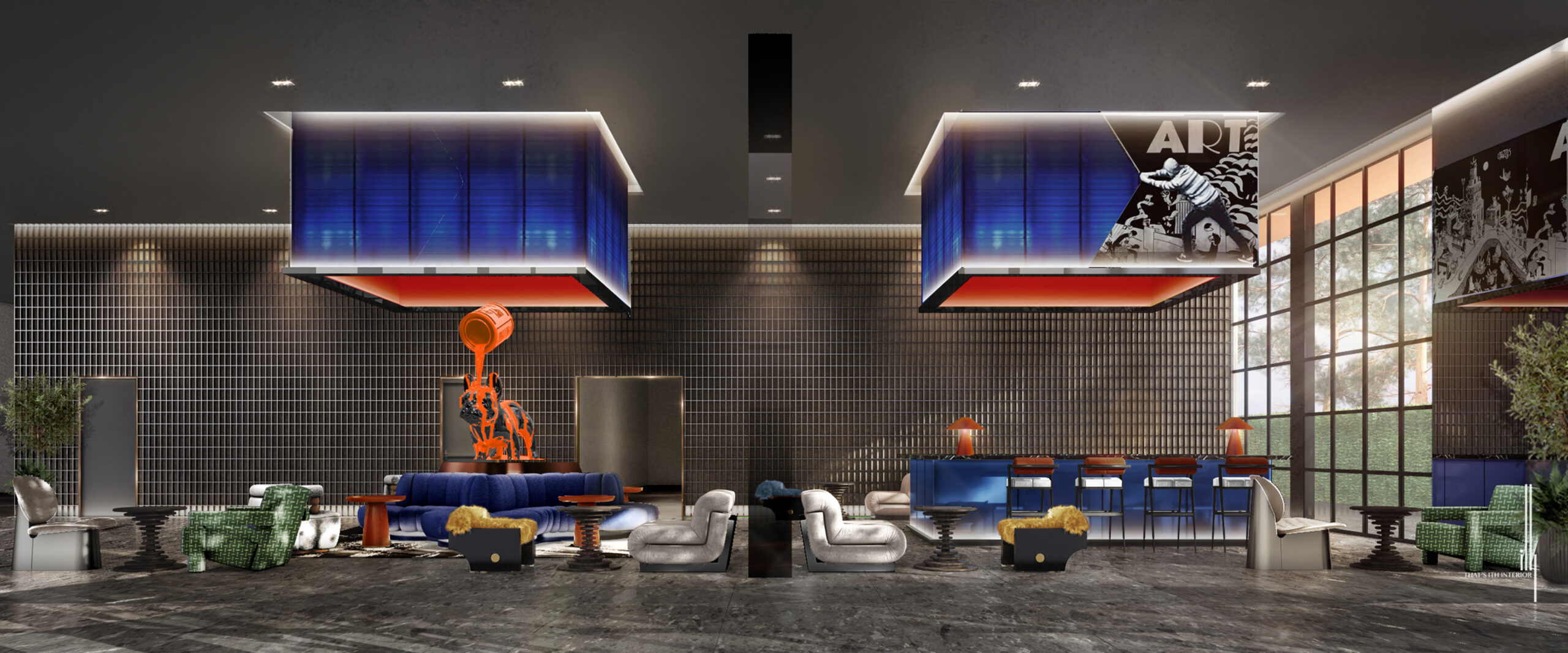
What Sets the Best Luxury Hotel Design Companies Apart?
Not the most dramatic lobby.
Not the most expensive material.
Not the longest list of custom furniture.
And not awards alone.
The best luxury hotel design companies connect several forms of intelligence.
Guest behaviour.
Brand.
Operations.
Place.
Architecture.
Material.
Craft.
Technical execution.
Commercial reality.
Emotion.
And memory.
The difficult part is not possessing each one individually.
It is making all of them feel like one idea.
A successful hotel often feels effortless to the guest.
Behind that ease may be extraordinary complexity.
That is the paradox.
The harder the design team works to resolve the experience, the less the guest should need to think about it.
For THAT’S ITH, that is the ambition behind Designing Places People Remember.
Not by making every room unforgettable.
But by understanding which moments matter enough to deserve memory.
Planning a Luxury Hotel Project in Thailand?
The most useful time to involve an interior designer is often before major decisions involving architecture, operations, brand, guest journey, and technical systems become difficult to change.
THAT’S ITH works with developers, hotel operators, architects, consultants, and multidisciplinary teams across hospitality projects in Thailand and international markets.
We do not begin by asking which previous hotel you want the project to resemble.
We begin with:
“What should make this property impossible to confuse with another one?”
Contact THAT’S ITH INTERIOR to discuss your next hotel or hospitality development.
You do not need to begin with a style.
Finding the Unspoken Brief is part of the work.
Frequently Asked Questions
What is luxury hotel design in Thailand?
Luxury hotel design in Thailand involves creating premium hospitality environments that bring together guest experience, brand identity, operations, architecture, materials, craftsmanship, climate response, and technical execution.
Luxury does not require one particular aesthetic.
The design should respond to the property, guest, and destination.
What should developers look for in a luxury hotel interior designer in Thailand?
Look for relevant built hospitality experience, a clear design philosophy, operational understanding, guest-journey thinking, technical capability, material knowledge, FF&E expertise, and experience collaborating with multidisciplinary teams.
What is important in five-star hotel design in Thailand?
Five-star hotel design should combine comfort, intuitive use, privacy, spatial clarity, service, craftsmanship, material quality, operational efficiency, and a distinctive identity.
Expensive materials alone do not create a five-star experience.
Why is hotel lobby design important?
The lobby often establishes the property’s first major emotional impression.
It helps communicate the hotel’s identity, level of formality, social character, and approach to guest experience before these qualities are explained verbally.
What is guest journey design?
Guest journey design considers the hotel as a sequence of experiences rather than a collection of rooms.
Arrival, reception, circulation, guestrooms, dining, amenities, transitions, and departure can all contribute to the emotional rhythm of the stay.
Why is local knowledge important for hotel design in Thailand?
Local knowledge helps with climate response, materials, fabrication, craftsmanship, construction conditions, suppliers, maintenance, and cultural context.
Its value is not simply access.
It helps international ambition become locally intelligent and executable.
What is The Unspoken Brief in hotel design?
The Unspoken Brief refers to needs, behaviours, tensions, operational concerns, market opportunities, and emotional objectives that may not appear explicitly in the formal hotel brief but can have a major influence on the design.
What does Fearless Luxury mean for THAT’S ITH?
Fearless Luxury means having the confidence to make the decision that genuinely belongs to the project rather than applying a predetermined image of luxury.
Sometimes that creates drama.
Sometimes restraint.
The consistency lies in the quality of judgment.
Does THAT’S ITH design luxury hotels?
Yes.
THAT’S ITH works across hospitality environments including hotel event spaces, restaurants, social hospitality, and other guest-focused interiors in Thailand and international markets.
The exact scope depends on each project appointment.
Does THAT’S ITH have one hotel design style?
No.
Different brands, guests, locations, and operational requirements should produce different responses.
The consistency is not in the aesthetic. It is in the judgment.
Who leads THAT’S ITH INTERIOR?
THAT’S ITH is founded and creatively led by ITH PALACH, whose professional design career spans more than 25 years.
When should a hotel interior designer join a project?
Ideally during early concept or planning stages.
Early involvement allows architecture, guest journey, operations, lighting, FF&E, brand identity, and materials to influence one another before major project decisions become difficult or expensive to change.