
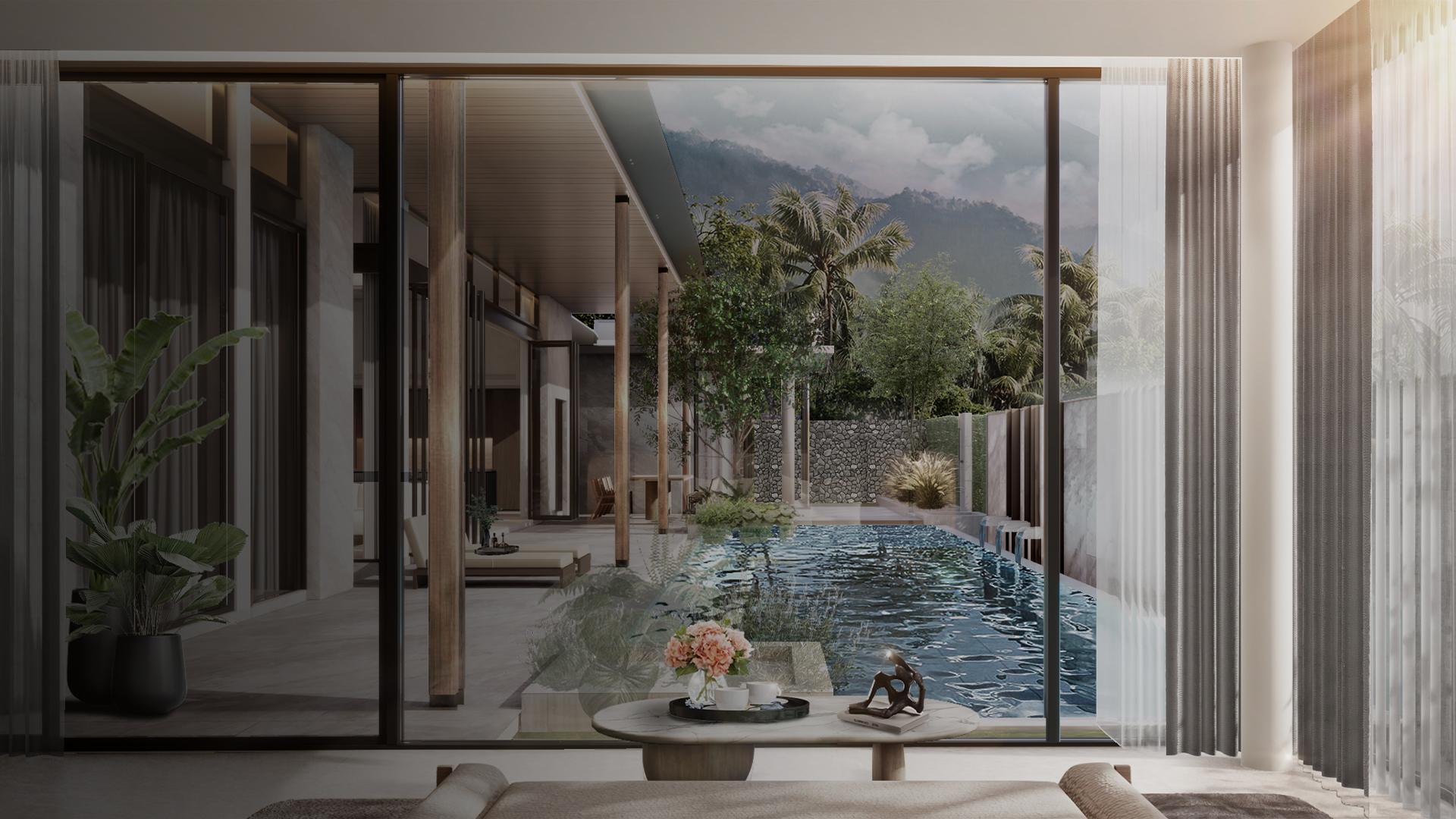
How Award-Winning Interior Designers Approach Luxury Residential Projects
A beautiful home can make an immediate impression.
But creating a home that still feels meaningful after years of living in it requires something more.
Behind every considered residential interior are hundreds of decisions that may never appear in the finished photographs.
How people move.
Where they gather.
When they need privacy.
How light changes through the day.
How materials age.
Which objects deserve attention.
What should be bespoke.
And which parts of the architecture should be allowed to remain quiet.
For an award-winning residential interior designer, the process therefore begins long before furniture is selected or a visual concept is presented.
It begins with the people.
A family house in Bangkok, a private villa in Phuket, and a penthouse overlooking the city may all belong to the luxury residential market.
But their architecture is different.
Their owners are different.
Their relationships with place are different.
Why should the answer be the same?
The most thoughtful residential designers do not begin with a fixed aesthetic.
They begin by discovering what makes the residence specific.
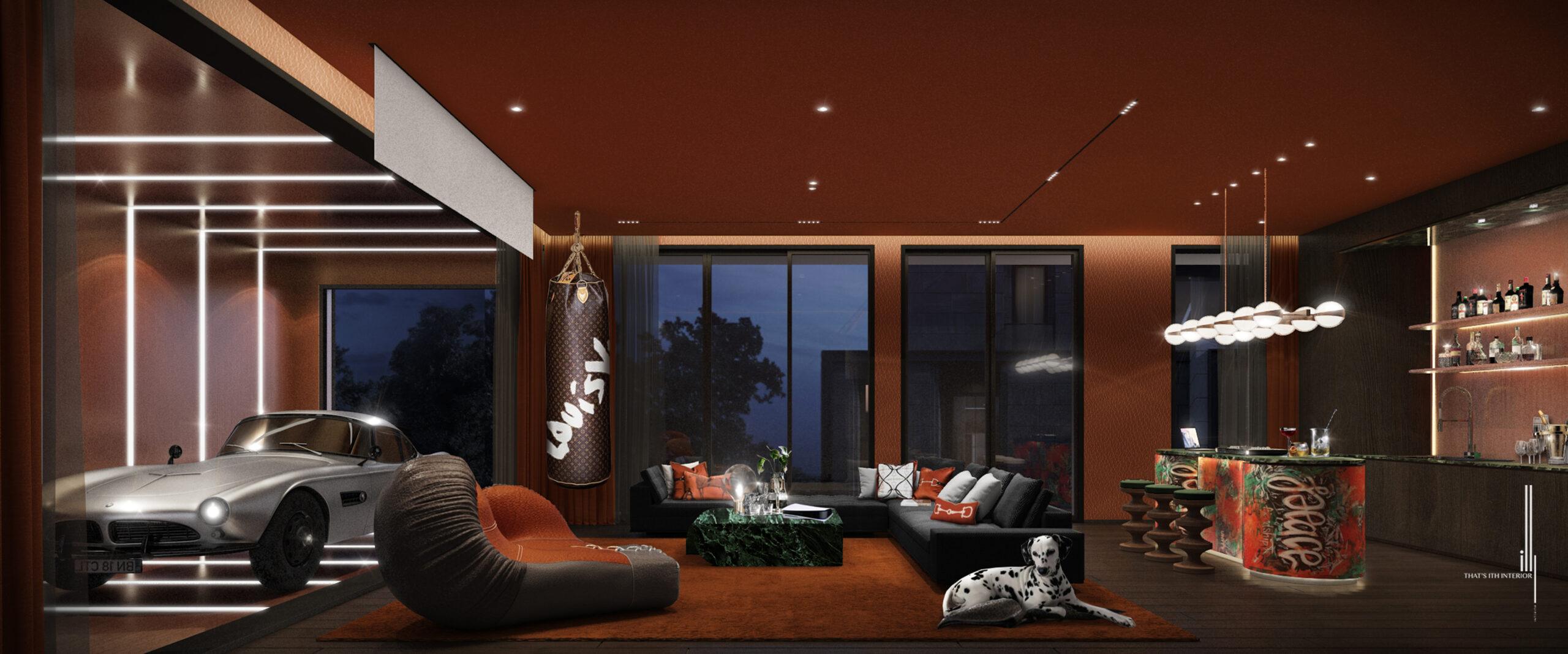
Why the Residential Interior Design Process Matters
Luxury residential design is often associated with beautiful outcomes.
Exceptional materials.
Bespoke furniture.
Art.
Craftsmanship.
Perfectly composed rooms.
But those are visible results of a much larger process.
Before a home takes shape, the designer needs to understand the relationship between:
people,
architecture,
site,
function,
emotion,
and time.
A compelling concept can establish direction.
But concept alone cannot resolve how a family actually lives.
That requires planning.
Technical development.
Material knowledge.
Coordination.
And countless decisions at scales ranging from the entire house to the way a drawer opens.
A home is not a showroom of someone’s taste. It is where several versions of real life have to coexist.
The residential design process is what allows all of those realities to become one coherent environment.
For clients, understanding that process also changes the relationship with the designer.
Instead of simply approving images, they begin to understand why decisions are being made — and what those decisions are trying to protect.
1. Understand the Homeowner Before Designing the Home
The first stage should not be about choosing a style.
It should be about understanding a life.
How does the household begin the day?
Where does everyone naturally gather?
Who needs privacy?
How often do guests visit?
Does somebody work from home?
What is collected?
What has sentimental value?
What never gets used, despite appearing in almost every conventional house plan?
How might life change over the next ten years?
These questions often reveal more than a folder of reference images.
A client may ask for an open-plan living space because they want the family to spend more time together.
Another may prefer separate rooms because independence and quiet are important parts of daily life.
Someone may love minimalism while owning objects accumulated across generations.
A couple may agree on the architecture but have completely different definitions of comfort.
These are not necessarily problems in the brief.
The interesting part of the brief is sometimes the contradiction, not the preference.
That is often where a more personal design begins.
Translate Lifestyle Into a Meaningful Brief
A strong residential brief should describe more than:
room count,
colour preferences,
materials,
or furniture styles.
It should establish how the home needs to behave.
Entertaining.
Storage.
Privacy.
Work.
Rest.
Collections.
Family relationships.
Accessibility.
Staff requirements.
Future change.
The objective is not to accommodate each request independently.
It is to understand how they interact.
A desire for openness may conflict with acoustic privacy.
A dramatic entertaining space may need to coexist with intimate everyday living.
A collection may require architectural attention while the owner still wants the overall interior to feel restrained.
A useful brief does not merely catalogue what the client wants. It reveals the relationships between those wants.
That is where design can begin to add value.
2. Read the Architecture Before Imposing an Interior
Every residence already has conditions.
Some are opportunities.
Others are constraints.
Orientation.
Daylight.
Structure.
Ceiling height.
Views.
Neighbouring properties.
Building services.
Existing architecture.
Climate.
An experienced residential interior designer should understand these conditions before deciding how the finished home should look.
For a new house, early collaboration with the architect may allow interior planning, architecture, lighting, and building systems to develop together.
For a renovation, the challenge may be recognising what should change — and what deserves to remain.
For a penthouse, structural conditions, fixed services, access, and condominium regulations can significantly influence what is possible.
The strongest interior does not behave as though architecture were an empty container. It responds to what is already there.
Luxury House Interior Design in Bangkok
Bangkok introduces specific residential conditions.
Heat.
Strong daylight.
Urban density.
Privacy.
Rain.
Air-conditioning.
Neighbouring buildings.
Indoor-outdoor relationships.
A large window may provide beautiful natural light but also introduce glare and thermal discomfort.
A garden may create privacy from one direction while exposing the house from another.
A generous entrance may establish arrival but still needs to connect naturally with family life.
These conditions should influence the design without forcing every Bangkok home into the same visual language.
Location should have consequences — not become a theme.
Penthouse Interior Design: When the View Is Not the Whole Story
Penthouses begin with another set of conditions.
Height.
Views.
Volume.
Glazing.
Existing building services.
Structural restrictions.
Condominium regulations.
Those characteristics can make a residence extraordinary.
They can also make it impersonal.
The challenge is not simply to maximise the skyline.
It is to decide:
Where does the drama of the city need to stop so that home can begin?
Sometimes the view should dominate.
Sometimes a room needs intimacy.
A successful penthouse uses its extraordinary setting without asking the owner to perform for it constantly.
The skyline establishes where the residence is.
The interior establishes what it feels like to live there.
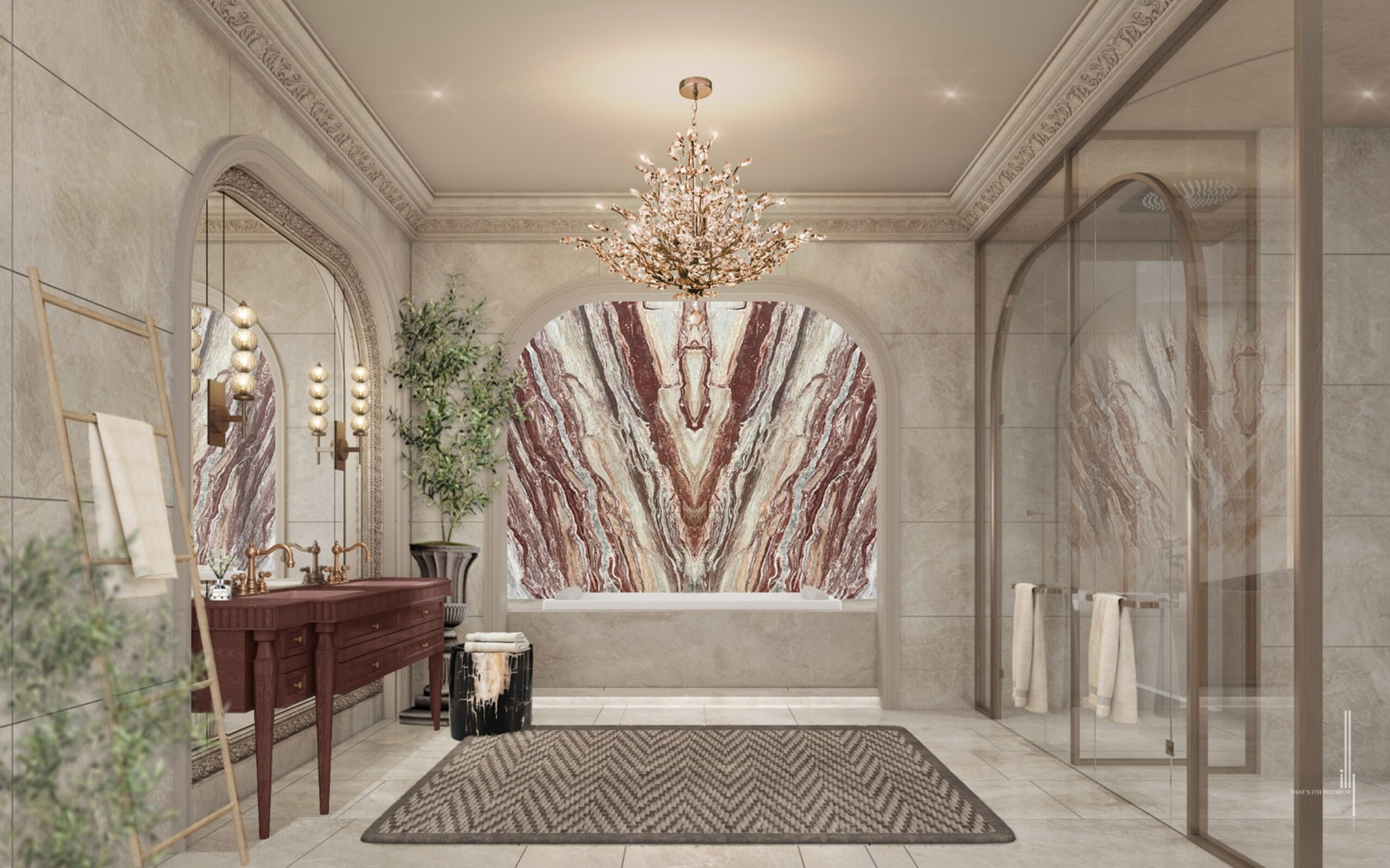
3. Develop a Concept With a Reason to Exist
Once the people, architecture, and practical requirements are understood, the creative concept can begin.
A concept should do more than establish a mood board.
It should provide a reason for the decisions that follow.
Why should this room feel open?
Why should another feel enclosed?
Which material deserves to become dominant?
What should the arrival reveal immediately?
What should remain hidden?
Which architectural feature should be amplified?
What should become quiet?
And what makes this design right for this particular client?
Without a strong idea, design becomes selection. With one, it becomes authorship.
A clear concept does not require every room to look the same.
In fact, a good home often contains different emotional temperatures.
Social.
Quiet.
Formal.
Intimate.
Bright.
Dark.
The concept creates coherence without requiring sameness.
Move Beyond a Preset Idea of Luxury
Luxury is frequently illustrated through:
marble,
polished metal,
designer furniture,
large-scale art,
and elaborate detailing.
These may all be appropriate.
But they are ingredients, not a definition.
One client may want saturated colour, theatrical contrast, and strong architectural gestures.
Another may value natural light, beautiful proportion, tactile materials, and near silence.
Both can be luxurious.
For THAT’S ITH INTERIOR, the more meaningful question is not:
“What does a luxury home look like?”
It is:
“What would luxury mean to these particular people?”
When almost anything can be bought, specificity becomes increasingly valuable.
A material can be sourced.
An object can be collected.
A reference can be reproduced.
But a life cannot.
That is where a more personal idea of luxury begins.
4. Use Space Planning to Translate Behaviour Into Architecture
Space planning is where the understanding of the client begins to become physical.
It determines:
how rooms connect,
how people circulate,
what is visible,
where privacy begins,
how furniture sits,
and how shared and personal territories relate.
A spectacular room can fail if circulation constantly interrupts it.
A beautiful dining space can become frustrating when disconnected from the way the household serves or entertains.
A large bedroom can still feel uncomfortable if privacy, storage, lighting, and furniture relationships are poorly resolved.
Space planning solves more than function. It choreographs everyday life.
Balance Togetherness and Independence
One of the most common tensions in residential design is the desire for both connection and privacy.
Families want to be together.
They also need to be apart.
The solution is not always another wall.
A change in level.
Furniture placement.
A threshold.
Acoustic treatment.
Lighting.
Material.
A partially screened view.
These can create different degrees of privacy within connected spaces.
A strong home should allow people to choose when to participate and when to withdraw.
Luxury is not only having more space. It is having greater control over how that space is experienced.
5. Select Materials for the Life They Will Actually Have
Materials influence appearance.
But they also influence:
touch,
temperature,
sound,
maintenance,
ageing,
and comfort.
Natural stone.
Timber.
Metal.
Glass.
Textiles.
Each has characteristics that extend far beyond visual preference.
A delicate surface may be perfect in one area and completely unsuitable in another.
A natural material may become more beautiful with age when patina has been anticipated rather than resisted.
Another may require a level of maintenance that conflicts with the client’s lifestyle.
Luxury is not specifying the most precious material. It is knowing which material this family can genuinely live with.
The designer needs to think beyond handover day.
How will it look after five years?
How will it be cleaned?
Can it be repaired?
Will it age gracefully?
Does it still support the concept once it has been lived with?
That is where material knowledge becomes part of long-term design quality.
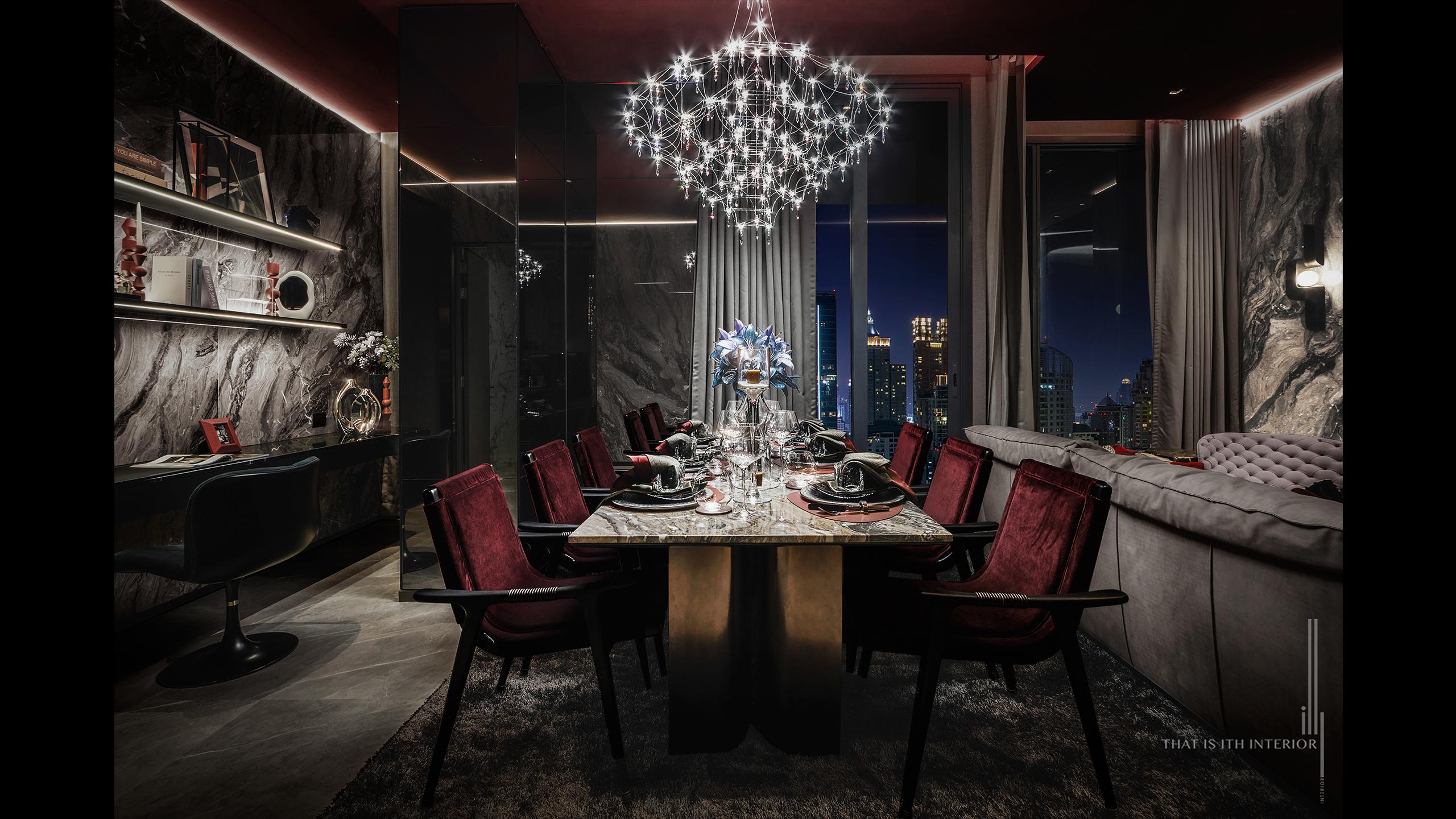
6. Use Bespoke Design Where Specificity Matters
Bespoke design can be one of the most powerful aspects of a luxury residence.
But it should not become a requirement simply because the project is expensive.
A dining table might respond to precisely how one family gathers.
A cabinet may be developed around a particular collection.
A headboard might integrate lighting, storage, and architecture in a way no standard piece could.
A ceiling might exist only because of one room, one owner, and one particular moment.
The point is not that nobody else can buy it.
The point is that it would make less sense somewhere else.
The important word in bespoke is not expensive. It is specific.
And sometimes the right answer is not bespoke at all.
An existing chair may already be perfect.
A vintage object may carry more character than something newly commissioned.
An inherited piece may have more emotional value than anything a designer could create.
The designer’s judgment lies in recognising what deserves to exist only once.
That is where bespoke becomes meaningful rather than decorative.
7. Design Villas as One Relationship Between Architecture, Landscape and Life
Luxury villas create particular opportunities.
Landscape.
Pools.
Terraces.
Courtyards.
Gardens.
Views.
Indoor-outdoor living.
These can create extraordinary environments.
But villas also carry the risk of becoming collections of large, disconnected spaces.
More square metres do not automatically create more meaning.
The designer has to give that freedom structure.
In Thailand, the challenge also includes:
heat,
humidity,
sun,
rain,
privacy,
maintenance,
and material performance.
A large opening toward the landscape may be visually powerful.
But it needs shade.
Comfort.
Privacy.
And a reason to exist beyond the photograph.
A villa should not merely be placed within a landscape. Interior, architecture, and landscape should feel like parts of one experience.
A Bangkok villa therefore should not automatically behave like a coastal house in Phuket.
The site changes.
The lifestyle changes.
So the answer should change.
At THAT’S ITH, projects such as The Reserve Villas – Sukhumvit 89/1 and ANANN Villas – Phuket demonstrate how different residential contexts can demand fundamentally different design responses.
8. Translate the Idea Into Something That Can Actually Be Built
A powerful concept still has to survive reality.
Drawings.
Services.
Fabrication.
Engineering.
Cost.
Construction.
Coordination.
Site conditions.
Depending on the agreed project scope, interior design development may involve:
detailed drawings,
material specifications,
FF&E,
lighting coordination,
bespoke joinery,
furniture documentation,
and coordination with architects, engineers, contractors, fabricators, and specialist consultants.
Some of the most important decisions will never become hero images.
The alignment of a concealed door.
The transition between stone and timber.
The depth of a cabinet.
Where a switch sits.
How a light fitting integrates with architecture.
Whether equipment disappears convincingly.
The things nobody photographs are often the things the client lives with every day.
Technical discipline does not reduce creativity.
It gives creativity the opportunity to survive construction.
A rendering shows what a studio can imagine.
A completed home shows what its process can deliver.
9. Refine the Design Without Losing the Idea
Residential design is rarely a straight line from concept to completion.
Clients understand themselves better as the project develops.
Technical information reveals new possibilities.
Budgets change.
Materials become unavailable.
Site conditions intervene.
Some early ideas improve.
Others should disappear.
This is normal.
The designer’s responsibility is not to defend every original decision.
It is to understand what can change without weakening the project.
Protecting design intent does not mean refusing change. It means knowing what the project cannot afford to lose.
That may mean changing a material but keeping the proportion.
Simplifying a detail while protecting the spatial sequence.
Replacing one piece of furniture without losing the emotional hierarchy of the room.
Good refinement is not compromise without direction.
It is editing with judgment.
Restraint Is Also a Design Decision
Luxury projects often create the temptation to add.
More material.
More art.
More detail.
More custom furniture.
More lighting.
More features.
But eventually everything begins competing.
Everything cannot be the protagonist.
A view may need an empty wall beside it.
One exceptional object may be stronger than five.
A beautifully proportioned room may not need another decorative gesture.
The most confident designers know when to stop.
Luxury is not the freedom to have everything.
It is the confidence to decide what deserves to remain.

THAT’S ITH: Our Approach to Luxury Residential Interior Design
At THAT’S ITH INTERIOR, we do not begin a home by asking which style the client wants.
We begin with the client.
How they live.
How they gather.
What they show.
What they keep private.
What they collect.
What they refuse to give up.
What feels comfortable.
What feels luxurious.
And sometimes, what they have not yet learned how to describe.
Led by ITH PALACH, whose design career spans more than 25 years, THAT’S ITH is a Bangkok-based interior design studio working across high-end residential, hospitality, restaurant, workplace, and lifestyle environments.
Our philosophy of Fearless Luxury is based on the belief that luxury does not need one recognisable appearance.
A private house, villa, and penthouse should not look alike simply because they occupy a similar market.
The people are different.
The architecture is different.
The site is different.
The story is different.
So the answer should be different too.
Design Begins With Identity, Not Style
We are interested in the parts of a client that do not fit neatly into one aesthetic category.
Someone may love entertaining but value absolute privacy.
A family may want contemporary spaces while keeping objects full of memory.
A couple may share one home but have completely different relationships with comfort.
These contradictions are useful.
They often reveal what the home truly needs to become.
From there, planning, materials, lighting, furniture, bespoke design, and technical detail can begin to respond to something deeper than taste.
The designer should bring authorship. But the finished residence should reveal the owner.
That is why our projects are not intended to share one visual signature.
The consistency is not in the aesthetic. It is in the judgment.
Different Homes, Different Answers
THAT’S ITH’s residential portfolio includes projects across different scales and architectural conditions.
SJ Home – Nonthaburi belongs to the world of the private family home.
The Reserve Villas – Sukhumvit 89/1 responds to luxury villa living within Bangkok.
ANANN Villas – Phuket introduces landscape, climate, privacy, and an entirely different relationship with nature.
Hyde Penthouse explores another condition again: high-rise living, urban views, and the need to create intimacy within an extraordinary setting.
These projects were never intended to resemble one another.
Their differences are the point.
For us, a successful residence should eventually feel so specific that another person could admire it —
but could never fully inherit its meaning.

What Should a Homeowner Expect From an Experienced Residential Interior Designer?
Before appointing a designer, understand not just the portfolio, but the process.
Who will lead the project?
How is the brief developed?
What stages are included?
What technical documentation will be produced?
How will materials and furniture be reviewed?
Which services depend on the agreed scope?
How does the studio coordinate with architects, contractors, and consultants?
What happens when something has to change?
And perhaps most importantly:
Does the designer ask questions that make you understand your own home differently?
A strong residential designer should not simply provide more options.
They should create clarity.
They should help determine which decisions matter most.
And when necessary, they should be willing to challenge an idea — not to impose their own taste, but because another solution may serve the client’s life better.
You are not simply choosing a style.
You are choosing whose judgment you are willing to trust when the obvious answer disappears.

Creating a Home That Remains Meaningful Over Time
The most successful homes are not necessarily the ones that make the loudest first impression.
They are the ones that continue to make sense.
The material still feels right as it ages.
The room continues to support daily life.
The bespoke detail still has a purpose.
The family can evolve without immediately outgrowing the architecture.
The design remains recognisable not because it followed a timeless aesthetic formula, but because its strongest decisions were based on something deeper than fashion.
For an award-winning residential interior designer, that is perhaps the more meaningful challenge.
Not simply creating something worth photographing.
But creating something worth living with.
A home that becomes more personal through use.
A home that understands its owners.
A home that would have needed to change if the people living there were different.
At THAT’S ITH, that is where Fearless Luxury becomes most personal.
Not in having more.
But in being understood more precisely.
Because ultimately, true luxury is not a home that could impress anyone.
It is a home that could only fully belong to you.
Contact THAT’S ITH INTERIOR to discuss your next private residence, luxury villa, penthouse, or bespoke residential project.
You do not need to arrive with the perfect brief.
Part of our work is helping you discover it.
Frequently Asked Questions
What is the residential interior design process?
The process typically begins with understanding the client and property, followed by space planning, concept development, material and furniture selection, design development, and technical documentation.
Exact stages and services depend on the project’s scale and agreed appointment.
How do award-winning interior designers approach luxury homes?
Recognition may demonstrate creative or technical achievement, but a strong residential approach should still begin with the people who will live in the home.
Lifestyle, privacy, architecture, context, materials, craftsmanship, comfort, and long-term use should all influence the design.
When should I hire an interior designer for a luxury house?
Ideally, involve the interior designer early — particularly for new construction or major renovation.
Early collaboration allows architecture, interior planning, lighting, building services, materials, built-in elements, and furniture to influence one another before major decisions become difficult to change.
How is bespoke villa interior design different from ordinary home design?
Luxury villas often require closer integration between architecture, landscape, pools, terraces, privacy, climate, and indoor-outdoor living.
Bespoke elements may also be developed around the owner’s lifestyle and the particular architectural conditions of the property.
What should be considered when designing a luxury penthouse?
Important considerations include views, scale, privacy, furniture proportions, lighting, structural limitations, existing building services, condominium regulations, and the owner’s daily routines.
The objective is not simply to maximise the view, but to create intimacy and belonging within an exceptional setting.
Does luxury residential interior design always require bespoke furniture?
No.
Bespoke furniture is valuable when it responds more precisely to a client, function, collection, architectural condition, or experience than an existing piece can.
The strongest designer also knows when an existing product is already the better answer.
What does Fearless Luxury mean in residential design?
For THAT’S ITH, Fearless Luxury means having the confidence to create a design around the specific people and place rather than applying a predetermined luxury aesthetic.
Sometimes that means bold expression.
Sometimes restraint.
The decision depends on what the home genuinely needs.
How important is the client’s lifestyle to residential interior design?
It is fundamental.
Daily routines, privacy, entertaining, family relationships, personal collections, work habits, comfort, and future change can all influence planning and design decisions.
A beautiful home that does not understand its occupants is not fully resolved.
How does THAT’S ITH approach bespoke residential design?
We begin by asking where a tailored solution would genuinely improve the experience rather than assuming every element needs to be custom-made.
The guiding question is:
What deserves to exist only once?
Does THAT’S ITH work on luxury residential projects in Thailand?
Yes.
THAT’S ITH’s residential portfolio includes private houses, villas, penthouses, and high-end residential developments in Bangkok and other parts of Thailand, including SJ Home – Nonthaburi, The Reserve Villas – Sukhumvit 89/1, ANANN Villas – Phuket, and Hyde Penthouse.