
High-End Interior Designer vs Interior Decorator: What’s the Difference?
The difference between an interior designer and an interior decorator can appear surprisingly small when looking only at the finished room.
Both may work with furniture.
Materials.
Colour.
Lighting.
Artwork.
Textiles.
Objects.
And both can have a significant influence on how an interior ultimately looks and feels.
The distinction becomes much clearer earlier in the project — when walls have not yet been positioned, lighting has not been coordinated, furniture dimensions are affecting architecture, bathrooms and kitchens are still being planned, or a hotel, villa, restaurant, or workplace requires technical information before construction can begin.
A High-End Interior Designer typically works more deeply with the creation of the interior environment itself.
An interior decorator generally works more specifically with the furnishing, visual composition, and final aesthetic layers of a substantially resolved space.
Neither is automatically more valuable.
The important question is:
How deeply does the professional need to influence the space before the objects arrive?
That is usually where the difference becomes meaningful.
What Does a High-End Interior Designer Do?
A high-end interior designer may become involved from the earliest stages of a project.
Depending on the appointment, the scope can include:
- concept design
- space planning
- circulation
- room relationships
- architectural interior development
- ceilings and flooring
- material specification
- lighting coordination
- kitchen and bathroom planning
- bespoke joinery
- custom furniture
- FF&E
- art coordination
- design development
- technical drawings and documentation
- consultant coordination
- construction-stage design services
- installation and styling support
The exact scope varies by project, contract, jurisdiction, and consultant structure.
But the defining characteristic is generally depth of intervention.
For a private villa, this might mean influencing room proportions before construction begins.
For a restaurant, it may involve guest circulation, bar planning, lighting, acoustics, bespoke seating, and service relationships.
For an office, planning may need to respond to concentration, collaboration, confidentiality, technology, and client experience.
For hospitality projects, interiors may need to coordinate architecture, operations, FF&E, lighting, service, and repeated room types across a much larger programme.
High-end interior design is not simply the selection of what goes inside a room. It can help determine what the room itself becomes.
What Does an Interior Decorator Do?
An interior decorator typically works with a space whose principal architectural framework is already established.
The walls may already be in the right places.
The lighting infrastructure may largely exist.
The kitchens and bathrooms may not require major redevelopment.
The challenge is therefore less about rebuilding the spatial logic and more about giving the environment greater character, cohesion, comfort, and personality.
A decorator may work with:
- furniture
- colour
- rugs
- textiles
- artwork
- accessories
- curtains and window treatments
- decorative lighting
- objects
- styling
- visual composition
That can be an extremely valuable role.
A well-designed architectural interior can still feel cold, generic, or unfinished when the furnishing layer is weak.
Equally, an existing residence with perfectly functional planning may not need architectural intervention at all.
It may simply need better furniture, stronger proportions, art, texture, and curation.
Decoration is not a lesser version of interior design. It solves a different problem.
The question is whether the project needs the space to change — or primarily needs the space to be completed.
The Clearest Difference Often Begins With Space Planning
One of the most significant distinctions is space planning.
An interior designer may influence:
where walls go,
how rooms connect,
how circulation works,
how furniture affects room proportions,
where privacy is required,
how public and private areas relate,
and how operational or service functions are organised.
Those decisions fundamentally change how the space works.
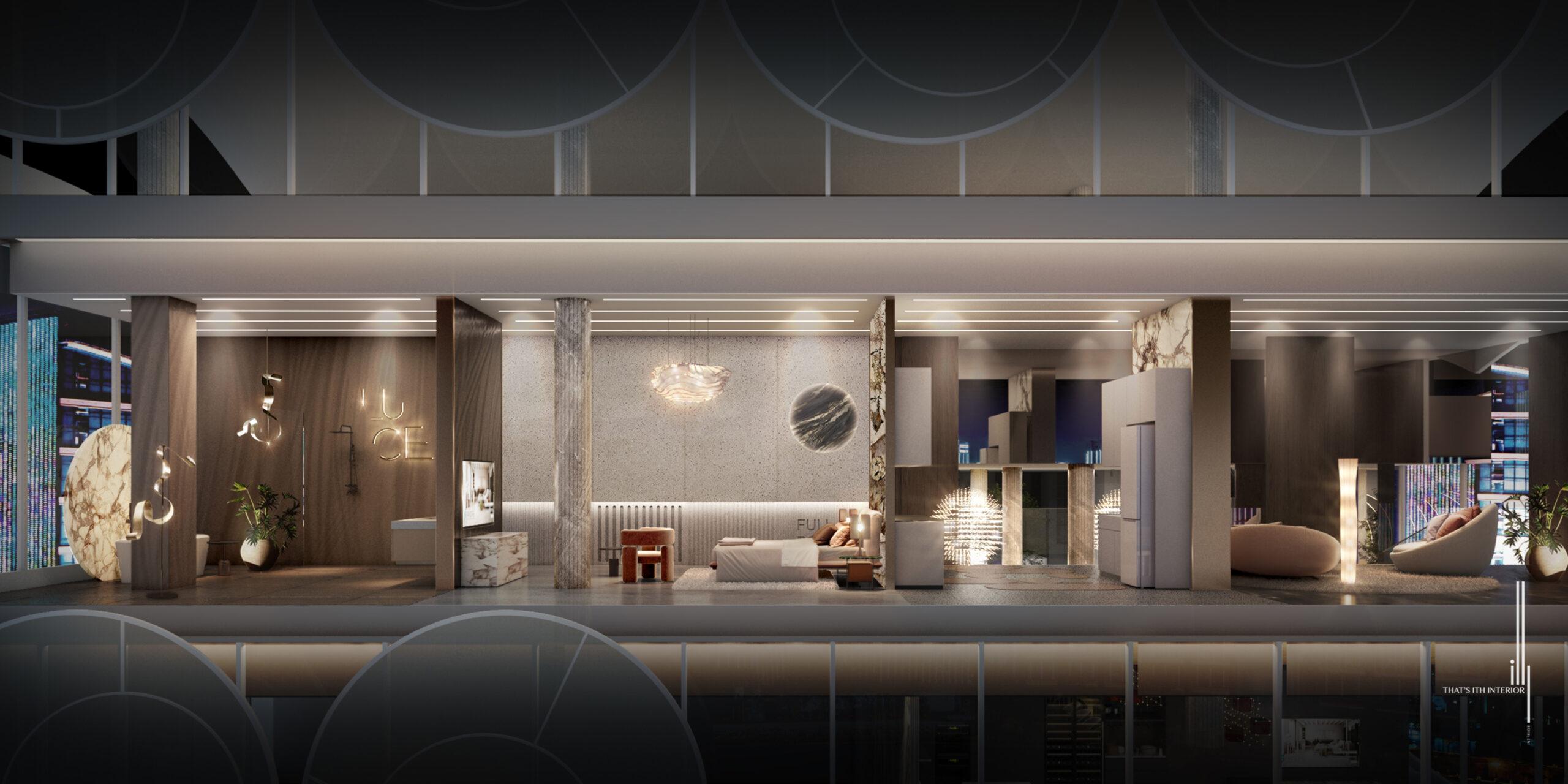
In a project such as Evostone by Fiandre, the interior experience depends on spatial sequence, circulation, material display, and how people encounter the brand — not simply on the objects placed within the finished room.
Similarly, projects such as The Reserve Villas – Sukhumvit 89/1 Club House require planning decisions that influence how several functions coexist within one environment.
A decorator generally responds to a spatial framework that has already been substantially resolved.
Furniture can improve a room enormously. But furniture alone cannot fully repair spatial logic that was wrong from the beginning.
That is why the timing of the appointment matters.
Interior Designers Work With the Architecture of the Interior
The phrase interior design can sometimes sound as though the work begins after architecture ends.
In reality, the two often overlap.
A High-End Interior Designer in Thailand may influence:
ceilings,
built-in joinery,
wall composition,
doors,
flooring transitions,
bathrooms,
kitchens,
staircases,
lighting locations,
integrated furniture,
and other architectural elements within the interior.
These elements require more than aesthetic judgment.
Dimensions matter.
Construction methods matter.
Services matter.
Material thickness matters.
Junctions matter.
Tolerances matter.
Maintenance matters.
Something that looks convincing in a rendering still needs to be translated into information that consultants, contractors, fabricators, and suppliers can understand and execute.
The closer a design decision moves toward construction, the more important technical interior design capability becomes.
Interior Decorators Often Work More Intensively With the Final Layer
Decoration may happen later, but that does not make the decisions superficial.
Furniture scale can completely change how a room feels.
A rug can visually reorganise a seating arrangement.
Curtains affect light, softness, acoustics, and proportion.
Artwork changes focus.
Objects influence personality.
Colour can alter the emotional temperature of an entire interior.
These decisions demand sophisticated judgment.
A room can have expensive architecture and still feel strangely unresolved because the final layer lacks composition.
Conversely, carefully selected furniture, art, textiles, and objects can transform a relatively simple architectural environment.
Architecture creates the room. The furnishing layer often determines whether somebody actually wants to live in it.
That is why strong interior design and strong decoration should not be positioned as opposing disciplines.
They often become most powerful when they understand each other.
A High-End Interior Designer Usually Develops the Concept Earlier
Luxury projects benefit from an idea strong enough to organise many decisions.
The concept may come from:
the client,
the brand,
the site,
the architecture,
a cultural memory,
the landscape,
a collection,
or the emotional experience the project should create.
The value of a concept is not that it produces a clever story for a presentation.
It creates a framework for judgment.
If the team later needs to choose between two materials, the concept can help answer which belongs.
If a furniture proposal feels attractive but unrelated, the idea gives the designer a reason to reject it.
If budget pressure requires simplification, the concept helps identify what the project cannot afford to lose.
A Luxury Interior Expert in Thailand working across a comprehensive design scope can carry that idea through:
planning,
materials,
lighting,
furniture,
bespoke details,
and eventually styling.
Concept does not make every element look the same. It gives different elements a shared reason for existing.
Both Interior Designers and Decorators May Work With FF&E
This is one area where the boundary becomes less obvious.
FF&E — furniture, fixtures, and equipment — may fall within both interior design and decoration.
Artwork and accessories can as well.
The difference is often not what is being selected.
It is when, why, and how deeply that selection influences everything around it.
An interior designer may establish furniture dimensions while architecture is still developing because those dimensions affect:
electrical positions,
floor boxes,
circulation,
joinery,
lighting,
views,
and room proportions.
A decorator may enter later and curate furniture within a completed architectural environment.
Both approaches can produce sophisticated results.
FF&E becomes part of architectural interior thinking when it actively influences the space around it.
The same chair can therefore be a decorating decision in one project and a fundamental interior-design decision in another.
Bespoke Design Often Requires More Coordination
Custom work is common in high-end projects.
Bespoke furniture.
Joinery.
Lighting.
Screens.
Feature elements.
Integrated storage.
Bars.
Wardrobes.
Dining tables.
But “bespoke” does not automatically mean sophisticated.
Its value lies in specificity.
A custom dining table may respond to an unusually long room.
A banquette may solve a difficult restaurant corner while integrating lighting and power.
A wardrobe may be designed around a client’s actual collection rather than assumptions about what wardrobes normally contain.
A reception desk may incorporate technology, storage, security, and brand identity.
Developing these pieces can require:
dimensions,
materials,
construction methodology,
shop-drawing review,
mock-ups,
samples,
prototypes,
fabricator coordination,
and quality control.
Bespoke design becomes valuable when customisation solves something an existing product could not solve as precisely.
Making something only once is not automatically luxury.
Knowing what deserves to exist only once is the more important skill.
Technical Documentation Creates Another Important Difference
A rendering can communicate atmosphere.
A contractor cannot build from atmosphere.
Construction requires information.
Plans.
Elevations.
Sections.
Details.
Schedules.
Material references.
Joinery information.
Specifications.
Dimensions.
Coordination.
Depending on the project, scope, jurisdiction, and consultant appointments, responsibility for these documents may be shared across several disciplines.
But comprehensive interior design usually involves significant technical development before the design can become a built environment.
This is typically outside the primary scope of interior decoration.
The ability to imagine a beautiful interior and the ability to communicate how that interior should be built are connected — but they are not the same capability.
This is one reason clients should look beyond renderings when evaluating a design studio.
A beautiful image demonstrates imagination.
A successful built project demonstrates whether the process could carry that imagination into reality.
High-End Interior Designers Usually Coordinate More Disciplines
Complex projects rarely involve one designer working alone.
A project may include:
architects,
structural engineers,
MEP consultants,
lighting designers,
landscape architects,
kitchen consultants,
AV and technology specialists,
operators,
contractors,
fabricators,
artists,
and suppliers.
Interior decisions frequently intersect with these disciplines.
A lighting location may conflict with air-conditioning.
A ceiling detail may affect sprinklers.
A bespoke bar may require coordination with equipment and drainage.
Furniture may affect power and data.
A bathroom design may depend on plumbing and waterproofing.
A decorator may also coordinate numerous suppliers, deliveries, art installers, and furnishing teams.
The difference is that comprehensive interior design generally interacts earlier and more deeply with the technical systems shaping the built space.
The more interconnected the project becomes, the more valuable coordination becomes as a design skill.
Good coordination does not reduce creativity.
It is often what allows creativity to survive construction.
Does “High-End” Simply Mean More Expensive?
No.
A project can use extremely expensive materials and still have weak design.
Likewise, a sophisticated interior does not need to make every surface financially extravagant.
“High-end” is more useful when it describes the level of:
judgment,
precision,
customisation,
coordination,
craft,
service,
material knowledge,
and attention given to the project.
A designer may deliberately use a relatively simple material because it is appropriate.
Another area may justify extraordinary craftsmanship because that particular moment carries more meaning.
Luxury is not the absence of budget limitations. It is the intelligence with which priorities are established.
That distinction matters because high-end design should not become an exercise in specifying the most expensive available option.
Price and design value are not always the same thing.
What Is the Difference Between a Designer and a Stylist?
Styling is another term that is sometimes confused with both interior design and decoration.
Styling usually sits even closer to the final presentation of the space.
Objects.
Books.
Flowers.
Table settings.
Accessories.
Cushions.
Artwork placement.
Small furniture arrangements.
Styling can profoundly influence photography and the final emotional layer of a project.
But it generally does not replace the earlier spatial, architectural, or technical work.
One way to think about the relationship is:
Interior design creates the environment.
Decoration composes the furnishing layer.
Styling completes the final visual edit.
In practice, the boundaries can overlap considerably, and different studios use titles differently.
That is why clients should evaluate actual scope and capabilities rather than relying only on job titles.
When Do You Need a High-End Interior Designer?
A comprehensive interior designer is usually appropriate when the project involves significant intervention.
This may include:
- a new-build private residence
- a major renovation
- luxury villas
- hotels and resorts
- restaurants and bars
- corporate headquarters
- branded residences
- clubhouses
- hospitality developments
- complex retail or experiential environments
- projects involving substantial bespoke design
- projects requiring coordination across several consultants
The common factor is not simply scale.
It is interdependence.
When planning affects lighting,
lighting affects ceilings,
furniture affects electrical positions,
materials affect detailing,
and operations affect circulation,
the project benefits from the interior designer becoming involved early.
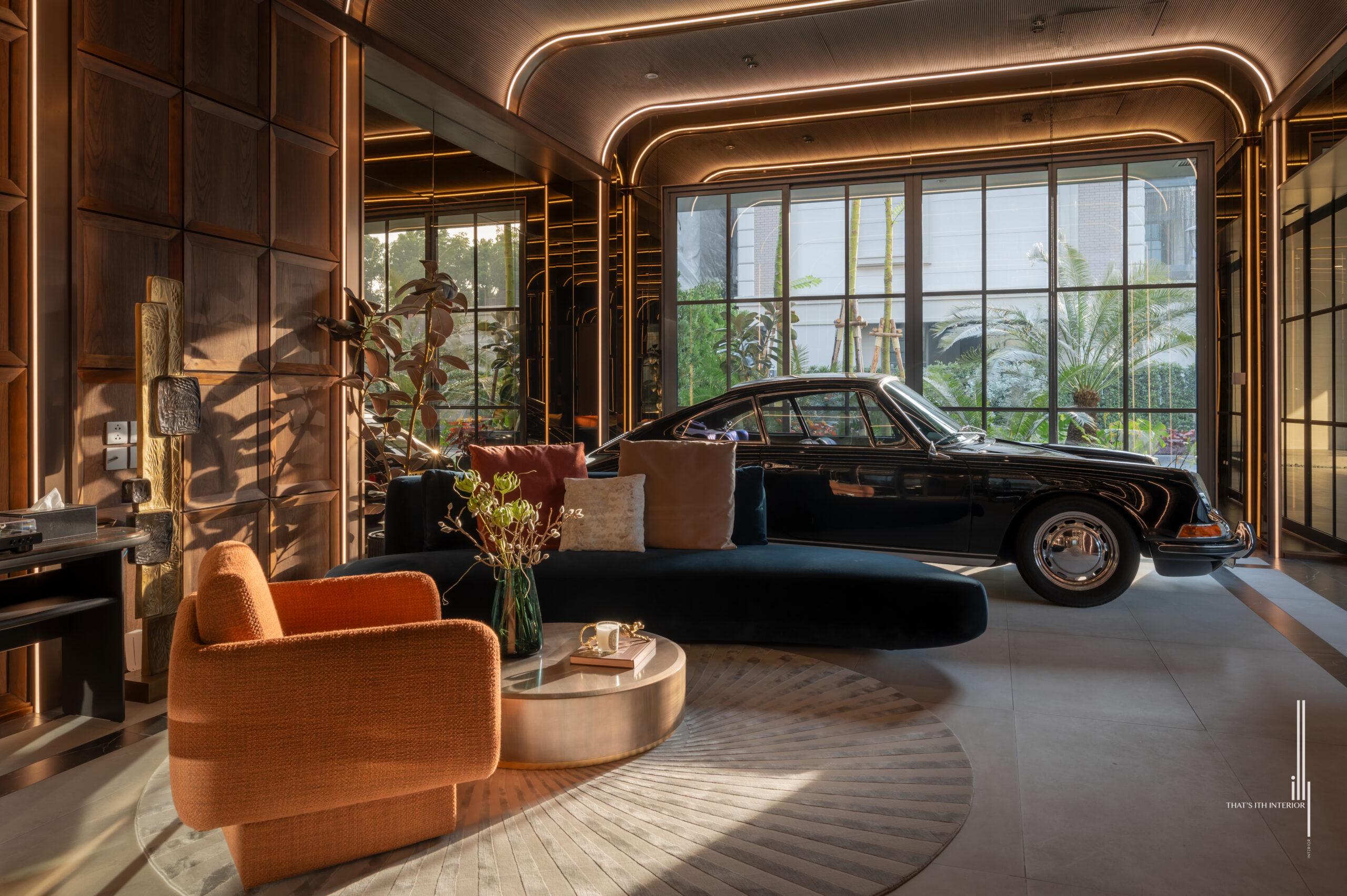
Projects such as The Fullton – Vietnam demonstrate why larger developments require design thinking across more than the decorative layer.
Private residential projects such as SMYTH’S – Kaset-Nawamin similarly benefit when interior planning and architectural decisions are considered before the major conditions become fixed.
If the project needs to change how the space works, not only how it looks, comprehensive interior design is usually the more appropriate appointment.
When Might an Interior Decorator Be Enough?
A decorator may be exactly the right choice when the architecture and planning already work.
Perhaps the residence needs:
new furniture,
art,
rugs,
curtains,
decorative lighting,
accessories,
and stronger visual cohesion.
Perhaps an apartment is complete but feels anonymous.
Perhaps the owner has accumulated good individual pieces but needs somebody to compose them into one coherent interior.
Perhaps no walls, ceilings, plumbing, or integrated joinery need to change.
In those situations, appointing a full interior design team may create unnecessary scope.
The intelligent decision is not to appoint the professional with the more impressive title. It is to appoint the professional whose capabilities match the problem.
Can One Studio Provide Both Interior Design and Decoration?
Yes.
Many full-service interior studios work across both architectural interior design and the furnishing layers.
This can create continuity.
The same idea developed during planning can continue through:
materials,
bespoke furniture,
FF&E,
art,
objects,
and final styling.
That continuity can be particularly valuable for highly personal residences and hospitality projects where identity depends on many layers working together.
Other projects may benefit from separate specialists.
An architect.
Interior designer.
Art consultant.
Decorator.
Stylist.
Lighting designer.
All may collaborate successfully.
There is no universal hierarchy.
What matters is whether every discipline understands the same project — rather than each one designing its own separate version of it.
How Should You Choose Between an Interior Designer and an Interior Decorator?
Start by defining what needs to change.
If the problem is:
“We like the apartment, but it feels unfinished.”
Decoration may be enough.
If the problem is:
“We need to change the layout, bathrooms, lighting, joinery, and how the entire house works.”
You probably need comprehensive interior design.
If the project is a new hotel, restaurant, villa, office, or development and many architectural and technical decisions remain unresolved, an interior designer will usually need to join much earlier.
A useful distinction is:
Decorator: How should this room be completed?
Interior designer: What should this room become?
Those questions can overlap.
But they reveal a meaningful difference in responsibility.
What Should You Look for in a High-End Interior Designer in Thailand?
Look beyond taste.
A beautiful portfolio matters, but a luxury project requires more than a recognisable aesthetic.
Consider whether the studio demonstrates:
Strong planning
Can they explain why the spaces work, not just why they look attractive?
Built projects
Renderings show imagination.
Completed work shows whether that imagination survived construction.
Technical capability
Can the studio develop and communicate details clearly enough for others to build?
Material knowledge
Do they understand performance, maintenance, climate, craft, and ageing — not just appearance?
Bespoke capability
Can they develop project-specific furniture, joinery, lighting, or details when standard solutions are insufficient?
FF&E judgment
Can they move comfortably between architecture and the objects completing it?
Consultant coordination
Can they collaborate effectively with architects, engineers, lighting designers, contractors, fabricators, and other specialists?
Different answers for different clients
Perhaps most importantly:
Do different projects actually look different?
A high-end designer should have strong judgment.
That does not mean every client should receive the same signature aesthetic.
That’s ITH’s Perspective on Interior Design and Decoration
At That’s ITH Interior, we see interior design as the creation of an experience from spatial concept through to the final layer.
That can include planning.
Material.
Light.
Furniture.
FF&E.
Bespoke design.
Art.
Styling.
But the intention is not to control every object merely for the sake of authorship.
The objective is coherence.
One project may require significant architectural intervention.
Another may already have strong architecture and depend much more heavily on furniture, art, and curation.
The appropriate response changes because the problem changes.
For us, Fearless Luxury is not determined by how much of the space a designer changes.
It comes from knowing which decisions matter enough to change at all — and then resolving those decisions with unusual precision.
That is also why we do not begin with a predetermined signature style.
One client may require restraint.
Another theatricality.
One residence may need architecture to become quieter so the owner’s collection can become the protagonist.
Another may need one extraordinary bespoke element to create the identity of the entire space.
The consistency is not in the aesthetic. It is in the judgment.
Explore That’s ITH projects to see how different clients, brands, programmes, and locations produce different design responses.
Planning a High-End Interior Project in Thailand?
The earlier the right design team becomes involved, the greater the opportunity to resolve planning, architecture, lighting, materials, FF&E, and technical requirements as one coherent idea.
Led by founder and designer ITH Palach, That’s ITH Interior is a Bangkok-based interior design studio working across luxury residential, hospitality, restaurant, workplace, retail, and commercial environments in Thailand and international markets.
Depending on the agreed project scope, our work can extend from concept and space planning through material development, bespoke design, FF&E, design development, technical documentation, and final interior layers.
Contact That’s ITH Interior to discuss the appropriate level of design involvement for your project.
Frequently Asked Questions
What is the difference between a high-end interior designer and an interior decorator?
A high-end interior designer may work with space planning, architectural interiors, materials, lighting, bespoke joinery, FF&E, technical development, and construction documentation.
An interior decorator generally works more closely with furniture, colour, textiles, artwork, accessories, window treatments, and the final aesthetic composition of an existing or substantially resolved interior.
Actual scopes vary by professional and project.
Is an interior designer better than an interior decorator?
Not inherently.
They solve different problems.
If the architecture and planning already work and the project primarily needs furniture, art, textiles, and visual curation, a decorator may be the more appropriate appointment.
If the project requires changes to planning, lighting, architectural details, joinery, technical systems, or construction, a comprehensive interior designer is usually more suitable.
What does high-end interior design in Thailand include?
Depending on the agreed scope, it may include concept design, space planning, architectural interior development, materials, lighting coordination, bespoke joinery and furniture, FF&E, design development, technical documentation, consultant coordination, and final styling.
When should I hire an interior designer?
Ideally before major architectural, planning, lighting, MEP, joinery, and furniture decisions have been fixed if the project requires significant interior intervention.
Early involvement provides more opportunity to coordinate those decisions rather than resolving conflicts later.
When should I hire an interior decorator?
A decorator may be appropriate when the spatial planning and architecture already work and the primary requirement is furniture, rugs, curtains, colour, art, decorative lighting, accessories, and final visual composition.
Can an interior designer also decorate?
Yes.
Many comprehensive interior studios work across both architectural interior design and FF&E, art, furniture, accessories, and styling.
The precise services should always be confirmed within the project scope.
Can an interior decorator change walls or produce construction drawings?
That depends on the individual professional, their qualifications, the jurisdiction, and the agreed scope.
In general, architectural alterations and technical construction documentation are more commonly associated with comprehensive interior design and relevant architectural or engineering consultants than with decoration alone.
What is a bespoke interior professional?
Bespoke interior work involves project-specific design such as custom furniture, joinery, lighting, screens, architectural details, or other elements developed specifically for the client or space.
The value of bespoke design lies in solving a particular requirement more precisely than a standard product could.
Why are construction drawings important in high-end interior design?
Construction drawings and technical information translate design intent into information that contractors, fabricators, and consultants can coordinate and build.
A rendering may communicate atmosphere, but construction requires dimensions, materials, details, junctions, schedules, and other technical information.
What should I look for in a high-end interior designer in Thailand?
Look for strong space planning, built projects, technical capability, material knowledge, FF&E judgment, bespoke design experience, consultant coordination, and the ability to explain why different projects require different design responses.
The most useful question may not be:
“Do I like this designer’s style?”
But:
“Do I trust this designer’s judgment when the project no longer has an obvious answer?”
Pasted markdown